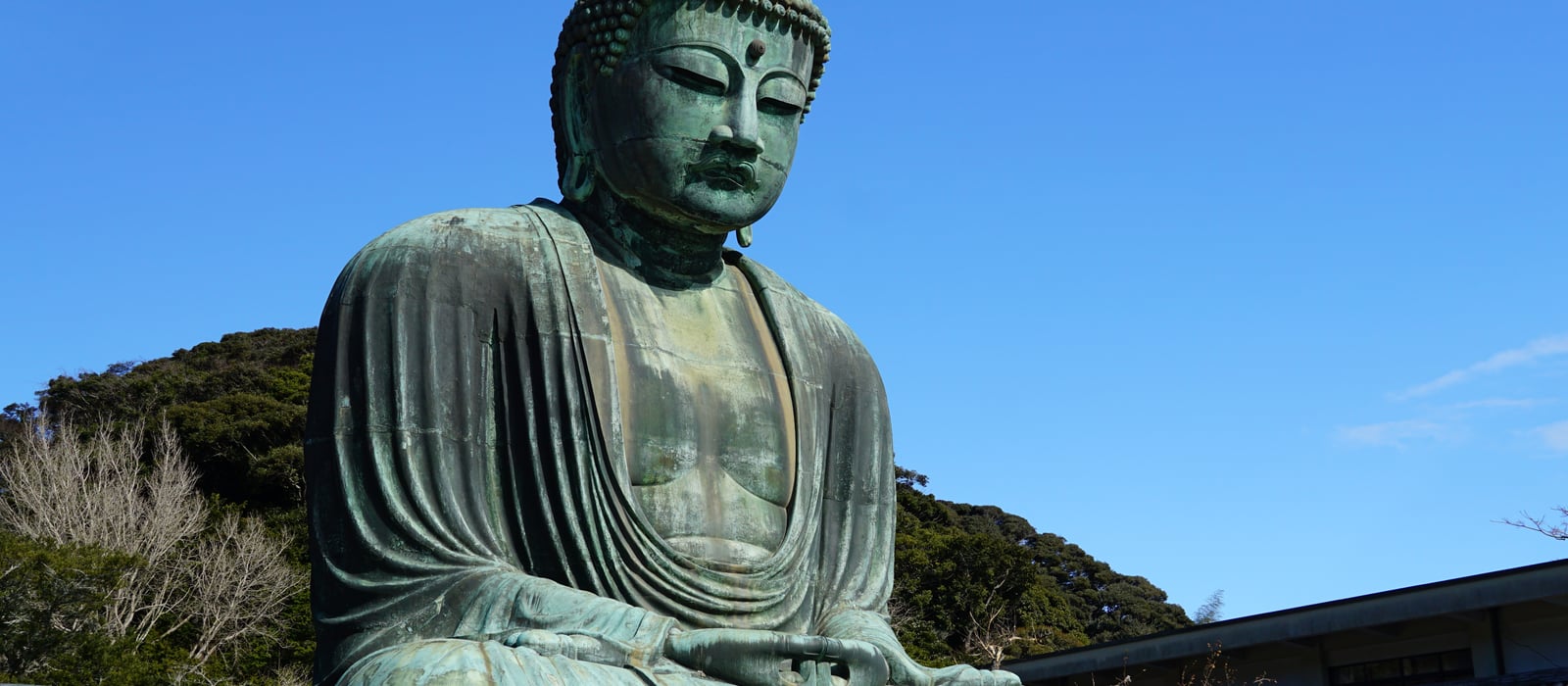
 Image: Wikimedia Commons
Kanagawa Prefecture
A region that flourished as the seat of samurai government in the Kamakura period, as a post town along the Tokaido in the Edo period, and, from the end of the shogunate onward, as a gateway for Japan's modernization and adoption of Western culture through the opening of the port of Yokohama. In Kamakura, Kamakura-bori carving developed against a backdrop of Zen Buddhist culture, while in Hakone and Odawara, woodworking and metalworking techniques such as Yosegi-zaiku (marquetry), lacquerware, and cast metalwork flourished, making use of abundant forest resources. The opening of the port of Yokohama gave rise to a food culture that incorporated Western and Chinese influences, such as Western-style furniture, scarves, gyu-nabe beef hot pot, and shumai dumplings, while the fishing industry of Sagami Bay and the Miura Peninsula, along with the pilgrimage culture of visiting Mt. Oyama, nurtured local flavors such as shirasu don, tuna dishes, and shojin tofu. A region with multilayered appeal, where samurai culture, post-town culture, the culture of the open port, and fishing-village culture all overlap.
Kanagawa's Traditional Crafts
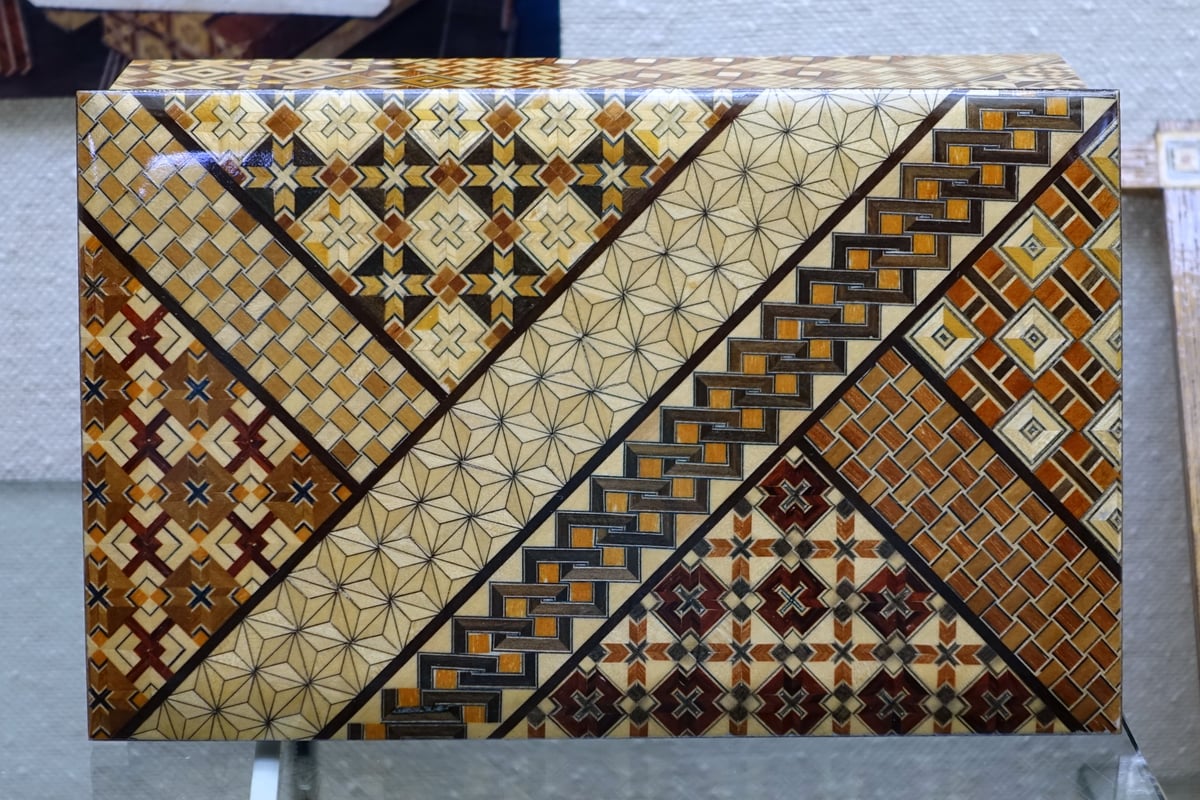
Hakone Yosegi-zaiku (Marquetry)
Hakone Yosegi Zaiku
Hakone Yosegi-zaiku is a traditional woodworking craft from Hakone, Kanagawa Prefecture, that assembles geometric patterns from the natural colors and grain of different woods, with no dyeing involved. It is said to have begun in the late Edo period, when Ishikawa Nihei of Hatajuku, noting the wide variety of tree species found in the mountains of Hakone, began combining pieces of wood with different colors and grains to make trays and boxes. In the Meiji era, marquetry techniques from the Shizuoka region were incorporated, giving rise to more intricate geometric patterns. The himitsu-bako (puzzle box), fitted with a trick-opening mechanism, became a popular souvenir among travelers on the Tokaido and visitors to the hot springs, and it remains a signature Hakone souvenir today. Designated a national Traditional Craft in 1984, the technique is still carried on today, centered on workshops and museums in Hatajuku, the craft's birthplace.
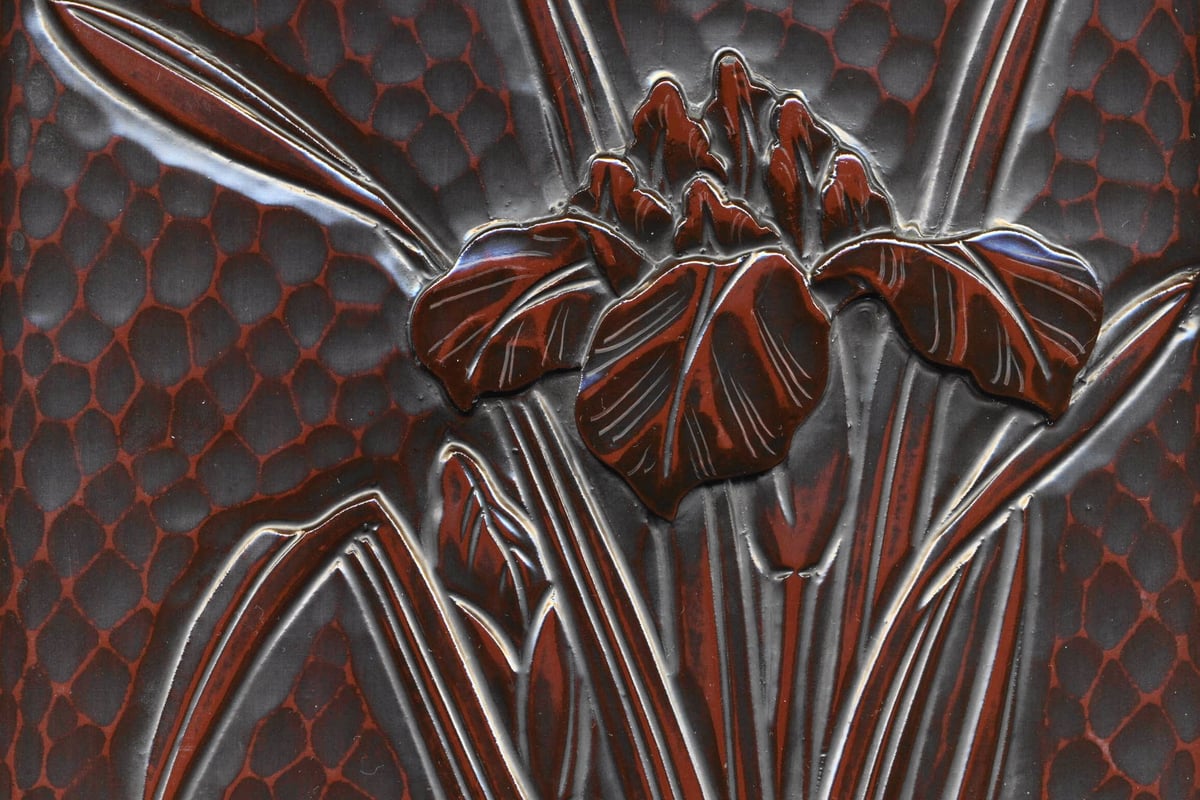
Kamakura-bori (Carved Lacquerware)
Kamakura-bori
Kamakura-bori is a traditional craft of Kamakura, Kanagawa Prefecture, in which wood is carved and then finished with layers of lacquer. It is said to have begun in the Kamakura period, when Buddhist sculptors in Kamakura, influenced by the carved lacquerware (tsuishu and tsuikoku) technique brought from Song-dynasty China, devised a simpler way to achieve three-dimensional designs: carving a pattern into the wood base and then applying lacquer over it. Originally made as Buddhist altar fittings and implements for Zen temples, the craft evolved into today's Kamakura-bori after the Buddhist sculptors, who lost their work during the anti-Buddhist movement of the early Meiji era, found a new path making everyday items such as trays and tea-cup stands. It is based on yagen-bori, a carving style with a V-shaped cross-section, and is characterized by deep, rich lacquer finishes that make the most of the wood's texture. Designated a Traditional Craft by the Minister of Economy, Trade and Industry in 1979, its techniques continue to be passed down today, centered on workshops and a cooperative association within Kamakura.

Odawara Casting
Odawara Imono
Odawara Casting is a metalworking craft passed down in Odawara City, Kanagawa Prefecture. It is said to have begun in 1534, near the end of the Muromachi period, when Yamada Jirōzaemon, who had moved to Odawara from Kawachi Province, opened a foundry there. In 1702, during the Edo period, the Kashiwagi family started their own foundry business and made a name for themselves producing sound-making objects using an alloy of copper and tin blended to their own ratio, called sahari. Today the main products are 'sound objects' — wind chimes (furin), Buddhist altar bells (orin), and hand bells — prized for their clear, long-lingering tones, and the Kashiwagi Art Casting Institute, the only foundry now remaining in Odawara, carries this tradition forward. The workshop is also known for making the ornate palace-style wind chimes used in Akira Kurosawa's film 'Red Beard,' and it displays and sells wind chimes, altar bells, and other products at its on-site 'Sahari Gallery: Sound Object Hall,' while in recent years it has also worked on collaborative pieces with Hakone Yosegi-zaiku (marquetry).
Odawara Chochin (Folding Paper Lantern)
Odawara Chochin
Odawara Chochin is a paper lantern from Odawara, Kanagawa Prefecture, said to have been devised in the mid-Edo period by a local lantern maker, Jinzaemon, for travelers crossing the Hakone mountains. Unlike ordinary lanterns, its body ribs form a single independent ring, so that when folded, the body collapses completely into its upper and lower lids, making it compact enough to carry inside a kimono breast pocket — its greatest feature. The bamboo strips used are shaved into a square cross-section to increase the surface area for gluing, making the lantern resistant to rain and fog, and the upper and lower lids are made from sacred wood from Saijoji Temple on Mt. Daiyuzan, which was also believed to ward off evil on the road. These three advantages — portability, durability, and protection from evil — were promoted as the santoku (three virtues), and in the Edo period the lantern became known nationwide as a souvenir among travelers on the Tokaido. Today only a small number of lantern shops in the city continue to uphold the traditional techniques, and efforts are made to pass on the skills through workshops and other activities.
Odawara Lacquerware
Odawara Shikki
Odawara Lacquerware is a traditional craft of Odawara City, Kanagawa Prefecture, finished in a way that preserves the beautiful natural grain of the wood. It is said to have begun in the mid-Muromachi period, when zelkova and other timber cut from the Hakone mountains was turned on a lathe into vessels and coated with raw lacquer rubbed directly into the wood. During the Warring States period, Hojo Ujiyasu invited lacquerers to his castle town and introduced colored lacquer techniques, and in the Edo period the craft developed in Odawara, which flourished as a post town on the Tokaido, expanding its range from everyday items to parts for military equipment. Its two signature techniques are 'suri-urushi-nuri,' in which raw lacquer is applied thinly to preserve the wood grain, and 'kijiro-nuri,' which builds up an undercoat with sabi-urushi (lacquer putty). Zelkova, valued for its durability and resistance to warping, is widely used to make its vessels. In 1984 it was designated a national Traditional Craft.
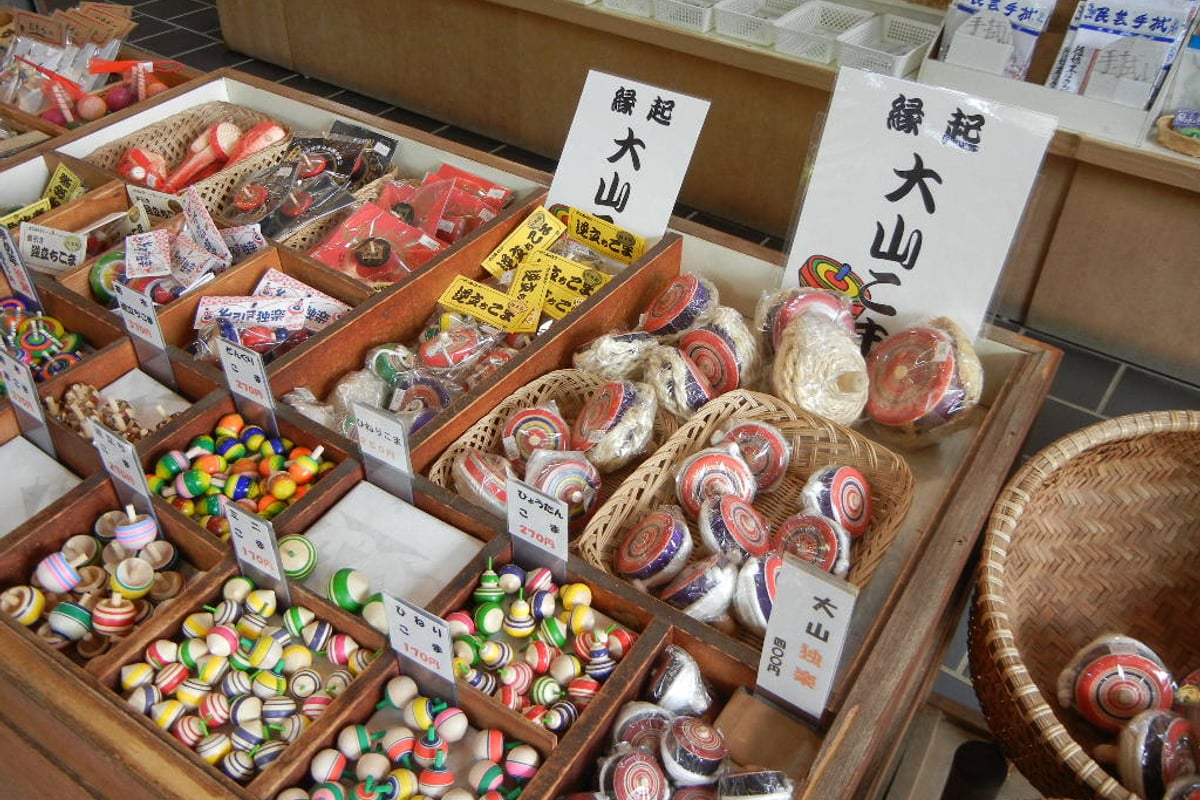
Oyama Top (Oyama-koma)
Oyama Koma
Oyama-koma are wooden spinning tops passed down at the foot of Mt. Oyama in Isehara City, Kanagawa Prefecture, which developed as souvenirs of the 'Oyama pilgrimage' that flourished in the mid-Edo period. Local mizuki wood is turned on a lathe by woodturners and finished in a plain wood base painted in bold bands of vermilion, indigo, and purple that blend together as the top spins. Their thick, long axle and rounded, substantial shape are designed, through a construction in which a separate piece of hard wood is inserted into the axle, to withstand use as 'fighting tops' knocked hard against one another, and because they 'spin well,' they have long been cherished as lucky charms believed to bring good fortune and business prosperity. Many woodturners and top shops once lined the pilgrimage approach, giving rise to the street's name 'Koma-sando' (Top Approach), but as lifestyles changed the number of makers declined, and today only a few shops along the approach carry the tradition forward. In 2023, 'the techniques for making Oyama-koma' were selected as a national Intangible Folk Cultural Property requiring documentation.
Yokohama Furniture
Yokohama Kagu
Yokohama Furniture is a craft that emerged in the wake of the opening of the port of Yokohama at the end of the Edo period, and is regarded as the birthplace of Western-style furniture-making in Japan. According to tradition, it began around 1863, when Goldman, an Englishman residing in Yokohama, asked a local harness-maker, Hara Yasuzō, to repair a chair. Impressed with the quality of the repair, Goldman then commissioned furniture in the same style made back home, prompting local woodworkers to study the structure and design of Western furniture and develop it in their own way. Its distinguishing techniques combine traditional Japanese woodworking with Western furniture styles: precise wood-joinery that uses almost no nails, and shaping of graceful curved surfaces with a specially curved-blade plane. In the Meiji era, Yokohama Furniture won international acclaim, even being exhibited at the Paris World's Fair, but the number of makers declined after the Great Kanto Earthquake and wartime destruction, and today only a handful of workshops and companies carry on the technique.
Yokohama Scarf
Yokohama Scarf
Yokohama Scarf is a traditional craft of Yokohama, Kanagawa Prefecture, born out of the raw silk and silk textile export industry that developed following the opening of the port of Yokohama in 1859. The skills of ukiyo-e painters and printers who gathered in Yokohama after the port opened combined with raw silk and silk goods, then the mainstay of the city's exports, giving rise to a dyeing industry for silk handkerchiefs and scarves. Screen-printing techniques were established in the early Showa era, and the delicate dyeing achieved through 'tenassen' (hand printing) — pressing dye through a stencil with a spatula — won worldwide acclaim. During the postwar period of rapid economic growth, Yokohama Scarf came to account for 80% of the world's export share, and by around 1976 as much as 90% of domestic production, but production has since contracted due to a strong yen and the shift of manufacturing overseas. Even so, the hand-printing techniques of Yokohama's craftspeople continue to be passed down today, and the craft is recognized as a Kanagawa Prefecture Designated Traditional Craft.
Yokohama Shibayama Lacquerware
Yokohama Shibayama-nuri
Yokohama Shibayama Lacquerware is a craft that uses an inlay technique in which carved pieces of shell, ivory, tortoiseshell, and other materials are set into the surface of lacquerware to raise motifs of flowers, birds, and natural scenery in relief. The technique itself derives from 'Shibayama-zōgan' (Shibayama inlay), devised in Edo in the late Edo period by Onogi Senzo, a native of Shibayama village in Kazusa Province (present-day Shibayama, Chiba Prefecture). Following the opening of the port of Yokohama at the end of the Edo period, the technique developed independently in the trading port of Yokohama as an export craft aimed at overseas markets. It was highly regarded in Europe and the United States during the Meiji era, and at its peak nearly 100 craftspeople gathered in Yokohama, but the number of artisans fell sharply due to damage from the Great Kanto Earthquake and World War II, together with declining export demand. Today, Miyazaki Teruo is said to be the only active craftsperson still able to produce even large-scale works, and surviving pieces themselves are rare within Japan, making this an extremely scarce traditional technique.
Kanagawa's Local Food
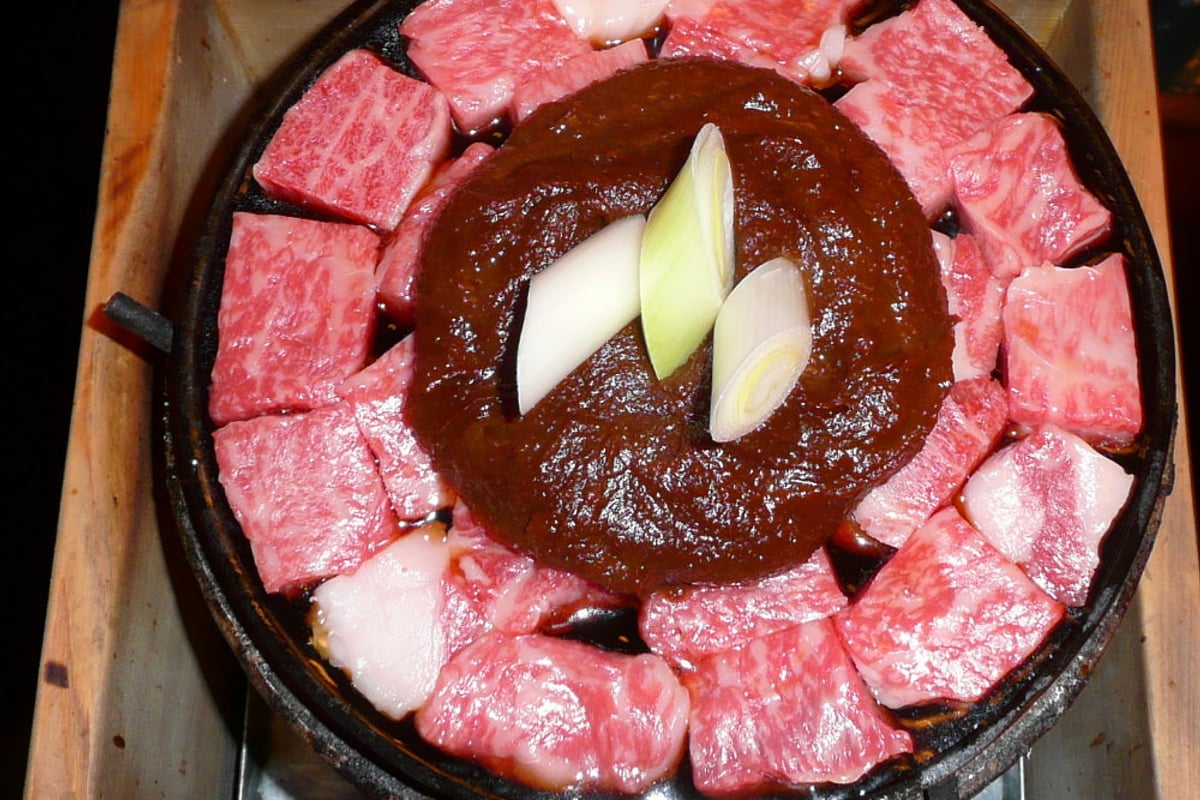
Gyu-nabe (Beef Hot Pot)
Gyu-nabe
Gyu-nabe is a hot pot dish that originated in the treaty port city of Yokohama between the late Edo and Meiji eras, in which beef is simmered in a miso- or soy sauce-based broth. In Japan up through the Edo period, eating meat was generally avoided; it is said that beef eating spread after people in Yokohama, home to the foreign settlement, came into contact with the meat-eating food culture of Westerners living there, and the dish became known nationwide as a symbol of 'bunmei-kaika' (civilization and enlightenment). It is characterized by chunks of beef, green onion, and tofu simmered in a shallow iron pot with a miso- or soy sauce-based broth, and it is regarded as the prototype from which sukiyaki later developed. Long-established Gyu-nabe restaurants that have operated in Yokohama for over a century still serve Gyu-nabe made according to the methods and flavors handed down from that era.
Herahera Dango
Herahera Dango
Herahera Dango is a local confection handed down since the Edo period in Sajima, a fishing district in the city of Yokosuka on the western side of the Miura Peninsula. Wheat flour, jōshinko (non-glutinous rice flour), or shiratamako (glutinous rice flour) dough is shaped into flattened dumplings and coated with smooth strained red bean paste (koshi-an) — a simple type of ankoromochi. It has traditionally been made in each household as a ceremonial dish for the Sajima boat festival held every July, to pray for a bountiful catch and freedom from illness. Several stories are told about the origin of the name: one holds that the flattened shape of the pressed dumplings resembles a hera, a flat tool used in fishing; another that the dumplings sway 'herahera' as they bob to the surface while boiling. After being selected in 2007 as one of the Ministry of Agriculture, Forestry and Fisheries' 100 Local Dishes of Farming, Mountain, and Fishing Villages, the confection also began to be commercialized by local sweets shops.
Kanko-yaki
Kanko-yaki
Kanko-yaki is a local dish handed down since the Edo period in the Tsukui area of Midori Ward, Sagamihara City — a simple grilled-and-steamed dumpling made by wrapping seasonal ingredients such as wild greens and mushrooms, azuki beans, kabocha squash, and pickles in kneaded wheat-flour dough, then grilling it before steaming it through. Because the mountainous Tsukui area was unsuited to rice cultivation, wheat and bean farming flourished there from early times, and a wheat-based flour-food culture took root. In the Edo period, the dough was filled with uruka (salted ayu-fish innards) or miso and steam-baked in the hot ash of a hearth, and the dish was enjoyed as a meal or snack between farm work. The name is said to derive from its resemblance in shape to the kakko, a drum used in gagaku (Japanese court music). In 2007, it was selected as a local dish of Kanagawa Prefecture in the Ministry of Agriculture, Forestry and Fisheries' 100 Local Dishes of Farming, Mountain, and Fishing Villages.
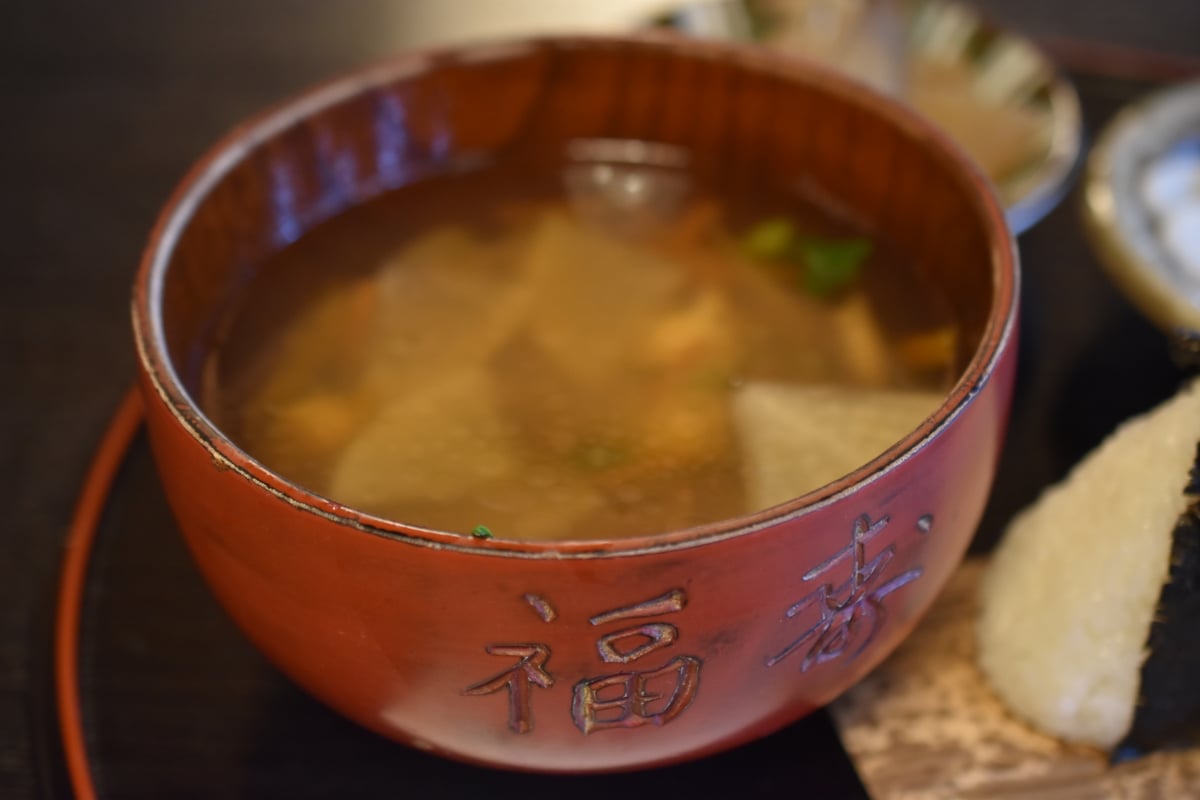
Kenchin-jiru (Kamakura Vegetable Soup)
Kenchin-jiru
Kenchin-jiru is a soup dish rooted in shojin ryori (Buddhist vegetarian cuisine), made by sautéing root vegetables and tofu in sesame oil and then simmering them in a kombu- and shiitake-based broth. According to a widely known account, the name derives from 'Kenchojiru,' a dish long prepared at Kenchoji Temple, a Zen temple in Kamakura, Kanagawa Prefecture, with the pronunciation gradually shifting to 'kenchin-jiru'; Kamakura is regarded as the dish's birthplace. The traditional method uses no animal-derived ingredients or stock, and the tofu is crumbled by hand rather than cut, giving the soup its characteristic mellow, savory flavor drawn from shojin ryori. From the Edo period onward, it spread beyond the bounds of temple cuisine to become a home-cooked dish among ordinary people, and today it is a standard winter soup made throughout Japan. In Kamakura, restaurants near the gate of Kenchoji Temple still serve Kenchin-jiru made to recreate the temple's traditional recipe.
Maguro no Kabuto-yaki (Grilled Tuna Head)
Maguro no Kabuto-yaki
Maguro no Kabuto-yaki (grilled tuna head) is a hearty local dish born in the port town of Misaki in Miura City, one of Japan's leading tuna fishing harbors. The tuna's head (kabuto) holds rare, richly flavored parts distinct from the body meat—such as the hachi-mi (crown meat), cheek meat, the flesh behind the eye, and throat meat—which are slow-grilled, often simply salted, to bring out their deep umami. The fishermen of Misaki have long practiced 'oki-ryori' (offshore cooking), a tradition of ingeniously preparing the tuna's innards and other underused parts, and kabuto-yaki is said to have emerged from this culinary lineage. Because only a small amount of this rare cut can be taken from a single fish, it is mostly served at specialty tuna restaurants around Misaki Port, and it has become a beloved dish among visitors as a symbol of Misaki's distinctive tuna food culture.
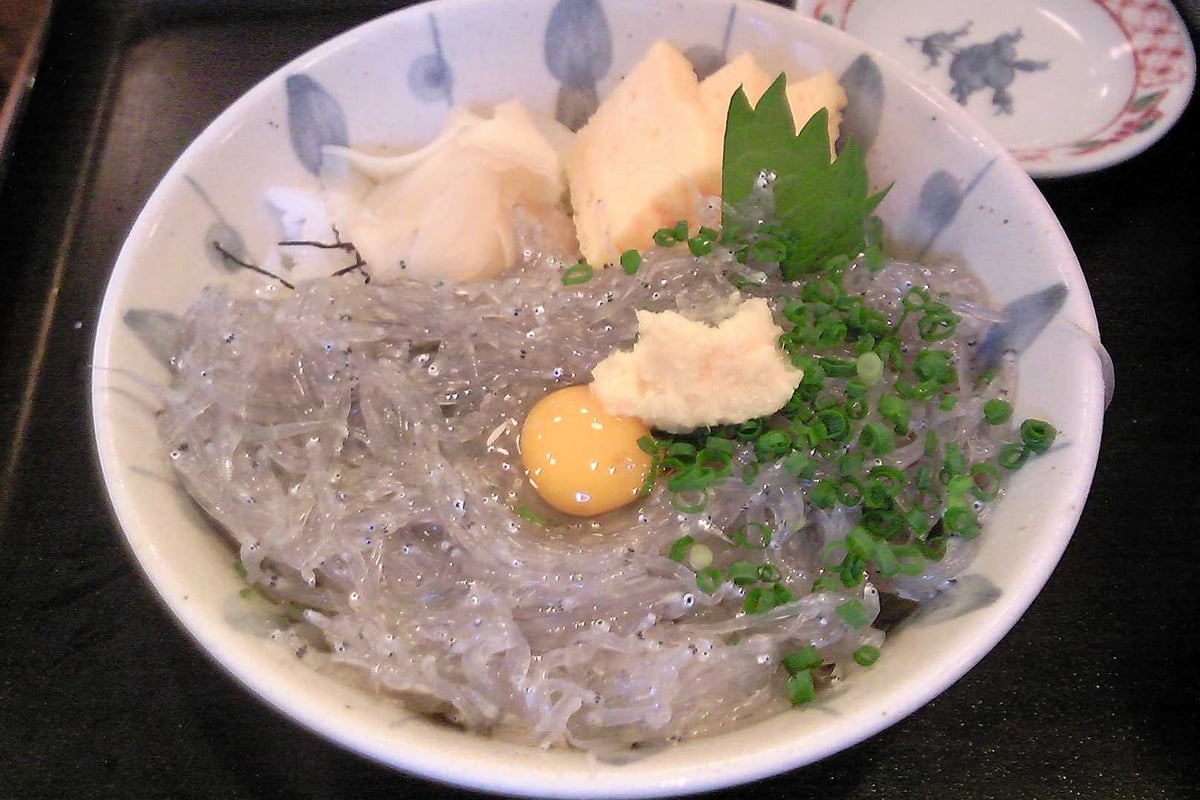
Nama-Shirasu-Don (Raw Whitebait Rice Bowl)
Nama-shirasu-don
Nama-shirasu-don is a seafood rice bowl representative of the Shonan area, piled high with freshly caught raw shirasu (young sardines) from Sagami Bay. Shirasu caught near the fishing ports around Enoshima, Koshigoe, and Kamakura spoil very quickly, so it can only be enjoyed raw on the day it is landed and near where it was caught—a rarity that is part of its appeal. It is known for its plump texture and a melt-in-the-mouth quality, typically eaten with soy sauce or ponzu and condiments such as ginger and chopped scallion. Shirasu fishing is closed from January through mid-March each year, so raw shirasu can only be enjoyed during the limited season after the ban is lifted. At eateries in Enoshima and Koshigoe, many restaurants offer their own take on the dish, such as bowls combining boiled (kama-age) and raw shirasu.
Oyama Tofu (Mt. Oyama-Style Tofu)
Oyama Tofu
Oyama Tofu is a tofu-based cuisine made at the foot of Mt. Oyama, a sacred peak of the Tanzawa mountains in Isehara City, and it developed alongside the 'Oyama pilgrimage' tradition that flourished from the Edo period onward. It is said that tofu-making thrived in Oyama from early times both because pilgrimage groups (Oyama-ko) offered soybeans as thanks for prayers and blessings, and because the area was blessed with pure spring water flowing down from the Tanzawa mountains. The custom was also tied to the tradition of shojin (vegetarian) cuisine practiced by mountain ascetics and monks, and tofu became a valued dish for pilgrims that used neither meat nor fish. Today, along the Koma Sando approach, inns and restaurants specializing in tofu cuisine still line the street, offering menus built around tofu made with local water and soybeans, such as yudofu (simmered tofu), dengaku (skewered and grilled tofu), and tofu kaiseki courses. It is a representative local delicacy of Kanagawa Prefecture, selected as one of the '100 Selected Kanagawa Specialties.'
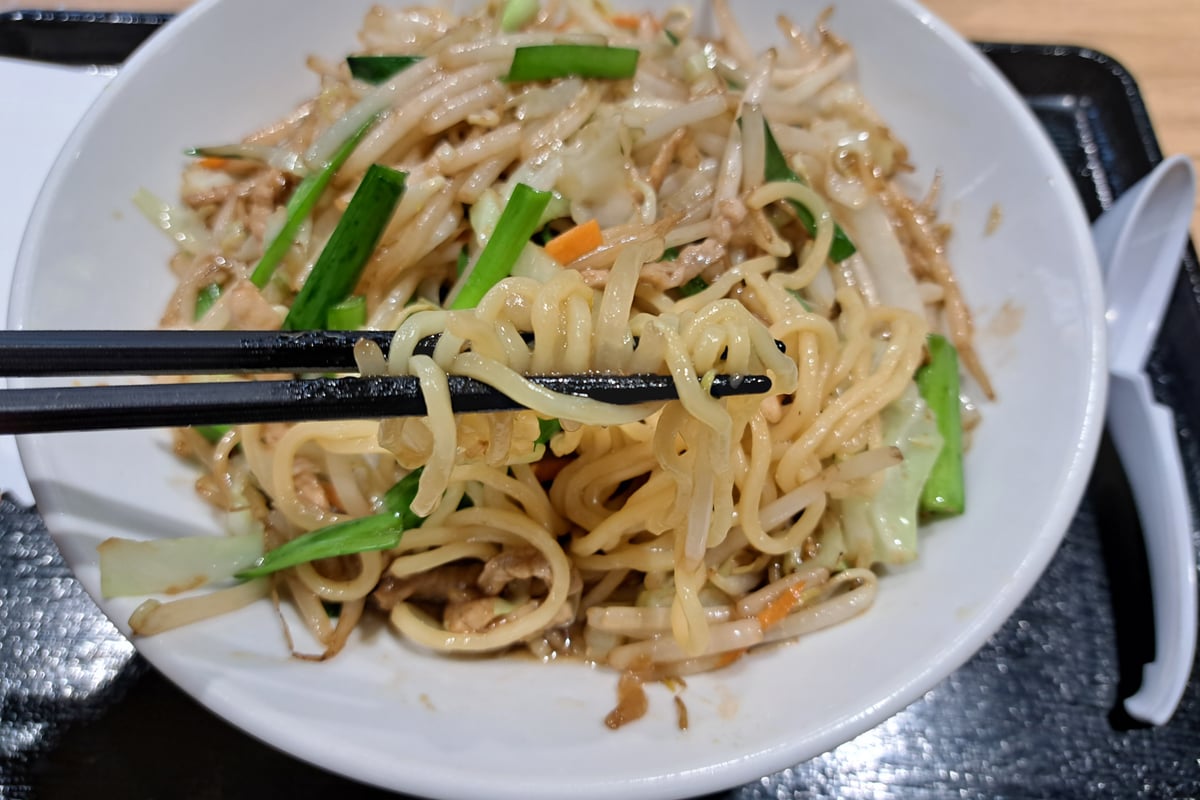
Sanma-men
Sanma-men
Sanma-men is a Yokohama-born local noodle dish topped with a thick, glossy sauce made of stir-fried pork and vegetables such as bean sprouts. Despite its name, it has no direct connection to the fish sanma (Pacific saury); the name is said to derive from the Chinese terms 'shengma-mian' or 'shengmian,' meaning roughly 'noodles topped with fresh ingredients.' It is said to have spread shortly after World War II, when it was served to laborers at the Port of Yokohama as an inexpensive, filling noodle dish that stayed warm even in winter, with theories pointing to Chinese restaurants in Yokohama Chinatown and Isezaki-cho as being involved in its origin. Colorful vegetables such as bean sprouts, chives, napa cabbage, and wood ear mushrooms are used generously, and the soy-sauce-based thickened sauce clings well to the noodles, giving the dish its homey, approachable appeal.
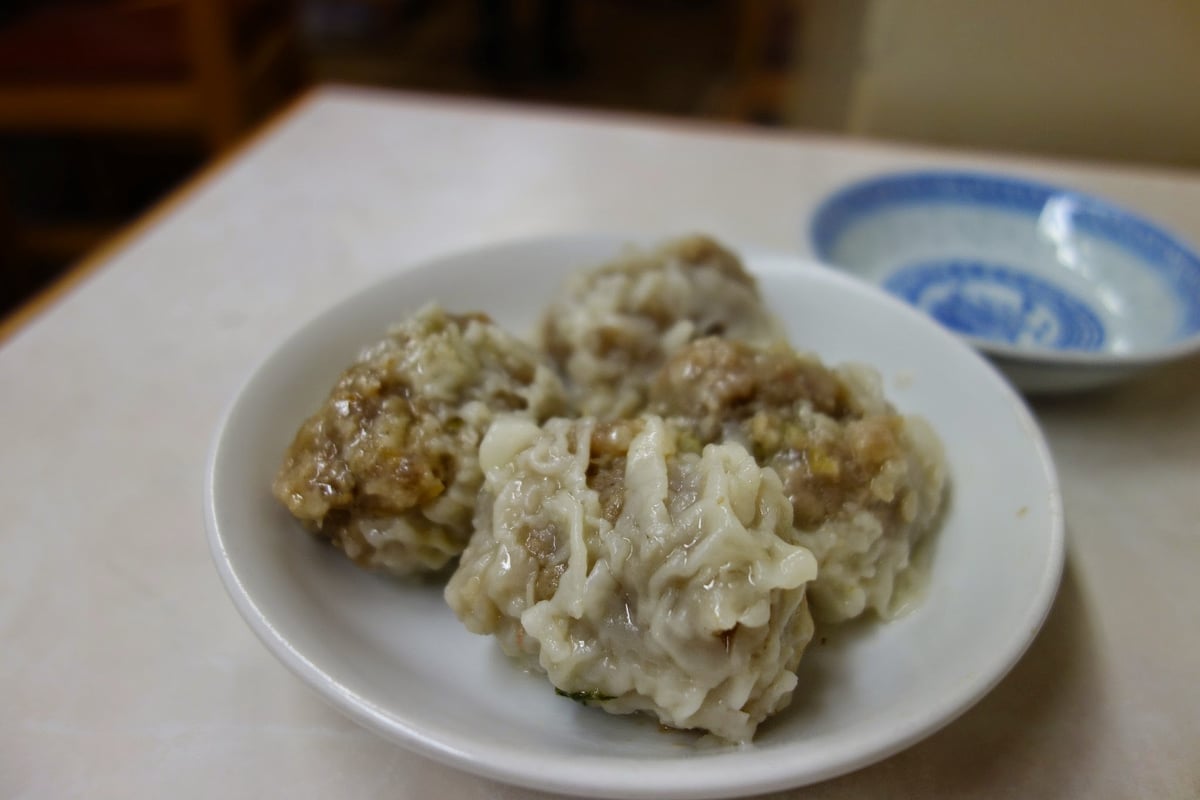
Yokohama Chinatown Shumai
Yokohama Chinatown Shumai
The shumai of Yokohama Chinatown developed against the backdrop of dim sum culture brought over by Chinese chefs who arrived at Nankin-machi (present-day Chinatown) following the opening of the port in the Meiji era. It is a type of dim sum made by wrapping pork-based filling in a wheat-flour wrapper and steaming it; Chinatown is home to numerous long-established shops with histories ranging from several decades to nearly a century, each offering its own house-made shumai with distinct blends and textures. Many are small, bite-sized pieces packed with concentrated meat juices, and takeout sales at storefronts and gift boxes for souvenirs are also common. Notably, the 'Shiumai' made by Kiyoken, nationally famous as a Yokohama ekiben (train station bento), is also said to have its roots in the shumai served in Nankin-machi (present-day Chinatown); the shumai served as Chinatown dim sum and Kiyoken's ekiben Shiumai are like siblings that branched off from the same Yokohama food culture.
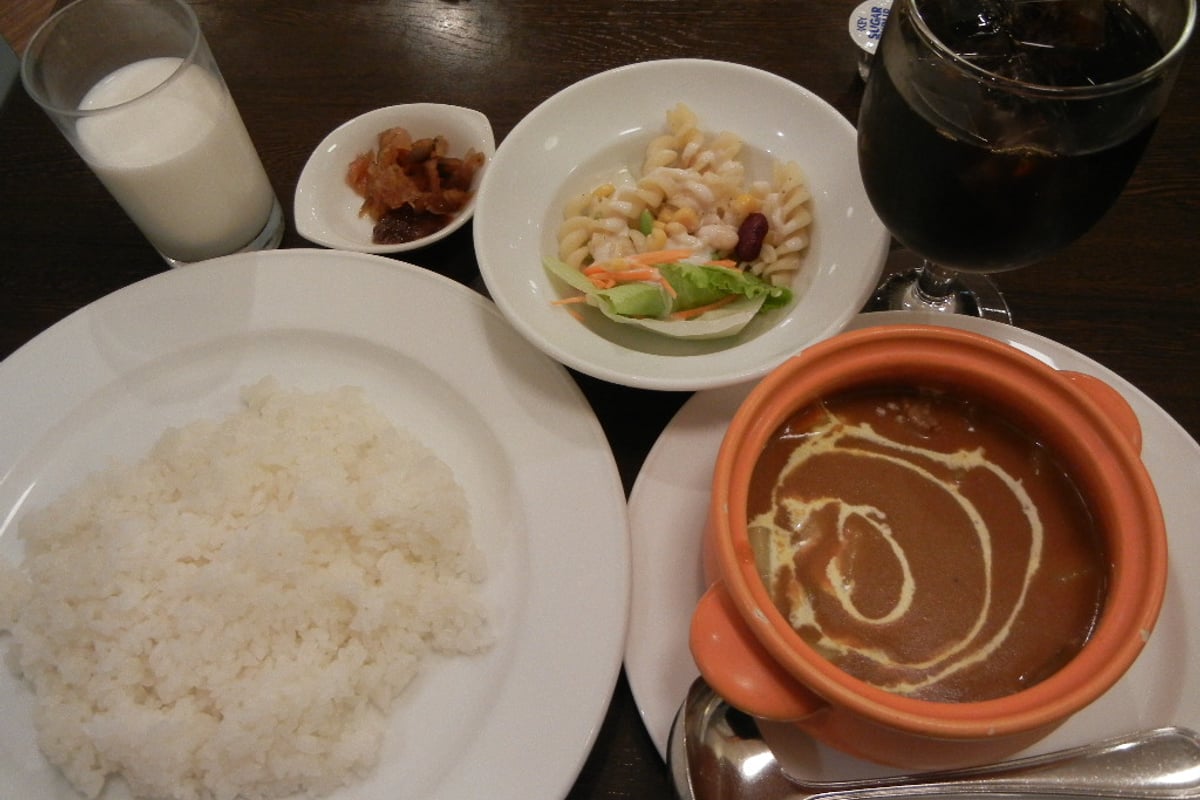
Yokosuka Kaigun Curry
Yokosuka Kaigun Curry
Yokosuka Kaigun Curry (Yokosuka Navy Curry) is a modern recreation of a curry recipe served in the former Imperial Japanese Navy during the Meiji era, and is a town-revitalization dish that originated in the city of Yokosuka. It recreates the method for 'curried rice' recorded in a 1908 navy cookbook, 'A Reference Book of Naval Culinary Techniques,' and it is a basic rule that it be served with milk and a salad on the side. It grew out of the activities of the 'Curry Town Yokosuka Promotion Committee,' launched in 1999 through cooperation between the city of Yokosuka, its chamber of commerce, and the Japan Maritime Self-Defense Force, and in principle it is served only at certified shops within Yokosuka City. The Imperial Japanese Navy of the Meiji era, whose sailors suffered from beriberi due to a diet centered on white rice, adopted a curry-flavored stew from the British Navy to improve nutritional balance — a practice regarded as one of the roots of Japan's curry culture — and Yokosuka Kaigun Curry is cherished today as a dish that carries this history forward.
Model Course
Half-Day Course: Kamakura-bori, Kenchin-jiru, and Nama-shirasu-don in Kamakura and Enoshima
Watch the skilled work of Hakkodo, a long-established Kamakura-bori workshop near Tsurugaoka Hachimangu Shrine, then savor the original taste of kenchin-jiru at Tenshin-an near the gate of Kenchoji Temple. Ride the Enoden line onward to Enoshima and Koshigoe to enjoy nama-shirasu-don — a classic half-day course through the Kamakura and Shonan area.
Isehara Course: Mt. Oyama Pilgrimage Charms and Shojin Tofu
Take the Oyama Cablecar to visit Oyama Afuri Shrine, then try your hand at painting an Oyama-koma spinning top at the Kanekoya branch shop along Koma Sando. Enjoy a course meal of Oyama tofu made with spring water from the Tanzawa mountains, served at a restaurant housed in a former pilgrim's lodging along the approach — a course that lets you experience the pilgrimage culture enjoyed by ordinary people in the Edo period.
Course: Western Furniture and Western Food Culture Brought by the Opening of the Port of Yokohama
Visit Yokohama Kagu Daniel in Motomachi to see Western-style furniture with roots in the Meiji era, then taste gyu-nabe made with chunks of beef at the long-established Ota Nawanoren. Move on to Chinatown to enjoy a walking tour of sanma-men and shumai — a course that captures more than 150 years of culture since the opening of the port of Yokohama.
Seafood Course: Tuna and Navy Curry in the Miura Peninsula and Yokosuka
Savor grilled tuna head (maguro no kabuto-yaki) at Kurobatei in Misaki Port, then move on to Yokosuka to try Yokosuka Kaigun Curry, served with milk and salad, at Yokosuka Kaigun Curry Honpo — a food-touring course unique to this town shaped by both the navy and the fishing industry.