Image: Wikimedia Commons
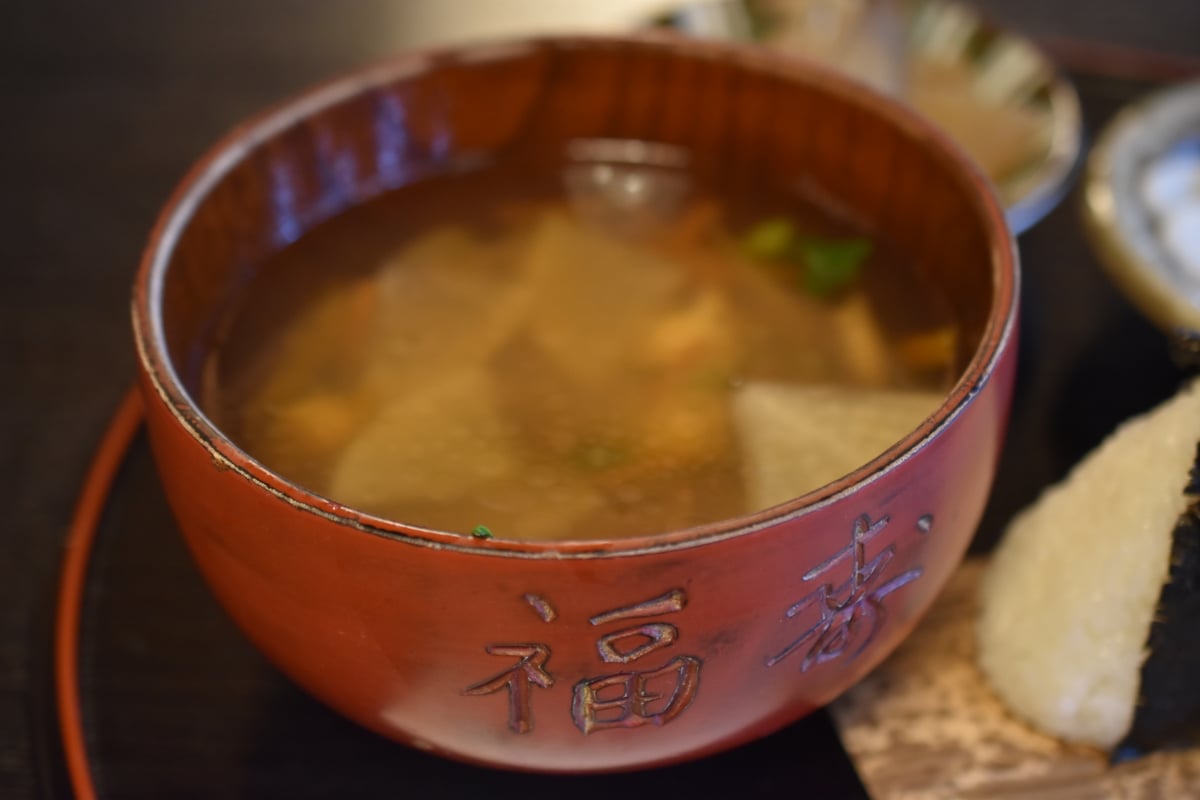
Kenchin-jiru is a soup dish rooted in shojin ryori (Buddhist vegetarian cuisine), made by sautéing root vegetables and tofu in sesame oil and then simmering them in a kombu- and shiitake-based broth. According to a widely known account, the name derives from 'Kenchojiru,' a dish long prepared at Kenchoji Temple, a Zen temple in Kamakura, Kanagawa Prefecture, with the pronunciation gradually shifting to 'kenchin-jiru'; Kamakura is regarded as the dish's birthplace. The traditional method uses no animal-derived ingredients or stock, and the tofu is crumbled by hand rather than cut, giving the soup its characteristic mellow, savory flavor drawn from shojin ryori. From the Edo period onward, it spread beyond the bounds of temple cuisine to become a home-cooked dish among ordinary people, and today it is a standard winter soup made throughout Japan. In Kamakura, restaurants near the gate of Kenchoji Temple still serve Kenchin-jiru made to recreate the temple's traditional recipe.
Origin
Several theories exist about the origin of the name Kenchin-jiru. The best-known account holds that the name comes from 'Kenchojiru,' a dish made at Kenchoji Temple, ranked first among the Five Great Zen Temples of Kamakura (the Kamakura Gozan), with the pronunciation gradually shifting to 'kenchin-jiru'; according to legend, a young trainee monk once dropped and crumbled a piece of tofu on the floor, and it was simmered together with vegetables, marking the dish's beginning. Etymological dictionaries, on the other hand, tend to favor a different theory: that the name is a Japanized version of 'kenchin,' a dish of julienned vegetables rolled up, found in fucha ryori, a style of Chinese-influenced Buddhist vegetarian cuisine, and it is sometimes written with characters meaning 'rolled vegetable soup.'
History
Whichever theory is correct, Kenchin-jiru is thought to have developed in Kamakura as a shojin ryori dish at Zen temples such as Kenchoji, and to have been handed down as a soup made without animal-derived ingredients. From the Edo period onward, it spread beyond the bounds of temple cuisine into ordinary households, and it is also thought to have been made in the farming villages near Kamakura, where good-quality root vegetables were grown, spreading to other regions as a home-cooked dish. Today, ingredients and seasoning vary by region and household, but near the gate of Kenchoji Temple, said to be the dish's birthplace, Kenchojiru (Kenchin-jiru) made according to the temple's traditional recipe is still served to worshippers and tourists.
Features
The basic method is to sauté root vegetables such as daikon, carrot, taro, and burdock root together with tofu in sesame oil, then simmer them in a kombu- and shiitake-based broth. As a shojin ryori dish that uses no animal-derived ingredients or stock, sautéing the ingredients in oil first is key to bringing out richness, and the tofu is traditionally crumbled by hand rather than cut with a knife. Seasoned with soy sauce, the soup has a simple, gentle flavor that draws out the sweetness of the root vegetables and the flavor of the broth.
Main Ingredients
Food Culture
Kenchin-jiru developed within the shojin ryori culture of Zen Buddhism, centered on Kenchoji Temple, and has been passed down as a dish embodying the Zen teaching of avoiding the taking of life and using ingredients without waste. As a warming winter soup, it has also been adopted into home cooking in the farming villages around Kamakura.
How It Differs from Home Cooking
At home, Kenchin-jiru is often made with chicken or pork and bonito-based stock, but the original version that originated at Kenchoji Temple is a shojin ryori dish that uses no animal-derived ingredients at all. Restaurants near the temple gate continue to follow the traditional recipe, including crumbling the tofu by hand rather than cutting it.
Famous Shops
点心庵
神奈川県鎌倉市山ノ内7
Located near the gate of Kenchoji Temple, serving an officially recognized Kenchin-jiru made under the temple's guidance. The 'Traditional Kenchojiru (Kenchin-jiru)' set with a salted rice ball costs around 990 yen.
鉢の木 新館
神奈川県鎌倉市山ノ内350
A long-established shojin ryori restaurant founded in 1964 (Showa 39), with a history of Michelin recognition. From around November to February, Kenchojiru appears on the course menu.
FAQ
Q. How is Kenchin-jiru different from tonjiru (pork soup)?
A. Tonjiru is a dish of pork and root vegetables simmered in miso, whereas Kenchin-jiru was originally made without animal-derived ingredients as a shojin ryori dish at Kenchoji Temple. The two are often confused because the ingredients look similar, but they differ in stock, seasoning, and whether pork is used.
Q. What does 'kenchin' mean?
A. One theory holds that the name comes from 'Kenchojiru,' a dish once made at Kenchoji Temple, with the pronunciation shifting over time; another holds that it derives from 'kenchin,' a dish of julienned vegetables rolled up, found in Chinese-influenced shojin ryori, and the dish is sometimes written with characters meaning 'rolled vegetable soup.'