Image: Wikimedia Commons
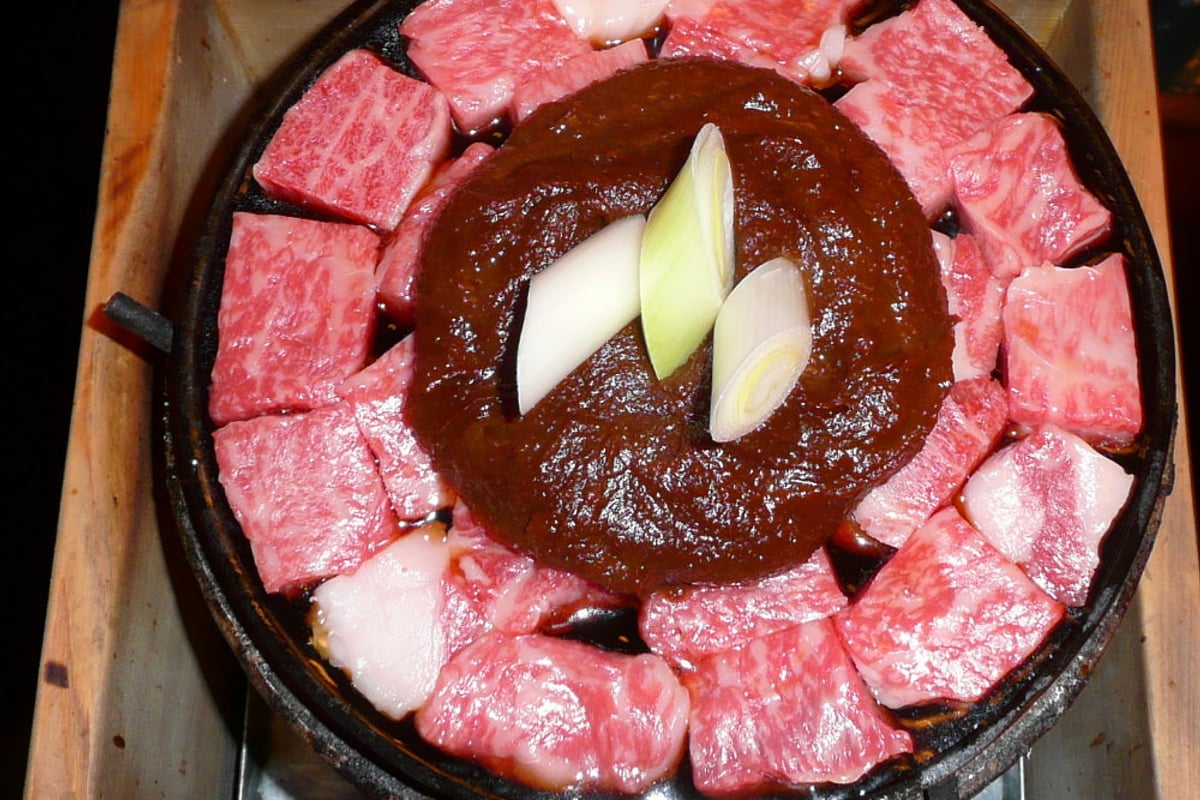
Gyu-nabe is a hot pot dish that originated in the treaty port city of Yokohama between the late Edo and Meiji eras, in which beef is simmered in a miso- or soy sauce-based broth. In Japan up through the Edo period, eating meat was generally avoided; it is said that beef eating spread after people in Yokohama, home to the foreign settlement, came into contact with the meat-eating food culture of Westerners living there, and the dish became known nationwide as a symbol of 'bunmei-kaika' (civilization and enlightenment). It is characterized by chunks of beef, green onion, and tofu simmered in a shallow iron pot with a miso- or soy sauce-based broth, and it is regarded as the prototype from which sukiyaki later developed. Long-established Gyu-nabe restaurants that have operated in Yokohama for over a century still serve Gyu-nabe made according to the methods and flavors handed down from that era.
Origin
In Japan up through the Edo period, the custom of eating beef had scarcely existed, largely due to Buddhist influence discouraging meat eating. When a foreign settlement was established in Yokohama following the opening of the port at the end of the Edo period, the beef-eating food culture of Westerners was introduced there, and interest in beef dishes grew among the Japanese people who came into contact with it. In 1868 (the first year of Meiji), a Gyu-nabe restaurant opened in Yokohama, regarded as one of the origins of Gyu-nabe — a dish born from simmering chunks of beef in a miso-based broth in a shallow iron pot.
History
Amid the mood of bunmei-kaika (civilization and enlightenment), Gyu-nabe spread to Tokyo as a dish symbolizing the spirit of the age, in which eating beef made one a civilized person, and during the Meiji era numerous Gyu-nabe restaurants opened across the country. In Yokohama, long-established restaurants that trace their roots to that era continue to operate today, carrying on the original miso-based method. Gyu-nabe is said to have gradually taken the form of sukiyaki, in which meat is simmered in seasoned broth, as it spread and settled nationwide, and it is regarded as a pioneer of Japan's beef-eating food culture.
Features
The dish is characterized by chunks of beef, green onion, tofu, and shirataki noodles simmered together in a shallow iron pot with a miso- or soy sauce-based broth. Unlike sukiyaki, in which thin slices of meat are quickly simmered in seasoned broth, Gyu-nabe is distinguished by slowly simmering chunks of beef, offering a hearty texture and a simple flavor that makes the most of the beef and the miso.
Main Ingredients
Food Culture
Born in the treaty port city of Yokohama, Gyu-nabe gained popularity among ordinary people as a dish symbolizing bunmei-kaika (civilization and enlightenment), becoming a catalyst that greatly changed the diet of Japanese people, who had previously avoided eating meat. Some restaurants, such as Araiya, made it their mission to offer beef rice and beef soba noodles at the same low price as a streetcar fare, helping to spread beef eating among ordinary people.
How It Differs from Home Cooking
Most beef hot pot dishes made at home today are closer in style to sukiyaki, finished with thinly sliced beef and a seasoned broth, but long-established Gyu-nabe restaurants in Yokohama continue to follow the method used since their founding, simmering chunks of beef in a miso-based broth.
Famous Shops
太田なわのれん
神奈川県横浜市中区末吉町1-15
A long-established Gyu-nabe restaurant said to have been founded in 1868 (the first year of Meiji). Its Gyu-nabe course with chunks of beef starts at around 11,000 yen per person.
荒井屋 本店
神奈川県横浜市中区曙町2-17
Founded in 1895 (Meiji 28). Offers a Gyu-nabe set meal from around 4,950 yen, as well as a more casual Gyu-nabe menu item for around 2,750 yen.
FAQ
Q. How is Gyu-nabe different from sukiyaki?
A. Gyu-nabe is a Yokohama-born dish in which chunks of beef are slowly simmered in a miso- or soy sauce-based broth, differing from sukiyaki, in which thin slices of meat are quickly simmered in seasoned broth — the two differ in how the meat is cut and cooked. Some accounts hold that Gyu-nabe was the prototype for sukiyaki.