Image: Wikimedia Commons
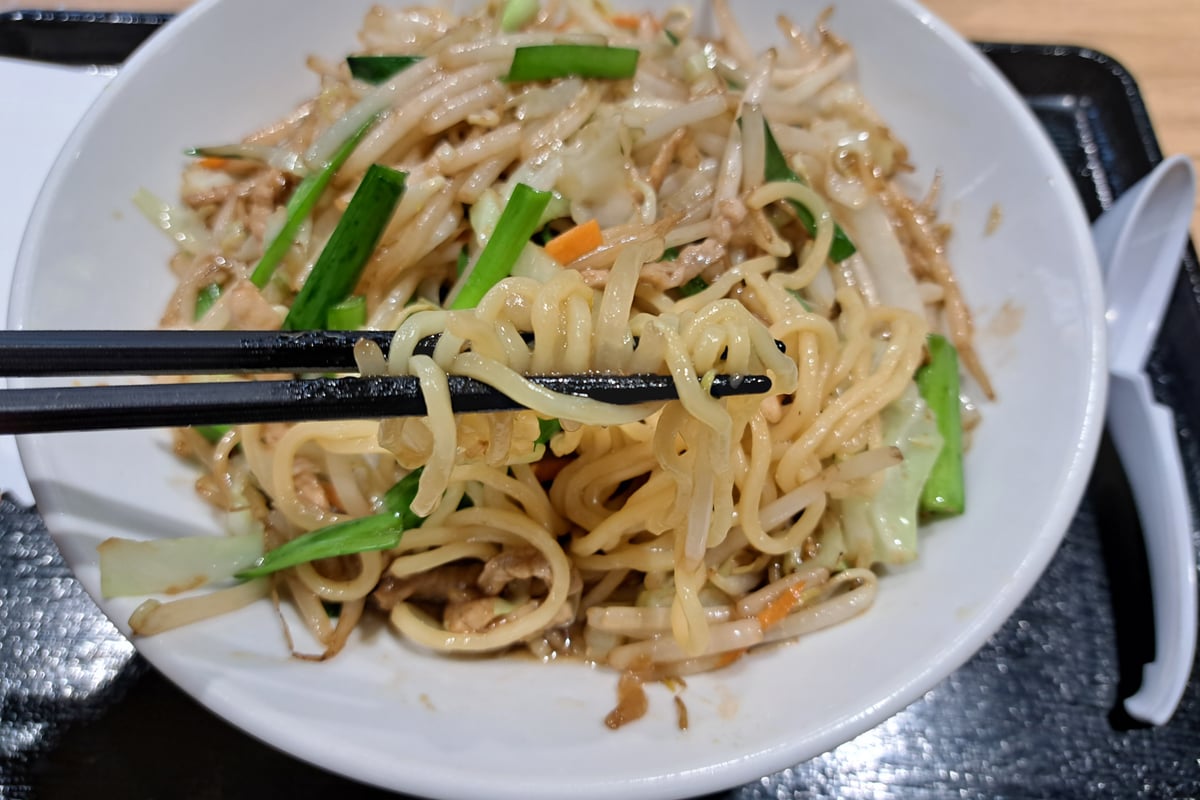
Sanma-men is a Yokohama-born local noodle dish topped with a thick, glossy sauce made of stir-fried pork and vegetables such as bean sprouts. Despite its name, it has no direct connection to the fish sanma (Pacific saury); the name is said to derive from the Chinese terms 'shengma-mian' or 'shengmian,' meaning roughly 'noodles topped with fresh ingredients.' It is said to have spread shortly after World War II, when it was served to laborers at the Port of Yokohama as an inexpensive, filling noodle dish that stayed warm even in winter, with theories pointing to Chinese restaurants in Yokohama Chinatown and Isezaki-cho as being involved in its origin. Colorful vegetables such as bean sprouts, chives, napa cabbage, and wood ear mushrooms are used generously, and the soy-sauce-based thickened sauce clings well to the noodles, giving the dish its homey, approachable appeal.
Origin
There are several theories about the origin of Sanma-men, including one that a head chef at a long-established Chinese restaurant in Yokohama Chinatown created it, and another pointing to 'Gyokusentei,' a Chinese restaurant in Isezaki-cho, as one of its birthplaces. It is said to have been served shortly after the war, around 1947-1948, to laborers working at the Port of Yokohama as a noodle dish packed with more vegetables and more filling than ordinary ramen.
History
There are also several theories about the origin of the name: in Chinese, 'sheng' is said to mean fresh, crisp texture, while 'ma' refers to topping noodles with ingredients, and 'shengma-mian' is said to have been corrupted into 'Sanma-men.' It has no direct connection to the fish sanma (Pacific saury). Having spread as an everyday dish among ordinary people in postwar Yokohama, Sanma-men is now a staple menu item not only in Yokohama Chinatown but at Chinese restaurants and casual neighborhood Chinese eateries throughout the city.
Features
The basic preparation involves stir-frying ingredients such as bean sprouts, chives, napa cabbage, carrots, wood ear mushrooms, and pork, then thickening a soy-sauce-based broth into a glossy sauce that is poured over soy-sauce ramen. The thickened sauce clings well to the noodles, and the combination of crisp vegetables with the piping-hot sauce is the dish's signature appeal. The types of vegetables used and the seasoning of the sauce vary from shop to shop, and many fans enjoy comparing different versions.
Main Ingredients
Food Culture
Loved as an everyday noodle dish that filled the stomachs of laborers working at the Port of Yokohama after the war, it remains a dish symbolic of Yokohama's food culture, still served today at a wide range of establishments from long-established Chinatown restaurants to casual neighborhood Chinese eateries.
How It Differs from Home Cooking
Unlike home-style stir-fried vegetable ramen, specialty shops' Sanma-men is distinguished by quickly stir-frying the vegetables over high heat to preserve their crisp texture, with careful attention paid to the balance of the soy-sauce-based sauce. The combination of vegetables used and the thickness of the sauce vary by shop, each with its own approach.
Famous Shops
玉泉亭 本店
神奈川県横浜市中区伊勢佐木町5-127
Founded in 1918. A long-established shop said to be one of the birthplaces of Sanma-men. Sanma-men costs around 800 yen.
萬珍樓本店
神奈川県横浜市中区山下町153
A long-established Cantonese restaurant founded in 1892, representative of Yokohama Chinatown. Sanma-men (shengma-mian) costs around 1,500 yen.
FAQ
Q. Does Sanma-men contain sanma (Pacific saury)?
A. No, the name has nothing to do with the fish sanma. It is said to derive from the Chinese term 'shengma-mian' (or 'shengmian'), which was corrupted into 'Sanma-men,' and is said to mean roughly 'noodles topped with fresh ingredients.'