Image: Wikimedia Commons
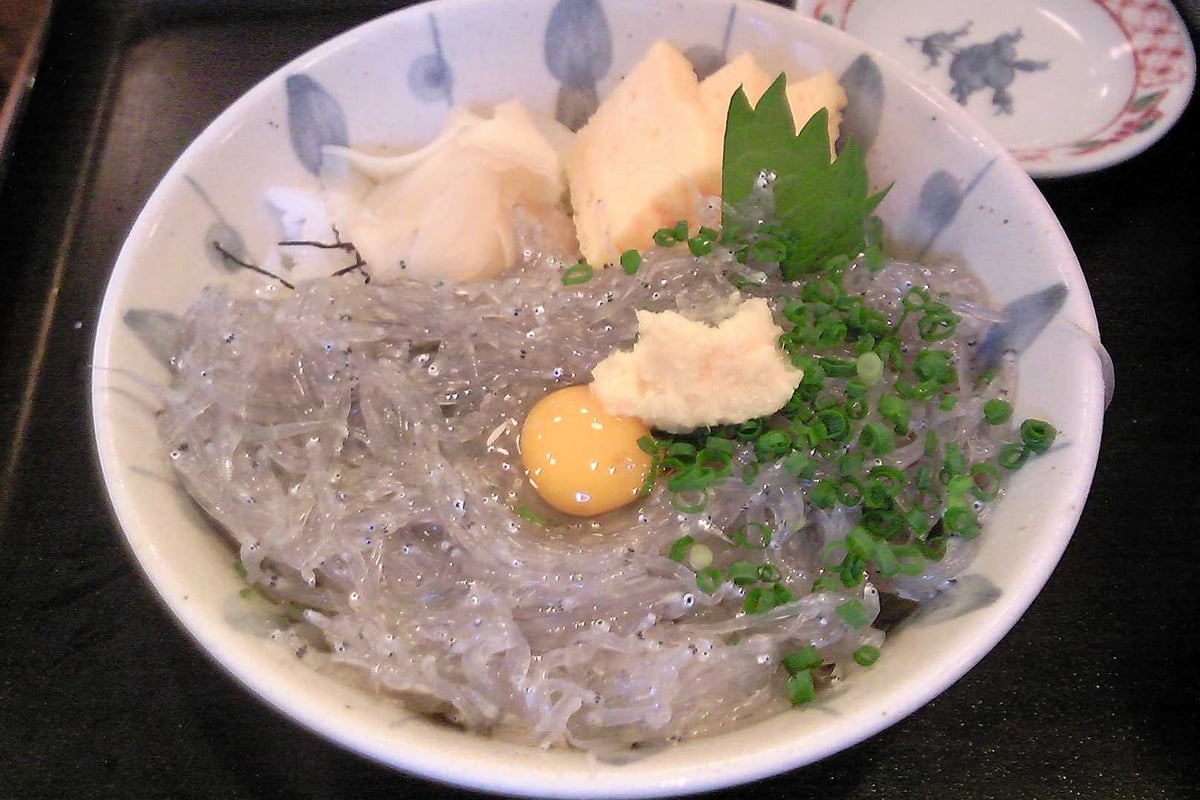
Nama-shirasu-don is a seafood rice bowl representative of the Shonan area, piled high with freshly caught raw shirasu (young sardines) from Sagami Bay. Shirasu caught near the fishing ports around Enoshima, Koshigoe, and Kamakura spoil very quickly, so it can only be enjoyed raw on the day it is landed and near where it was caught—a rarity that is part of its appeal. It is known for its plump texture and a melt-in-the-mouth quality, typically eaten with soy sauce or ponzu and condiments such as ginger and chopped scallion. Shirasu fishing is closed from January through mid-March each year, so raw shirasu can only be enjoyed during the limited season after the ban is lifted. At eateries in Enoshima and Koshigoe, many restaurants offer their own take on the dish, such as bowls combining boiled (kama-age) and raw shirasu.
Origin
Shirasu fishing has been practiced in the fishing villages along Sagami Bay since the Edo period, but eating it raw only became widespread relatively recently, once conditions for preserving freshness and distribution improved. Because shirasu deteriorates very quickly after being landed, it was traditionally sold in processed forms such as kama-age shirasu (boiled) or chirimen-jako (dried). Local eateries near the landing ports in Enoshima and Koshigoe began serving it raw, taking advantage of its just-caught freshness, and this style became established as a regional specialty.
History
The areas around Enoshima, Koshigoe, and Yuigahama in Kamakura have long been centers of shirasu fishing, and local fishery cooperatives and eateries led the growth of restaurants serving raw shirasu. As Enoshima's popularity as a tourist destination rose, nama-shirasu-don gained recognition as a local specialty aimed at visitors to Shonan, and today it is a signature menu item at many restaurants in the area.
Features
Because raw shirasu has a high water content and spoils quickly, it can only be served raw near the port where it was landed—its defining characteristic. It has a plump texture and a gentle sweetness, typically eaten with condiments such as soy sauce, ponzu, ginger, scallion, and shiso leaf. Bowls combining kama-age and raw shirasu, known as 'nishoku-don' (two-color bowl) or 'sanshoku-don' (three-color bowl), are also popular for their contrasting textures.
Main Ingredients
Food Culture
Shirasu fishing along Sagami Bay is a vital local industry for Enoshima, Koshigoe, and Kamakura, and a locavore food culture of serving the catch on the very day it is landed has taken root there. That availability can shift with the fishing ban or weather conditions is itself characteristic of a fishing town culture that values the season's catch.
How It Differs from Home Cooking
Because raw shirasu spoils quickly and isn't suited to distribution to ordinary households or distant areas, home cooking typically uses kama-age (boiled) or dried shirasu instead. Nama-shirasu-don, served raw, is a dish that can only be enjoyed at eateries near the landing port—a true local specialty.
Famous Shops
しらす問屋 とびっちょ 江の島本店
神奈川県藤沢市江の島1-6-7
Offers a wide range of shirasu dishes, from raw to kama-age. Nama-shirasu-don starts at around 1,280 yen.
江の島ハルミ
神奈川県藤沢市江の島2-1-12
A long-established eatery run by three generations of the same family. The signature 'Enoshima-don' costs around 1,400 yen.
しらすや 腰越漁港前店
神奈川県鎌倉市腰越2-10-13
A shirasu specialty restaurant directly across from Koshigoe fishing port, run by the fishing outfit Kanhama Suisan.
FAQ
Q. Why is raw shirasu rarely eaten in other parts of Japan?
A. Raw shirasu spoils very quickly after being landed, so it can only be distributed unprocessed very close to the port where it was caught. It is considered a rare treat that can only be enjoyed at local eateries in places like Enoshima and Koshigoe.
Q. Can nama-shirasu-don be eaten year-round?
A. Shirasu fishing is closed from January 1 through mid-March each year, so raw shirasu cannot be eaten during that time. The season generally runs from spring through winter after the ban lifts, but depending on the day's catch and weather, raw shirasu may not be available and only kama-age shirasu may be served.