Image: Wikimedia Commons
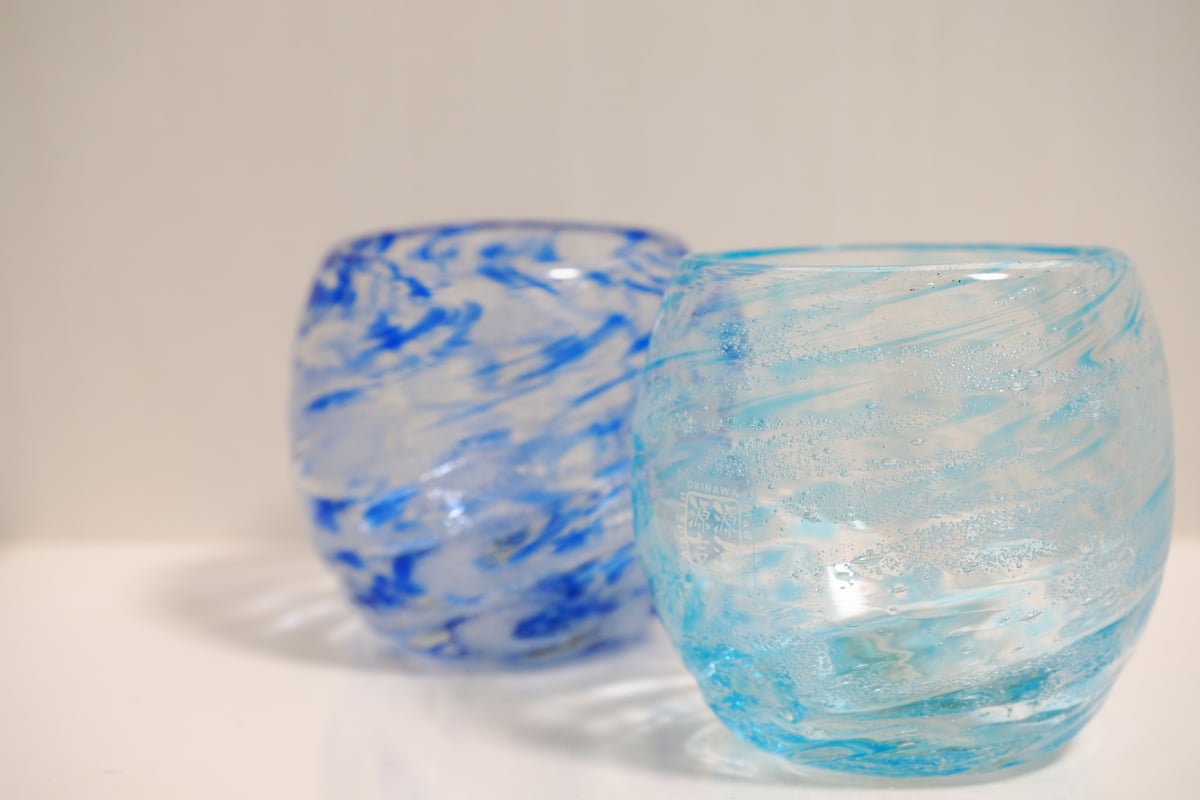
Ryukyu Glass is blown-glass craftware made in Okinawa Prefecture. Glassmaking in Okinawa is said to have begun around 1900, when glassblowers who had come from Kagoshima, Nagasaki, and Osaka set up workshops in Nishimachi, Naha City, producing everyday items such as medicine bottles and lamp chimneys. Much of the industry and its raw materials were lost during World War II, but after the war, artisans turned to empty beer and cola bottles discarded by the occupying US military bases, melting them down to bring glassmaking back to life. Because these discarded bottles contained impurities such as label residue, the finished pieces often contained countless tiny bubbles - a trait that came to be prized as the distinctive texture known as 'awa-garasu' (bubble glass), and together with the soft, muted colors derived from recycled bottles, became one of the defining charms of Ryukyu Glass. In the 1950s, orders from US military personnel increased, and colorful Western-style glass tableware spread as the industry's mainstay product. Today, workshops are scattered around Itoman City, Tomigusuku City, and Nago City, and in 1998 Ryukyu Glass was designated a Traditional Craft of Okinawa Prefecture.
Origin
Glassmaking in Okinawa is said to have begun around 1900, when glassblowers who had come from Kagoshima, Nagasaki, and Osaka set up workshops around Nishimachi, Naha City, and made glass items needed for daily life, such as medicine bottles and lamp chimneys. At the time, production centered on practical, everyday goods rather than the crafted pieces seen today.
History
Japan's defeat in World War II destroyed much of Okinawa's glassmaking industry and its raw materials. After the war, artisans turned their attention to the large volumes of discarded beer and cola bottles coming out of the US military bases stationed in Okinawa, melting them down in furnaces and remaking them into glass products, which brought the industry back to life. From the mid-1950s, US military personnel began ordering custom-made tableware to take home as souvenirs, and colorful Western-style glass tableware that made use of the hues derived from recycled bottles spread as the industry's mainstay product. In 1998, Ryukyu Glass was designated a Traditional Craft of Okinawa Prefecture.
Features
Its most distinctive feature is 'awa-garasu' (bubble glass), glass containing countless fine bubbles. In the era when discarded bottles were reused, impurities such as label residue would sometimes cause bubbles to form, and this came to be embraced as a distinctive texture that scatters light in unique ways; today, baking soda and similar substances are also added deliberately to create this bubbled effect. The soft greens, browns, and blues derived from recycled bottles, along with the thick, warm feel of hand-blown glass, are also hallmarks of Ryukyu Glass.
Techniques
Awa-garasu (Bubble Glass)
A technique in which sodium bicarbonate (baking soda) is added to and stirred into glass that has been melted to a syrup-like consistency in the furnace, generating countless fine bubbles. This scatters light in many directions, giving the glass a soft, white appearance.
Materials Used
Production Process
- 1
Batching and melting
Raw materials such as silica sand are heated to high temperatures in the furnace until they melt into a syrup-like consistency.
- 2
Gathering
Molten glass is gathered onto the tip of the blowpipe.
- 3
Shaping
The glassblower shapes the vessel using molds and tools while blowing air through the pipe.
- 4
Annealing
The piece is slowly cooled in an annealing furnace to prevent cracking and complete the finishing process.
| Main Production Areas |
|
|---|
How to Buy
- 琉球ガラス村
- Located in Itoman City, this is one of Okinawa's largest Ryukyu Glass workshops and theme parks. Admission is free, and it includes a workshop tour along with a shop carrying more than 2,000 kinds of glass products.Where to buy →PR
Hands-on Experiences
琉球ガラス村
沖縄県糸満市字福地169番地
In addition to glassblowing, there is a wide range of experience programs including painting and glass engraving, many of which do not require same-day reservations.
View details →てぃだ工房
沖縄県国頭郡恩納村
Glassblowing experiences start at around 3,300 yen for the basic course and around 4,400 yen for the extended course. The workshop is located near a beach in Onna Village.
View details →