Image: Wikimedia Commons
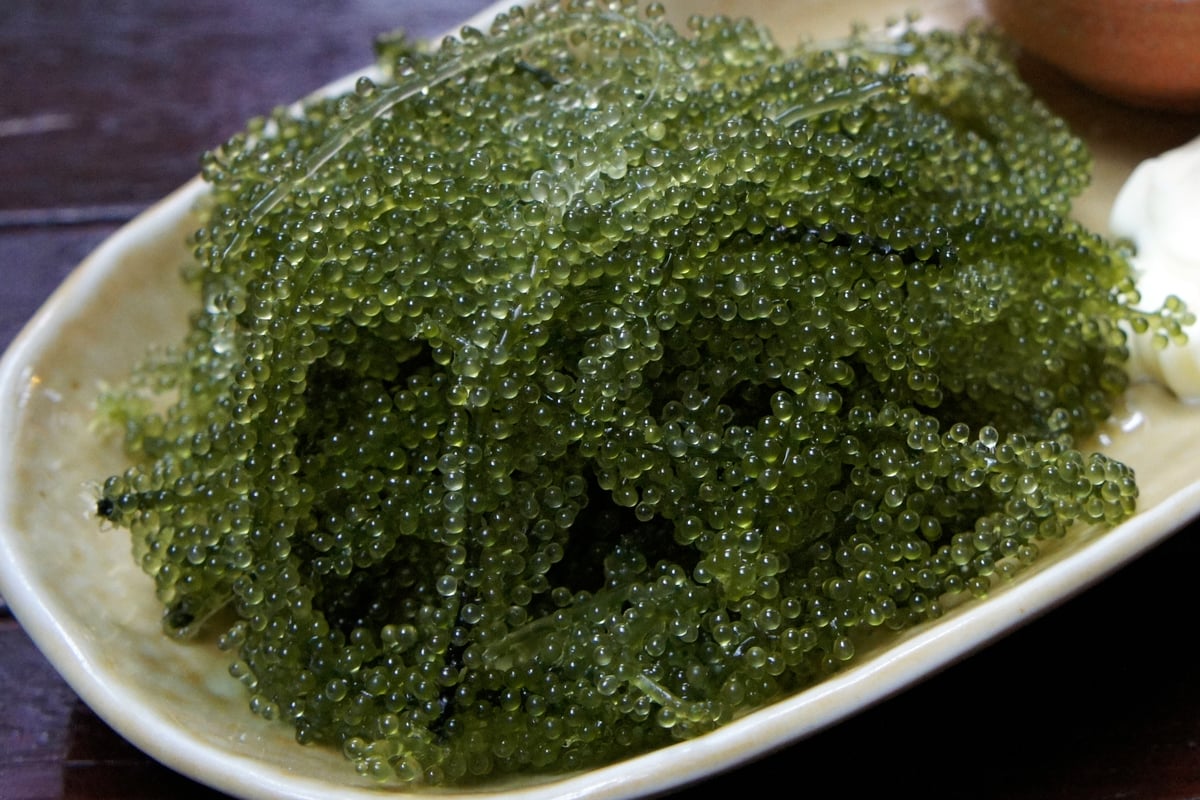
Umibudo (scientific name Caulerpa lentillifera) is a seaweed in which tiny green beads, about 1 to 2 millimeters across, cluster along a stem like a bunch of grapes — a signature Okinawan seafood prized for its popping texture and briny, ocean flavor. Around 1994, the Onna Village Fisheries Cooperative introduced land-based aquaculture techniques that had been under research at the Okinawa Prefectural Fisheries Experiment Station, achieving the prefecture's first full-scale success in farming umibudo. This breakthrough spurred the spread of farming across Okinawa's main island, and umibudo has since grown into one of Okinawa's leading farmed marine products, ranking after mozuku and kuruma prawns. It is enjoyed on its own with sanbaizu (a mixed vinegar sauce) or soy sauce, and also served over rice bowls or alongside sashimi, and it has won popularity among tourists under the nickname 'green caviar.' Because the beads shrivel once freshness is lost, careful temperature control after harvest is essential to preserving its quality and flavor.
Origin
Umibudo is a seaweed that grew naturally in the shallow waters off Okinawa and had long been eaten locally, but the amount that could be gathered in the wild was limited. Around 1994, when the Onna Village Fisheries Cooperative introduced the land-based aquaculture methods that the Okinawa Prefectural Fisheries Experiment Station had been researching, full-scale farming technology for umibudo was established in Okinawa Prefecture for the first time.
History
The Onna Village Fisheries Cooperative has a track record of leading the prefecture in seaweed farming, including mozuku and asa (sea lettuce), and is also known as the area that pioneered successful umibudo farming in Japan. Since that technology was established, farming spread across Okinawa's main island, and today umibudo has grown to become one of Okinawa Prefecture's leading farmed marine products, ranking after mozuku and kuruma prawns.
Features
Its defining feature is its appearance — tiny green beads about 1 to 2 millimeters across strung along stems like bunches of grapes — along with the distinctive popping texture and briny aroma it releases when chewed. It is typically eaten on its own with sanbaizu, but because it suffers cold-temperature damage and its beads shrivel when stored at 10℃ or below, keeping it at room temperature is important for preserving its quality.
Main Ingredients
Food Culture
Umibudo has long been eaten in Okinawa, but the establishment of farming technology enabled it to be distributed stably, and it has since gained nationwide recognition as a staple izakaya menu item and tourist souvenir. It is also affectionately known as 'green caviar.'
Famous Shops
元祖 海ぶどう 万座毛店
沖縄県国頭郡恩納村恩納2767 万座毛周辺活性化施設2F
The shop said to be the birthplace of the umibudo rice bowl. Its signature dish, the original umibudo don, costs around 1,700 yen (tax included) and lets diners enjoy a generous helping of umibudo grown in Onna Village.
FAQ
Q. Should umibudo not be stored in the refrigerator?
A. Umibudo grows in warm seas and is sensitive to cold — storing it at 10℃ or below causes cold-temperature damage that makes the beads shrivel. It should generally be kept at room temperature.