Image: Wikimedia Commons
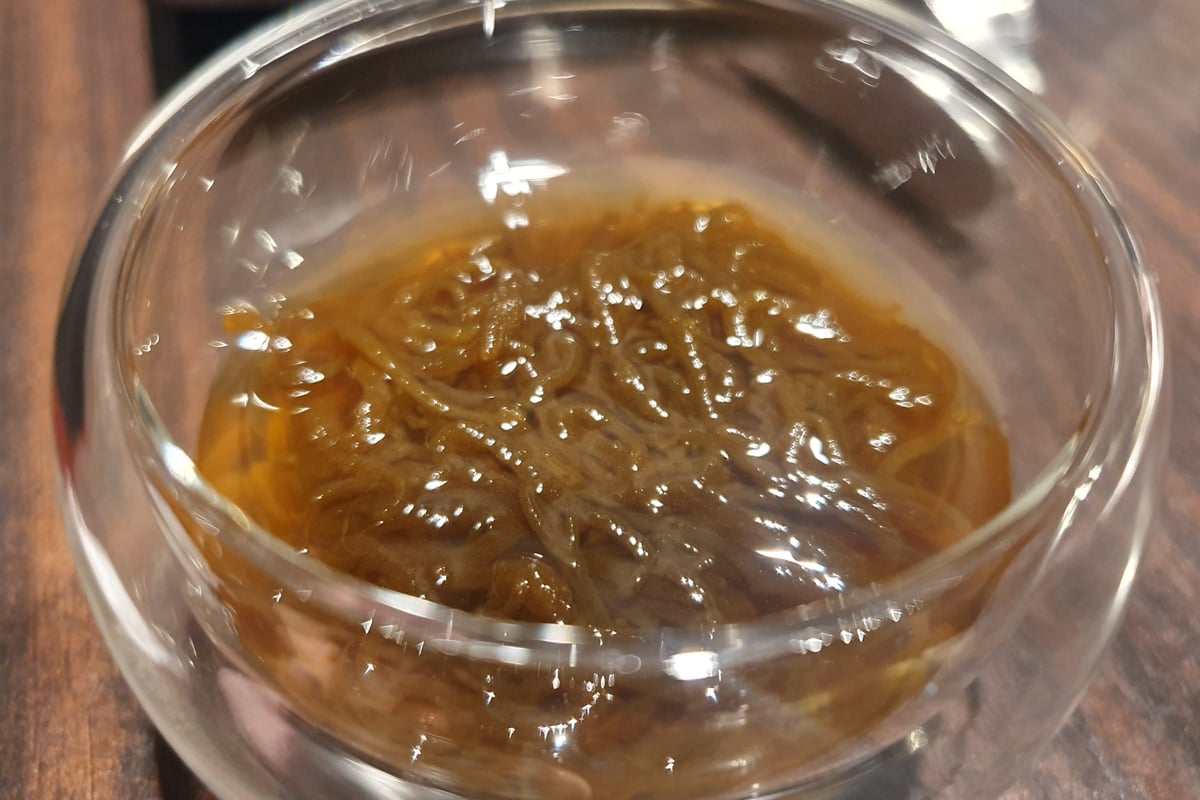
Mozuku is a thin, thread-like brown seaweed that grows in the waters around Okinawa, used in a wide range of dishes such as vinegared salads, tempura, and soups — one of Okinawa's signature seaweed ingredients. In particular, 'Okinawa mozuku,' the variety cultivated in Okinawa, is said to take its name from its habit of growing attached to other seaweed (the Japanese word mozuku literally meaning 'to attach to seaweed'), and it is known for its firm, springy bite and smooth texture. Full-scale technology for farming mozuku in Okinawa Prefecture began development in the 1970s, and after the first successful harvest of farmed mozuku in 1977, production spread to fishing cooperatives across the prefecture. Today, Okinawa Prefecture accounts for more than 99% of Japan's total mozuku production, making it the country's leading production area by far. Beyond vinegared salads, dishes such as mozuku don (mozuku simmered with egg or stir-fried and served over rice) have been served in school lunches and are cherished by locals, and it is now firmly established as a household dish as well.
Origin
The name mozuku is said to come from the way it grows attached to rocks and other seaweed — literally, 'attaches to seaweed.' Wild mozuku grew naturally in the waters around Okinawa, but the harvest was limited. Okinawa Prefecture advanced research into artificial farming techniques for Okinawa mozuku, and after field trials that began around 1975, the first successful harvest of farmed mozuku was achieved in 1977.
History
Since the farming technology was established, production expanded among fishing cooperatives across Okinawa Prefecture, and Okinawa mozuku — prized for its firm, springy texture — became established as the leading variety. Today, Okinawa Prefecture's mozuku harvest exceeds 15,000 tons, accounting for more than 99% of Japan's total production and making it the country's top production area. Mozuku don, made by stir-frying mozuku and serving it over rice, spread throughout the prefecture after being introduced in school lunches and has since become established as a household dish.
Features
Okinawa mozuku, the variety cultivated in Okinawa, is thicker than ordinary mozuku and is known for its firm, springy bite and crisp texture. Besides being served in vinegared salads, it is also enjoyed as a snack or with drinks when deep-fried as tempura — a distinctly Okinawan way of eating it. Mozuku don, in which ginger juice is added to soften the seaweed's distinctive aroma, is also cherished as a local dish.
Main Ingredients
Food Culture
Mozuku became widely popular among Okinawans after being served in school lunches and is now established as an ingredient eaten routinely at home. It is a mainstay of Okinawa's seaweed farming industry and is used in a wide range of ways, from everyday side dishes such as tempura and egg-simmered mozuku to snacks served with drinks.
Famous Shops
中本鮮魚てんぷら店
沖縄県南城市玉城字奥武9
A famous tempura shop on Ou Island. Mozuku tempura is sold at an affordable price of around 100 yen per piece, and the shop is popular enough to draw lines of customers seeking it freshly fried.
FAQ
Q. Is Okinawan mozuku different from ordinary mozuku?
A. The main variety farmed in Okinawa is Okinawa mozuku, which has thicker strands than ito-mozuku harvested on the Japanese mainland, and is known for its firm, springy bite and crisp texture.