Image: Wikimedia Commons
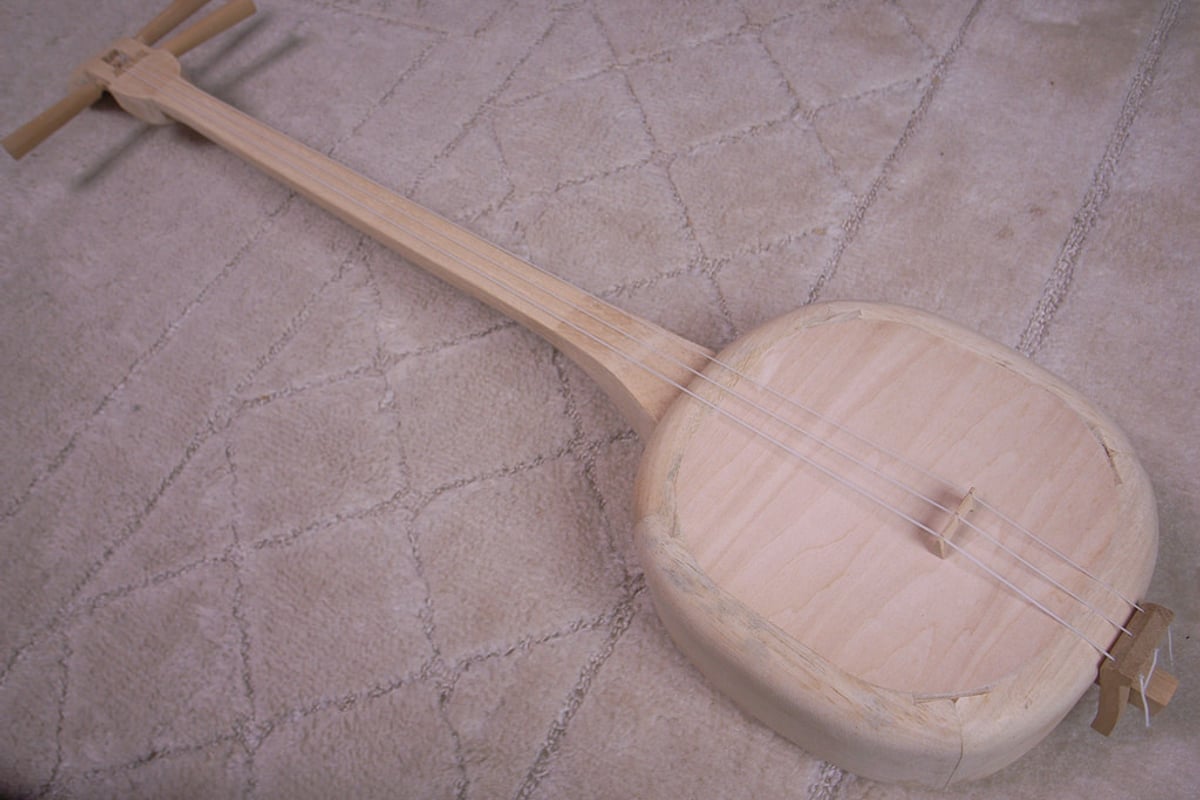
The sanshin is a three-stringed instrument with a body covered in snakeskin and a wooden neck, and it is indispensable to Okinawan music and performing arts. It is said to have originated around the end of the 14th century, when the Chinese sanxian, a stringed instrument from Fujian Province, was brought to the Ryukyu Kingdom through trade and developed into a distinctly Ryukyuan instrument centered on Kume Village (present-day Kume, Naha City). From the 15th century onward it spread among the Ryukyuan shizoku (gentry) class and developed as an accompaniment instrument for court banquet music and performing arts. The neck comes in seven traditional shapes named after master craftsmen of the Ryukyu Kingdom era, such as the Makabi, Haebaru, and Yunaa types, and instruments are made by combining a neck of wood such as kuruchi (Okinawan blackwood) with a body covered in python skin. Sanshin workshops and cooperatives carry on the craft techniques today; the sanshin was designated a national Traditional Craft in 2018, having already been designated an Okinawa Prefecture traditional craft product in 2012. Prices range from a few tens of thousands of yen for beginner instruments to several hundred thousand yen or more for high-end models with genuine python skin and prized woods, and the tone and appearance vary greatly depending on the type and materials chosen, which is part of its appeal.
Origin
The sanshin is said to have originated around the end of the 14th century, when the sanxian, a stringed instrument from Fujian Province in China, was brought to the Ryukyu Kingdom through trade. It is thought that sanxian music, brought by people who came from Fujian and settled in Kume Village (present-day Kume, Naha City) - the so-called Kume Sanjuroku-sei ('Thirty-Six Families of Kume') - combined with Ryukyu's existing musical culture and gradually developed into a distinct instrument.
History
In the 15th century, as the Ryukyu Kingdom was unified and trade with mainland China and Southeast Asia flourished, the sanxian became Ryukyuanized into what came to be called the 'sanshin' and spread among the shizoku class. It developed as an accompaniment instrument for court banquet music and Ryukyuan performing arts, and neck shapes came to be named after generations of master craftsmen. The sanshin was designated an Okinawa Prefecture traditional craft product in 2012, and a national Traditional Craft in 2018.
Features
The instrument consists of a neck carefully shaped from wood such as kuruchi (Okinawan blackwood), a body covered in python skin, and karakui (tuning pegs), with three strings of differing thickness. The neck shape falls into seven traditional types, including Makabi, Haebaru, and Yunaa, and each type gives a different impression in tone and appearance.
Materials Used
| Main Production Areas |
|
|---|
Artisans & Workshops
沖縄県三線製作事業協同組合
A cooperative of sanshin artisans from across the prefecture. It displays and sells everything from sanshin bearing the Traditional Craft trademark to artist models and beginner instruments, and visitors can try playing before buying.
Official site →How to Buy
- 三線組合 直営店(三線組合onlineSHOP)
- Carries a wide range, from entry-level yushigi-wood models starting around 70,000 yen to high-end instruments with kuruchi wood and genuine python skin exceeding 500,000 yen. The cooperative's original model is priced at 88,800 yen.Where to buy →PR
Hands-on Experiences
沖縄県三線製作事業協同組合(三線組合)
沖縄県那覇市安里360-7 和光マンション1階
About a 5-minute walk from Asato Station on the Yui Rail monorail. Open year-round, 10:00 a.m.-6:00 p.m., with many sanshin available to try before choosing.
View details →FAQ
Q. What types of sanshin neck shapes are there?
A. There are seven traditional neck shapes named after master craftsmen of the Ryukyu Kingdom era, such as the Makabi, Haebaru, and Yunaa types, and the curve and thickness of the neck give each type a different tone and appearance.