Image: Wikimedia Commons
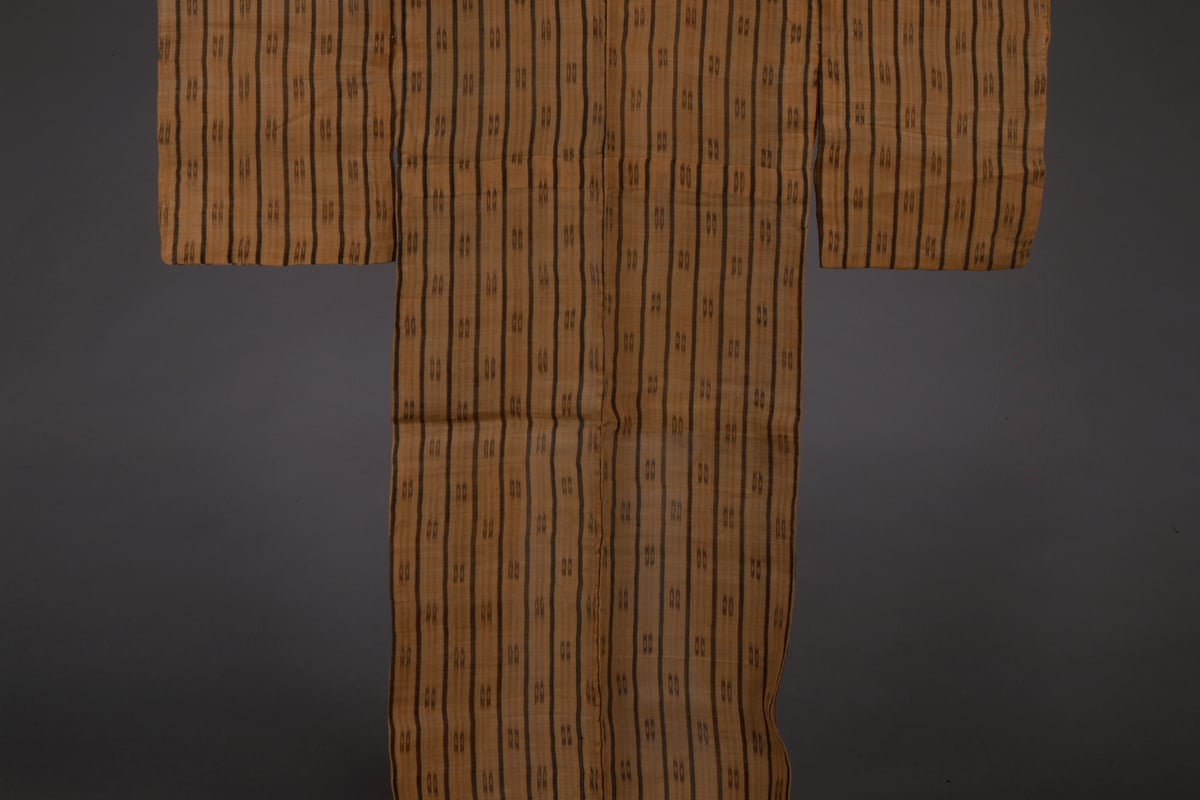
Bashofu is a representative summer textile of Okinawa, woven from thread made of fiber taken from the stalk of the ito basho (Japanese fiber banana) plant. Old records suggest it was already being woven by around the 13th century, and it is said that by around the 15th century a production method almost identical to today's had been established. During the Ryukyu Kingdom era, it was grown in banana gardens directly managed by the royal government, and as a cloth used everywhere from royal garments to the everyday clothing of commoners, it was the fabric most familiar to the people of Okinawa. Kijoka, in Ogimi Village, Kunigami District, has long been known as a leading production area for bashofu. Production suffered devastating damage in the Battle of Okinawa during World War II, but soon after the war, Taira Toshiko began working to revive the craft, reestablishing the technique in Kijoka. In 1974, it was designated a national Important Intangible Cultural Property as "Kijoka no Bashofu," and the Kijoka Bashofu Preservation Society, centered on Taira Toshiko, was certified as the holding organization. Its defining feature is a taut, cool texture achieved through a process spanning about three years, from growing the ito basho plant to spinning the thread, kasuri binding, dyeing, and weaving; Taira Toshiko herself was certified as a Living National Treasure (holder of an Important Intangible Cultural Property) in 2000.
Origin
Old records suggest bashofu was already being woven by around the 13th century, and it is said that by the 15th century a production method almost identical to today's had been established. In the Ryukyu Kingdom, it was grown in banana gardens directly managed by the royal government, used both as a trade good with China and as tribute to the Satsuma domain, and worn by people of every class, from royal garments to the everyday clothing of commoners, becoming a cloth deeply rooted in daily life.
History
Production suffered devastating damage in the Battle of Okinawa during World War II, but after the war, Taira Toshiko, a native of Kijoka in Ogimi Village, returned home from Kurashiki and immediately set to work reviving the production technique. In 1974, it was designated a national Important Intangible Cultural Property as "Kijoka no Bashofu," and the Kijoka Bashofu Preservation Society, led by Taira, was certified as the holding organization. Taira herself was individually certified as a holder of an Important Intangible Cultural Property (Living National Treasure) in 2000.
Features
Its defining feature is a labor-intensive process taking about three years, from growing and harvesting the ito basho plant, through boiling, thread spinning, hand-binding of kasuri patterns, dyeing, and hand-weaving, to a final washing. Cloth woven from finely spun banana fiber has a taut texture and excellent breathability, giving it a cool, comfortable feel suited to Okinawa's hot, humid climate. The intricate kasuri patterns are also one of the highlights of Kijoka bashofu.
Materials Used
Production Process
- 1
Growing and harvesting the ito basho plant
The ito basho plant is grown for about three years before its stalk is cut.
- 2
Stripping the bark and boiling
The bark of the stalk is stripped and boiled in lye to soften the fiber.
- 3
Thread spinning
The fiber is split into fine strands and joined into thread by hand-twisting.
- 4
Kasuri binding and dyeing
The thread is bound according to the design and dyed with indigo or plant dyes.
- 5
Weaving
The cloth is hand-woven on a takabata loom while aligning the kasuri pattern, then washed to finish.
| Main Production Areas |
|
|---|
Artisans & Workshops
喜如嘉の芭蕉布保存会
The holding organization for the national Important Intangible Cultural Property "Kijoka no Bashofu," formed around Living National Treasure Taira Toshiko. It carries on a consistent traditional technique spanning everything from growing the ito basho plant to hand-weaving.
Official site →Hands-on Experiences
大宜味村立芭蕉布会館
沖縄県国頭郡大宜味村喜如嘉454
Visitors can watch a video on the production process and view the workshop. Open 10:00-17:00 (until 17:30 from April to October); closed Sundays, during the traditional Obon period, and at New Year. A bark-stripping experience is also offered.
View details →