Image: Wikimedia Commons
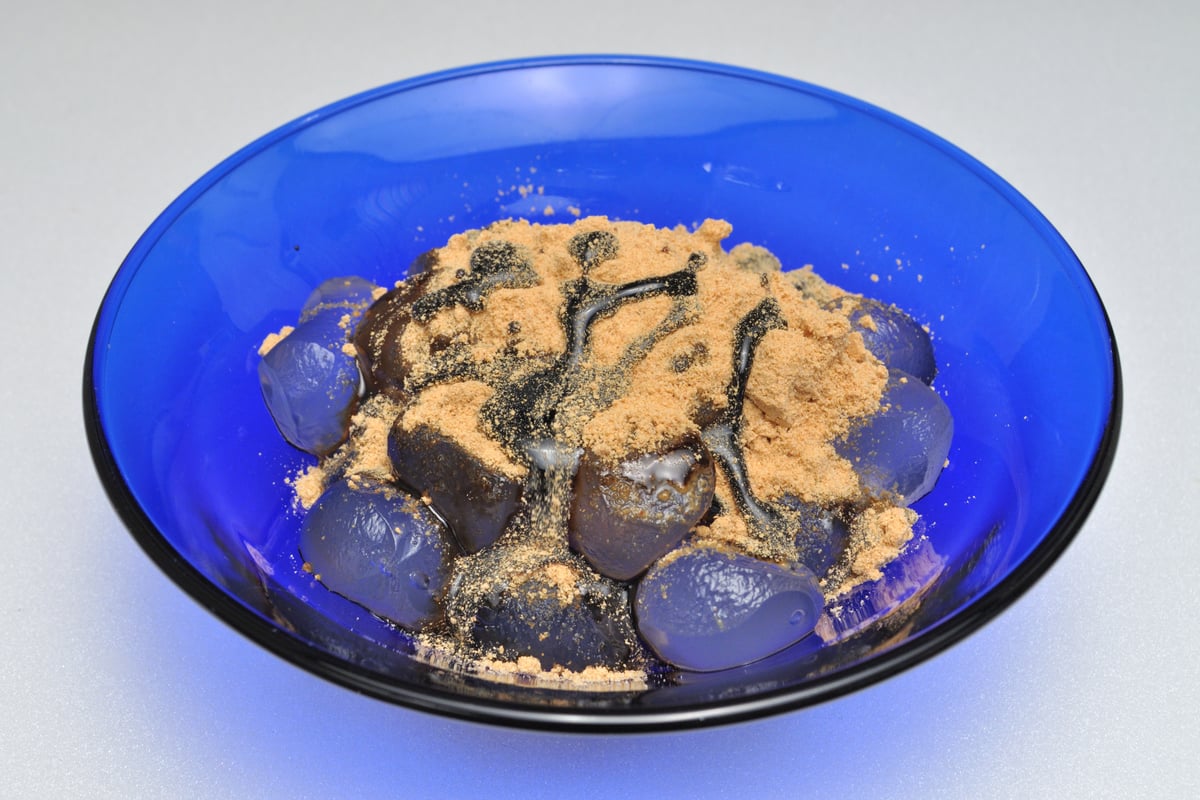
Warabimochi is a cooling sweet made by dissolving "warabiko" (bracken starch), extracted from the root of the bracken fern, in water and kneading it, then eating it topped with kuromitsu (black sugar syrup) and kinako (roasted soybean flour). Its distinctive features are a melt-in-the-mouth soft texture and a faint bitterness, and it is said to have been a luxury confection beloved by aristocrats in the Heian period. "Hon-warabiko," true bracken starch that can only be extracted from bracken roots, is extremely scarce — only a few hundred grams can be extracted from 10 kilograms of root — so inexpensive products using other starches, such as sweet potato starch, are also widely sold. Many sweets shops in Kyoto insist on kneading it fresh to order, and shops centered around Gion and Shimogamo that serve warabimochi made with true hon-warabiko are also popular with tourists.
Origin
The origin of warabimochi is said to trace back to the Heian period, and legend has it that Emperor Daigo was so fond of its taste that he bestowed the rank of "tayu" upon the person who made it. Warabiko at the time was a precious commodity obtainable only in small amounts from bracken roots, and warabimochi is said to have been a luxury confection prized even at the Imperial court. It is thought to have taken on its current mochi-like form around the Kamakura period.
History
In the Edo period, warabimochi also has a history of being used as an emergency food that sustained people's lives during famines, when bracken roots were dug up to extract starch. From the modern era onward, it became a signature confection of sweets shops beloved by ordinary people as well, and in Kyoto, sweets shops in Gion and Shimogamo began serving warabimochi kneaded fresh for each order, establishing it as a Kyoto sweet and souvenir popular with tourists too.
Features
Warabimochi made with 100% hon-warabiko has a tendency to firm up over time, so many specialty shops knead and serve it fresh, one portion at a time, only after an order is placed. A dark, translucent color and a strong stickiness are characteristics unique to hon-warabiko, while many inexpensive commercial warabimochi products are mainly blended with sweet potato starch and similar ingredients. The standard way to enjoy it is topped generously with kinako and kuromitsu.
Main Ingredients
Food Culture
Cherished as a sweet that brings coolness in summer, it is also a popular tourist attraction, with many sweets shops known for kneading it in front of customers as a live demonstration.
How It Differs from Home Cooking
Warabimochi made at home often uses easily obtainable "warabimochi-ko" (a starch-based substitute), whereas specialty shops use the rare hon-warabiko to produce a distinctive stickiness and flavor.
Famous Shops
ぎおん徳屋
京都市東山区祇園町南側570-127
Hon-warabimochi is about 1,250 yen and up. A popular sweets shop on Gion's Hanamikoji street.
View details →茶寮 宝泉
京都市左京区下鴨西高木町25
Warabimochi kneaded to order, about 950 yen and up. Can be enjoyed at a sukiya-style residence near Shimogamo Shrine.
View details →