Image: Wikimedia Commons
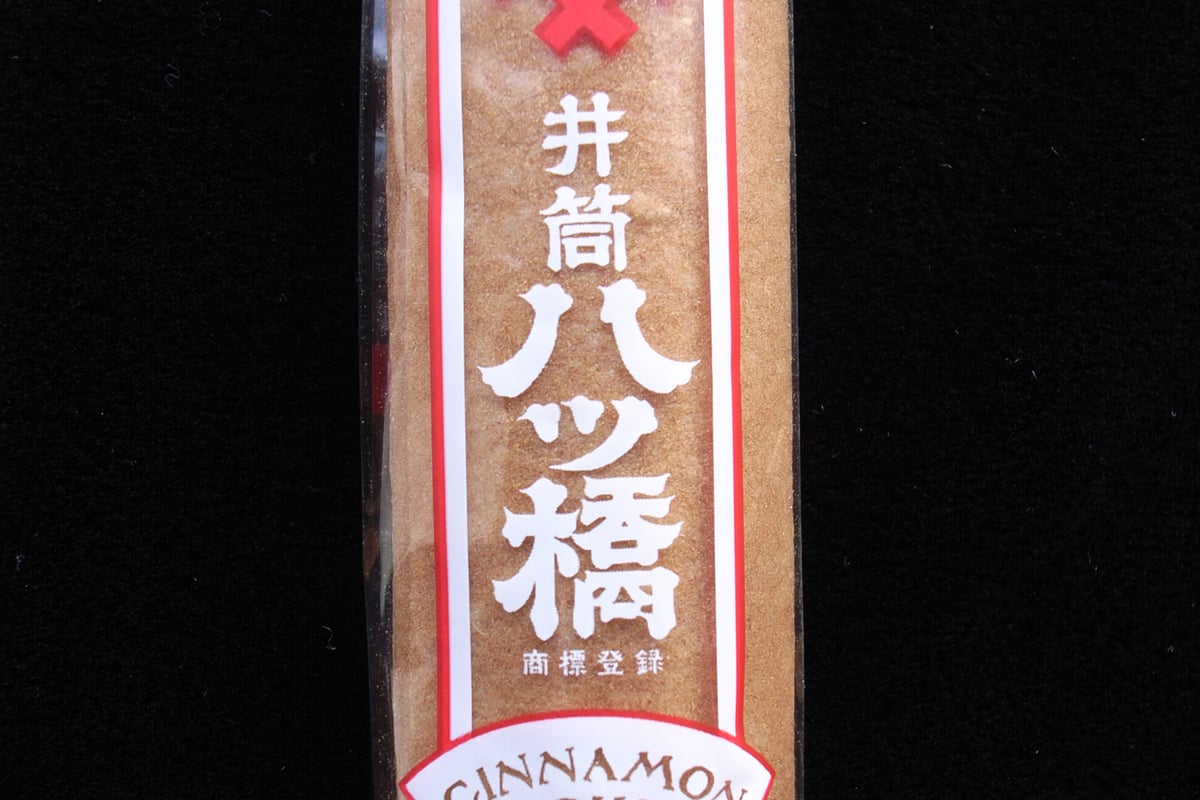
Yatsuhashi is a famous Kyoto confection made by steaming rice flour with sugar and cinnamon (nikki), then rolling it thin and baking it. Its distinctive feature is a shape curved like a crescent moon, said by one theory to be named after the Edo-period koto musician Yatsuhashi Kengyo, and by another to derive from the shape of the wooden bridge at Yatsuhashi in Mikawa Province that appears in The Tales of Ise. It was once only a hard-baked cracker, but from the Showa era onward, an unbaked, soft version called "nama-yatsuhashi" was created, and the triangular nama-yatsuhashi wrapped around bean paste became the mainstream souvenir version. Today there is a wide range of flavors, including matcha, chocolate, and seasonal strawberry, and more than a dozen companies belonging to the Kyoto Yatsuhashi Industry Cooperative Association each manufacture and sell it using their own methods.
Origin
There are several theories about the origin of yatsuhashi. The most widely known holds that in 1689 (Genroku 2), a dry confection shaped like a koto was sold at a teahouse along the approach to Kurodani and Shogo-in temples, named in memory of Yatsuhashi Kengyo, regarded as the founder of early-modern koto music. Another theory holds that the name derives from the shape of the wooden bridge at Yatsuhashi in Mikawa Province that appears in The Tales of Ise, and the true origin of the name remains undetermined to this day.
History
In the Edo period, it became established as a souvenir sold along the approaches to Shogo-in and Kurodani temples, and long-established shops with origins as teahouses in Kyoto grew, including Izutsu Yatsuhashi Honpo, founded in 1805 (Bunka 2) in front of the Minamiza theater in Gion. For a long time it existed only as a hard-baked cracker, but when the unbaked "nama-yatsuhashi" was created in the 1960s, the triangular, bean-paste-filled nama-yatsuhashi gained popularity, and it subsequently achieved nationwide recognition as the leading representative of Kyoto souvenirs.
Features
Its most distinctive features are the aroma of cinnamon (nikki) and its curved shape, reminiscent of a crescent moon or a koto bridge. The hard-baked yatsuhashi has a crisp texture and keeps well, while nama-yatsuhashi has a chewy texture and is typically wrapped around ogura-an (coarse red bean paste) and shaped into a triangle. In recent years, the range of flavors has expanded greatly to include matcha, brown sugar, and seasonal fruit, and comparing multiple flavors has also become a popular way to enjoy it.
Main Ingredients
Food Culture
Having spread as a souvenir sold before the gates of Shogo-in and Kurodani temples, it developed within a gift-giving culture tied to shrine and temple visits, and it remains cherished today as a staple Kyoto souvenir.
How It Differs from Home Cooking
The process of steaming rice flour and then rolling it thin and baking it requires specialized tools and skill, so it is almost never made at home, and it has instead developed exclusively as a souvenir confection made by specialty confectioners.
Famous Shops
井筒八ッ橋本舗 祇園本店
京都市東山区川端通四条上る常盤町178
Founded in 1805 (Bunka 2). The shop of origin for "Yugiri," a pioneering tsubuan-filled nama-yatsuhashi.
View details →聖護院八ッ橋総本店 本店
京都市左京区聖護院山王町6
Founded in 1689 (Genroku 2). The standard nama-yatsuhashi is about 540 yen and up.
View details →| Nama-yatsuhashi (assorted flavors) | A soft type shaped into a bean-paste-filled triangle, available in a wide range of flavors beyond the classic cinnamon, including matcha and chocolate. Individually wrapped and easy to share, it is a staple Kyoto souvenir. |
|---|
FAQ
Q. Why is yatsuhashi shaped like a bridge?
A. There are two theories about the origin of the shape: one holds that it was modeled after a koto in memory of Yatsuhashi Kengyo, the founder of koto music, and the other that it derives from the wooden bridge at Yatsuhashi in Mikawa Province in The Tales of Ise. Which is correct has not been determined.
Q. Are "yatsuhashi" and "nama-yatsuhashi" the same thing?
A. Yatsuhashi is a hard-baked cracker made from baked rice-flour dough, while nama-yatsuhashi is a soft confection made from the same dough left unbaked. Nama-yatsuhashi is a relatively new product, created after the start of the Showa era.