Image: Wikimedia Commons
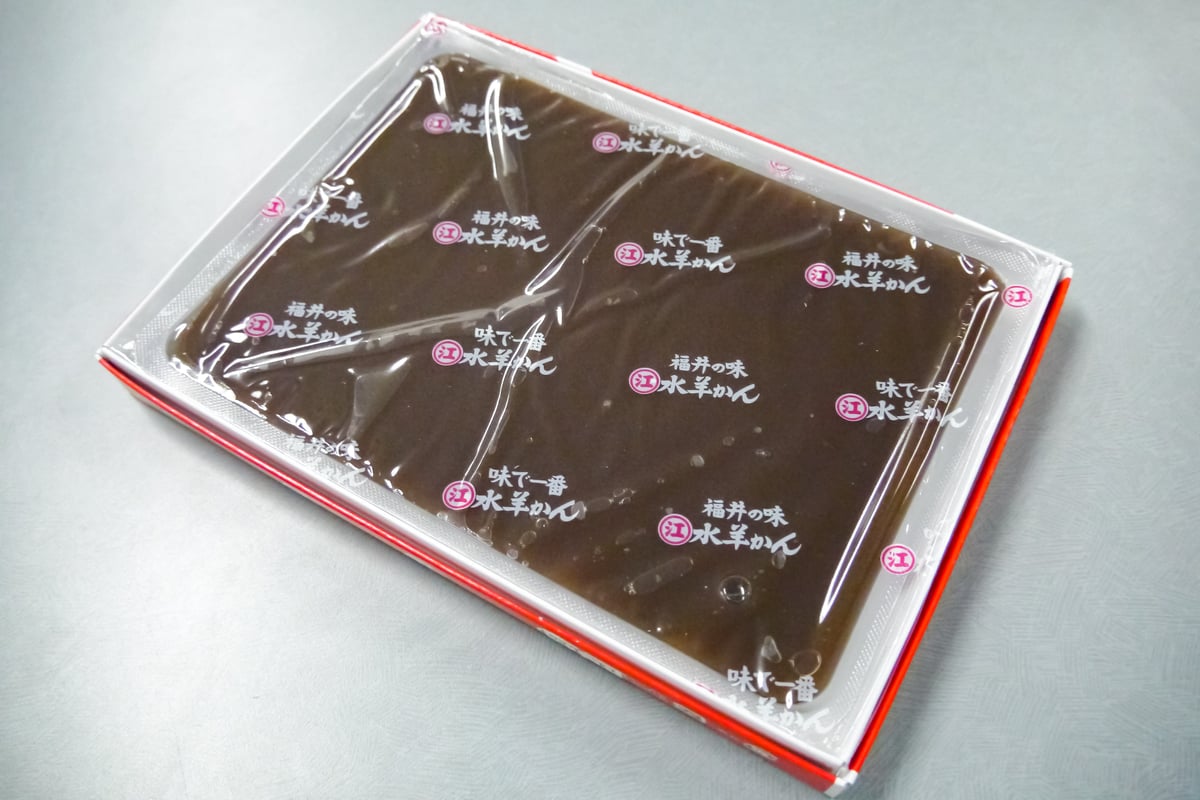
Fukui Mizu Yokan is a Japanese confection made by dissolving smooth red bean paste (koshian), sugar, and agar (kanten) over heat and then chilling the mixture until set, and in Fukui Prefecture it is a seasonal tradition enjoyed in winter. Nationwide, mizu yokan is known as a summer sweet, but in Fukui many shops make it only in winter, from around November to around March. Eating well-chilled mizu yokan while sitting at a kotatsu (heated table) is considered one of the pleasures of winter. Many shops use brown sugar (kokuto), and its hallmarks are a clean sweetness and a smooth texture that melts in the mouth. The main style is 'ichimai-nagashi', in which the yokan is poured as a single slab into a flat paper box. It is cut or scooped out with the spatula that comes with it. Because of its low sugar content, it does not keep long, and most products must be refrigerated. The Fukui City tourism website introduces more than 20 shops selling it within the city alone. Sweetness, thickness, and the flavor of the brown sugar differ from shop to shop, so comparing them is part of the fun. In Ono City and elsewhere it is also called 'decchi yokan', and thicker versions are popular there.
Origin
There are several theories about its origin. A well-known one holds that it spread when decchi (apprentices at merchant houses) who had gone to work in Kyoto and elsewhere in the Kansai region brought yokan home when they returned for the New Year. It is also said to have begun when people re-cooked the neri yokan (firm yokan) they had brought home with water and agar to increase its volume. Diluting yokan, which was expensive, with water is thought to have turned it into a sweet that ordinary people could afford.
History
Mizu yokan, with its low sugar content, spoils easily, and in the days before refrigerators it was difficult to keep in summer. Fukui winters, on the other hand, rarely bring indoor temperatures below freezing. Chilly hallways and engawa (veranda-like corridors) served in place of a refrigerator. The cold was also well suited to setting the agar, and mizu yokan is said to have become established as a winter food.
Features
The basic method is to dissolve koshian, sugar, and agar over heat and chill until set, and many shops add brown sugar. With more water and less sugar than neri yokan, it has a slippery, smooth texture and a restrained sweetness. The ichimai-nagashi style poured into paper boxes was once sold by counting out 'one slab' or 'two slabs'. Today it is still common to scoop it out with the included spatula.
Main Ingredients
Food Culture
In Fukui, mizu yokan appears at the front of Japanese confectionery shops around November, heralding the arrival of winter. Gathering around the box at the kotatsu and dividing it up with the spatula is a familiar scene of winter family time. The paper boxes were ill-suited to carrying, so it was once little known outside the prefecture. In recent years, products in sealed packs have appeared, and it has become known outside the prefecture as well.
Famous Shops
えがわ
福井県福井市照手3丁目6-14
A long-established shop opened in 1937 (Showa 12), which makes and sells mizu yokan only from November to March. It is characterized by the gentle aroma of brown sugar and an additive-free method. 'Egawa no Mizu Yokan' costs from around 850 yen.
View details →久保田製菓
福井県福井市南四ツ居2丁目1-36
Sells mizu yokan made with brown sugar from Hateruma, Okinawa, its own blend of sugar, koshian, and agar from November through the end of March. It uses no preservatives or sweeteners. The large boxed size (450 g) costs from around 600 yen.
View details →FAQ
Q. Why is mizu yokan eaten in winter in Fukui?
A. It is said that mizu yokan, with its low sugar content, spoils easily, and in the days before refrigerators it was hard to keep in summer. In Fukui, indoor temperatures rarely fall below freezing in winter, so it could be kept chilled in cold hallways and on engawa. That is how it became established as a winter sweet.
Q. What is 'decchi yokan'?
A. It is the name for mizu yokan in Ono City and parts of the Reinan area, and it is characterized by being thicker than in other areas. Note that Shiga Prefecture's Decchi Yokan (Apprentice's Yokan) is a different confection made by another method: red bean paste is mixed with wheat flour and other ingredients, wrapped in bamboo sheaths, and steamed.