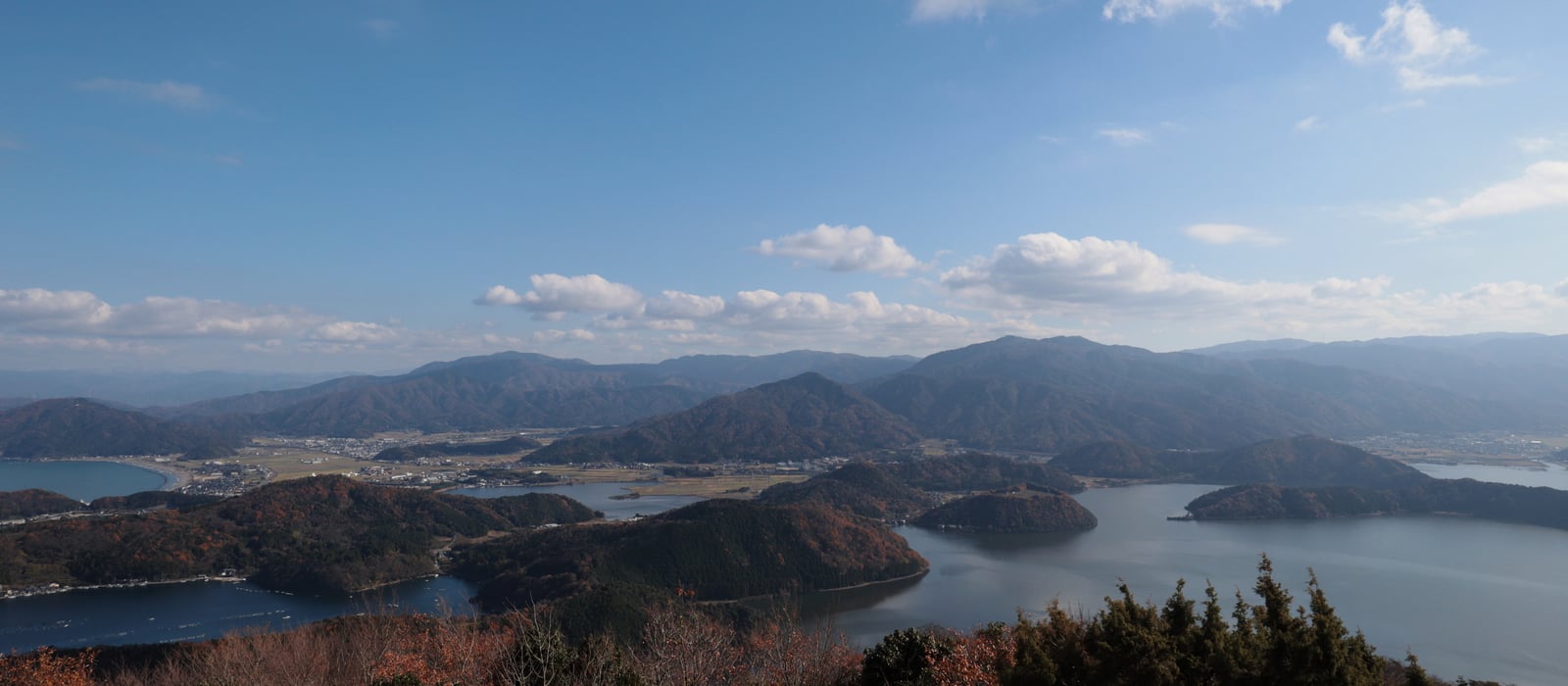
 Image: Wikimedia Commons
Fukui Prefecture
Facing the Sea of Japan, Fukui Prefecture has nurtured distinct crafts and food cultures in Reihoku to the north and Wakasa to the south. The prefecture has seven Traditional Crafts Designated by the Minister of Economy, Trade and Industry. Echizen City, Sabae City and Echizen Town are home to the production areas of Echizen Shikki (lacquerware), Echizen Washi (paper), Echizen Uchihamono (forged blades), Echizen Tansu (chests) and Echizen-yaki, one of Japan's Six Ancient Kilns. Sabae City is a major production center for Japanese-made eyeglass frames. In Obama City in Wakasa, Wakasa-nuri, lacquerware in which eggshells and seashells are lacquered over and then polished to reveal their patterns, and Wakasa Meno Zaiku (agate craft) are carried on. For food, the region is known for Echizen Crab, a winter delicacy; Echizen Oroshi Soba, eaten with grated daikon; and the sauce katsudon of Yoroppaken. You can also enjoy flavors rooted in local life, such as hamayaki saba and heshiko from Obama, the starting point of the Saba Kaido (Mackerel Road), and mizu yokan eaten under the kotatsu in winter.
Fukui's Traditional Crafts
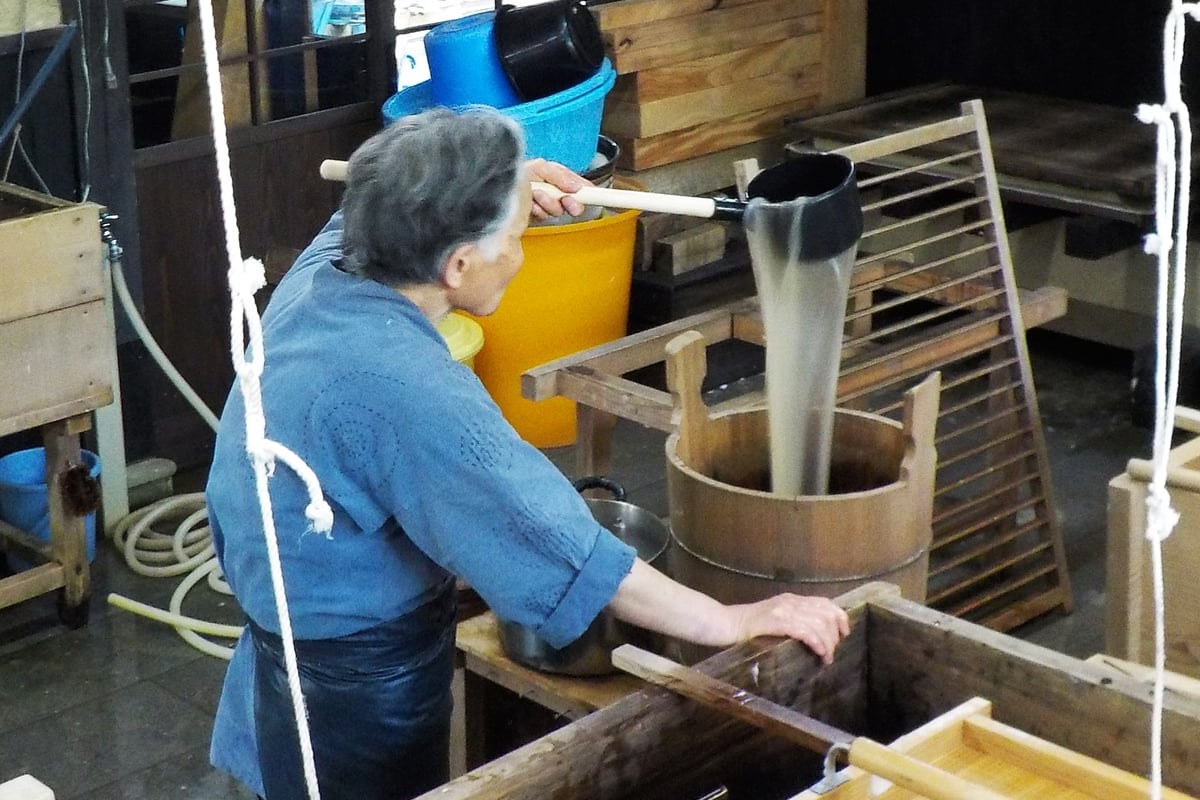
Echizen Washi (Echizen Japanese Paper)
Echizen Washi
Echizen Washi is handmade Japanese paper that has long been made in the Imadate district of Echizen City, Fukui Prefecture. The production area consists of five villages, Otaki, Iwamoto, Furo, Shinzaike and Sadatomo, collectively known as 'Goka' (the Five Villages). According to legend, about 1,500 years ago a goddess named Kawakami Gozen appeared upstream on the Okamoto River and taught the villagers how to make paper, and she is enshrined at Okamoto Shrine as the goddess of papermaking. In the Nara period the paper was used for copying sutras, and in time it gave rise to 'Echizen Hosho,' a high-grade paper prized by the samurai class. The paper for the Fukui Domain's banknotes in the Edo period and for the Dajokan-satsu notes of the new Meiji government was also made here. Using kozo, mitsumata and gampi as raw materials, papermakers produce a wide variety of papers for different uses, such as hosho paper, torinoko paper and fusuma (sliding door) paper. In 1976 it became a Traditional Craft Designated by the Minister of Economy, Trade and Industry. At Echizen Washi Village, visitors can watch and try papermaking.
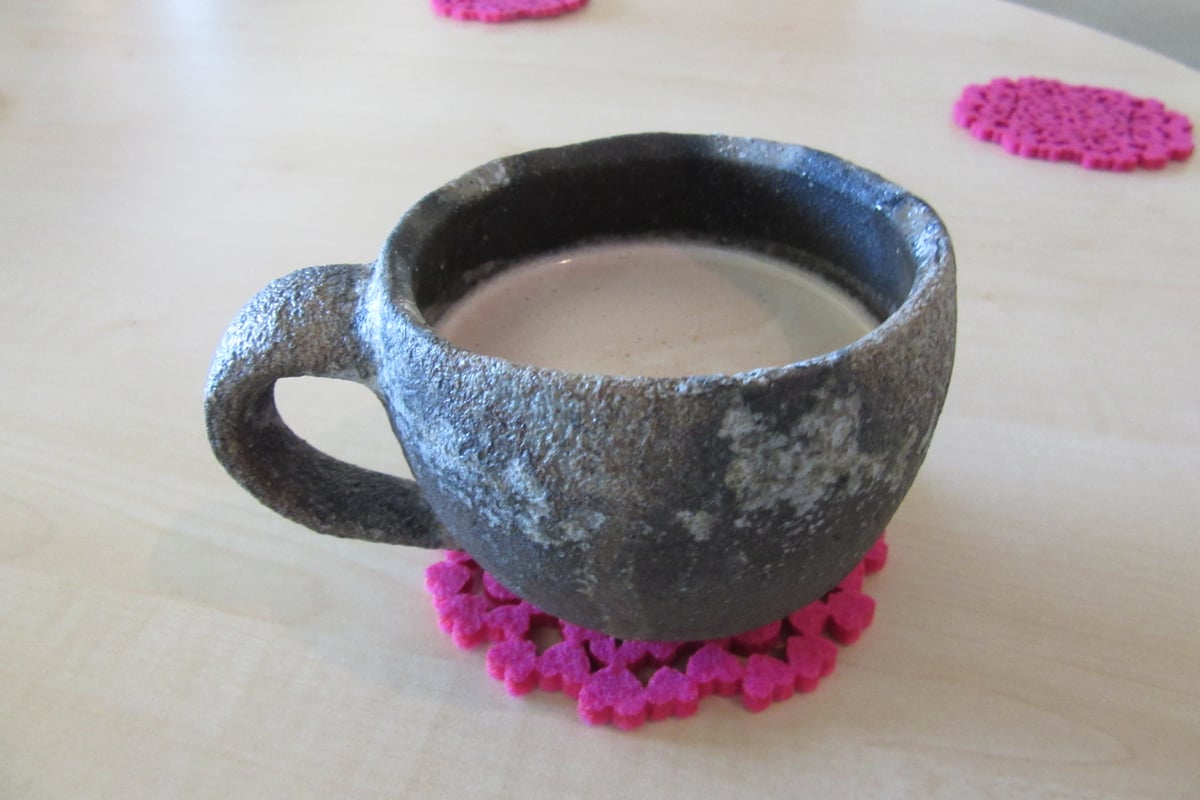
Echizen-yaki (Echizen Ware)
Echizen-yaki
Echizen-yaki is pottery made mainly in Echizen Town, Nyu District, Fukui Prefecture. It is counted among 'Japan's Six Ancient Kilns,' together with Seto, Tokoname, Shigaraki, Tanba and Bizen. The area began as a pottery center about 850 years ago, at the end of the Heian period, when it adopted techniques from the Tokai region, such as those of the Tokoname kilns, and started producing yakishime (high-fired unglazed) stoneware. Because the pieces are fired at high temperatures without glaze, they become hard and durable. A yellowish-green natural glaze, formed when wood ash melts inside the kiln, adds a rustic beauty. By the late Muromachi period, with jars, large storage vessels and mortars as its main products, it had grown into the largest pottery-producing area on the Sea of Japan side. It became a Traditional Craft Designated by the Minister of Economy, Trade and Industry in 1986, and in 2017 it was also recognized as Japan Heritage as one of the Six Ancient Kilns. At Echizen Ceramic Village (Echizen Togei-mura), visitors can choose pieces from local kilns and try making pottery.
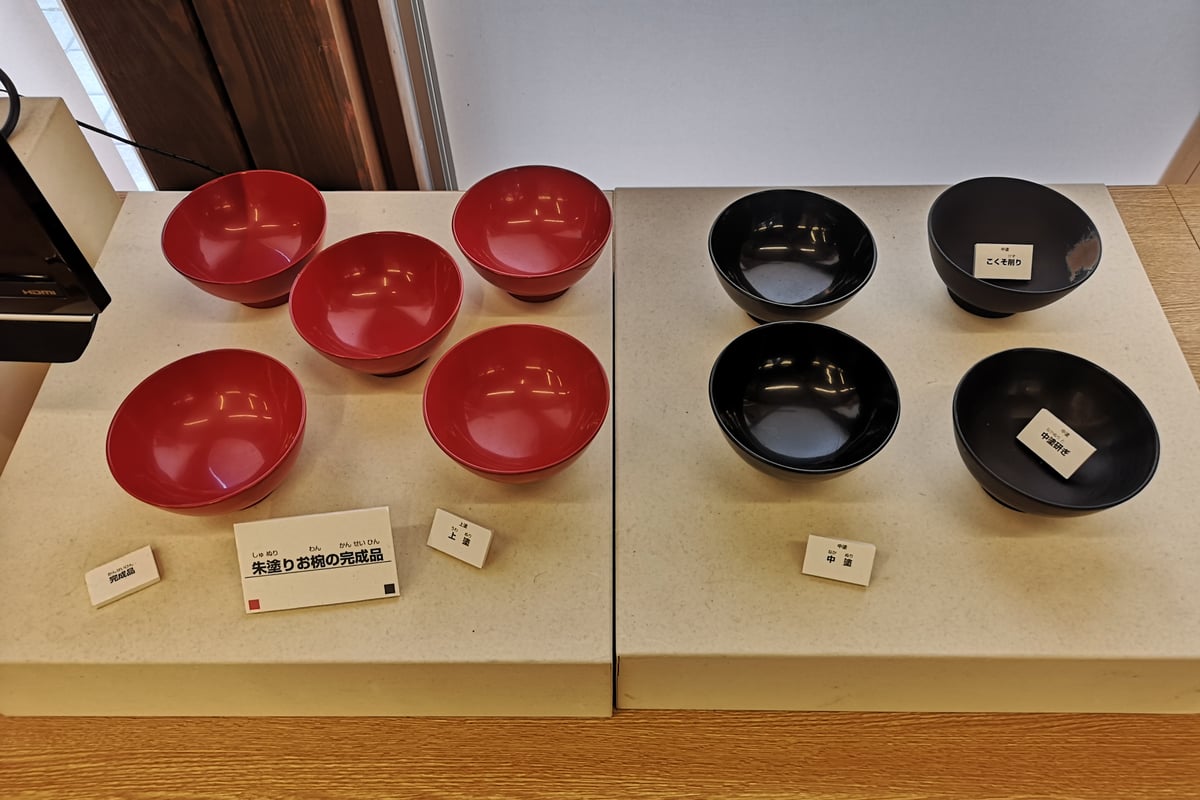
Echizen Shikki (Echizen Lacquerware)
Echizen Shikki
Echizen Shikki is lacquerware made mainly in the Kawada district of Sabae City, Fukui Prefecture. It is said to have begun about 1,500 years ago, when the future Emperor Keitai, then still a prince, ordered a lacquerer in the village of Katayama to recoat his damaged crown. The lacquerer presented the crown together with a black-lacquered bowl, and the prince, impressed by the fine workmanship, encouraged the making of lacquerware. It is characterized by a glossy, durable finish created by carefully applying layer upon layer of lacquer over a sturdy base. At the end of the Edo period, the area adopted maki-e techniques from Kyoto and chinkin techniques from Wajima. From the Meiji period onward, it expanded sales of commercial lacquerware for inns and similar businesses, and today it produces most of the lacquerware used in the restaurant and food service industry. In 1975 it became a Traditional Craft Designated by the Minister of Economy, Trade and Industry.
Echizen Uchihamono (Echizen Forged Blades)
Echizen Uchihamono
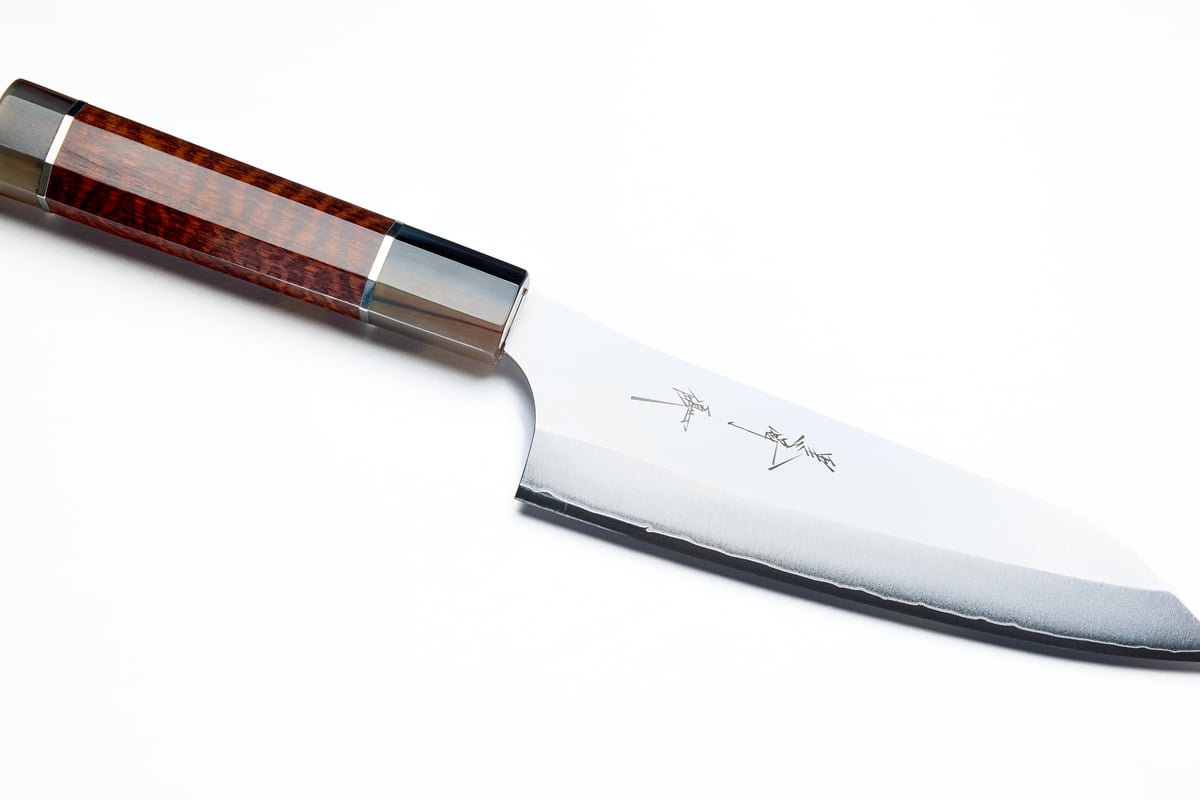
Echizen Uchihamono are forged blades made in Echizen City, Fukui Prefecture. They are said to have begun about 700 years ago in the Nanboku-cho period, when Chiyozuru Kuniyasu, a swordsmith from Kyoto, moved to Fuchu (present-day Echizen City) in search of good water for swordmaking and made sickles for the local farmers. In the Edo period the craft developed under the protection of the Fukui Domain. As Echizen lacquer-tapping craftsmen traveling around the country carried sickles with them and sold them, the name of Echizen blades spread far and wide. Techniques of hizukuri (hot forging) and hand finishing have been handed down, including 'nimai-hiroge,' in which two blades are stacked and hammered out together. The blades are known for being thin, light and exceptionally sharp, and today the main products are kitchen knives and other knives. In 1979, it became the first forged-blade craft to be designated a Traditional Craft Designated by the Minister of Economy, Trade and Industry. At Takefu Knife Village in the city, visitors can watch craftsmen at work up close.

Echizen Tansu (Echizen Chests)
Echizen Tansu
Echizen Tansu are chests made mainly in the Takefu district of Echizen City, Fukui Prefecture. They are assembled from solid zelkova or paulownia wood using 'sashimono' joinery, a technique that uses no nails. To this are added lacquer coating that draws on the skills of Echizen Shikki and decorative iron fittings that draw on the blacksmithing techniques of Echizen Uchihamono. By combining several advanced techniques, the chests are given a solid, stately presence. Craftsmen skilled in woodworking settled in the area from the late Edo period, and by the mid-Meiji period, chest makers had formed the core of what became known as 'Tansu-machi' (Chest Town). Even today, chest shops and workshops are concentrated along Tansu-machi Street. The heart-shaped 'inome' motif used on the fittings is a pattern meant to ward off evil. In 2013 it became a Traditional Craft Designated by the Minister of Economy, Trade and Industry.
Wakasa-nuri (Wakasa Lacquerware)
Wakasa-nuri
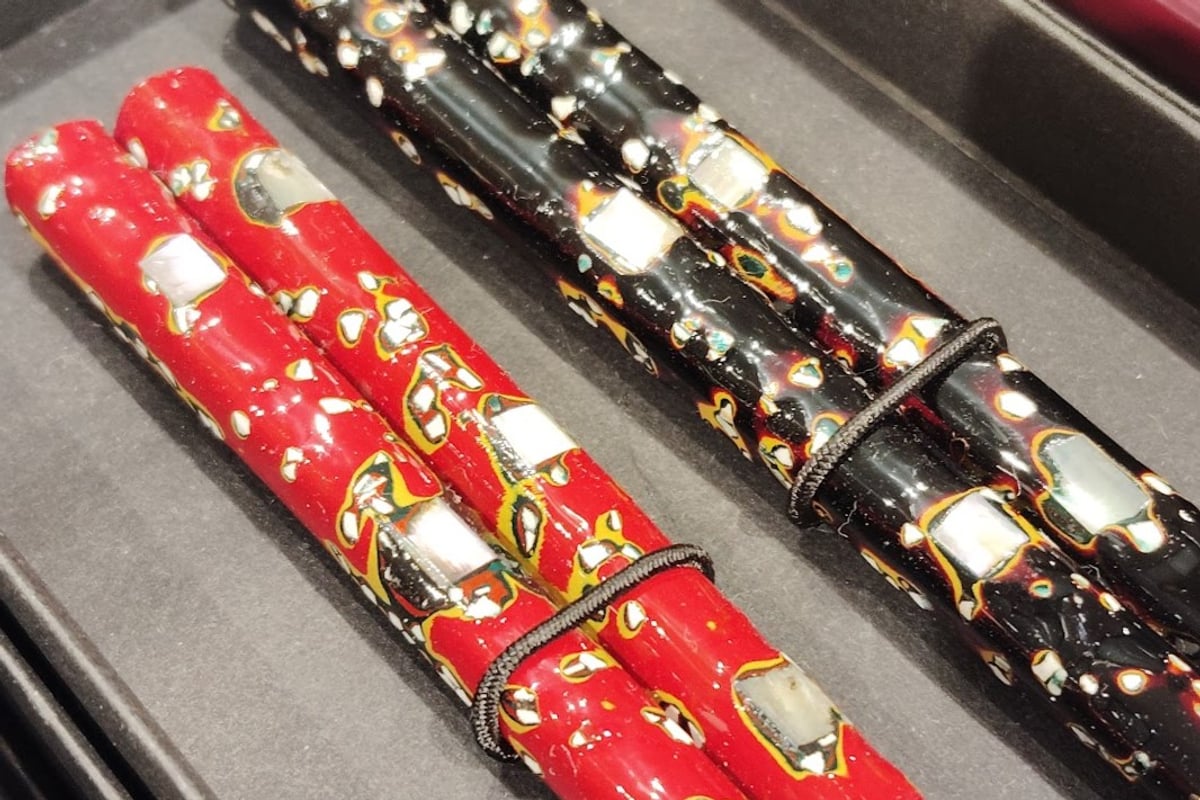
Wakasa-nuri is lacquerware made in Obama City, Fukui Prefecture. Its defining feature is togidashi ('polishing out'): patterns are created with eggshells, abalone and other seashells, pine needles and similar materials, colored lacquer is applied in many layers, and the surface is then ground with whetstones to bring the patterns to the surface. The patterns are said to evoke the seabed of Wakasa Bay, and it was once also called 'Hoseki-nuri' (jewel lacquer). It is said to have originated in the early Edo period, when Matsuura Sanjuro, the official lacquerer of the Obama Domain, took inspiration from Chinese lacquerware to devise a lacquer finish that stylized the appearance of the seabed. The ruling Sakai family generously protected Wakasa-nuri, and more than 200 lacquering methods are said to have been developed from the mid to late Edo period. In 1978 (Showa 53), it was designated a Traditional Craft Designated by the Minister of Economy, Trade and Industry. Today its representative product is lacquered chopsticks, and Obama City is said to account for more than 80% of the lacquered chopsticks produced in Japan. At Hashi no Furusato-kan WAKASA and Wakasa Kobo in the city, visitors can try togidashi polishing on chopsticks.
Wakasa Meno Zaiku (Wakasa Agate Craft)
Wakasa Meno Zaiku
Wakasa Meno Zaiku is a gemstone craft handed down in Obama City, Fukui Prefecture. Rough agate is heated in a process called yakiire to bring out a vivid red color, then carved and polished into ornaments and accessories. Some traditions trace its origins to the Nara period, but the foundations of its techniques were laid in the mid-Edo period. It is said that in the Kyoho era (1716-1736), Takayama Kihei of Onyu Village (present-day Onyu, Obama City) learned polishing techniques in Osaka and heat-treating techniques in Tsugaru, and then began making agate beads in his village. In the Meiji era, carving techniques were developed, and incense burners, Buddhist statues, animal figurines and other pieces also came to be made. In 1976 (Showa 51), it was designated a Traditional Craft Designated by the Minister of Economy, Trade and Industry. At its peak there were about 50 artisans, but today Uenishi Soichiro of Sosuke Kobo carries on the techniques as the only artisan in the production area. At Wakasa Kobo in Obama City, visitors can also try agate polishing.
Echizen Take Ningyo (Echizen Bamboo Dolls)
Echizen Take Ningyo
Echizen Take Ningyo are dolls from Fukui Prefecture in which every part, from the costume and body to the hair, is made of bamboo or bamboo sheath. They are said to have been created after much trial and error in the Showa 20s (1945-1954) by the brothers Morota Yasutaka and Sanshiro, who ran a bamboo craft business in Maruoka, Sakai City, and their form is said to have been established around 1952 (Showa 27). Their exhibition at the 1955 (Showa 30) Toyama Exposition prompted full-scale bamboo doll production. In 1963 (Showa 38), Mizukami Tsutomu published the novel 'Echizen Take Ningyo', which was made into a film the same year, spreading the name nationwide. Many of the dolls are elegant figures based on Noh, Kabuki and other themes, and a highlight is the black hair, expressed by inserting 5,000 to 7,000 finely split strips of bamboo into each doll. It is not a Traditional Craft Designated by the Minister of Economy, Trade and Industry, but has been designated a Fukui Prefecture-designated Local Craft. At Echizen Take Ningyo no Sato (Echizen Bamboo Doll Village) in Maruoka, visitors can watch artisans at work and try making bamboo dolls.
Sabae Eyewear
Sabae Eyewear
Sabae Eyewear refers to eyeglass frames made mainly in Sabae City, Fukui Prefecture. It is not a Traditional Craft Designated by the Minister of Economy, Trade and Industry but a local industry that began in the Meiji era, and through the skills of its artisans and a system of divided labor, it has built a production area known around the world. It began in 1905 (Meiji 38), when Masunaga Gozaemon of Shono, Asozu Village, Asuwa District (present-day Shono-cho, Fukui City) invited eyeglass craftsmen from Osaka and spread eyeglass making as a side business for farming households during the snowy winters. The techniques eventually spread to Sabae, and the city came to promote itself as 'Megane no Machi Sabae' (Sabae, the eyeglass town). In 1983, the world's first titanium eyeglass frames were successfully developed and produced here. Today, about 95% of Japanese-made eyeglass frames are made in Fukui Prefecture, with Sabae City at its center. At the Megane Museum in the city, visitors can learn about the history of the production area, try making frames by hand and buy products from manufacturers in the prefecture.
Fukui Habutae Silk
Fukui Habutae
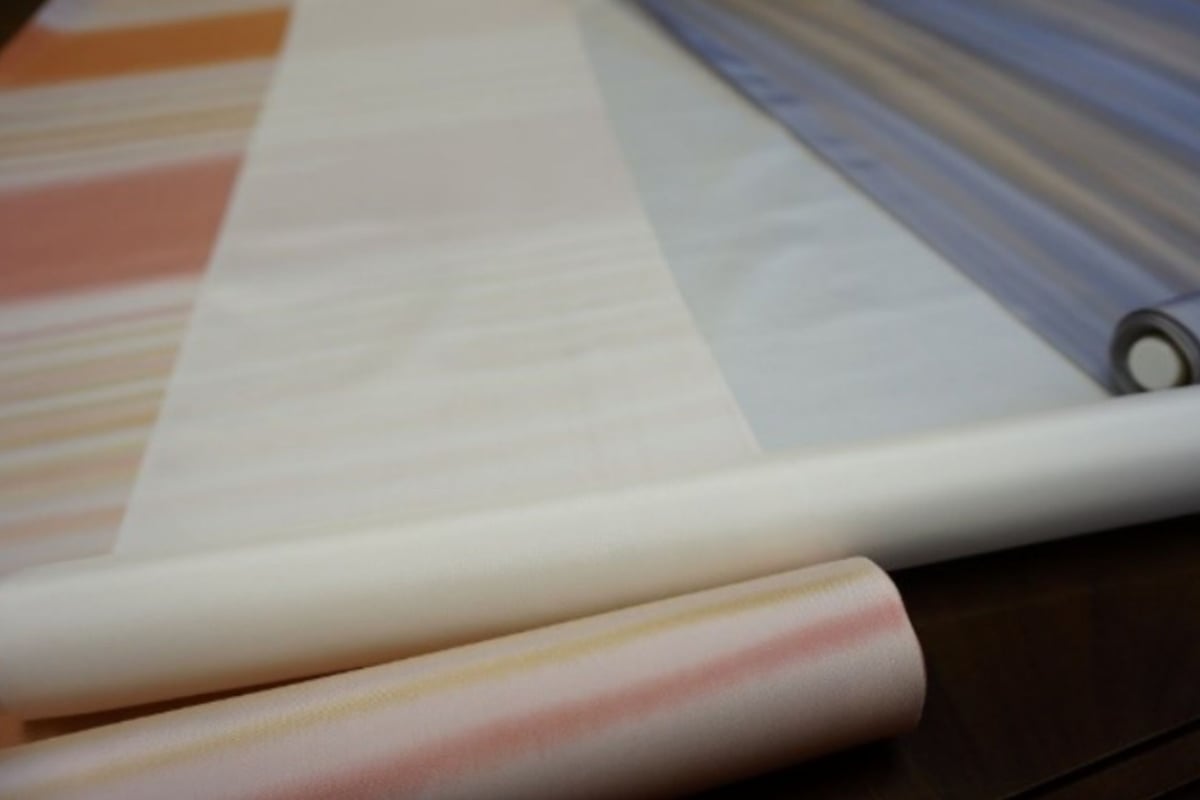
Fukui Habutae is a silk fabric that was woven extensively in Fukui Prefecture for export during the Meiji era. Habutae is a plain-woven fabric made by drawing together two fine, untwisted warp threads, and it is light and soft with a beautiful white luster. In Fukui, research into new silk fabrics began in the early Meiji era, including sending trainees to Kyoto. In the late 1880s, habutae weaving techniques were introduced by inviting engineers from the advanced weaving center of Kiryu. The techniques spread throughout the prefecture, and in the early 1890s Fukui Prefecture's silk fabric output became the highest in Japan. Electric power looms spread by the early Taisho era, and the Hokuriku region grew into one of the country's leading producers of export habutae. The area later shifted to rayon (artificial silk) and synthetic fibers, and Fukui remains one of Japan's foremost textile-producing regions today. In Katsuyama City, 'nure-yoko habutae', woven with wet weft threads, is still produced. Habutae Mochi, a famous Fukui confection, was also named after this habutae weave.
Fukui's Local Food
Echizen Crab
Echizen Crab
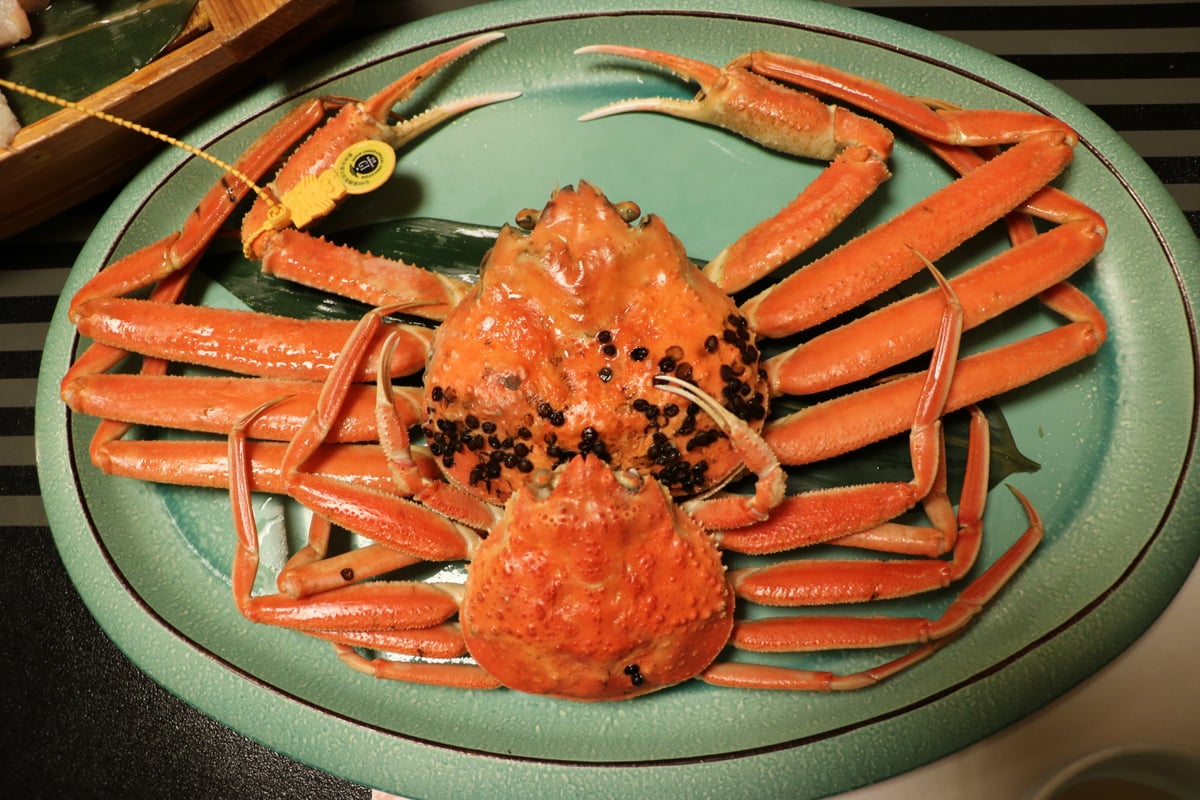
Echizen Crab is the brand name given to male snow crabs (zuwaigani) landed at ports in Fukui Prefecture. It covers crabs landed at Echizen Port (Echizen Fishing Port) in Echizen Town, as well as at Mikuni Port in Sakai City, Tsuruga Port, Obama Port, and others. A yellow tag attached to a leg is proof of the brand, bearing the GI (Geographical Indication) mark, the name of the fishing boat, and other information. Echizen Crab landed at Mikuni Port has been presented to the Imperial Household since 1922 (Taisho 11), and it is known as 'the only crab presented to the Imperial Household.' In 2018, it became the first crab in Japan to be registered under the national Geographical Indication (GI) protection system. The fishing season opens on November 6 each year, and males are landed until March 20 of the following year. Female snow crabs are called 'Seiko-gani,' and the uchiko (ovaries) inside the shell and the sotoko (eggs) carried on the belly are prized. Echizen Town is also home to the Echizen Crab Museum, where visitors can learn about Echizen Crab, and the crab is one of the signature winter delicacies of the Echizen Coast.
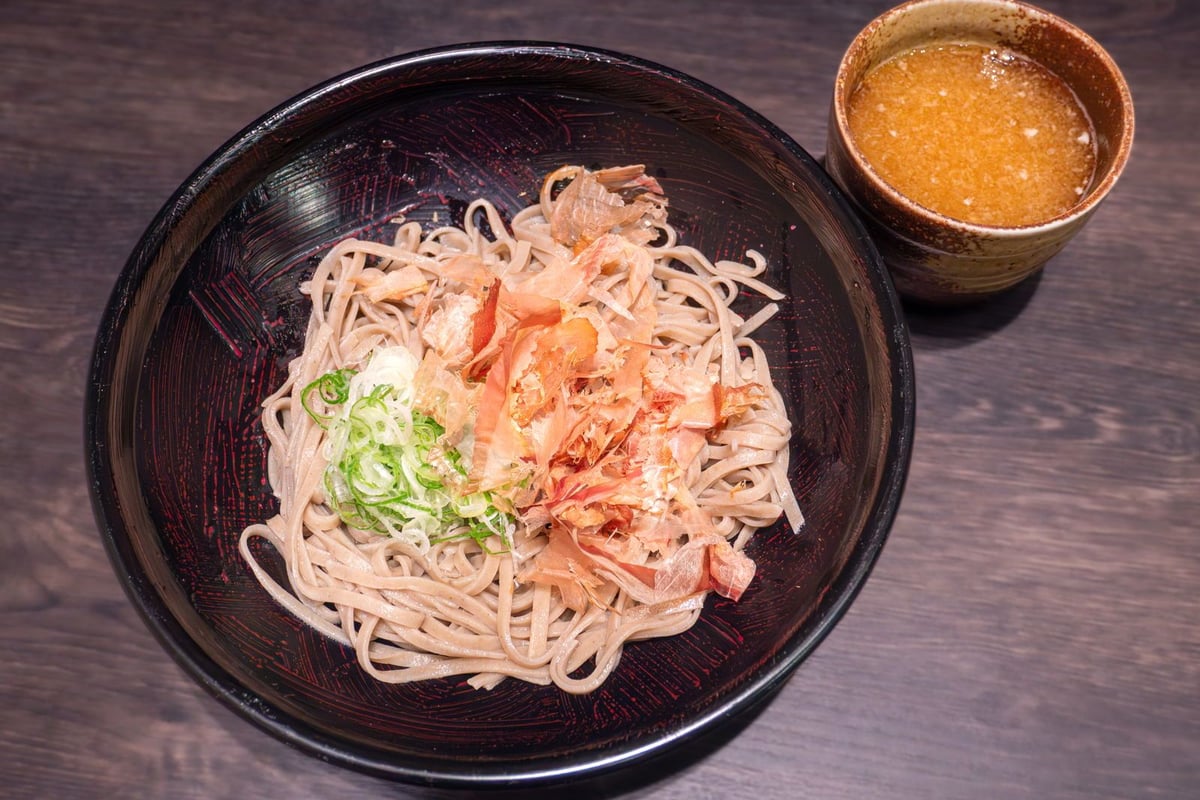
Echizen Oroshi Soba (Soba with Grated Daikon)
Echizen Oroshi Soba
Echizen Oroshi Soba is a local dish of Fukui Prefecture in which cold soba noodles are eaten with grated daikon radish and dashi broth. It is commonly topped with bonito flakes and chopped green onions, and depending on the season, spicy karami daikon is also used. The mainstream soba in Fukui is inaka soba (country-style soba), cut somewhat thick from dark buckwheat flour ground in a stone mill together with the inner husk. Many native buckwheat varieties remain in the prefecture, and although their grains are small, they are said to have a rich flavor and an excellent aroma. Buckwheat cultivation is said to have been started by the Asakura clan in the Sengoku period, and at the beginning of the Edo period, 'soba-kiri' (soba in noodle form) was introduced. Later, the practice of eating it with grated daikon spread and has been handed down to the present day. The name 'Echizen Soba' is said to derive from an anecdote about Emperor Showa, who visited Fukui in 1947 (Showa 22). The way the grated daikon and dashi are combined differs from shop to shop, so comparing them is part of the fun.
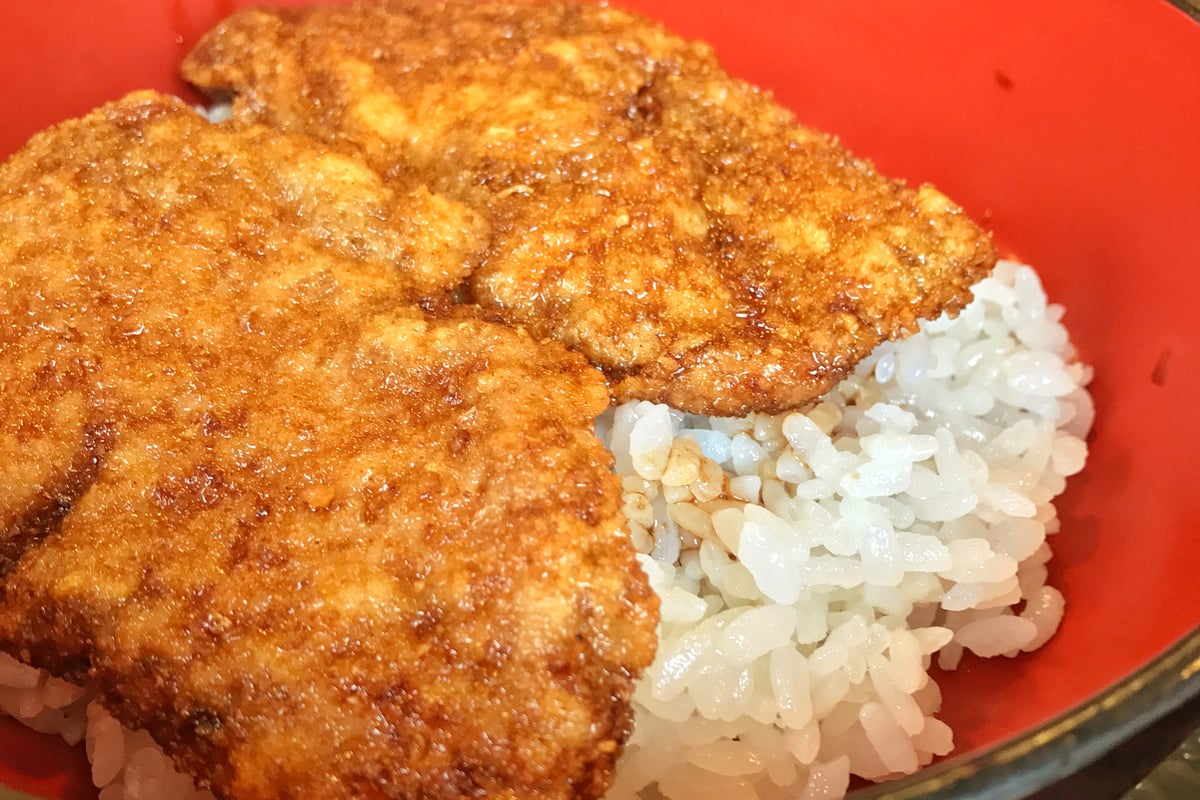
Fukui Sauce Katsudon
Fukui Sauce Katsudon
Fukui Sauce Katsudon is a rice bowl made by coating thinly sliced pork in fine breadcrumbs, deep-frying it, dipping it in a Worcestershire sauce-based sauce, and placing it on rice. In Fukui, it is taken for granted that ordering 'katsudon' will bring you sauce katsudon rather than the version simmered with egg. Its originator is said to be Yoroppaken, a Western-style restaurant in Fukui City. Its founder, Takabatake Masutaro, studied cooking in Germany and presented this dish in Tokyo in 1913 (Taisho 2). After being hit by the Great Kanto Earthquake, he returned to his hometown of Fukui and reopened the restaurant, and sauce katsudon took root as a taste of Fukui. Today, noren-wake shops (independent shops permitted to carry on the original name) have spread throughout the prefecture, and the dish is beloved as a soul food of the people of Fukui. The cutlet is tender enough to cut with chopsticks, and the sauce, with its balance of sweetness and acidity, whets the appetite. Another characteristic is its simplicity: there is no cabbage underneath, only rice and cutlet.
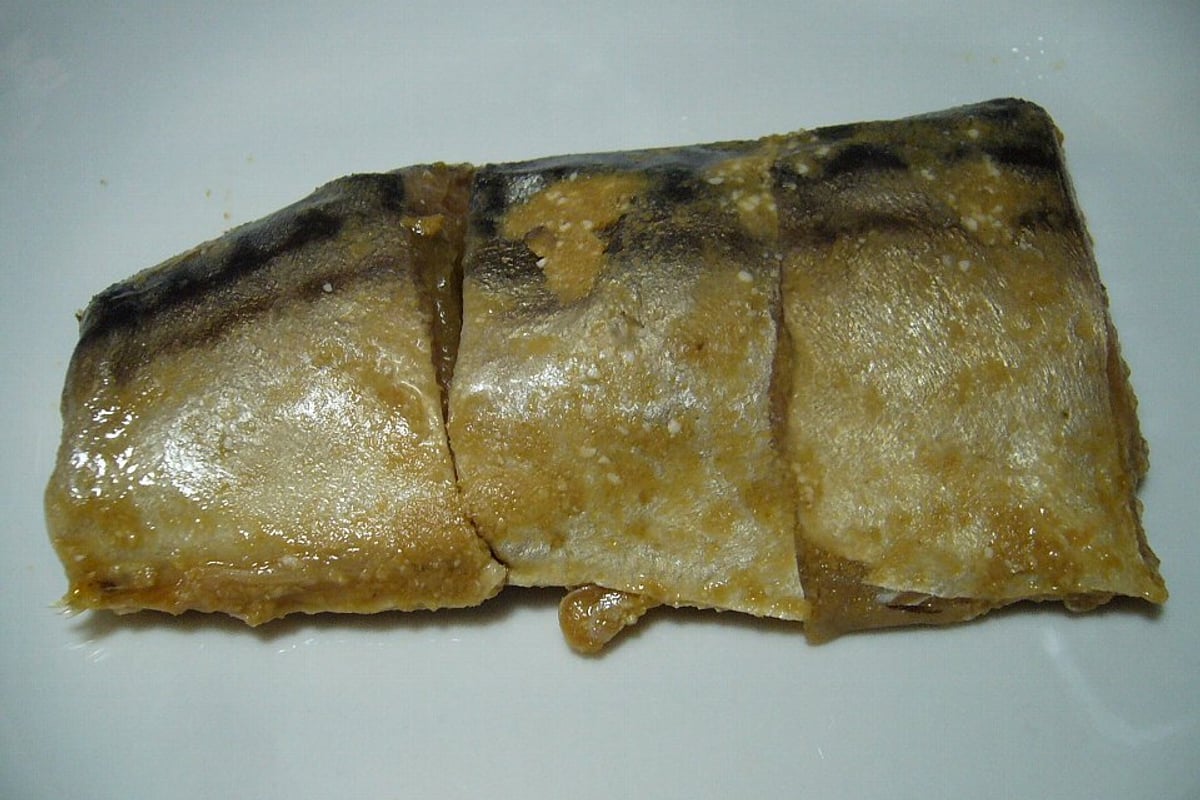
Heshiko (Rice-bran Fermented Mackerel)
Heshiko
Heshiko is a traditional preserved food of Fukui Prefecture, made by salting fish such as mackerel and then pickling it in rice bran to mature. It has long been made in the Wakasa region and along the Echizen Coast. Fish with the innards removed are salted for about a month, then packed in rice bran for more than half a year to ferment and mature. While it is salty, it is characterized by the concentrated umami and aroma of the fish. It is thought to have been made in Wakasa by the mid-Edo period, and it was a valuable source of protein for getting through harsh winters. The standard way to eat it is to remove the bran, grill it lightly, and serve it as a snack with sake or in ochazuke (rice with tea poured over it). In recent years, it has also come to be used like anchovies, in dishes such as pasta and pizza. In Obama City, 'Saba no Narezushi' (fermented mackerel sushi) is also made by desalting heshiko and pickling it again with rice koji and cooked rice.
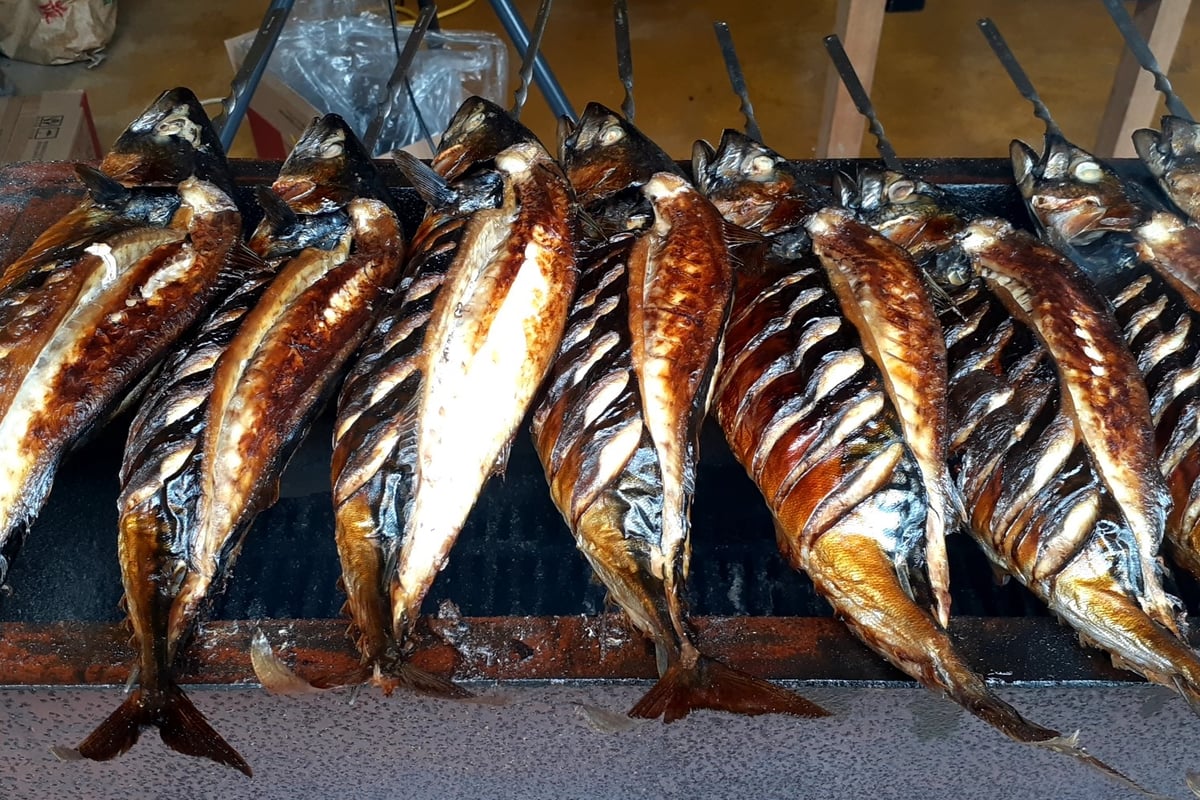
Hamayaki Saba (Whole Grilled Mackerel)
Hamayaki Saba
Hamayaki Saba is a specialty of the Wakasa region of Fukui Prefecture, made by skewering a whole mackerel and grilling it. Mackerel spoils easily, but grilling makes it keep longer, so it has long been enjoyed in Obama City, which faces Wakasa Bay, where mackerel was caught in abundance. In the past, to preserve freshness, mackerel is said to have been grilled on the beach right after being landed. The grilled mackerel is usually eaten with ginger soy sauce. Since ancient times, Wakasa was a Miketsukuni (a province that supplied food to the imperial court), delivering seafood to the capital, and Obama is known as the starting point of the Saba Kaido (Mackerel Road), along which mackerel was carried to Kyoto. In Obama City's shopping streets, there are long-established shops that display Hamayaki Saba grilled right at the storefront. Hamayaki Saba, which is delicious even when cold, also gave rise to the pressed sushi 'Yaki Saba Sushi,' which has become one of Fukui's representative souvenirs.
Kodai no Sasazuke (Vinegar-cured Small Sea Bream)
Kodai no Sasazuke
Kodai no Sasazuke is a specialty of Obama City, Fukui Prefecture, in which small sea bream caught in Wakasa Bay are filleted in the three-piece style (sanmai oroshi), lightly cured with salt and vinegar, and packed into small cedar kegs. The main raw material is a small form of yellowback sea bream (kidai) known as 'renkodai'. Scales and fine bones are carefully removed from sea bream about 10 cm long, and the fillets are lightly salted and then marinated in vinegar or seasoned vinegar. After being packed into the keg, the fish is finished with bamboo grass leaves (sasa). The skin glows a vivid pink and the flesh is a translucent white or pale amber, so its beauty is part of the appeal. The method is said to have been established in Obama during the Meiji era, and it developed through the town's ties with Kyoto, a major center of consumption. In 2017 (Heisei 29), it was registered under the national Geographical Indication (GI) protection system as 'Wakasa Obama Kodai Sasazuke'. Today, the Obama Sasazuke Association, a cooperative of manufacturers in Obama City, preserves and passes on the traditional flavor.
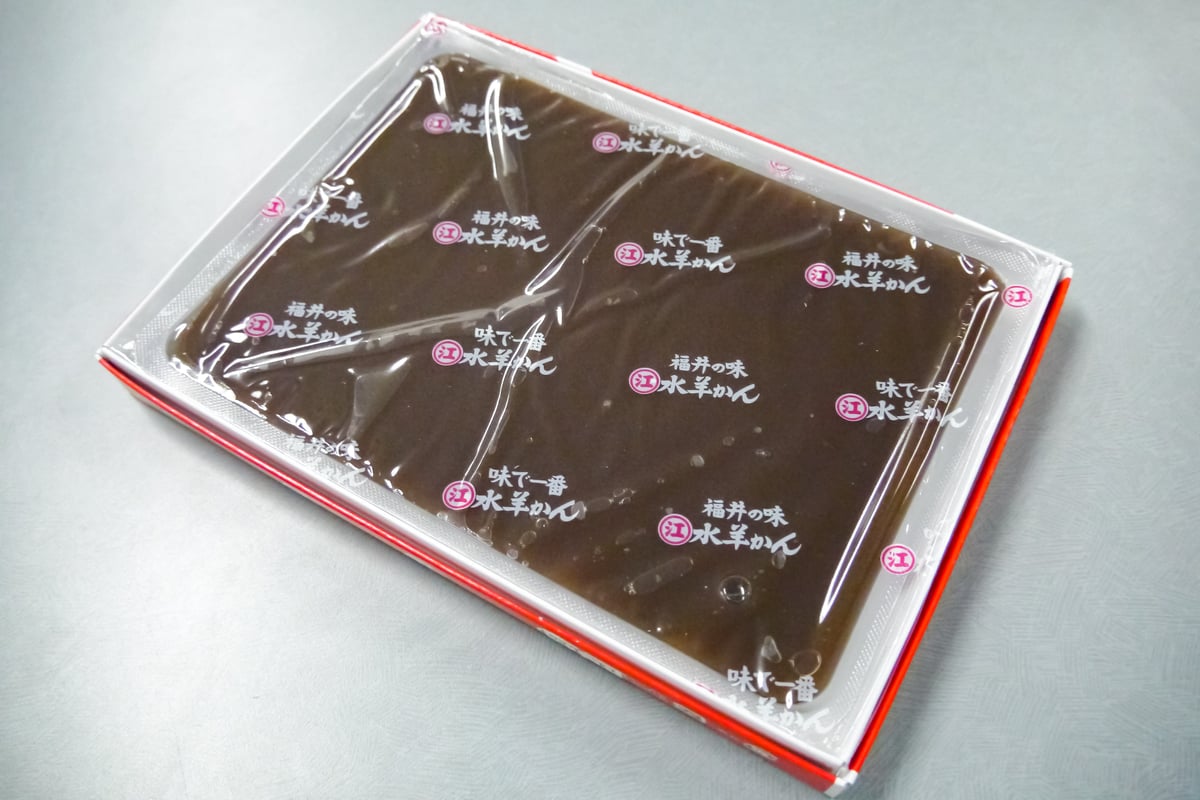
Fukui Mizu Yokan (Winter Soft Red Bean Jelly)
Fukui Mizu Yokan
Fukui Mizu Yokan is a Japanese confection made by dissolving smooth red bean paste (koshian), sugar, and agar (kanten) over heat and then chilling the mixture until set, and in Fukui Prefecture it is a seasonal tradition enjoyed in winter. Nationwide, mizu yokan is known as a summer sweet, but in Fukui many shops make it only in winter, from around November to around March. Eating well-chilled mizu yokan while sitting at a kotatsu (heated table) is considered one of the pleasures of winter. Many shops use brown sugar (kokuto), and its hallmarks are a clean sweetness and a smooth texture that melts in the mouth. The main style is 'ichimai-nagashi', in which the yokan is poured as a single slab into a flat paper box. It is cut or scooped out with the spatula that comes with it. Because of its low sugar content, it does not keep long, and most products must be refrigerated. The Fukui City tourism website introduces more than 20 shops selling it within the city alone. Sweetness, thickness, and the flavor of the brown sugar differ from shop to shop, so comparing them is part of the fun. In Ono City and elsewhere it is also called 'decchi yokan', and thicker versions are popular there.
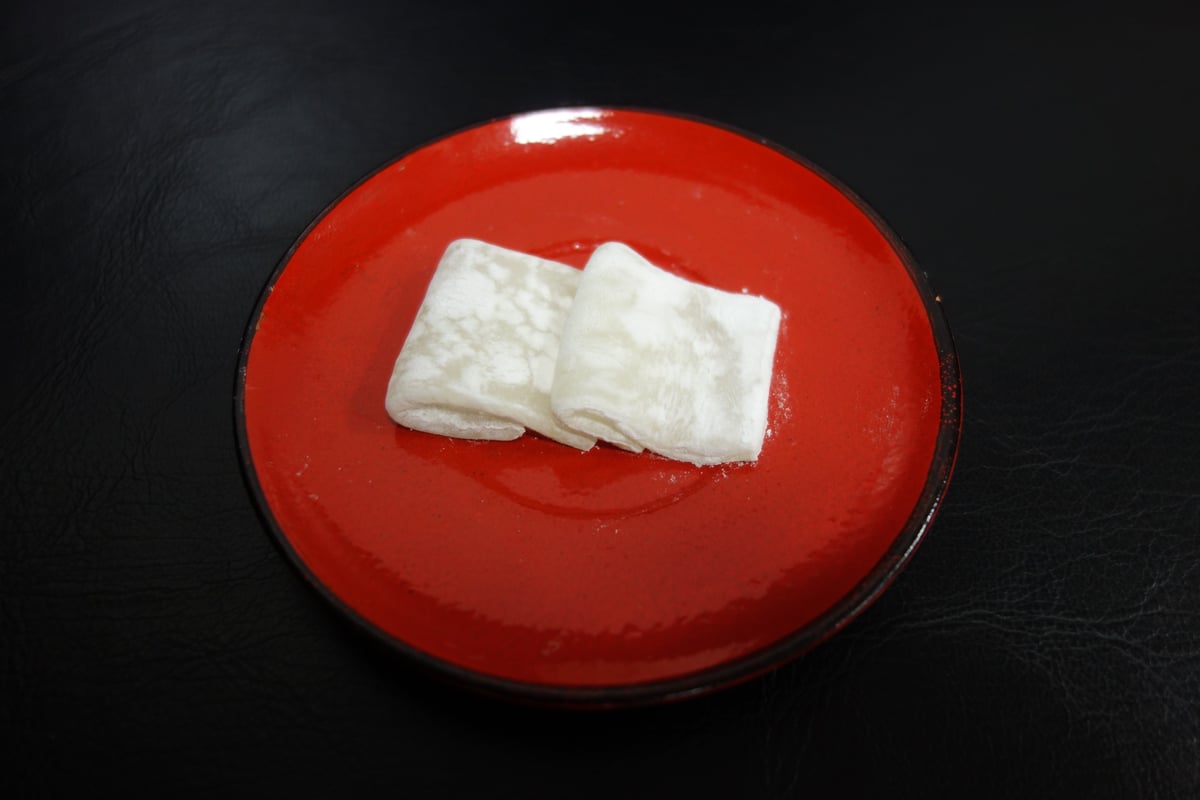
Habutae Mochi
Habutae Mochi
Habutae Mochi is a local confection of Fukui Prefecture made by steaming glutinous rice flour (mochiko), kneading it with sugar and starch syrup (mizuame), spreading it thin, and cutting it into squares. It is a simple mochi sweet whose basic ingredients are just three: mochiko, sugar, and mizuame. Its name comes from habutae, a silk fabric that has represented Fukui since the Meiji era. Habutae is a high-grade plain-weave silk with a smooth, lustrous finish. Habutae Mochi expresses the whiteness and fine, delicate feel of that fabric in the form of a mochi sweet. Its hallmark is a soft, airy texture that seems to melt in the mouth. It is said to have been created in the Meiji era, and the Ministry of Agriculture, Forestry and Fisheries dates the appearance of a sweet named 'Habutae Mochi' to 1905 (Meiji 38). However, several shops are known as its originator, and there are various theories about its origin. Today it is a classic Fukui souvenir, made by many confectioners, each with its own recipe. There are also many derivative sweets, such as versions dusted with kinako (roasted soybean flour), versions wrapped around sweet bean paste, and versions sandwiched in monaka wafers.
Echizen Uni (Salted Sea Urchin)
Echizen Uni (Salted Sea Urchin)
Echizen Uni is 'shio-uni' (salted sea urchin), made by salting and maturing the gonads of bafun sea urchins caught along the Echizen Coast of Fukui Prefecture. It is also written as 汐うに or 塩雲丹. In the Edo-period book Nihon Sankai Meisan Zue (Illustrated Famous Products of Japan's Mountains and Seas), it was praised as 'the finest of all shiokara (salted delicacies)'. Together with Mikawa's konowata and Hizen's karasumi, it is counted among Japan's three great delicacies (chinmi). The bafun sea urchin used as the raw material is a small urchin with a shell only a few centimeters across, and around 100 urchins are said to be needed to make 100 g of the product. The roe is firmed with salt to draw out moisture, kneaded into a paste, and then matured. Its hallmarks are rich umami, the aroma of the sea, and a smooth texture, and even a tiny amount delivers deep flavor. The current method is said to have been devised in the late Edo period by Tennoya (now Tentatsu), an official purveyor to the Fukui Domain. The catch of bafun sea urchins in the prefecture is very small, and it remains a precious delicacy that still relies on handwork.
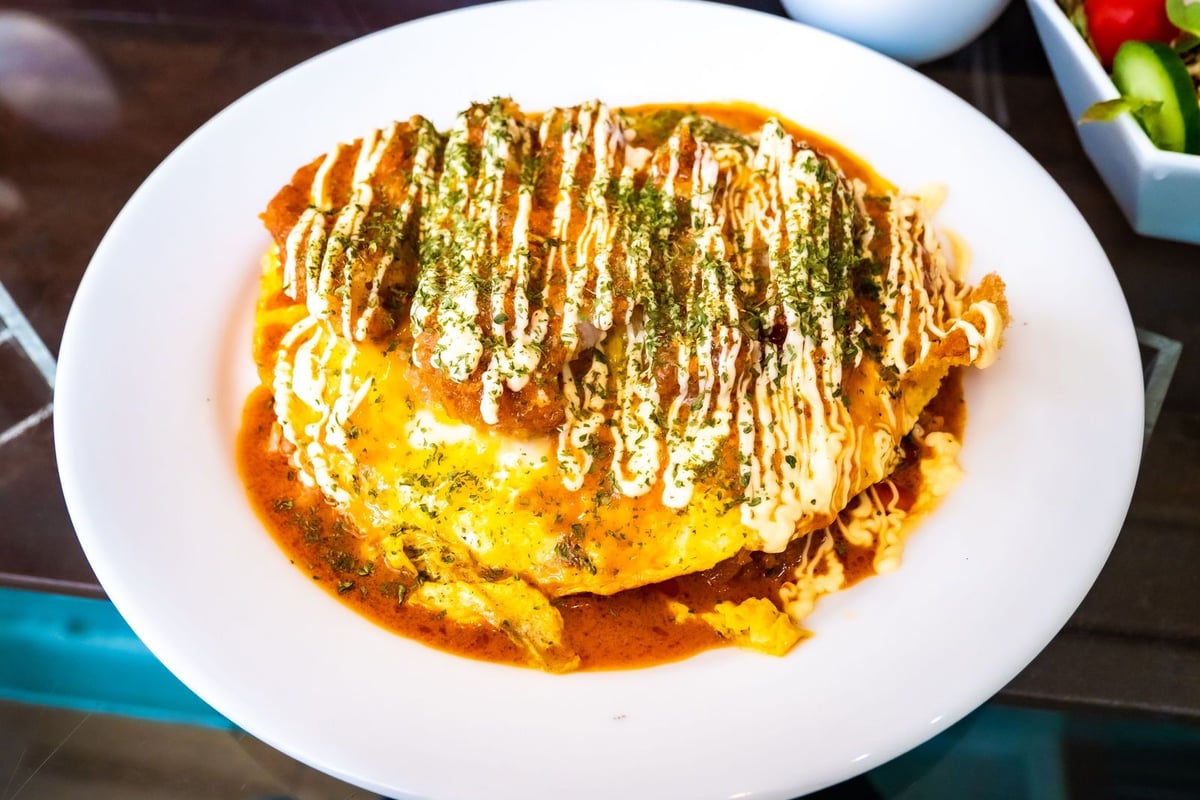
Volga Rice
Volga Rice
Volga Rice is a local specialty of Echizen City, Fukui Prefecture, consisting of omurice (omelet rice) topped with a tonkatsu (pork cutlet) and covered in sauce. It is said to have been enjoyed for more than 30 years in the Takefu district of Echizen City, which corresponds to the former Takefu City. Locally, it has been eaten not as a special dish but as an entirely ordinary Western-style meal (yoshoku). There is no set recipe, and a major characteristic is that the preparation and flavor differ from restaurant to restaurant. Besides ketchup rice, some restaurants use pilaf or fried rice for the rice inside. The cutlet also varies, from pork loin or fillet to minced meat cutlet (menchi katsu), and the sauces are just as distinctive, including demi-glace and tomato sauce. The origin of the name 'Volga' is unclear, and various theories are told. In 2010, Echizen City employees and others formed the 'Japan Volgaler Association' and have worked to promote the town. The number of restaurants serving it has grown from about five at first to more than 20, and it has also appeared in school lunches.
Model Course
A Course Through the Lacquerware, Eyewear, Blade and Chest Production Areas of Sabae and Echizen City
At the Megane Museum (めがねミュージアム) in Sabae City, compare frames made by manufacturers across the prefecture. Next, at Urushi no Sato Kaikan (うるしの里会館), try Echizen Shikki painting or fuki-urushi (wiped lacquer) (reservation required). For lunch, enjoy Echizen Oroshi Soba at Urushiya (うるしや) in Echizen City. In the afternoon, watch blacksmiths at work at Takefu Knife Village (タケフナイフビレッジ), then get a feel for chest making at Oyanagi Tansu kicoru (小柳箪笥 kicoru) on Tansu-machi Street. For dinner, you can try Volga Rice at Jam House (ジャムハウス) in Echizen City.
A Course from Echizen Washi Village and Echizen Ceramic Village to the Winter Echizen Coast
At Papyrus House (越前和紙の里 パピルス館) in Echizen Washi Village, Echizen City, try papermaking, then watch a certified traditional craftsman making paper by hand at the Udatsu Paper and Craft Museum (卯立の工芸館). Move on to Echizen Ceramic Village in Echizen Town and try hand-building or painting at the Fukui Prefectural Ceramics Museum (福井県陶芸館). At Echizen-yaki no Yakata (越前焼の館), you can choose pieces from the kilns. During the Echizen Crab season (November to March), we also recommend enjoying crab dishes at the inn Kobase (こばせ) on the Echizen coast.
A Course of Wakasa-nuri, Agate Craft and Mackerel Flavors in Obama, the Starting Point of the Saba Kaido
At Hashi no Furusato-kan WAKASA (箸のふるさと館WAKASA) in Obama City, try polishing out the pattern of Wakasa-nuri chopsticks (reservation system). Next, at Wakasa Kobo (若狭工房) on the second floor of the Miketsukuni Wakasa Obama Food Culture Museum (御食国若狭おばま食文化館), watch Wakasa-nuri and agate craftsmen at work, and you can also try agate polishing. Buy hamayaki saba at Kutsukiya (朽木屋) in the Izumi-cho shopping street, and pick up Kodai no Sasazuke or heshiko at shops such as Marukai (丸海) to taste the food culture of the Saba Kaido.
A Course of Specialties Around Fukui Station and Echizen Bamboo Dolls in Maruoka
Walk from Fukui Station to Yoroppaken Sohonten (ヨーロッパ軒総本店) for a lunch of the original sauce katsudon. Around the station, you can pick up Echizen Uni at Tentatsu Honten (天たつ本店) and Habutae Mochi at Matsuokaken (松岡軒) or Kinbaido (錦梅堂). From November to March, Egawa's (えがわ) mizu yokan is a must. In the afternoon, visit Echizen Take Ningyo no Sato (越前竹人形の里) in Maruoka, Sakai City, and watch bamboo dolls being made. With a reservation, you can also try making bamboo crafts such as bamboo-copters.
A Course Visiting a Former Habutae Weaving Mill and Habutae Sweets in Katsuyama
Hataya Kinenkan Yumeore Katsuyama (はたや記念館ゆめおーれ勝山) in Katsuyama City is a textile museum that makes use of a weaving mill operated from the Meiji to the Heisei era. Trace the history of a town that prospered from habutae silk weaving, and try hand-weaving a coaster (reservation required). On your way home, buy 'Habutae Kurumi,' habutae mochi kneaded with walnuts, at Hayakawa (はや川) in the city.
Events
Okamoto Shrine and Otaki Shrine Spring Grand Festival (Paper Festival) (岡太神社・大瀧神社 春季例大祭(紙まつり))
May 3-5 every year / Okamoto Shrine and Otaki Shrine, Otaki-cho, Echizen City
View details →Echizen Ceramics Festival (越前陶芸まつり)
Usually late May (the 44th festival in 2026: May 30 and 31) / Echizen Ceramic Village, Ozowara, Echizen Town, Nyu District
View details →RENEW (an open-factory event in the Echizen-Sabae area)
Every autumn (October 9-11 in 2026) / Workshops and companies in Sabae City, Echizen City and Echizen Town
View details →