Image: Wikimedia Commons
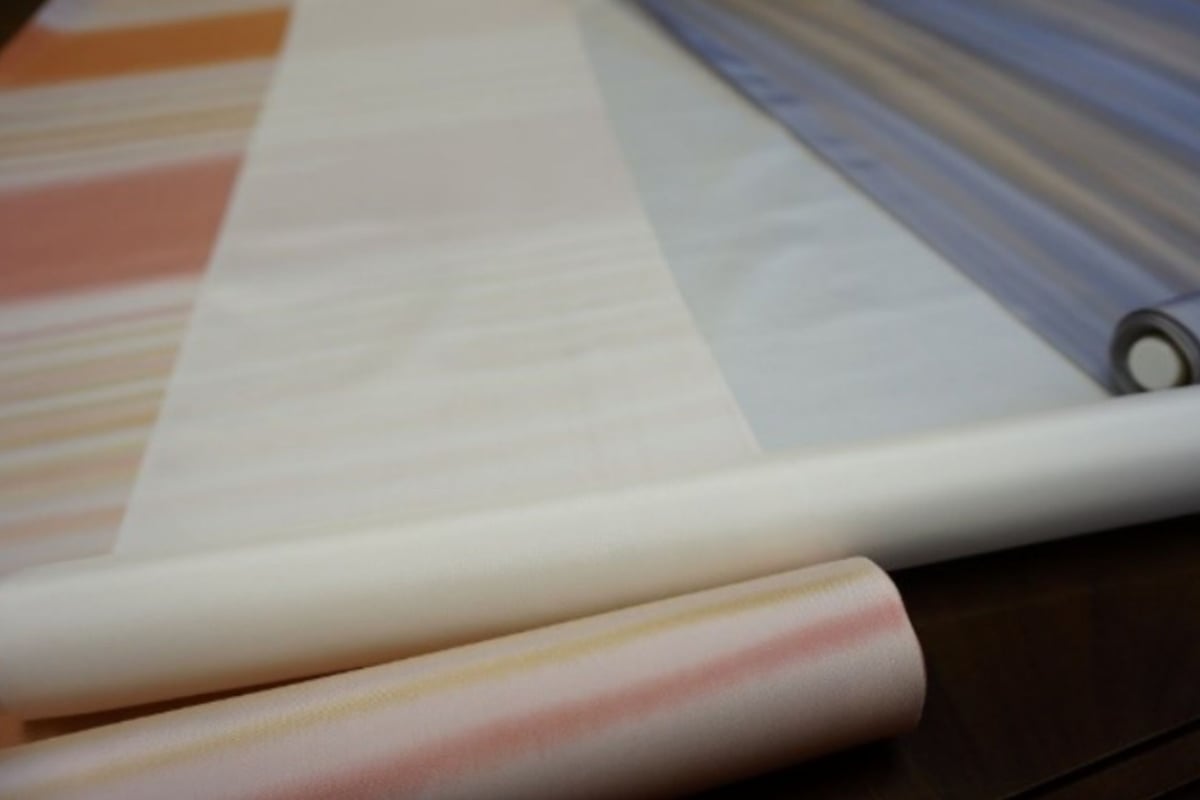
Fukui Habutae is a silk fabric that was woven extensively in Fukui Prefecture for export during the Meiji era. Habutae is a plain-woven fabric made by drawing together two fine, untwisted warp threads, and it is light and soft with a beautiful white luster. In Fukui, research into new silk fabrics began in the early Meiji era, including sending trainees to Kyoto. In the late 1880s, habutae weaving techniques were introduced by inviting engineers from the advanced weaving center of Kiryu. The techniques spread throughout the prefecture, and in the early 1890s Fukui Prefecture's silk fabric output became the highest in Japan. Electric power looms spread by the early Taisho era, and the Hokuriku region grew into one of the country's leading producers of export habutae. The area later shifted to rayon (artificial silk) and synthetic fibers, and Fukui remains one of Japan's foremost textile-producing regions today. In Katsuyama City, 'nure-yoko habutae', woven with wet weft threads, is still produced. Habutae Mochi, a famous Fukui confection, was also named after this habutae weave.
Origin
The Fukui area, with little difference in humidity between day and night, is well suited to silk weaving and was known as a silk-producing region from the Edo period. In 1871 (Meiji 4), Yuri Kimimasa, a former samurai of the Fukui Domain, brought back silk fabrics from Europe and asked Sakai Isao and other public-spirited people in Fukui to devise new silk fabrics. At Sakai's petition, trainees were sent to Kyoto, and the battan loom (a loom equipped with a flying shuttle) was also introduced. In 1877, the 'Shokko Kaisha' (Weavers' Company) opened.
History
When habutae exports boomed in the 1880s, weaving techniques were introduced in Fukui as well. Koriki Naohiro was invited from the factory of Kiryu weaver Moriyama Yoshihei to provide training, and scouring technicians were also sent to Kiryu. In the early 1890s, Fukui Prefecture's silk fabric output overtook that of Gunma Prefecture to become the highest in Japan. Although production stagnated temporarily at the end of the Meiji era, it grew again in the early Taisho era. However, exports declined after the financial panic of 1920, and the area shifted to rayon fabrics.
Features
Habutae is a plain-woven silk fabric made by drawing together two fine, untwisted warp threads. Light, supple and smooth to the touch, with excellent whiteness and a lustrous sheen, it has long been valued for kimono linings and formal wear. In the 'nure-yoko habutae' of Katsuyama City, Fukui Prefecture, the weft threads are woven wet, which tightens the weave and gives the fabric a smooth yet firm texture. Because uneven weaving tends to occur when the threads dry, it is said to be a fabric characteristic of the humid Hokuriku region.
Techniques
Habutae weaving
Fine, untwisted raw silk is used for the warp, and two threads are passed through each dent of the reed (osa, a comb-like tool that aligns the warp threads) for plain weaving. This is said to be the origin of the name 'habutae' (two threads per dent), and the result is a light, soft and lustrous fabric.
Nure-yoko (wet weft)
A technique of weaving while wetting the weft threads with water. The weave becomes tighter, producing a light, supple, durable and lustrous habutae. Higashino Tokichi Orimono in Katsuyama City continues to weave habutae using this technique.
Scouring (seiren)
The process of removing impurities from the woven fabric to bring out its whiteness and luster. Fukui acquired the technique by sending technicians to Kiryu, and in 1911 the scouring factories in the prefecture were merged into 'Fukui Prefecture Seiren Co., Ltd.' to improve quality.
Materials Used
| Main Production Areas |
|
|---|
Artisans & Workshops
株式会社東野東吉織物
A silk textile manufacturer in Katsuyama City. It produces 'nure-yoko habutae', woven by drawing together two warp threads and weaving with wet weft threads, mainly making fabric used for kimono linings and similar purposes. The company's factory is included as a component of the national Heritage of Industrial Modernization.
How to Buy
- Katsuyama City Hometown Tax Donation (Furusato Choice)
- A silk-cashmere stole made with Higashino Tokichi Orimono's nure-yoko habutae is listed as a thank-you gift for donations to Katsuyama City. The donation amount is high, at around 360,000 yen, so check the details carefully before applying.Where to buy →PR
Hands-on Experiences
はたや記念館ゆめおーれ勝山
福井県勝山市昭和町1丁目7-40
A textile museum housed in the former Kinoshita Weaving Mill, which operated from 1905 (Meiji 38) to 1998 (Heisei 10); admission is free. Hand-woven coaster making costs around 700 yen (reservation required), and a weaving experience on a takabata loom using silk thread costs around 4,000 yen. Visitors can also try reeling silk from cocoons for free.
View details →FAQ
Q. Is there a connection between habutae and Habutae Mochi?
A. Habutae Mochi, a famous Fukui confection, is a Japanese sweet named after habutae weaving. It is said to have been created in the late Meiji era, when habutae weaving was at its peak, and its white, smooth mochi evokes the texture of the silk fabric.
Q. Is habutae still woven in Fukui today?
A. The center of Fukui's textile industry has shifted to synthetic fibers, but Higashino Tokichi Orimono in Katsuyama City and others continue to weave 'nure-yoko habutae'. Today it is used mainly for kimono linings and similar purposes.
Q. Is there a place in Fukui to learn about the history of habutae?
A. At 'Hataya Kinenkan Yume-O-re Katsuyama' in Katsuyama City, exhibits introduce habutae production from the mid-Meiji era and the rise of rayon fabrics in the early Showa era. The building itself, which makes use of a former weaving mill, is part of the national Heritage of Industrial Modernization.