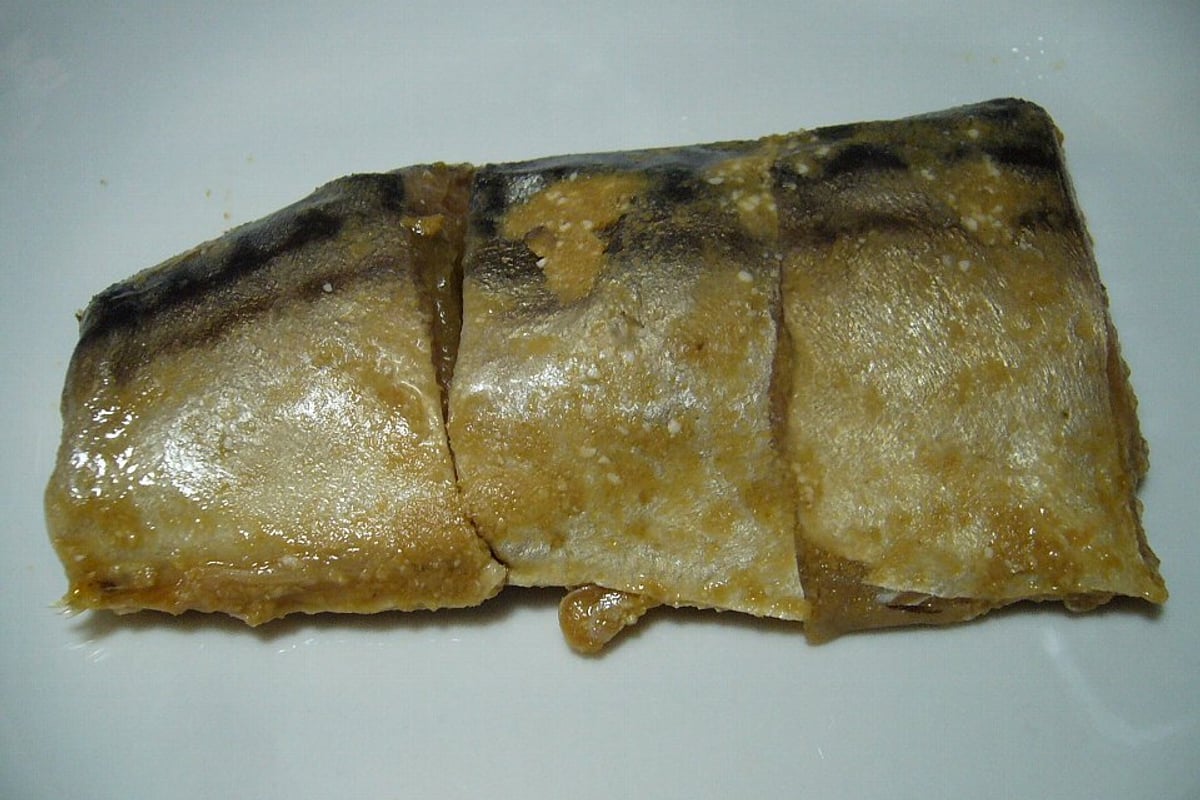
Image: Wikimedia Commons
Heshiko is a traditional preserved food of Fukui Prefecture, made by salting fish such as mackerel and then pickling it in rice bran to mature. It has long been made in the Wakasa region and along the Echizen Coast. Fish with the innards removed are salted for about a month, then packed in rice bran for more than half a year to ferment and mature. While it is salty, it is characterized by the concentrated umami and aroma of the fish. It is thought to have been made in Wakasa by the mid-Edo period, and it was a valuable source of protein for getting through harsh winters. The standard way to eat it is to remove the bran, grill it lightly, and serve it as a snack with sake or in ochazuke (rice with tea poured over it). In recent years, it has also come to be used like anchovies, in dishes such as pasta and pizza. In Obama City, 'Saba no Narezushi' (fermented mackerel sushi) is also made by desalting heshiko and pickling it again with rice koji and cooked rice.
Origin
One theory holds that the name heshiko derives from the expression 'heshikomu' (to press in), used for packing fish into barrels. It is said that 'heshikomareta mono' (something pressed in) was shortened to 'heshiko.' Fish were once plentiful in the waters near Obama and were a valuable source of protein for residents. Heshiko is said to have arisen as a way of preserving fish in preparation for winters and stormy days when fishing was impossible.
History
Heshiko is said to have been made since the mid-Edo period, and it has supported life in Wakasa as a winter preserved food. Obama is also known as the starting point of the Saba Kaido (Mackerel Road), along which mackerel was carried to Kyoto, and mackerel was an important product of the area. Today, the Mihama Heshiko Association (Mihama Heshiko Kumiai) in Mihama Town is working to develop it as a brand. The production method also continues to be passed on through extracurricular lessons at elementary schools, the operation of a workshop in Tagarasu, Obama City, and other activities.
Features
Preparation of mackerel heshiko begins around April to June, in late spring. Butterflied mackerel is salted, and after the summer has passed it is packed tightly into wooden barrels with rice bran and fermented for more than half a year. It is said to keep for several years as long as it is not exposed to air. Some sources note that, compared with raw mackerel, its amino acids, the components responsible for umami, increase about 2.5 times. The ingredients are mackerel, salt, rice bran, chili peppers, and so on.
Main Ingredients
Food Culture
In places such as Tagarasu in Obama City, 'Saba no Narezushi' is also made by removing the skin of heshiko, desalting it in water, stuffing it with rice mixed with rice koji, and pickling it for about two weeks. Lactic acid fermentation produces an aroma likened to that of a fine cheese. It has long been regarded as an indispensable feast for celebrations such as the New Year.
Famous Shops
民宿 佐助
福井県小浜市田烏36-47
A minshuku (family-run guesthouse) in the fishing village of Tagarasu in Obama City that prepares traditional local dishes such as heshiko and Saba no Narezushi. In winter, pufferfish and crab dishes can also be enjoyed. A one-night stay with two meals featuring its regular summer menu is from about 8,000 yen.
なぎさ会
福井県三方郡美浜町日向9-16
A shop selling handmade preserved foods, started by housewives in Mihama Town. It sells heshiko made by the traditional method of pickling mackerel in salt and rice bran, available from about 1,680 yen per piece. It is said to be closed on Saturdays and Sundays.
| Domestic Homemade Saba Heshiko (Kafuku Sengyo) | Heshiko from Kafuku Sengyo, a fresh fish shop in Obama City with more than 100 years of history. It is finished by the traditional method using a nukadoko (rice-bran pickling bed) that has been replenished for more than 30 years. It is offered as a return gift for donations to Obama City under the furusato nozei (hometown tax donation) program.Where to buy →PR |
|---|---|
| Mackerel Heshiko Peperoncino Sauce (Echizen Tamuraya) | A pasta sauce made with heshiko by Echizen Tamuraya, which deals in Fukui specialties. It is sold at places such as its shop inside 'Kuruf Fukui Station,' a commercial facility at JR Fukui Station, and is from about 1,200 yen. |
FAQ
Q. What is the origin of the name 'heshiko'?
A. The leading theory is that it derives from the expression 'heshikomu' (to press in), used for packing fish into barrels. It is said to be a shortened form of 'heshikomareta mono' (something pressed in). Another theory holds that it is a corruption of 'hishio' (干潮).
Q. How is heshiko eaten?
A. The standard way is to remove the bran, cut it into bite-sized pieces, and grill it lightly over a flame. It is used as a snack with sake, in ochazuke, as a filling for onigiri (rice balls), and as a sushi topping. Recently, it has also been used in fried rice and to season pasta and pizza.