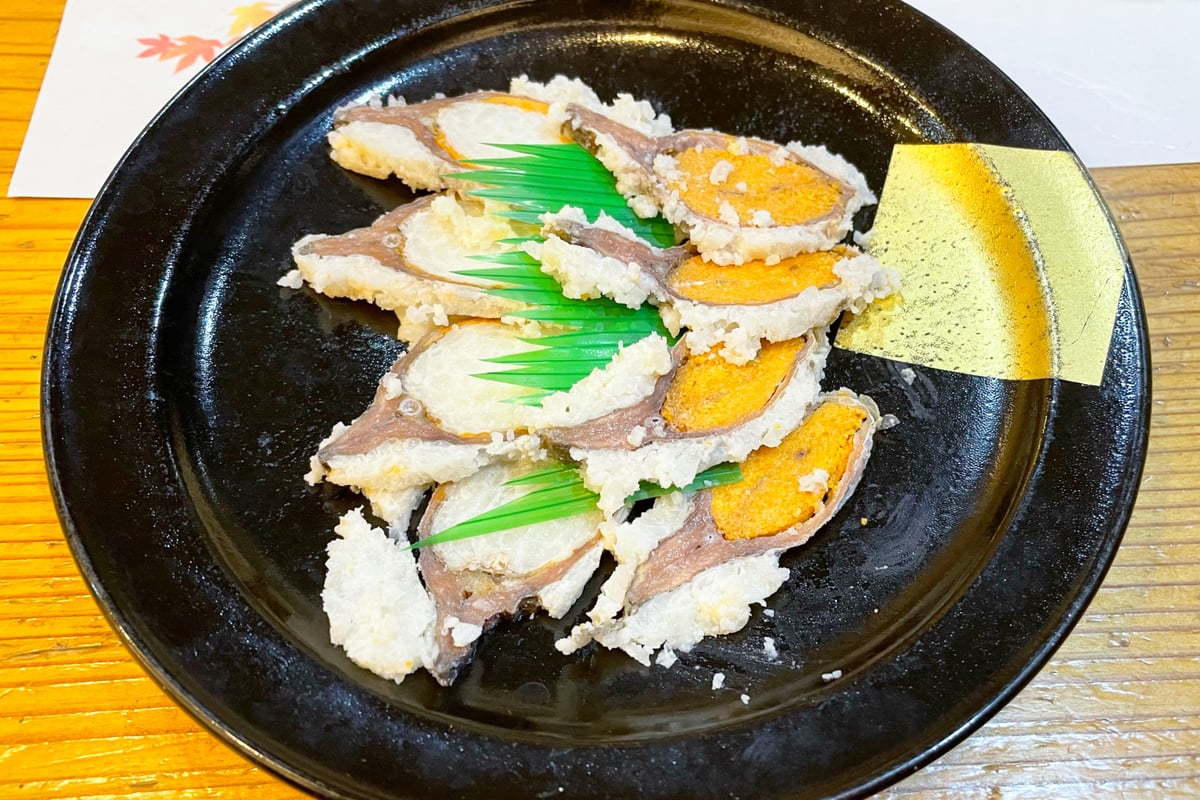
Image: Wikimedia Commons
Funazushi is a signature narezushi (fermented sushi) of Shiga Prefecture, made by salting nigorobuna — a crucian carp species found only in Lake Biwa — and then packing it with cooked rice to undergo lactic acid fermentation. Unlike modern nigiri-zushi, which gets its tartness from vinegar, funazushi develops its sourness naturally through the prolonged fermentation of rice and fish, and it is often described as a living link to the origins of sushi itself. Its history is remarkably old: wooden tablets (mokkan) from the Nara period and the Heian-era legal code Engishiki record 'sushi funa' (鮨鮒) being sent as tribute from Omi Province. Funazushi is known for its strong sourness and a distinctive fermented aroma sometimes compared to cheese — a flavor that divides opinion, though well-made funazushi is prized for its rich umami without any fishy smell. It is typically sliced thin and eaten as is, enjoyed with tea over rice (ochazuke) or as an accompaniment to sake, and remains a treasured traditional dish served on special occasions such as New Year and when hosting guests.
Origin
Funazushi has an extremely long history. The term 'funazushi' (鮒鮨) appears on wooden tablets from the Nagayao family residence and the Nijo Oji excavation sites, both dating to the Nara period. The Heian-era legal code Engishiki records that 'sushi funa' was sent as tribute to the imperial court from the Chikuma kitchen of Omi Province (near present-day Maibara City, Shiga Prefecture), showing that rice and salt were already being used in its preparation at the time. The method of packing fish with cooked rice and allowing it to lactic-acid ferment — known as narezushi — is considered the prototype of modern nigiri-zushi, and funazushi is regarded as a food that preserves this ancient form almost unchanged to the present day.
History
Thanks to the geography of Lake Biwa and its surrounding inlets and paddy fields, nigorobuna gathering in shallow waters to spawn could be caught with relative ease, and funazushi became deeply woven into life along the lake's shores. The process — salting egg-bearing nigorobuna caught around April and May, then layering them with rice in barrels during the doyo season (midsummer) for the main fermentation, weighting them down, and letting them ferment until eating them from New Year onward — has been passed down largely unchanged since before the Edo period. Even today, households around the lake and specialty shops in areas such as Takashima and Otsu continue to follow methods handed down over generations.
Features
The defining feature of funazushi is that its sourness comes entirely from lactic acid fermentation, without any vinegar. After salting and then packing with rice, it is left to ferment for several months to over a year, producing a strong tartness alongside a rich aroma from amino acids created during maturation. Nigorobuna, a crucian carp species unique to Lake Biwa, is considered the finest fish to use, with egg-bearing females especially prized. Flavor varies with the degree of fermentation and the pickling method, and some shops offer beginner-friendly versions, such as those pickled in sake lees, that are easier to enjoy.
Main Ingredients
Food Culture
Funazushi is a preserved food born from the union of Lake Biwa fishing and rice farming in the lakeside way of life, and it has long been treasured as a dish for special occasions such as New Year and hosting guests. Because its preparation demands considerable time and effort, it remains cherished today as a flavor passed down within individual households.
Famous Shops
元祖阪本屋
滋賀県大津市中央1-2-20
Founded in 1869. Originally a branch of the main Sakamotoya, which served as an official restaurant for the Zeze domain during the Edo period, this long-established shop has specialized in making and selling funazushi for over 150 years. Known for its mellow, approachable flavor, it offers small sizes starting in the 3,000-yen range.
View details →四〇〇年鮒寿し 総本家 喜多品老舗
滋賀県高島市勝野1387
A long-established Takashima shop said to have been founded in 1619. For nearly 400 years since the early Edo period, it has preserved the traditional 'momiji funazushi' technique passed down in Omi-Takashima since ancient times, along with its own method known as 'hyakume hyakkan sennichi.'
View details →鮒寿し 魚治
滋賀県高島市マキノ町海津2304
A long-established shop on the shores of Lake Biwa in Makino, which also operates the inn and restaurant Korian. Alongside the traditional main fermentation method, it offers a milder, easier-to-eat sake-lees pickled version that is especially popular with first-timers and women.
View details →FAQ
Q. Why does funazushi have such a distinctive smell?
A. It is made by lactic-acid fermenting nigorobuna and rice without using any vinegar. The aroma comes from the fish's proteins breaking down into amino acids during fermentation; high-quality funazushi is said to have a rich, cheese-like fragrance, but the fermented smell is strong and opinions on it vary widely.
Q. What is the best way to eat funazushi?
A. It is often sliced thin and eaten as is with sake, or enjoyed as ochazuke by pouring hot tea over it. Its distinctive sourness and saltiness spread through the dish much like a broth, making it easier for first-time eaters to enjoy.