Image: Wikimedia Commons
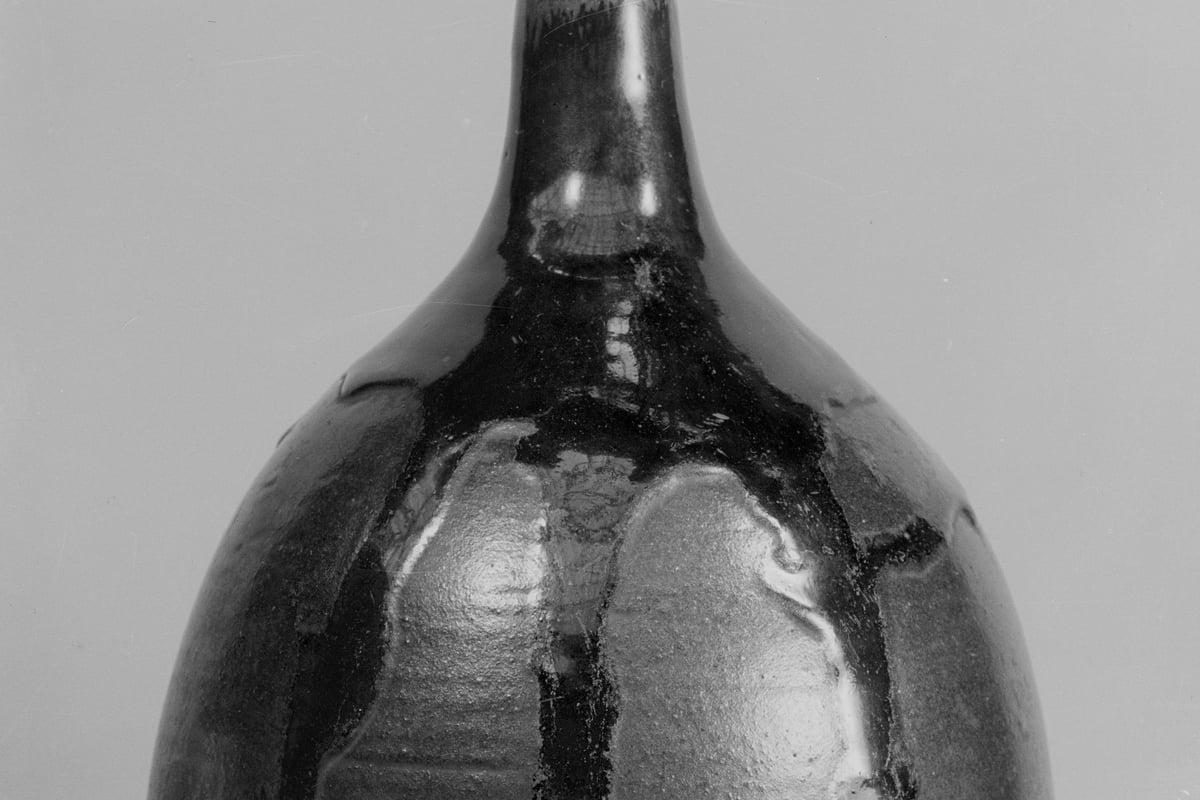
Zeze-yaki is stoneware fired in the Zeze district of Otsu City, Shiga Prefecture. It is said to have begun in the early Edo period as the official kiln of Zeze Domain, under the guidance of Kobori Enshu, the renowned tea master. Reflecting Enshu's refined tastes, it is counted among the 'Enshu Nanagama,' the seven representative kilns said to have been favored by Enshu, and became known for tea utensils such as tea caddies and water jars glazed in a dark, blackish tone overlaid with white clay. Its history as an official domain kiln was relatively short-lived due to a change of feudal lord, but in 1919 the local businessman Kenzo Iwasaki, working together with the painter Shunkyo Yamamoto, revived the kiln, and the techniques have been carried on to this day as 'Shinsei Zeze-yaki' (revived Zeze-yaki). Today, visitors can encounter its works and history at places such as the Zeze-yaki Museum in Otsu City.
Origin
The predecessor of Zeze-yaki is said to trace back to a kiln recorded as 'Seta-yaki' around the Genna era (1615-1624). During the Kan'ei era, under Zeze Domain lord Ishikawa Tadafusa, it was established as the domain's official kiln, and tea ceramics reflecting the guidance and tastes of Kobori Enshu, a tea master who also served as construction magistrate, began to be produced. Tea caddies and water jars featuring the 'fukurin' design, in which white clay is overlaid on a dark, understated glaze, were prized as exemplary works conveying Enshu's aesthetic sensibility.
History
Following a change of feudal lord, Zeze-yaki's history as an official domain kiln is said to have ended after several decades from the Kan'ei era. A long blank period followed, but in 1919 the local businessman Kenzo Iwasaki, reluctant to see the tradition disappear, built a new climbing kiln together with the painter Shunkyo Yamamoto, and with guidance from the Kyoto potter Tozan Ito II, devoted his life to reviving Zeze-yaki. This 'Shinsei Zeze-yaki' (revived Zeze-yaki) has been carried on by the Iwasaki family, and pottery-making continues today in the Nakasho area of Otsu City.
Features
Zeze-yaki is a producer of tea ceramics counted among the 'Enshu Nanagama,' and is known for the 'fukurin' design, in which white clay is overlaid on a dark, blackish glaze. Its hallmark is refined, restrained, and dignified form reflecting Kobori Enshu's tastes, and it has developed mainly around tea utensils such as tea caddies, water jars, and tea bowls. Since its revival, visitors can encounter both historical and contemporary works at a museum and kiln overlooking a garden.
Techniques
Fukurin
A design technique unique to Zeze-yaki in which white clay is overlaid, like a border, around the rim of a piece coated in a dark, blackish glaze. It produces the refined look favored by Kobori Enshu.
Materials Used
Production Process
- 1
Shaping
Tea caddies, water jars, tea bowls, and other forms are shaped on the potter's wheel, with an emphasis on the refined form favored by Enshu.
- 2
Bisque firing
The shaped clay body is fired once at a low temperature to stabilize the form.
- 3
Glazing
A dark, blackish glaze is applied, and white clay is overlaid around the rim and other areas to create the fukurin design.
- 4
Final firing
The piece is fired at high temperature in a climbing kiln or gas kiln, finishing it as a tea ceramic with a subdued luster.
| Main Production Areas |
|
|---|
Artisans & Workshops
膳所焼窯元陽炎園
A Zeze-yaki kiln carried on by the Iwasaki family since its revival in the Taisho era. It continues to create works that carry on the tradition of tea ceramics favored by Kobori Enshu.
Official site →How to Buy
- 膳所焼窯元陽炎園
- The online site of the kiln that has carried on Zeze-yaki since its revival. It introduces and sells traditional tea ceramics such as tea caddies, water jars, and tea bowls.Where to buy →PR
Hands-on Experiences
膳所焼美術館
滋賀県大津市中庄1丁目22-28
Admission from around 600 yen; an option including matcha and a sweet costs an additional 500 yen or so. Visitors can view works spanning the history of Zeze-yaki while overlooking a garden associated with Kobori Enshu.
View details →FAQ
Q. What are the 'Enshu Nanagama'?
A. The term refers to a group of seven representative kilns said to reflect the tastes of Edo-period tea master Kobori Enshu, which include Zeze-yaki as well as kilns such as Shidoro-yaki and Agano-yaki. In fact, some of these kilns opened after Enshu's death, and the grouping is said to have been assembled in later generations by invoking his name.