Image: Wikimedia Commons
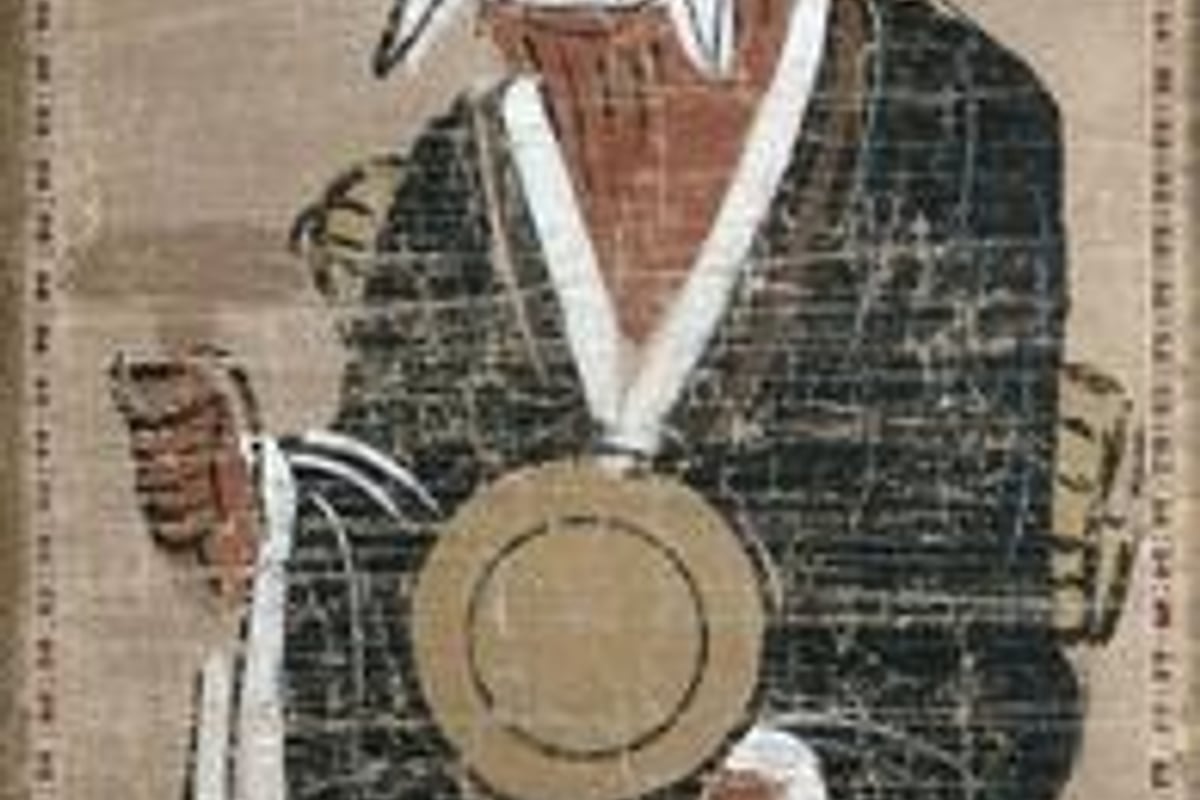
Otsu-e are folk paintings that were sold as souvenirs to travelers at the Otsu post station on the Tokaido road (around Oiwake and Otani) in the early Edo period. They are said to have begun around the Kan'ei era (1624-1644) as Buddhist paintings depicting religious subjects, and are also known from Matsuo Basho's haiku 'What Buddha did the brush of Otsu-e begin with?' Over time the subject matter broadened to secular themes, and during the Bunka-Bunsei era (1804-1829), ten representative subjects — the 'Ten Otsu-e Themes' — including 'Oni no Nembutsu' (Demon's Prayer) and 'Fuji Musume' (Wisteria Maiden), became established. Each painting carries a moral verse and a talismanic meaning: Oni no Nembutsu is cherished as a charm against children's night crying, while Fuji Musume is valued as an auspicious image for good marriage. Today, near Otsu City's Miidera Temple, the Takahashi Shozan family, who run the 'Otsu-e no Mise' shop founded in the early Meiji era, continue to carry on the traditional technique and paint Otsu-e as holders of an Otsu City-designated Intangible Cultural Property.
Origin
The origins of Otsu-e are said to date back to around the Kan'ei era (1624-1644) in the early Edo period, in the Oiwake and Otani area of the Otsu post station on the Tokaido road. They are said to have begun as Buddhist paintings sold as souvenirs and talismans to travelers heading to Kyoto or Osaka; Matsuo Basho's haiku 'What Buddha did the brush of Otsu-e begin with?' also suggests that the earliest subjects were primarily Buddhist.
History
From the mid-Edo period onward, Otsu-e broadened its subjects from Buddhist images to playful and satirical depictions of people and animals, developing into a popular art form that conveyed moral lessons and good fortune through accompanying verses. During the Bunka-Bunsei era (1804-1829), the ten representative subjects known as the 'Ten Otsu-e Themes' became established, and the art form reached its peak in the late Edo period. Although the number of painters declined in the modern era, the Takahashi Shozan family has passed down the technique through generations, centered on the 'Otsu-e no Mise' shop founded in the early Meiji era along the approach to Miidera Temple in Otsu City, and today the fourth and fifth generations continue to create the works.
Features
The characteristic feature of Otsu-e is its humorous depiction of deities, people, and animals using simple outlines and rustic coloring, accompanied by a moral verse alongside the painting. Another major characteristic is that each painting carries a talismanic meaning or lesson: 'Oni no Nembutsu' wards off children's night crying, 'Fuji Musume' prays for a good marriage, and 'Hyotan Namazu' (Gourd and Catfish) teaches how to get on in the world. In later years, 'Fuji Musume' was also adapted as a piece for Japanese classical dance, extending the art form's reach beyond painting.
Techniques
The Ten Otsu-e Themes
A collective name for the ten representative subjects established during the Bunka-Bunsei era, including Oni no Nembutsu, Fuji Musume, Hyotan Namazu, Takajo (Falconer), and Zato (Blind Musician), each carrying its own talismanic meaning or moral lesson.
Materials Used
Production Process
- 1
Sketching
Deities, people, and animals are drawn in simple outlines.
- 2
Coloring
Colors are applied quickly using a simple palette.
- 3
Adding the Verse
A moral verse or words related to the painting are added to complete the work.
| Main Production Areas |
|
|---|
Artisans & Workshops
大津絵の店(高橋松山)
A long-established Otsu-e shop founded in the early Meiji era along the approach to Miidera Temple. The fourth-generation Takahashi Shozan and fifth-generation Shinsuke, holders of an Otsu City-designated Intangible Cultural Property, carry on the traditional subjects and techniques today.
Official site →How to Buy
- 大津絵の店
- A shop specializing in Otsu-e located along the approach to Miidera Temple. It offers works such as hanging scrolls, shikishi boards, and woodblock prints, and items can also be purchased through its online shop.Where to buy →PR
FAQ
Q. What paintings does 'the Ten Otsu-e Themes' refer to?
A. It is a collective name for ten representative subjects that became established during the Bunka-Bunsei era, including Oni no Nembutsu, Fuji Musume, Hyotan Namazu, Takajo, and Zato. Over time the number of subjects grew to more than a hundred, but these ten remain especially cherished as auspicious images.