Image: Wikimedia Commons
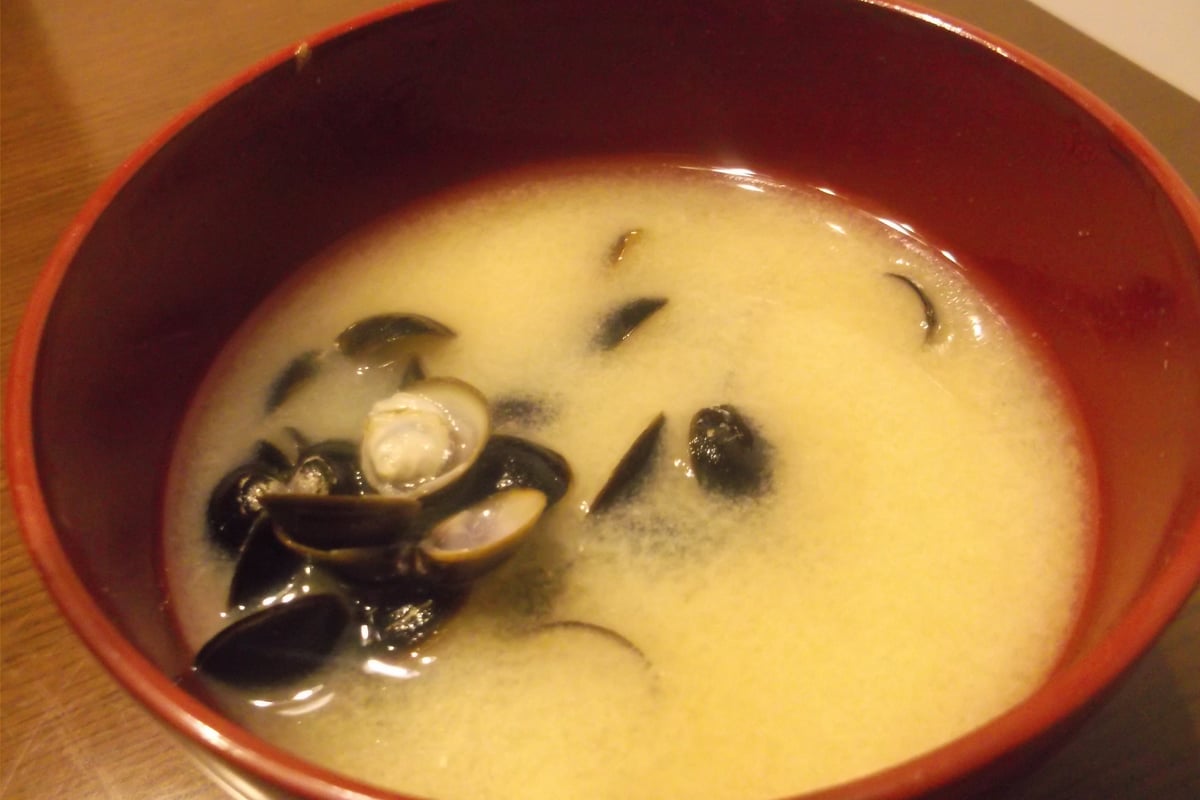
Shijimi-jiru is a miso soup made with seta shijimi, a species of freshwater clam found only in Lake Biwa, and it has long been cherished as a local dish throughout Shiga Prefecture. Compared to other clam varieties such as the yamato shijimi, seta shijimi have plumper, larger, thicker shells and richly flavored meat. Until around the 1960s and 70s, families across the prefecture ate it regularly as miso soup, simmered in a sweet soy sauce (shigure-ni), or as shijimi rice, and it symbolized the bounty of Lake Biwa. In recent years, catches have declined sharply due to environmental changes such as the loss of sandy lakeshore habitat, and efforts are underway to protect this resource. The season runs from around December to April, when the clams firm up and become especially delicious, earning them the nickname 'kan-shijimi' (winter shijimi), and during this period they appear in supermarkets and shops throughout the prefecture.
Origin
Seta shijimi is a species found only in Lake Biwa and the rivers that flow into it, and it has supported the tables of the lake country's people since ancient times. Fishing for it as a resource of Lake Biwa dates back many centuries, and in lakeside communities, turning this readily available ingredient into miso soup naturally became the customary way to prepare it.
History
Until around the 1960s and 70s, shijimi miso soup, shigure-ni, and shijimi rice were widely eaten as home cooking throughout the prefecture and were known as a specialty of Lake Biwa. Since then, environmental changes such as the shrinking of sandy lakeshore habitat have reduced the clams' living space, and catches have fallen sharply. Today, as a precious resource, protection efforts are underway, including releasing juvenile clams and regulating catches.
Features
The basic preparation avoids overpowering dashi, instead letting the clams' own umami and broth shine through in the miso soup. Because seta shijimi have large, richly flavored meat, even a modest number of clams is said to yield plenty of umami. It is typically served with garnishes such as chopped green onion, allowing diners to enjoy the clams' flavor in its simplest form.
Main Ingredients
Food Culture
For people living along the shores of Lake Biwa, shijimi clams were an easily gathered ingredient close to home. During their December-to-April season, they appear in supermarkets across the prefecture as 'kan-shijimi,' and the dish is cherished as one that announces the changing seasons at the family table.
How It Differs from Home Cooking
At home, it is enjoyed as an easy everyday miso soup, whereas traditional restaurants (ryotei) often serve it as kamameshi (rice cooked in a pot) or as a course within a kaiseki meal, showcasing the clams' umami through more elaborate dashi preparation and presentation.
Famous Shops
洗心寮
滋賀県大津市石山寺3-1-9
A long-established restaurant founded in 1926 in front of Ishiyama-dera Temple, known for its signature shijimi kamameshi (clam rice cooked in a pot).
View details →小松家
滋賀県大津市石山寺3-1-17
A soba noodle shop in front of Ishiyama-dera Temple, popular for its set menu pairing zaru soba with shijimi rice.