 Image: Wikimedia Commons
Shiga Prefecture
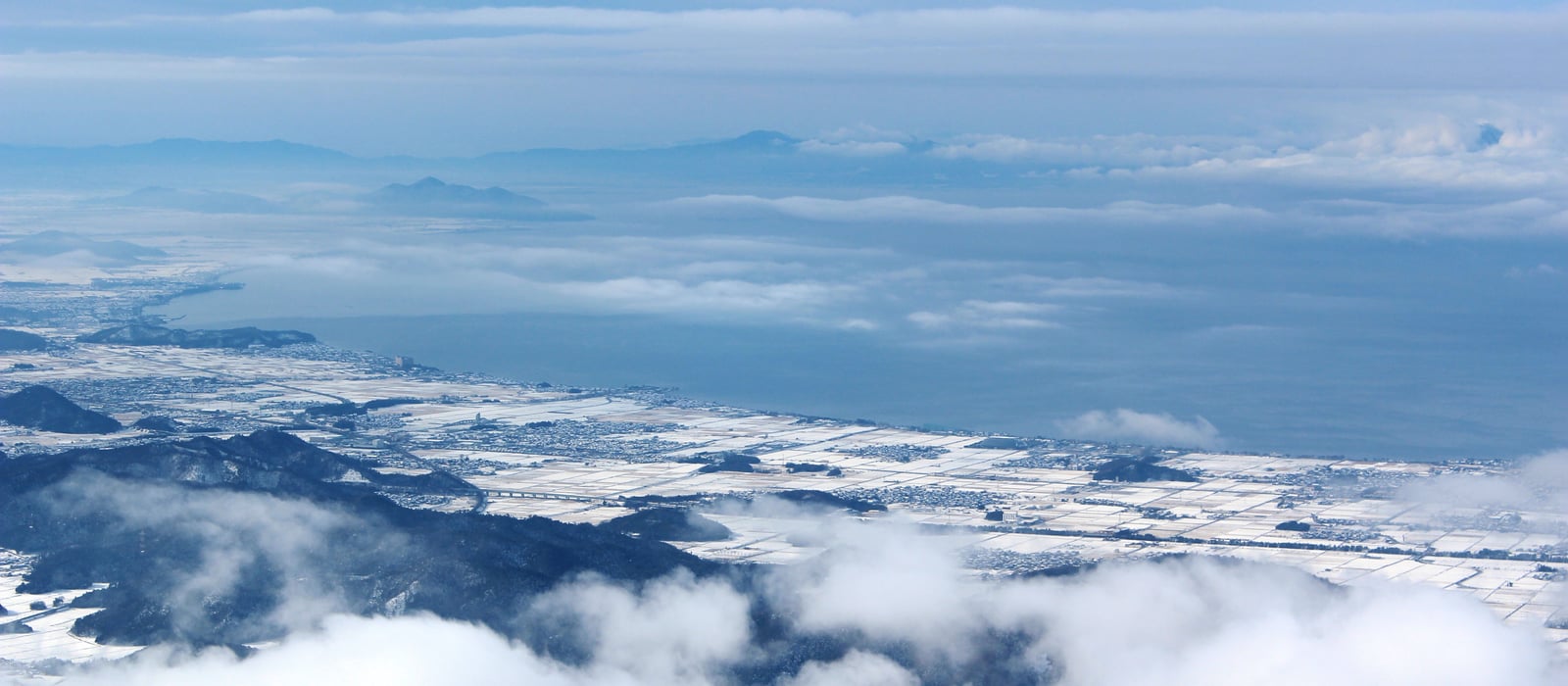
Home to Lake Biwa, Japan's largest lake, Shiga Prefecture is alive with a rich variety of traditional crafts: Shigaraki-yaki, one of Japan's Six Ancient Kilns, the twin Buddhist-altar-making centers of Hikone and Nagahama, and Omi-jofu, a hemp textile once distributed nationwide by Omi merchants. Along the approach to Mii-dera Temple in Otsu, the folk-art tradition of Otsu-e painting and the craft of cord-braiding have been passed down since the Edo period, while Adogawa in Takashima City is known as the heartland of folding-fan-rib production, supplying roughly 90% of Japan's fan ribs. On the food side, the table is still graced by Omi beef, one of Japan's three great wagyu brands with roots in the Edo period, funazushi, said to be the oldest form of sushi in Japan, and lake-fish dishes made with Lake Biwa's endemic biwamasu trout and seta shijimi clams. Shiga's charm lies in its distinctive production areas scattered around all sides of the lake - Otsu, Hikone, Nagahama, Shigaraki, Takashima, and Omihachiman.
Shiga's Traditional Crafts
Shigaraki-yaki (Shigaraki Ware)
Shigaraki-yaki
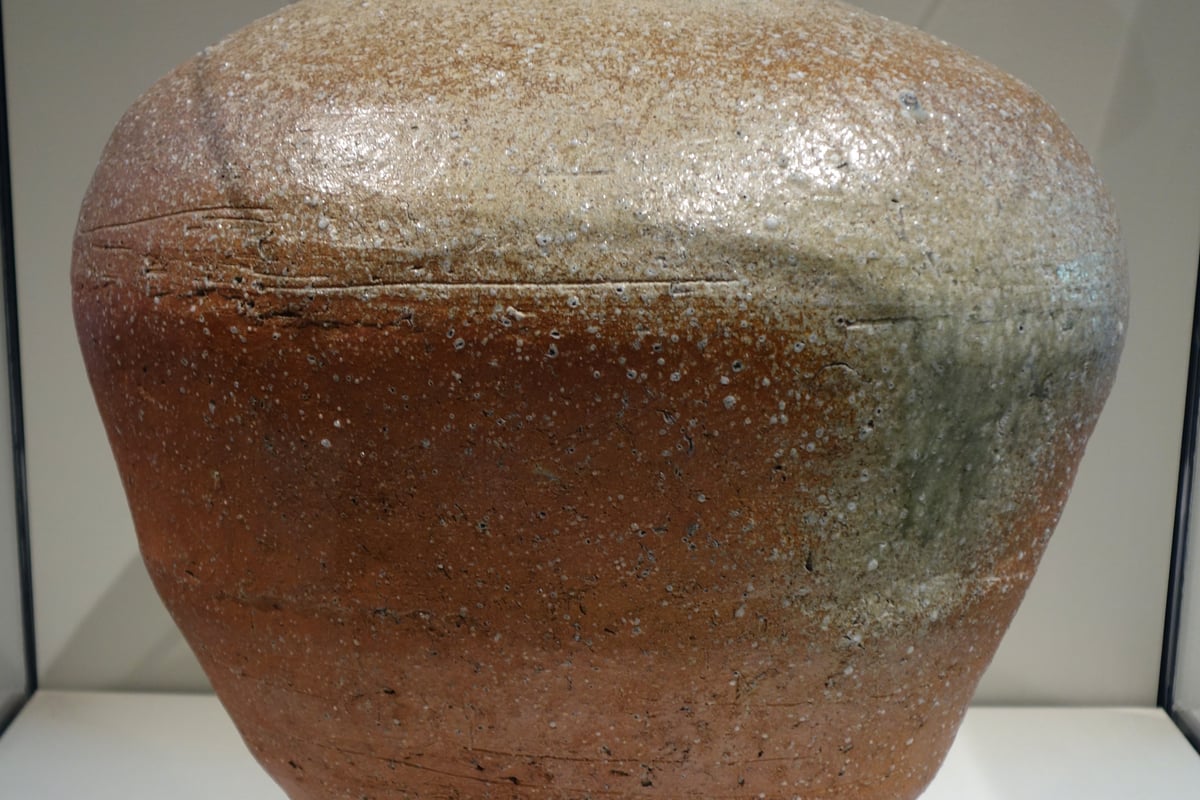
Shigaraki-yaki is stoneware fired mainly around Shigaraki, Koka City in Shiga Prefecture, and is counted among Japan's Six Ancient Kilns alongside Seto, Tokoname, Tamba, Echizen, and Bizen. The kilns are said to have opened in the Kamakura period under the influence of neighboring Tokoname's techniques, and by the Momoyama period Shigaraki wares were prized as utensils for the tea ceremony. Today the ware is widely known for its endearing tanuki (raccoon dog) figurines, but the production area actually covers a much broader range of goods, from jars and pots to tea ceramics, tiles, planters, and contemporary art. The tanuki figurine became famous nationwide in 1951, when newspapers reported that tanuki statues holding Japanese flags had been lined up to welcome Emperor Showa during his visit to Shigaraki. The greatest appeal of Shigaraki-yaki lies in the rustic beauty created by earth and flame: the warm scarlet hue (hiiro) produced by the iron content in the clay, and the glassy vidro glaze (bidoro-yu) formed when wood-fired ash melts onto the surface.

Omi-jofu (Omi Ramie/Hemp Textile)
Omi-jofu
Omi-jofu is a hemp textile woven mainly in the Koto region on the eastern shore of Lake Biwa, in what are now Aisho Town and Higashiomi City. It was designated a Traditional Craft by the Minister of Economy, Trade and Industry in 1977. The production area is said to date back to hemp weaving traditions from the Muromachi period, and in the Edo period it was distributed nationwide by Omi merchants as a luxury hemp fabric called 'Takamiya cloth,' ranked alongside Nara-zarashi and Echigo-chijimi. There are two main lines: kibira, woven using hand-spun hemp or ramie weft threads, and kasuri, woven to create ikat patterns. Both have long been prized as luxury fabrics for kimono worn in the height of summer. Thanks to hemp's characteristic crisp, cool touch and breathability, the fabric was also widely used in the modern era for mosquito netting, supporting the everyday life of the Omi region. Today the craft is carried on by a small number of certified master artisans, centered on the Omi-jofu Traditional Industry Hall in Aisho Town.
Hikone Butsudan (Hikone Buddhist Altars)
Hikone Butsudan
Hikone Butsudan are gold-lacquered Buddhist altars produced mainly in Hikone City, Shiga Prefecture, and were the first product in the Buddhist altar and ritual goods industry to be designated a Traditional Craft by the Minister of Economy, Trade and Industry, in 1975. Their origin is said to trace back to the mid-Edo period, when craftsmen in the castle town of Hikone Domain who had produced arms and armor turned to making Buddhist altars as the country entered an age of peace. Under the protection of the Hikone Domain, a division-of-labor system involving seven specialized trades — woodworking, palace-structure work, carving, lacquering, maki-e (lacquer decoration), metal fittings, and gold-leaf application — became established by the late Edo period, and the street known as 'Nanamagari,' connecting Hikone Castle town with the Nakasendo highway, is still lined with altar shops and workshops today. The craft is known for its weighty, splendid finish achieved through extensive gold leaf and lacquer, as well as for being crafted entirely by hand, from the woodwork through to final assembly.
Takashima Senkotsu (Takashima Folding Fan Ribs)
Takashima Senkotsu
Takashima Senkotsu are the bamboo ribs of folding fans, made in Takashima City, Shiga Prefecture, especially along the Ado River basin. The region produces roughly 90% of all fan ribs distributed in Japan. It is said to have begun in the Edo period as a side occupation during the winter farming off-season, making use of madake bamboo planted along the Ado River. Craftsmen make a distinction between oyabone, the outer ribs that support both ends of the fan, and nakabone, the inner ribs that fan out from the pivot, and the process of splitting, shaving, and polishing the bamboo runs to about 18 steps for the oyabone and about 16 for the nakabone, each handed from one specialized craftsman to the next in a division-of-labor system. Most finished fan ribs are sent to fan wholesalers in Kyoto, where they are papered and painted to become 'Kyo-sensu' (Kyoto folding fans) — making Takashima the unsung backbone that supports the glamorous Kyoto fan industry from behind the scenes. In recent years, efforts have also spread to create original local products, such as cloth fans using Takashima fan ribs.
Zeze-yaki (Zeze Ware)
Zeze-yaki
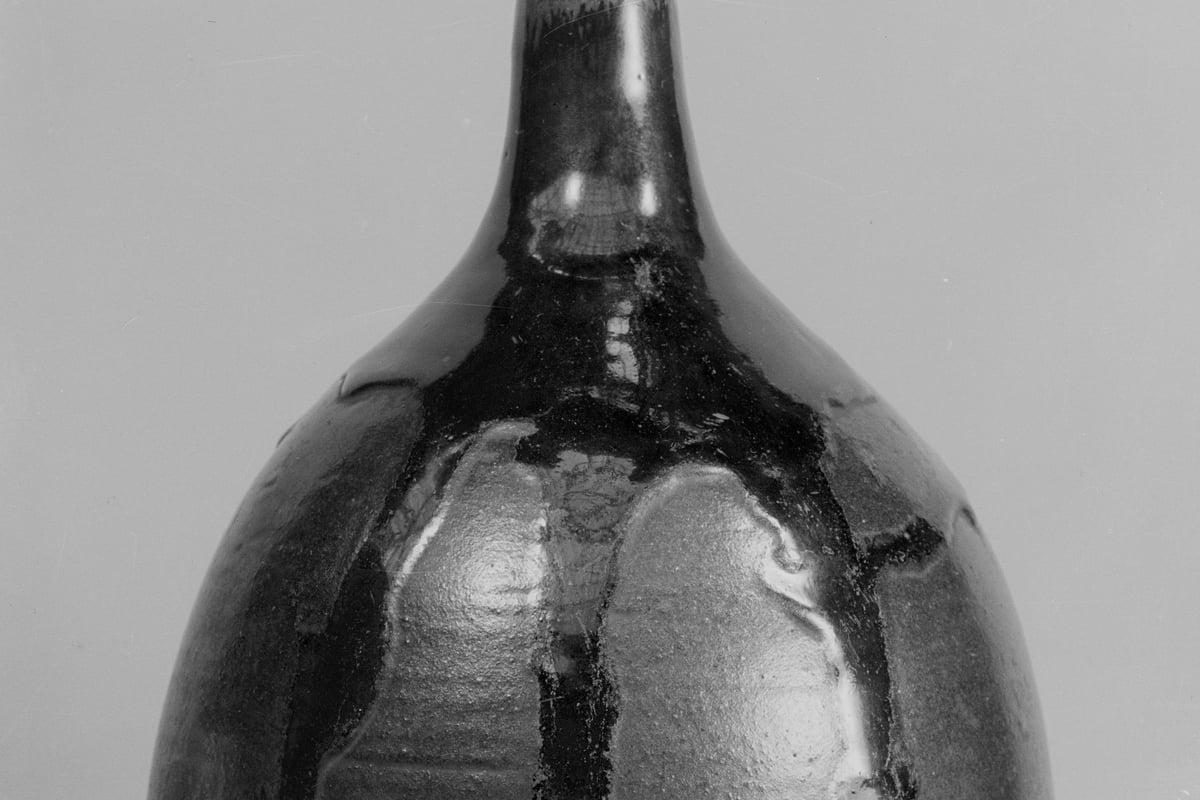
Zeze-yaki is stoneware fired in the Zeze district of Otsu City, Shiga Prefecture. It is said to have begun in the early Edo period as the official kiln of Zeze Domain, under the guidance of Kobori Enshu, the renowned tea master. Reflecting Enshu's refined tastes, it is counted among the 'Enshu Nanagama,' the seven representative kilns said to have been favored by Enshu, and became known for tea utensils such as tea caddies and water jars glazed in a dark, blackish tone overlaid with white clay. Its history as an official domain kiln was relatively short-lived due to a change of feudal lord, but in 1919 the local businessman Kenzo Iwasaki, working together with the painter Shunkyo Yamamoto, revived the kiln, and the techniques have been carried on to this day as 'Shinsei Zeze-yaki' (revived Zeze-yaki). Today, visitors can encounter its works and history at places such as the Zeze-yaki Museum in Otsu City.
Obata Ningyo (Obata Clay Dolls)
Obata Ningyo
Obata Ningyo are traditional clay dolls handed down in Gokasho-Obata, Higashiomi City, Shiga Prefecture, designated a Shiga Prefecture Traditional Craft in 1994. According to tradition, during the Kyoho era (1716-1736), a man named Yasube, who ran a courier business to Kyoto, learned the techniques of Kyoto's popular Fushimi dolls and brought them back home, marking the craft's beginning. In workshops along the old Nakasendo highway, the traditional method of shaping figures with wooden and clay molds is still practiced today, with vivid coloring centered on pink and ultramarine applied over the dolls' rustic clay texture. Over the centuries, hundreds of molds are said to have accumulated, producing a wide variety of seasonal and auspicious items, from festival dolls to zodiac-themed clay bells. While beloved as a folk toy woven into the townscape long associated with Omi merchants, the craft now has only a single successor, Gengo Hosoi, the ninth generation counting from the founder Yasube, and the community continues efforts toward preserving and passing on the tradition.
Umpei-fude (Umpei Calligraphy Brushes)
Umpei-fude
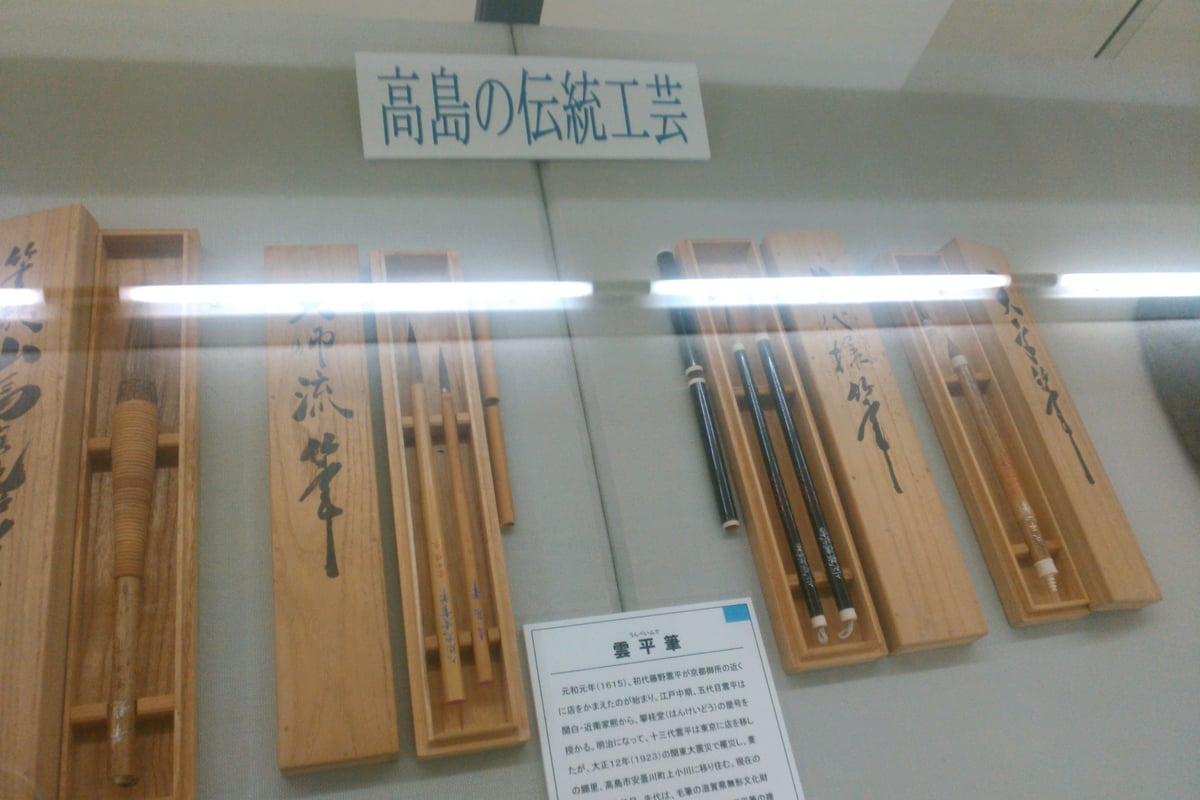
Umpei-fude are calligraphy brushes that carry on the technique of 'makifude' (wrapped brushes), in which the brush tip is formed by wrapping washi paper around the hair core. The craft's founder is said to be Fujino Umpei, a brush maker who established his workshop in Kyoto during the Genna era (around 1615); he served the imperial court and is said to have had close ties with the Arisugawa-no-miya family, known for its devotion to calligraphy. In the Shotoku era, the fifth-generation Umpei received the title 'Hankeido' from the then-regent Konoe Iehiro, and successive brush makers have carried on the technique under this name ever since. Today the workshop is located in Adogawa, Takashima City, Shiga Prefecture, where the fifteenth-generation Fujino Umpei and his child are known as the only makers in Japan of makifude brushes, whose tips are wrapped and fixed with washi paper. The brush tips, made using a combination of animal hairs such as raccoon dog, sheep, and weasel, hold ink well and are said to produce powerful lines, and have long been cherished by calligraphers and many enthusiasts. In 1966 the fourteenth generation was recognized as a holder of Shiga Prefecture's Intangible Cultural Property, and Umpei-fude itself has been designated a Traditional Craft by the Governor of Shiga Prefecture.
Otsu-e (Otsu Folk Paintings)
Otsu-e
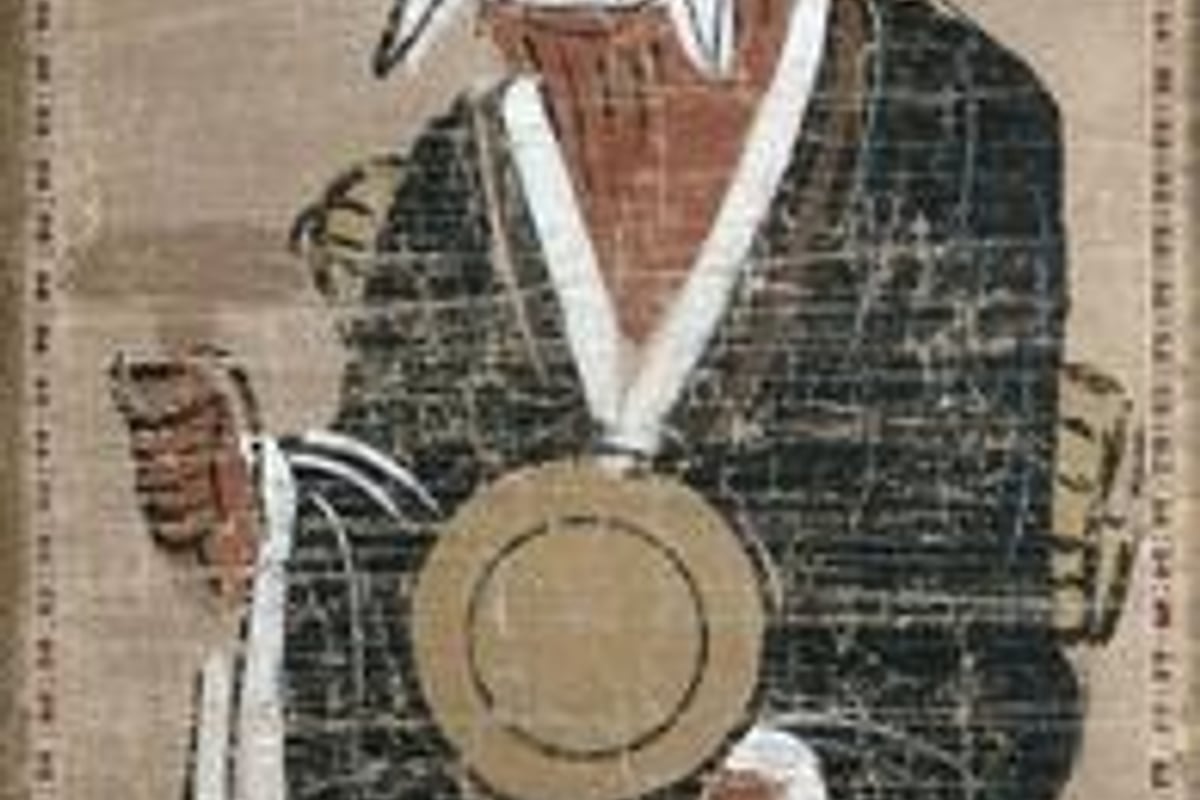
Otsu-e are folk paintings that were sold as souvenirs to travelers at the Otsu post station on the Tokaido road (around Oiwake and Otani) in the early Edo period. They are said to have begun around the Kan'ei era (1624-1644) as Buddhist paintings depicting religious subjects, and are also known from Matsuo Basho's haiku 'What Buddha did the brush of Otsu-e begin with?' Over time the subject matter broadened to secular themes, and during the Bunka-Bunsei era (1804-1829), ten representative subjects — the 'Ten Otsu-e Themes' — including 'Oni no Nembutsu' (Demon's Prayer) and 'Fuji Musume' (Wisteria Maiden), became established. Each painting carries a moral verse and a talismanic meaning: Oni no Nembutsu is cherished as a charm against children's night crying, while Fuji Musume is valued as an auspicious image for good marriage. Today, near Otsu City's Miidera Temple, the Takahashi Shozan family, who run the 'Otsu-e no Mise' shop founded in the early Meiji era, continue to carry on the traditional technique and paint Otsu-e as holders of an Otsu City-designated Intangible Cultural Property.
Otsu Kumihimo (Otsu Braided Cords)
Otsu Kumihimo
Otsu Kumihimo is a traditional craft of braided cords (kumihimo) passed down mainly in the Ōsaka district (逢坂) of Otsu City. Kumihimo braiding was introduced to Japan along with Buddhism, and was originally used as cords for binding sutra scrolls and Buddhist vestments, as well as decorative cords for the robes of court nobles and samurai. In Otsu, the craft is said to have begun during the Edo period, when samurai and townspeople traveling the Tokaido road into Kyoto had the cords on their sword scabbards and inro cases repaired locally. Using several types of braiding stands — including the maru-dai (round stand), kaku-dai (square stand), aya-take-dai, and naiki-dai — artisans braid threads by hand into a single cord, with high-grade products using thread dyed with plant-based dyes. Today, Tozaburo Himo, founded in 1867 (Keio 3), remains the only kumihimo workshop in the Ōsaka district, producing a wide range of items from obi-jime sashes and haori cords to small accessories such as straps.
Nagahama Butsudan (Nagahama Buddhist Altars)
Nagahama Butsudan
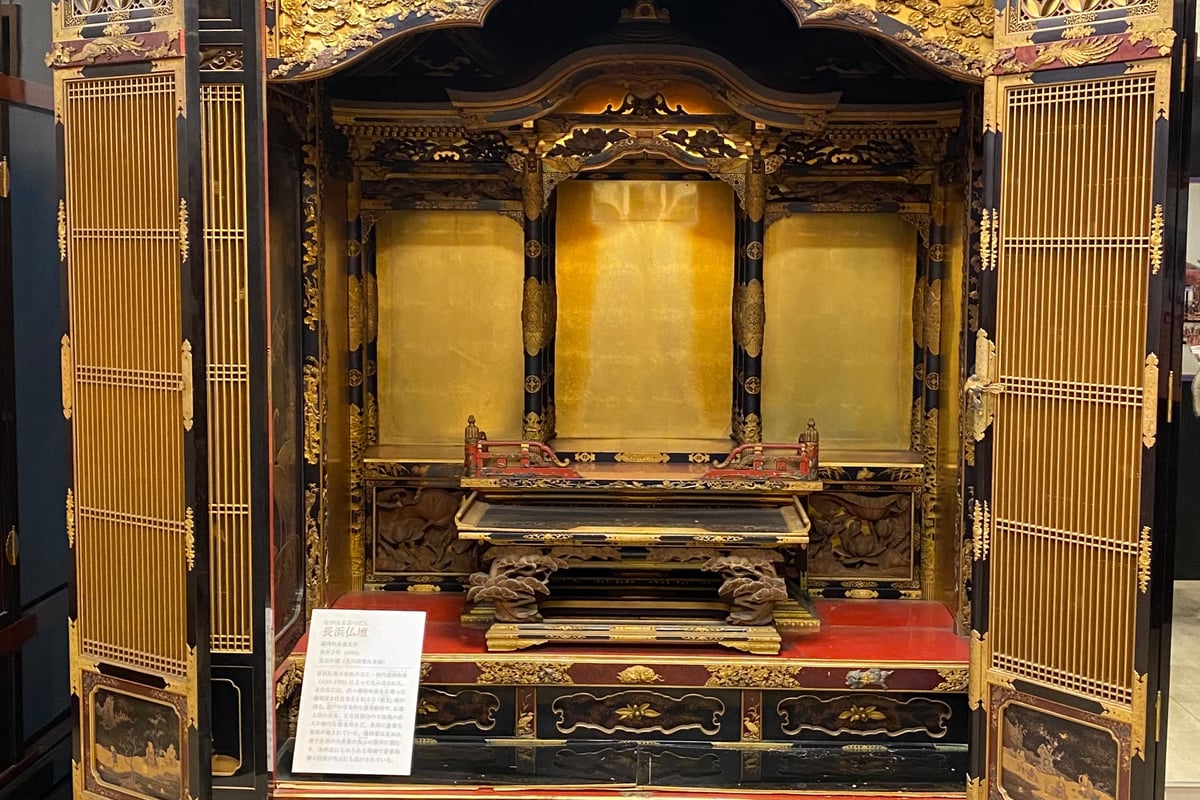
Nagahama Butsudan are gold-lacquered Buddhist altars (kin-butsudan) made mainly in Nagahama City, Shiga Prefecture, and are recognized as a production center distinct from Hikone Butsudan. It is said that altar-making spread to various regions during the Muromachi period, carried by craftsmen who had moved out from Kyoto's 'Hachi-busho,' a group of Buddhist image and altar makers, and that in Nagahama — a region with deep devotion to Jodo Shinshu Buddhism — Fujioka Izumi laid the foundations of the local industry. The oldest surviving example bears a date corresponding to 1680 (Enpo 8), showing that the production center was already established by the mid-17th century. Altars are made through a division of labor across seven processes — woodworking, the kuden (miniature shrine housing the principal image), carving, metal fittings, lacquering, maki-e (lacquer decoration), and gold-leaf application — a collaborative art involving multiple craftsmen such as woodworkers, metal-fitting artisans, lacquerers, and maki-e artists. The kokashiki (frame-assembly) technique, which joins parts without adhesives or nails, allows altars to be disassembled and repaired even after completion, so they can be used for generations. The woodworking, carving, and metalwork skills cultivated in building the floats for the Nagahama Hikiyama Festival have long supported the local altar-making industry.
Shiga's Local Food
Funazushi (Fermented Crucian Carp Sushi)
Funazushi
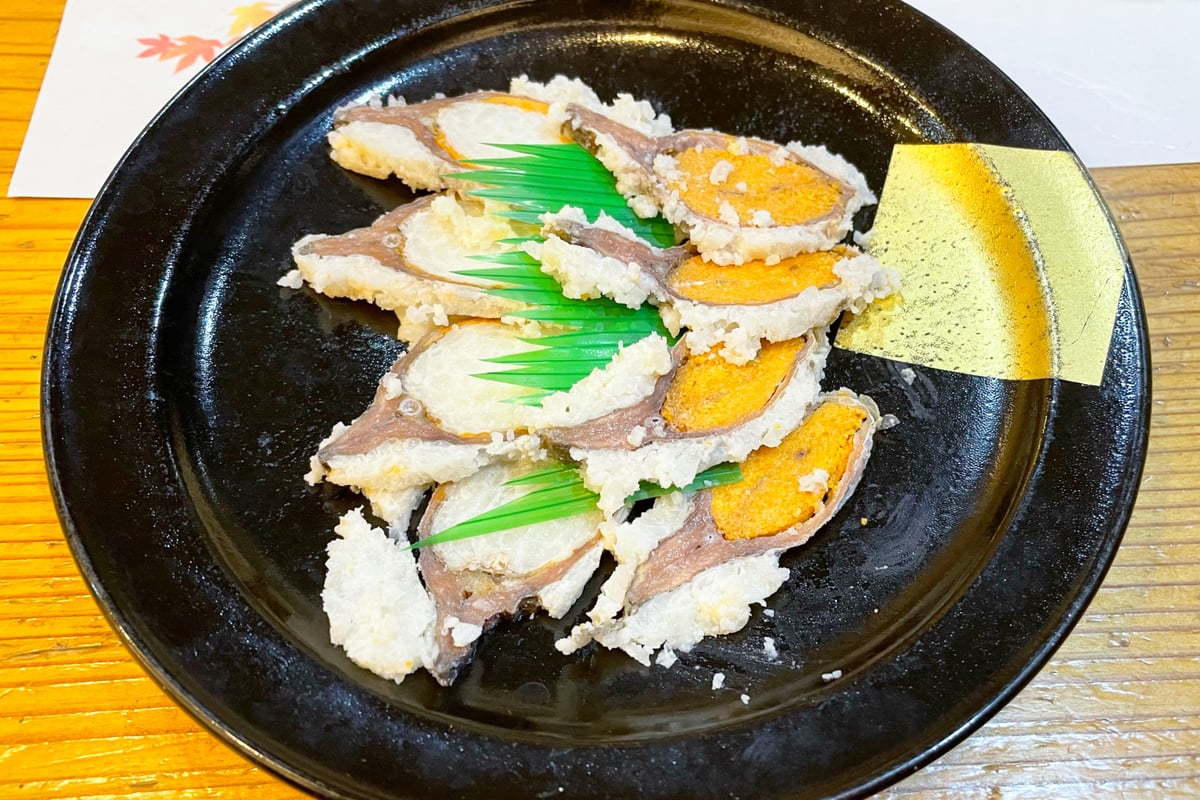
Funazushi is a signature narezushi (fermented sushi) of Shiga Prefecture, made by salting nigorobuna — a crucian carp species found only in Lake Biwa — and then packing it with cooked rice to undergo lactic acid fermentation. Unlike modern nigiri-zushi, which gets its tartness from vinegar, funazushi develops its sourness naturally through the prolonged fermentation of rice and fish, and it is often described as a living link to the origins of sushi itself. Its history is remarkably old: wooden tablets (mokkan) from the Nara period and the Heian-era legal code Engishiki record 'sushi funa' (鮨鮒) being sent as tribute from Omi Province. Funazushi is known for its strong sourness and a distinctive fermented aroma sometimes compared to cheese — a flavor that divides opinion, though well-made funazushi is prized for its rich umami without any fishy smell. It is typically sliced thin and eaten as is, enjoyed with tea over rice (ochazuke) or as an accompaniment to sake, and remains a treasured traditional dish served on special occasions such as New Year and when hosting guests.
Omi Beef
Omi-gyu
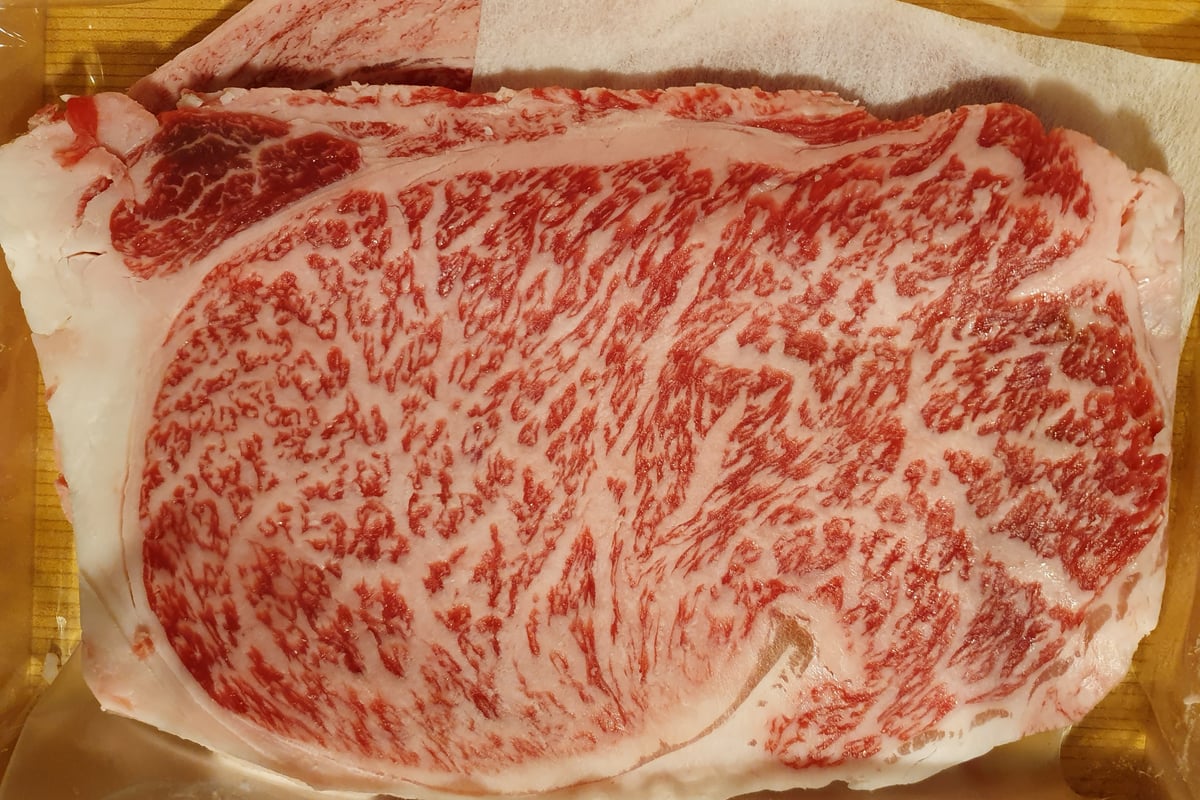
Omi Beef is a branded wagyu raised within Shiga Prefecture, ranked alongside Matsusaka beef and Kobe beef as one of Japan's three great wagyu brands. Its history dates back to the early Edo period, and it is often cited as the oldest branded wagyu on record in Japan. During the Edo period, eating meat was officially forbidden under Buddhist influence, but the Hikone domain presented beef preserved in miso, called 'Hanpongan,' to the shogunate and the three branch families of the Tokugawa as a health tonic — an act that became the starting point for spreading the name of Omi Beef nationwide. It is renowned for its fine marbling and the balance between the rich flavor of the lean meat and the refined sweetness of its fat, making it popular in dishes ranging from sukiyaki and shabu-shabu to steak. It continues to be raised today under consistent farming practices within Shiga Prefecture and is known both domestically and internationally as one of the prefecture's leading culinary brands.
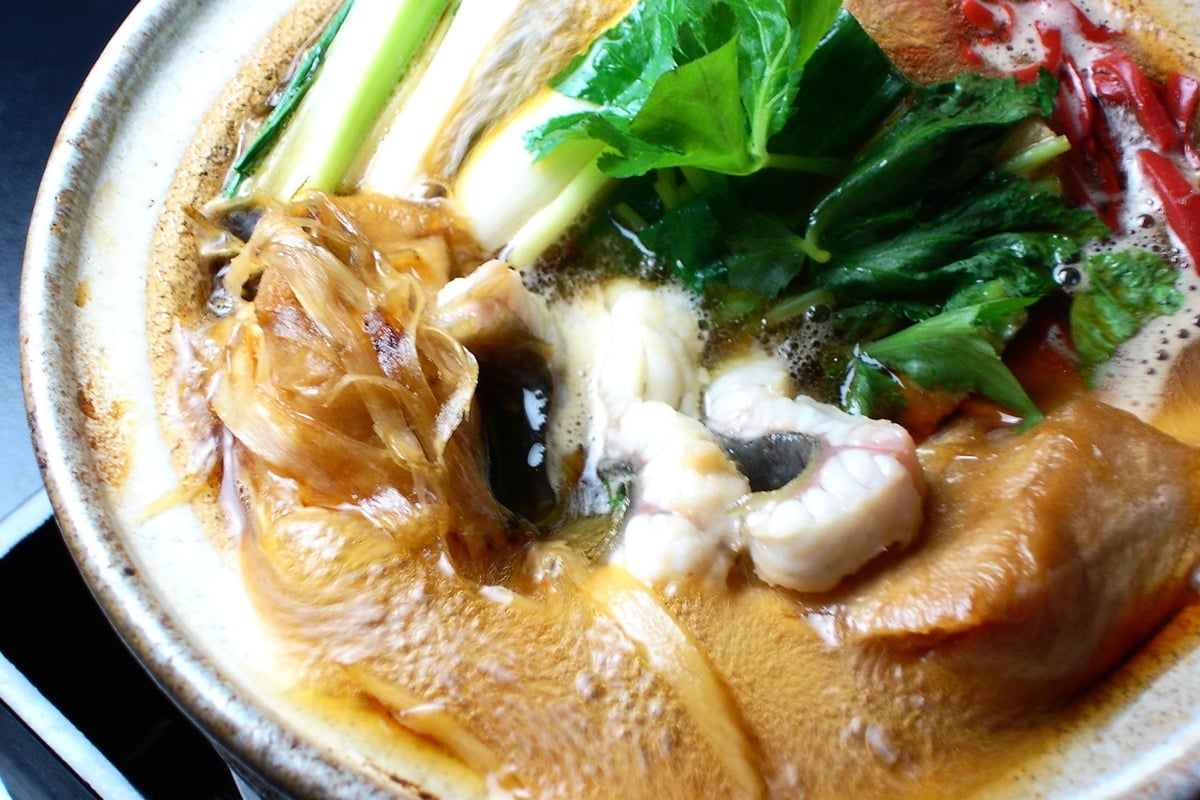
Junjun (Lake Biwa-style Sukiyaki Hot Pot)
Junjun
Junjun is a sukiyaki-style hot pot dish, seasoned sweet and savory with soy sauce, sugar, and mirin, that has been passed down along the shores of Lake Biwa and in the Kohoku region to the north. While sukiyaki nationwide typically centers on beef, Junjun is distinctive in that its ingredients vary by region and household — featuring lake fish such as eel, isaza goby, carp, honmoroko, and catfish, as well as chicken or Omi Beef. The name is said to come from the 'jun-jun' sound the ingredients make as they simmer in the pot. Once a home-cooked dish known mainly in fishing villages around Lake Biwa, Junjun has in recent years become recognized across Shiga Prefecture and is increasingly introduced to visitors as a local specialty. It is a hot pot that reflects lakeside life, traditionally prepared with special ingredients for occasions such as New Year and the Obon holidays when hosting guests.
Decchi Yokan (Apprentice's Yokan)
Decchi Yokan
Decchi yokan is a rustic yokan (sweet bean jelly) made by kneading smooth red bean paste (koshian) with wheat flour and other ingredients, then wrapping it in bamboo bark and steaming it. It is a local confection that originated in Omihachiman City, Shiga Prefecture. Compared to standard neri yokan, it has a milder sweetness and a distinctive chewy texture infused with a faint aroma from the bamboo bark. There are several theories about the origin of its name: one holds that it was named after the 'decchi' (apprentice boys) who worked as live-in servants for merchant houses in Osaka and the Kanto region, who could afford this modestly priced sweet as a gift when returning home for their rare holidays; another traces it to the dialect word 'decchiru,' meaning 'to knead together.' The long-established shop Watayo, founded in 1863, is known as the birthplace of the confection, which grew out of the region's ready access to bamboo bark as a wrapping material — a distinctly Omihachiman innovation. It remains a beloved local souvenir today. Beyond Omihachiman, similar sweets spread to other regions, such as Iga City in Mie Prefecture, through the trading networks of Omi merchants.
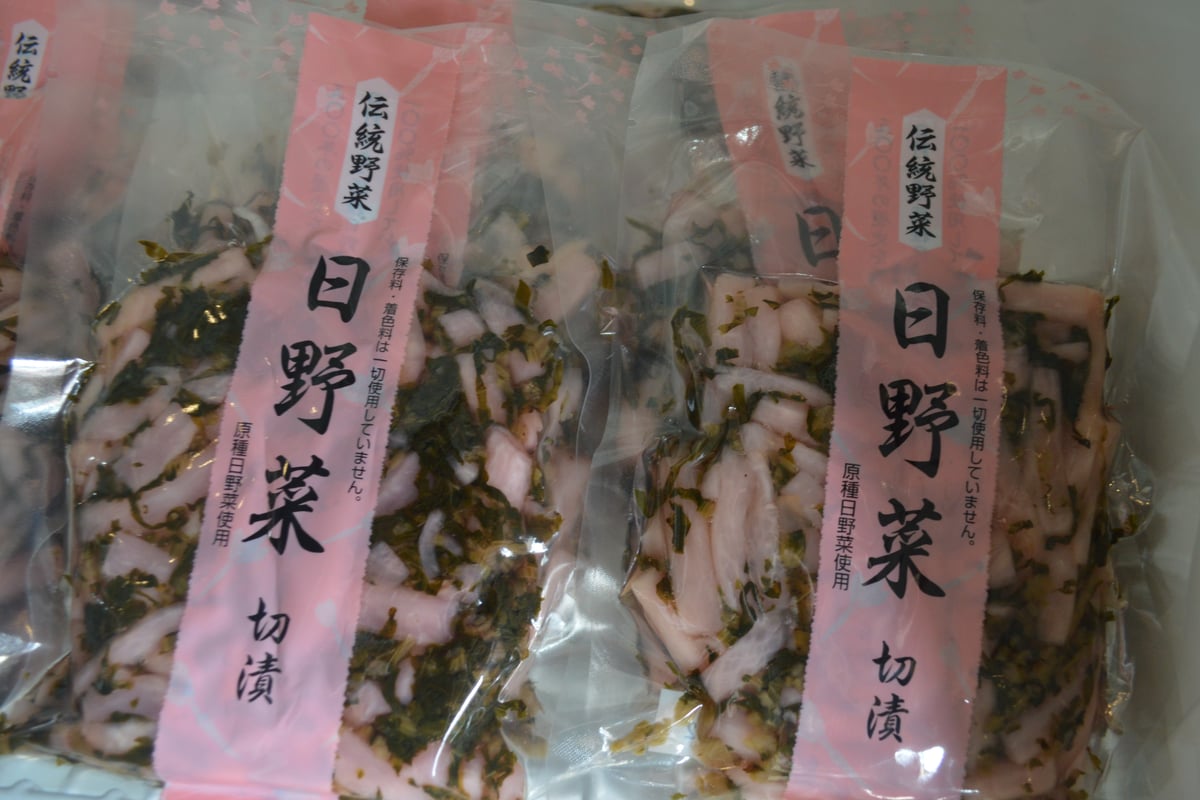
Hinona-zuke (Pickled Hino Turnip)
Hinona-zuke
Hinona-zuke is a pickle made from hinona, a traditional vegetable native to Hino, Gamo District, Shiga Prefecture — a slender turnip variety whose root gradates from white to purple. It is prized for its distinctive pungency and faint bitterness, and is prepared in several ways, including 'sakura-zuke,' in which chopped leaves and root are pickled together in vinegar; 'ebi-zuke,' finished with sweet vinegar; and 'hine-zuke,' a rice-bran pickle. According to tradition, it was discovered about 500 years ago by the Gamo clan, the lords of Hino, on a visit to a Kannon hall, and cultivation of hinona and its pickling traditions later spread to places such as Ise and Aizu, carried by the Gamo clan's later relocation and the nationwide trading networks of the Omi merchants. In 1998, it was designated one of Shiga Prefecture's Selected Intangible Folk Cultural Properties as part of 'Shiga's Food Culture Properties,' making it a representative pickle of the Lake Biwa region.
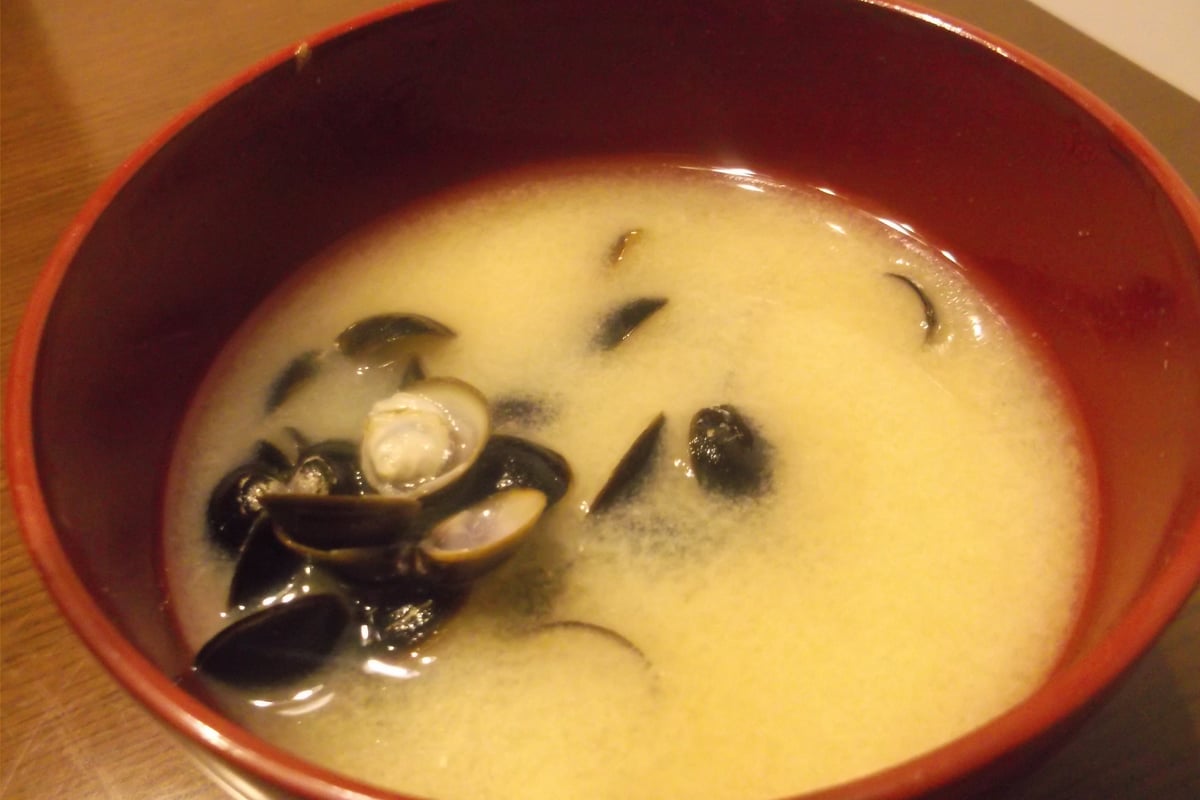
Shijimi-jiru (Freshwater Clam Miso Soup)
Shijimi-jiru
Shijimi-jiru is a miso soup made with seta shijimi, a species of freshwater clam found only in Lake Biwa, and it has long been cherished as a local dish throughout Shiga Prefecture. Compared to other clam varieties such as the yamato shijimi, seta shijimi have plumper, larger, thicker shells and richly flavored meat. Until around the 1960s and 70s, families across the prefecture ate it regularly as miso soup, simmered in a sweet soy sauce (shigure-ni), or as shijimi rice, and it symbolized the bounty of Lake Biwa. In recent years, catches have declined sharply due to environmental changes such as the loss of sandy lakeshore habitat, and efforts are underway to protect this resource. The season runs from around December to April, when the clams firm up and become especially delicious, earning them the nickname 'kan-shijimi' (winter shijimi), and during this period they appear in supermarkets and shops throughout the prefecture.
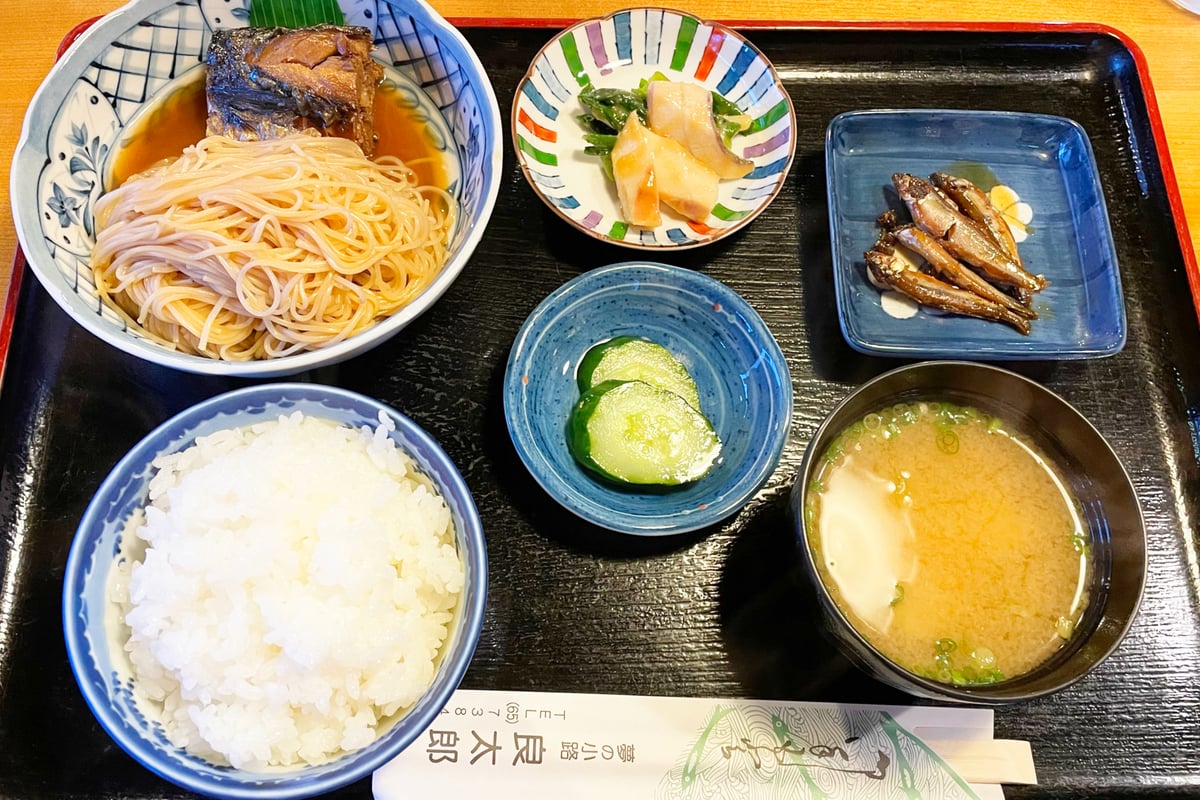
Saba-somen (Mackerel Somen Noodles)
Saba-somen
Saba-somen is a local dish from the Kohoku region of Shiga Prefecture (around Nagahama City) made by simmering sweet-and-savory grilled mackerel together with somen noodles; it is also called 'yaki-saba somen' (grilled mackerel somen). Although Kohoku is an inland region, it lies relatively close to Wakasa Bay, a mackerel-producing area, and grilled mackerel and narezushi carried in from Wakasa have long been familiar ingredients there. The dish is said to originate from the custom of 'satsuki-mimai,' in which families would send grilled mackerel to daughters who had married into farming households to look after them during the busy May farming season, and it became cherished as a dish that could be prepared quickly even during hectic times. It has also been served as a feast dish for celebrations and ceremonial occasions, such as the Nagahama Hikiyama Festival at Nagahama Hachimangu Shrine, and remains beloved today as a soul food representing the Kohoku region.
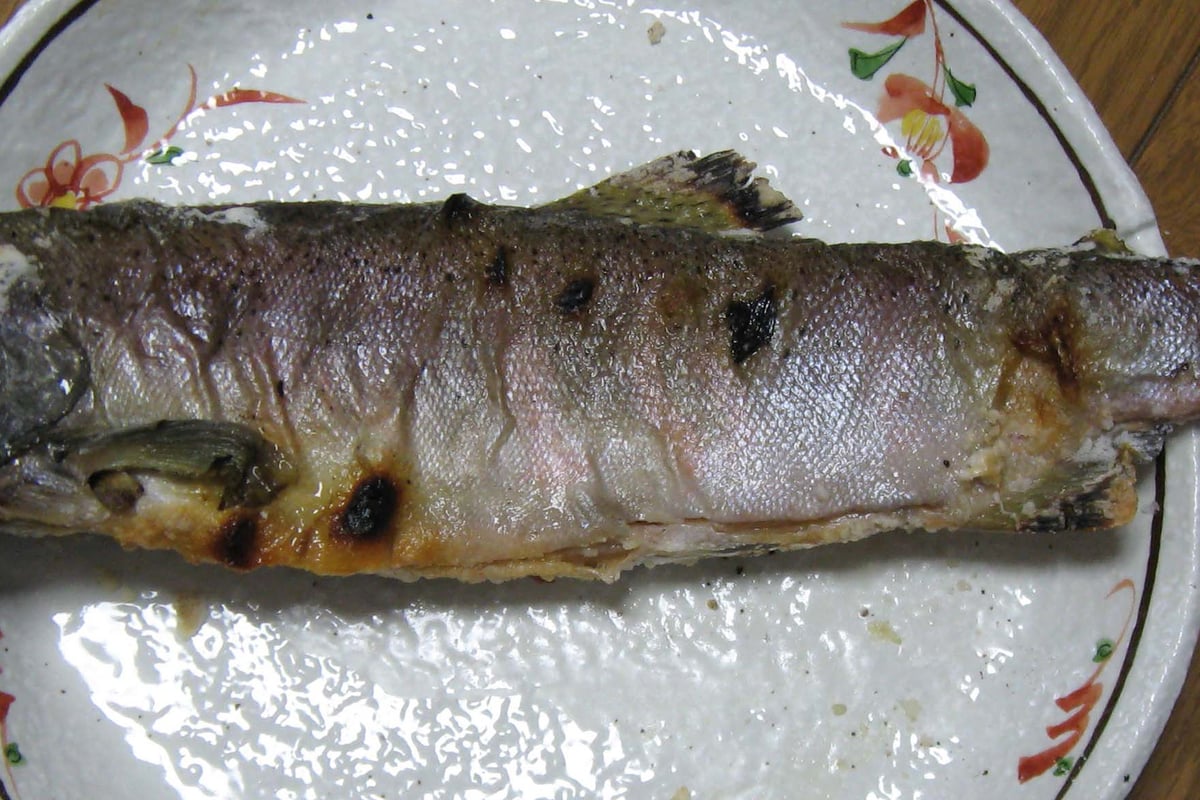
Biwamasu Ryori (Lake Biwa Trout Cuisine)
Biwamasu Ryori
Biwamasu (Lake Biwa trout) is a species of salmon endemic to Lake Biwa, a rare fish that spends its entire life in fresh water without ever descending to the sea. It is enjoyed prepared in many ways — as sashimi, salt-grilled, in nanban-zuke (vinegar-marinated fried fish), or as vinegared dishes — and its defining trait is the high-quality richness of its fat, which has earned it the nickname 'jewel of Lake Biwa.' Its season runs from around June to early September, with the fat content peaking from early summer to summer as it prepares to spawn, and locally it is most often eaten as sashimi. From October to November, its spawning season, fishing is banned to protect the resource, making it a rare lake fish available only during a limited period and drawing strong popularity both within and outside the prefecture. Local ways of preparing it are also passed down, including 'kokera-zushi,' traditional to the former Minamihama district of Biwa Town, and 'ameno-io gohan,' a rice dish cooked with the fish.
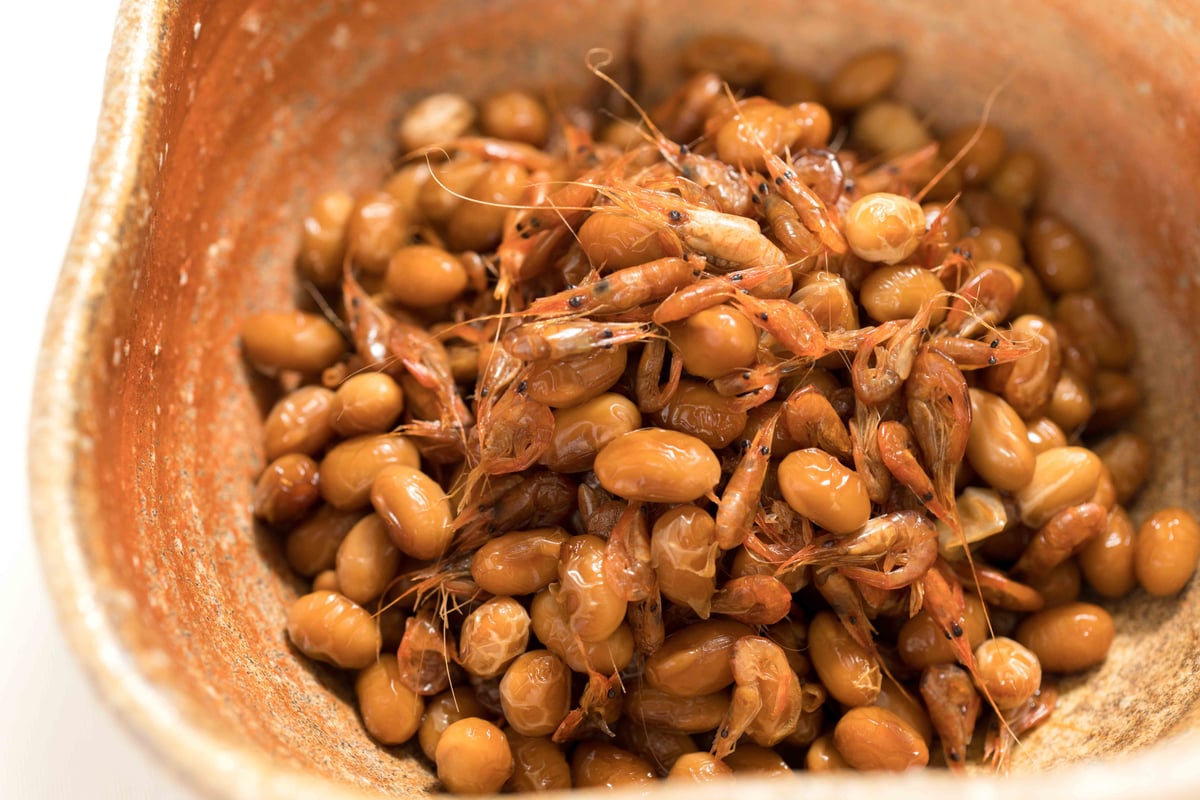
Ebi-mame (Shrimp and Soybeans)
Ebi-mame
Ebi-mame is a local dish of Shiga Prefecture made by simmering small freshwater shrimp called suji-ebi, caught in Lake Biwa, together with soybeans in a sweet-savory broth. It has long been made in households throughout the prefecture, including in Omihachiman and Hikone, and is cherished as an easy way to take in calcium and protein. Soybeans and azuki beans have been cultivated on the ridges between rice paddies in Shiga Prefecture since ancient times, and dishes using soybeans have traditionally been served at celebratory gatherings such as weddings, memorial services, and festivals. The dish carries a wish for longevity — 'may we live diligently (mame) until our backs bend like a shrimp's' — and it is an essential dish for New Year and other festive occasions. It remains a beloved home-cooked dish today, sometimes even appearing in school lunches, with the flavor passed down from parent to child.
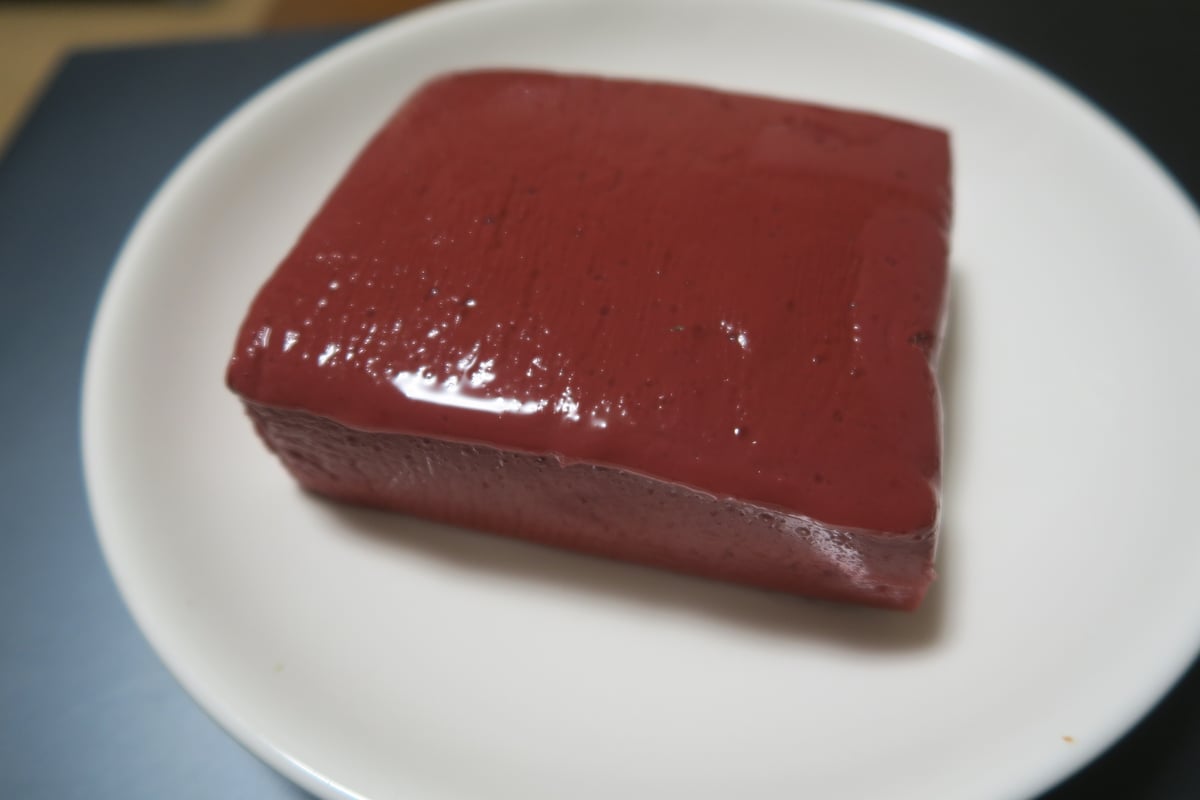
Aka-konnyaku (Red Konjac)
Aka-konnyaku
Aka-konnyaku is a vividly red-colored konjac known as a specialty of Omihachiman City in Shiga Prefecture. It is colored with iron sesquioxide, a food additive that resists fading even when cooked, and it has a distinctively firm, chewy texture. Several stories are told about its origin, including that Oda Nobunaga, said to have loved flamboyant things, had even the konjac dyed red, or that the color was inspired by Nobunaga's red battle surcoat, but no story has been reliably confirmed. The 1940 'History of Hachiman Town, Shiga Prefecture' includes an account from an elderly resident that the color was once produced by boiling down corn husks; from the Meiji era onward, food dye was used, and once the use of iron sesquioxide was approved in 1971, the production method used today became established. It is used in a wide range of dishes, from simmered dishes and dengaku (skewered and grilled with miso) to sashimi-style preparations, and it remains a classic souvenir for visitors to Omihachiman.
Model Course
Shigaraki-yaki Kiln Tour and Omi Beef Course
Spend the day exploring the kilns and pottery-making experiences of Shigaraki-yaki, one of Japan's Six Ancient Kilns, in Shigaraki, Koka City, then savor Omi beef sukiyaki or steak, one of Japan's three great wagyu brands - a one-day course combining Shiga's pottery and fine food.
Historical Course: Buddhist Altar Craftsmanship in Hikone and Nagahama, with Funazushi and Saba-somen
Tour a Hikone Butsudan workshop in the 'Nanamagari' district of Hikone's old castle town, then travel to Nagahama to visit a long-established Nagahama Butsudan shop and sample Nagahama's signature saba-somen (mackerel somen) and funazushi, Shiga's iconic fermented sushi - a course tracing the history of craftsmanship and cuisine in northern Lake Biwa.
Half-Day Course: Otsu-e Painting, Braided Cords, and Shijimi Cuisine near Mii-dera in Otsu
Visit a shop along the approach to Mii-dera Temple in Otsu that has produced Otsu-e folk paintings since the Edo period, experience cord-braiding at Tozaburo-himo, a long-established shop in Otsu's Osaka district, then savor shijimi-jiru made with seta shijimi clams near the gate of Ishiyama-dera Temple - a half-day course exploring Otsu's craftsmanship and lake-fish cuisine.
Omi-jofu, Decchi Yokan, and Aka-konnyaku Course in Aisho Town and Omihachiman
Experience hemp-weaving craftsmanship at the Omi-jofu Traditional Industry Hall in Aisho Town, then head to Omihachiman to sample decchi yokan from a long-established confectioner and the local specialty aka-konnyaku (red konjac) - a course enjoying the streetscape linked to Omi merchants and local flavors.
Fan Ribs and Calligraphy Brushes in Takashima and Adogawa
Tour a Takashima Senkotsu workshop in Adogawa, Takashima City, which produces about 90% of Japan's folding fan ribs, then visit the workshop of Umpei-fude, the only maker in Japan still producing 'wrapped brushes,' and, in season, savor biwamasu cuisine, known as 'the jewel of Lake Biwa.'
Folk Toys, Junjun, and Hinona-zuke in Higashiomi and Hino
Visit an Obata Ningyo clay-doll workshop along the old Nakasendo highway in Gokasho, Higashiomi City, then savor hinona-zuke pickles made from Hino Town's local hinona turnip, junjun (a sukiyaki-style hot pot simmering lake fish and Omi beef), and ebi-mame - a course enjoying the towns of the Omi merchants and the flavors of Lake Biwa.
Events
Nagahama Hikiyama Festival
Mid-April every year (4 days; UNESCO Intangible Cultural Heritage) / Central Nagahama, around Nagahama Hachimangu Shrine
View details →Shigaraki Pottery Festival
Mid-October every year (about 9 days) / Around participating Shigaraki-yaki shops in Shigaraki, Koka City
View details →Sagicho Festival
A weekend in mid-March every year (Nationally Selected Intangible Folk Cultural Property) / Around Himure Hachimangu Shrine, Omihachiman City
View details →