Image: Wikimedia Commons
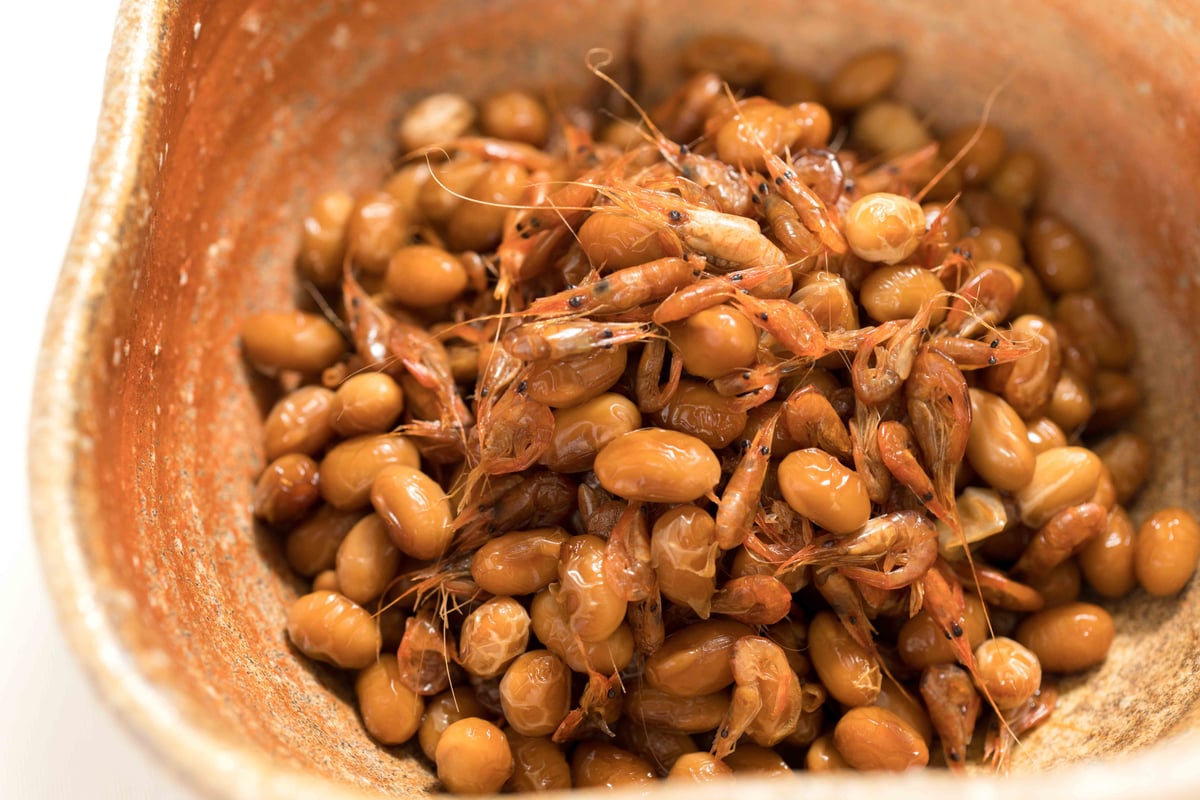
Ebi-mame is a local dish of Shiga Prefecture made by simmering small freshwater shrimp called suji-ebi, caught in Lake Biwa, together with soybeans in a sweet-savory broth. It has long been made in households throughout the prefecture, including in Omihachiman and Hikone, and is cherished as an easy way to take in calcium and protein. Soybeans and azuki beans have been cultivated on the ridges between rice paddies in Shiga Prefecture since ancient times, and dishes using soybeans have traditionally been served at celebratory gatherings such as weddings, memorial services, and festivals. The dish carries a wish for longevity — 'may we live diligently (mame) until our backs bend like a shrimp's' — and it is an essential dish for New Year and other festive occasions. It remains a beloved home-cooked dish today, sometimes even appearing in school lunches, with the flavor passed down from parent to child.
Origin
Suji-ebi shrimp have long thrived in the shallows and weed-covered areas of Lake Biwa, making them a familiar ingredient for the people of the lake country. At the same time, soybeans and azuki beans have long been cultivated on the ridges between rice paddies throughout Shiga Prefecture. Ebi-mame is thought to have developed in households across the region as a dish combining the bounty of the lake with the bounty of the fields.
History
At gatherings such as weddings, memorial services, and festivals, it has been customary to serve dishes made with soybeans, and ebi-mame became established as one such 'festive dish.' It carries a wish for longevity — 'may we live diligently (mame) until our backs bend like a shrimp's' — and has also been cherished as a New Year's dish. It continues to be made at home today and has even been incorporated into school lunches, passing down through generations.
Features
The basic method is to simmer suji-ebi shrimp, shell and all, together with soybeans slowly in a sweet-savory broth of soy sauce, sugar, and mirin. The fragrant aroma of the shrimp harmonizes with the fluffy texture of the soybeans, and the dish also keeps well as a preserved side dish. The shrimp is simmered slowly and carefully until soft enough to eat shell and all, a process that takes considerable time and effort.
Main Ingredients
Food Culture
Carrying the wish for longevity expressed as 'may we live diligently (mame) until our backs bend like a shrimp's,' ebi-mame has long been passed down in households of the lake country as an auspicious dish served at New Year and other celebrations.
How It Differs from Home Cooking
At home, it is a simple dish that appears regularly on the table as a preserved side dish, whereas tsukudani (simmered preserve) shops simmer it slowly for a long time to create a version with enhanced keeping quality and flavor, intended as a souvenir item.
Famous Shops
漁師の店 川田商店
滋賀県近江八幡市長命寺48-20
A tsukudani shop run by Lake Biwa fishermen, producing and selling ebi-mame and other simmered lake-fish preserves.
佃煮の伊吹
滋賀県長浜市
A tsukudani shop founded in 1954. Its ebi-mame, made with locally grown pesticide-free soybeans, costs around 480 yen per 100g.
View details →| えび豆(佃煮) | A tsukudani preserve of Lake Biwa suji-ebi shrimp and Shiga-grown soybeans, simmered in a sweet-savory broth. It keeps well at room temperature and can be purchased at souvenir shops and roadside stations throughout the prefecture. |
|---|