Image: Wikimedia Commons
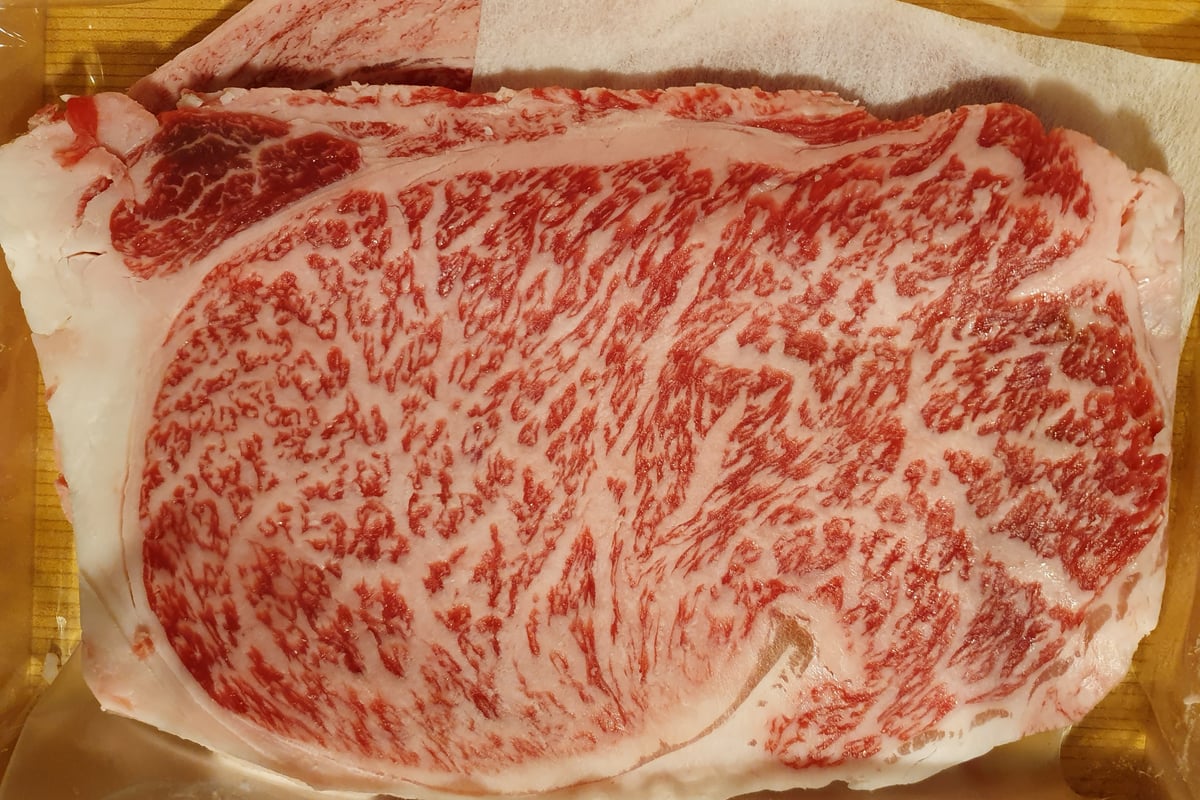
Omi Beef is a branded wagyu raised within Shiga Prefecture, ranked alongside Matsusaka beef and Kobe beef as one of Japan's three great wagyu brands. Its history dates back to the early Edo period, and it is often cited as the oldest branded wagyu on record in Japan. During the Edo period, eating meat was officially forbidden under Buddhist influence, but the Hikone domain presented beef preserved in miso, called 'Hanpongan,' to the shogunate and the three branch families of the Tokugawa as a health tonic — an act that became the starting point for spreading the name of Omi Beef nationwide. It is renowned for its fine marbling and the balance between the rich flavor of the lean meat and the refined sweetness of its fat, making it popular in dishes ranging from sukiyaki and shabu-shabu to steak. It continues to be raised today under consistent farming practices within Shiga Prefecture and is known both domestically and internationally as one of the prefecture's leading culinary brands.
Origin
The history of Omi Beef is said to trace back to around 1687. The Hikone domain slaughtered cattle to obtain hides for armor and horse equipment, and to avoid wasting the meat, a domain physician is said to have devised a method of preserving beef in miso, drawing on the Chinese medical text Bencao Gangmu. This preserved beef, sold as a health tonic called 'Hanpongan,' became the first documented instance of Omi Beef spreading into the wider world.
History
Although eating meat was officially taboo during the Edo period, it became customary for the Hikone domain to present its miso-preserved Omi Beef to the shogunate and the three branch Tokugawa families from the Genroku era onward, under the pretense of it being medicine. After the Meiji era, when eating meat was no longer prohibited, Omi Beef spread widely alongside the growing sukiyaki culture, and specialty restaurants and butcher shops developed mainly around Otsu and Hikone. Matsukiya, founded in 1883, has a history of supplying beef to the Imperial Household as a purveyor to the imperial court, carrying the prestige of Omi Beef into the present day.
Features
Omi Beef is raised through careful farming practices amid the abundant water and mild climate of the Omi Basin. In addition to its fine marbling, it is well known for the balance between the rich flavor of the lean meat and the refined sweetness of its fat, with a clean aftertaste that never feels heavy. Among the three great wagyu brands alongside Kobe and Matsusaka beef, Omi Beef is said to boast a history of nearly 400 years, and part of its appeal lies in its versatility across cooking styles, from sukiyaki and shabu-shabu to steak and yakiniku.
Main Ingredients
Food Culture
During the Edo period, Omi Beef was a special ingredient presented to the shogunate under the guise of medicine; from the Meiji era onward, it became established as an indispensable delicacy for celebrations and hosting guests in the Omi region. The prefecture has many butcher shops and restaurants specializing in beef, and it remains deeply woven into everyday food culture.
How It Differs from Home Cooking
At home, thinly sliced beef is often enjoyed casually in sukiyaki or yakiniku, whereas specialty restaurants purchase whole cattle to offer rare cuts, adjust the thickness of each cut individually, and manage aging carefully — drawing out the full character of the meat.
Famous Shops
近江牛 松喜屋 本店
滋賀県大津市唐橋町14-17
Founded in 1883, this long-established restaurant is regarded as the originator of Omi Beef sukiyaki. It served as a purveyor to the Imperial Household Ministry through the Meiji, Taisho, and Showa eras, with a history of supplying Omi Beef to the imperial kitchen. Dinner courses start in the low tens of thousands of yen.
View details →近江牛レストラン 千成亭
滋賀県彦根市戸賀町120-4
A specialty Omi Beef restaurant that has operated in Hikone for about 80 years. It offers sukiyaki, shabu-shabu, and kaiseki-style courses in private tatami rooms, and has long been popular with both locals and visitors.
View details →焼肉 すき焼き 池もと
滋賀県近江八幡市安土町桑実寺488-1
Located with a view of Azuchi Castle, associated with Oda Nobunaga, this restaurant is directly run by the long-established butcher shop 'Omi Beef Ikemoto.' Because it purchases whole cattle, even rare cuts of Omi Beef are available at relatively affordable prices.
View details →| 近江牛の味噌漬け | A processed product originating from 'Hanpongan,' the health tonic that the Hikone domain presented to the shogunate during the Edo period. The beef is thoroughly infused with the flavor of miso, keeps well, and is a classic choice for gift-giving souvenirs from Shiga. |
|---|
FAQ
Q. Are Omi Beef and Omi Beef miso-pickle the same thing?
A. Omi Beef is the general name for branded wagyu produced in Shiga Prefecture, and the miso-pickle is one processed product made from it. 'Hanpongan,' which the Hikone domain presented to the shogunate during the Edo period, is considered the prototype of this miso-pickled beef, and it remains a popular souvenir today.