Image: Wikimedia Commons
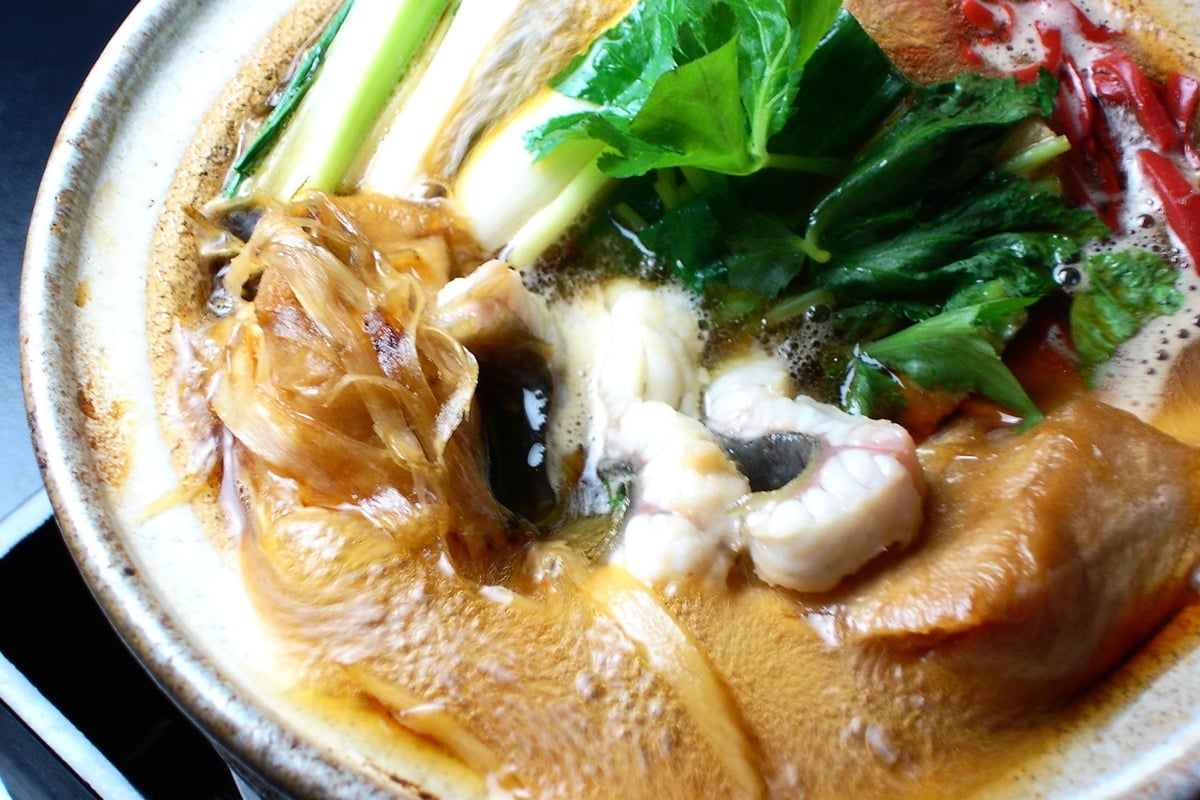
Junjun is a sukiyaki-style hot pot dish, seasoned sweet and savory with soy sauce, sugar, and mirin, that has been passed down along the shores of Lake Biwa and in the Kohoku region to the north. While sukiyaki nationwide typically centers on beef, Junjun is distinctive in that its ingredients vary by region and household — featuring lake fish such as eel, isaza goby, carp, honmoroko, and catfish, as well as chicken or Omi Beef. The name is said to come from the 'jun-jun' sound the ingredients make as they simmer in the pot. Once a home-cooked dish known mainly in fishing villages around Lake Biwa, Junjun has in recent years become recognized across Shiga Prefecture and is increasingly introduced to visitors as a local specialty. It is a hot pot that reflects lakeside life, traditionally prepared with special ingredients for occasions such as New Year and the Obon holidays when hosting guests.
Origin
Junjun is a hot pot dish born from the combination of Lake Biwa fishing and rural farming life, and it is said to have developed as a resourceful way to make full, delicious use of fish caught in the lake and its inlets. The name is thought to derive from an onomatopoeia representing the sound made as ingredients simmer in the pot, though in some areas similar hot pot dishes go by different names. It shares with sukiyaki the use of a sweet-savory warishita broth, but differs significantly in that its main ingredient is not limited to beef.
History
In fishing villages of the Kohoku and Kosei regions, hot pot cooking developed as a way to preserve and prepare lake fish, and a sukiyaki-style sweet-savory seasoning using soy sauce and sugar took hold. Originally a home dish confined to fishing villages and their surroundings, the specific ingredients and seasoning ratios varied from household to household. In recent years, the name 'Junjun' has come into use across Shiga Prefecture, and the dish has gained recognition as a local specialty, having been featured in the Ministry of Agriculture, Forestry and Fisheries' 'Our Local Cuisine' collection.
Features
Unlike ordinary sukiyaki, which centers on beef, Junjun is notable for its flexibility — using lake fish such as eel, isaza goby, carp, honmoroko, and catfish, as well as chicken or Omi Beef, depending on the household, region, and season. It is seasoned sweet and savory with soy sauce, sugar, and mirin, and simmered in a sukiyaki pot together with shirataki noodles, tofu, and fu (wheat gluten cakes). On special occasions, families splurge on ingredients such as Omi Beef or duck, so the grade of ingredients used can also reflect the level of hospitality being shown.
Main Ingredients
Food Culture
Junjun has traditionally been made with finer ingredients than usual for occasions such as New Year and Obon when hosting guests. Whether lake fish or meat is used varies by region and household, and the dish is cherished as one that reflects the lifestyle of each locality.
How It Differs from Home Cooking
The biggest characteristic of Junjun is that there is no fixed recipe — the lake fish or meat used, and the sweet-savory balance of the broth, differ from household to household. In recent years it has also come to be served at restaurants, but the combinations of ingredients are still said to be as varied as the number of households that make it.
Famous Shops
ひさご寿し
滋賀県近江八幡市桜宮町213-3
A Japanese restaurant in Omihachiman with over 50 years of history. It serves the bounty of the lake, including biwamasu (Lake Biwa trout) sushi, and offers Junjun made with koayu (small sweetfish), isaza goby, eel, and Omi Beef according to the season.
View details →FAQ
Q. Where does the name 'Junjun' come from?
A. The name comes from the 'jun-jun' bubbling sound made as ingredients simmer in the pot. It is the name used in the Kohoku and Kosei regions for this type of sweet-savory, sukiyaki-style hot pot, and the ingredients and seasoning ratios vary by area.