Image: Wikimedia Commons
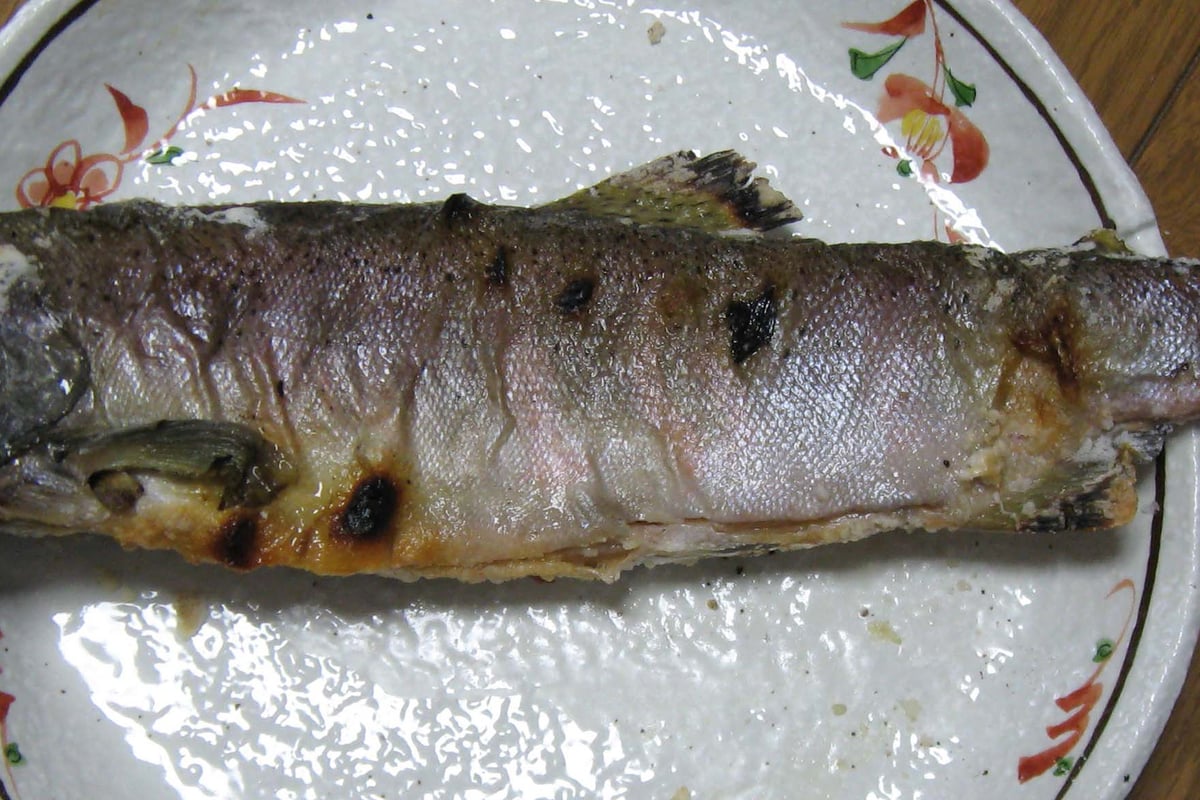
Biwamasu (Lake Biwa trout) is a species of salmon endemic to Lake Biwa, a rare fish that spends its entire life in fresh water without ever descending to the sea. It is enjoyed prepared in many ways — as sashimi, salt-grilled, in nanban-zuke (vinegar-marinated fried fish), or as vinegared dishes — and its defining trait is the high-quality richness of its fat, which has earned it the nickname 'jewel of Lake Biwa.' Its season runs from around June to early September, with the fat content peaking from early summer to summer as it prepares to spawn, and locally it is most often eaten as sashimi. From October to November, its spawning season, fishing is banned to protect the resource, making it a rare lake fish available only during a limited period and drawing strong popularity both within and outside the prefecture. Local ways of preparing it are also passed down, including 'kokera-zushi,' traditional to the former Minamihama district of Biwa Town, and 'ameno-io gohan,' a rice dish cooked with the fish.
Origin
Biwamasu is a fish of the order Salmoniformes, family Salmonidae, and unlike ordinary salmon, it never descends to the sea, spending its entire life in Lake Biwa and the rivers that flow into it as a species endemic to the lake. Because its habit of swimming upstream in autumn to spawn resembles that of salmon, it is also known by the alternate name 'ameno-io,' and it has long been fished as a valuable protein source for the lake country.
History
In communities along Lake Biwa's shores, biwamasu caught during its upstream spawning run has long been eaten as a seasonal blessing — served as sashimi and salt-grilled fish, as well as prepared into local dishes such as 'kokera-zushi' and 'ameno-io gohan,' traditional to the former Minamihama district of Biwa Town. In recent years, resource management measures have been introduced from a conservation standpoint, banning fishing during the spawning season of October and November and placing limits on catch volume and fishing methods.
Features
During its peak season from early summer to summer, the fish carries excellent fat, sometimes likened to toro (fatty tuna) in quality. Besides sashimi, it suits a wide range of preparations, including salt-grilling, nanban-zuke, and frying, offering a firm, fine-grained texture and an elegant richness of fat. Because of the fishing ban during spawning season, tasting it fresh and in season locally holds special value.
Main Ingredients
Food Culture
Known by the alternate name 'ameno-io' for its habit of swimming upstream in autumn, biwamasu carries distinctive local preparations such as 'kokera-zushi' from the former Minamihama district of Biwa Town. The existence of a fishing ban to protect its spawning season also reflects a regional culture that values and protects the lake's bounty.
How It Differs from Home Cooking
At home, it is mainly prepared as salt-grilled or simmered fillets, whereas specialty restaurants often build courses around a whole fish sourced in season, served through multiple preparations such as sashimi and seared (aburi) style, allowing diners to compare different cuts and textures.
Famous Shops
花ちょうちん
滋賀県大津市馬場2-6-8
A popular restaurant in Otsu offering a limited-quantity biwamasu set meal for around 1,500 yen.
山本屋魚濱
滋賀県長浜市元浜町(黒壁スクエア入口)
A Nagahama restaurant specializing in biwamasu cuisine, serving dishes such as sashimi and salt-grilled fish.
View details →FAQ
Q. How is biwamasu different from sakuramasu (cherry salmon)?
A. Biwamasu is considered a subspecies of sakuramasu that became landlocked in Lake Biwa and adapted to a freshwater-only life cycle. Unlike sakuramasu, it never descends to the sea, spending its entire life in the lake and its rivers.