Image: Wikimedia Commons
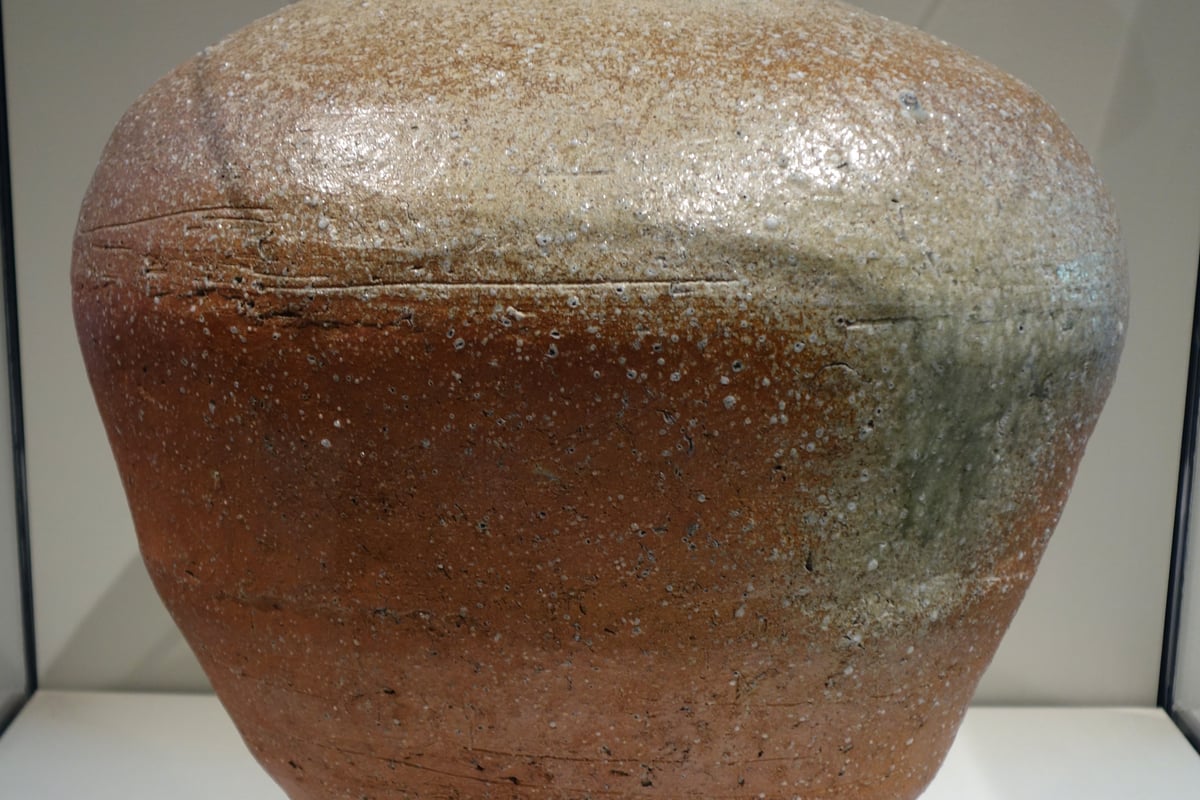
Shigaraki-yaki is stoneware fired mainly around Shigaraki, Koka City in Shiga Prefecture, and is counted among Japan's Six Ancient Kilns alongside Seto, Tokoname, Tamba, Echizen, and Bizen. The kilns are said to have opened in the Kamakura period under the influence of neighboring Tokoname's techniques, and by the Momoyama period Shigaraki wares were prized as utensils for the tea ceremony. Today the ware is widely known for its endearing tanuki (raccoon dog) figurines, but the production area actually covers a much broader range of goods, from jars and pots to tea ceramics, tiles, planters, and contemporary art. The tanuki figurine became famous nationwide in 1951, when newspapers reported that tanuki statues holding Japanese flags had been lined up to welcome Emperor Showa during his visit to Shigaraki. The greatest appeal of Shigaraki-yaki lies in the rustic beauty created by earth and flame: the warm scarlet hue (hiiro) produced by the iron content in the clay, and the glassy vidro glaze (bidoro-yu) formed when wood-fired ash melts onto the surface.
Origin
Pottery-making in Shigaraki is said to have begun in the mid-Kamakura period under the influence of techniques from neighboring Tokoname. Shigaraki's clay comes from strata deposited by the ancient Lake Biwa, and its high heat resistance and excellent plasticity made it well suited to everyday jars, pots, and mortars in the early years. When the tea ceremony flourished during the Momoyama period, tea masters came to favor Shigaraki's rustic texture, and Shigaraki water jars and flower vases became valued tea utensils.
History
From the Edo period onward, Shigaraki made use of its proximity to Kyoto to develop as a production center for a wide range of goods, including charcoal braziers, planters, and tea jars. In the modern era it also began producing architectural tiles and sanitary ware. When tanuki figurines holding Japanese flags were lined up during Emperor Showa's visit in 1951, news coverage of the event sparked nationwide popularity for the tanuki statues. In 1990, the Shigaraki Ceramic Cultural Park (a Shiga Prefectural facility) opened, and the area continues to draw ceramic artists from Japan and abroad as a place where traditional techniques and contemporary art coexist.
Features
The defining characteristics of Shigaraki-yaki are the natural, kiln-born textures unique to climbing kilns (noborigama) and single-chamber kilns (anagama): the warm scarlet hue (hiiro) produced when the iron-rich clay is fired at high temperatures, the glassy vidro glaze (bidoro-yu) formed as wood ash melts in the heat, and the dark scorch marks left where flames strike the surface directly. Unbound by any single style, Shigaraki-yaki also shows remarkable versatility, ranging from humorous works like the tanuki figurines to tea ceramics, tableware, and large-scale objects.
Techniques
Hiiro (scarlet color)
A phenomenon in which the iron content of Shigaraki clay turns reddish-brown when fired at high temperatures in a climbing kiln or single-chamber kiln. The depth of color varies with the clay quality and how the flames strike the piece, giving each vessel its own distinct expression.
Vidro glaze (bidoro-yu)
A natural glaze formed when wood ash falls onto the surface of a piece during firing and melts into a glassy coating at high temperature. The resulting greenish natural glaze becomes part of the vessel's scenic character.
Scorch marks (koge)
Dark brown marks left where flames strike a piece directly inside the kiln. These bold traces of earth and fire are one of the signature 'scenic' effects of Shigaraki-yaki.
Materials Used
Production Process
- 1
Preparing the clay
Clay derived from the ancient Lake Biwa strata is refined and cleared of impurities to produce clay that is easy to shape. Shigaraki clay has excellent heat resistance and plasticity, making it well suited to large pieces.
- 2
Shaping
Depending on the piece being made, potters use the wheel, hand-building, or slab techniques with tataraita boards to create diverse forms, from jars and plates to tanuki figurines.
- 3
Drying
Shaped pieces are dried slowly, either in the sun or indoors, to prevent cracking during firing.
- 4
Loading and firing the kiln
Pieces are fired at high temperatures in climbing kilns or single-chamber kilns, and today also in gas or electric kilns, with the amount of firewood and flame exposure adjusted to achieve the desired coloring.
- 5
Unloading and finishing
Finished pieces are removed from the kiln and, where needed, polished or decorated to complete the work.
| Main Production Areas |
|
|---|
Artisans & Workshops
明山窯(明山陶業)
A long-established kiln in Nagano, Shigaraki, said to have been founded in the early Edo period. It produces a wide range of goods, from flower vessels and tableware to figurines, continuing to make use of the traditional character of the clay.
Official site →How to Buy
- 大谷陶器
- A direct-sale shop run by a kiln in Nagano, Shigaraki. It offers a wide range of Shigaraki-yaki, from tanuki figurines and water-lily bowls to everyday tableware.Where to buy →PR
- 信楽陶器まつり
- A pottery market held every autumn in Shigaraki. Kilns and trading companies line the streets, drawing crowds of visitors in search of a bargain find, making it one of Shigaraki's biggest annual events.Where to buy →PR
Hands-on Experiences
まるとく陶器 得斎陶房
滋賀県甲賀市信楽町長野1198-2
Reservation required. Electric wheel experience from around 2,400 yen; hand-building experience from around 1,800 yen (includes firing for one piece up to 18 cm).
View details →FAQ
Q. Why is Shigaraki-yaki so strongly associated with tanuki figurines?
A. In 1951, newspapers reported that tanuki figurines holding Japanese flags had been lined up to welcome Emperor Showa during his visit to Shigaraki, and the story caused a sensation. Since then, the tanuki has spread nationwide as a good-luck charm for business prosperity, but it is in fact only one of many products made in Shigaraki.