Image: Wikimedia Commons
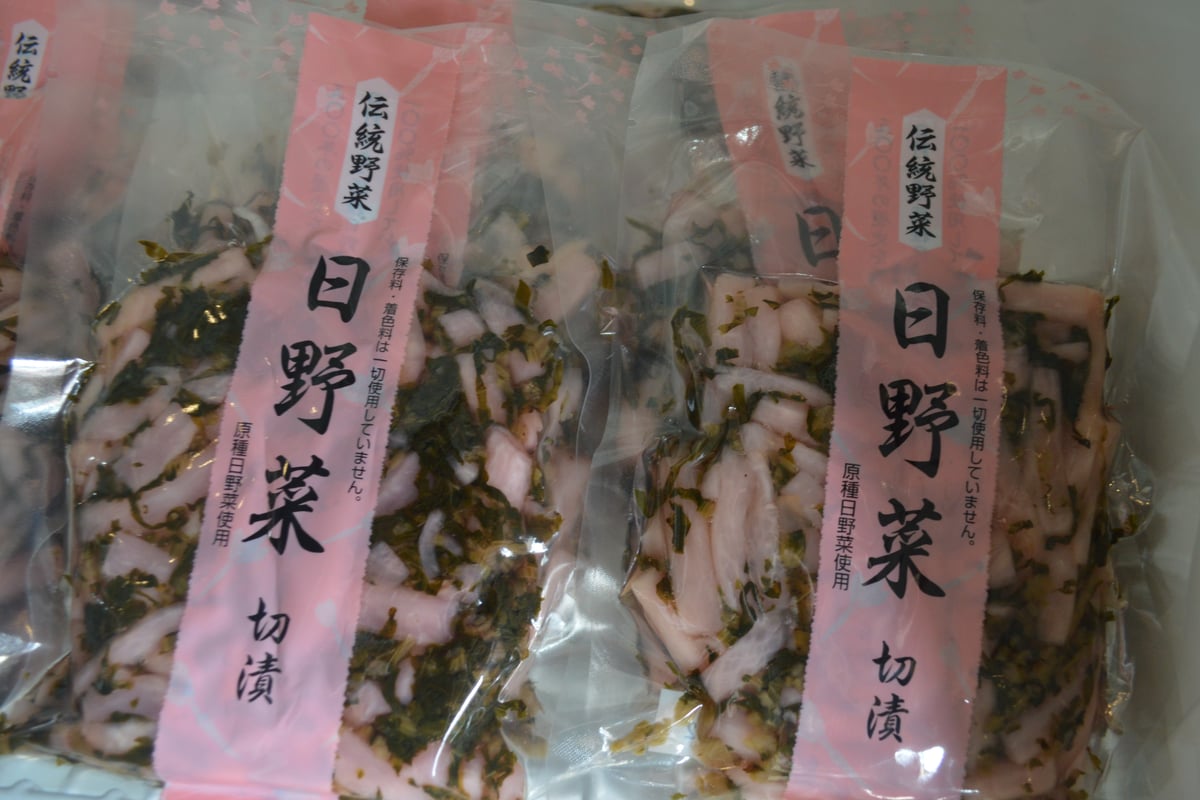
Hinona-zuke is a pickle made from hinona, a traditional vegetable native to Hino, Gamo District, Shiga Prefecture — a slender turnip variety whose root gradates from white to purple. It is prized for its distinctive pungency and faint bitterness, and is prepared in several ways, including 'sakura-zuke,' in which chopped leaves and root are pickled together in vinegar; 'ebi-zuke,' finished with sweet vinegar; and 'hine-zuke,' a rice-bran pickle. According to tradition, it was discovered about 500 years ago by the Gamo clan, the lords of Hino, on a visit to a Kannon hall, and cultivation of hinona and its pickling traditions later spread to places such as Ise and Aizu, carried by the Gamo clan's later relocation and the nationwide trading networks of the Omi merchants. In 1998, it was designated one of Shiga Prefecture's Selected Intangible Folk Cultural Properties as part of 'Shiga's Food Culture Properties,' making it a representative pickle of the Lake Biwa region.
Origin
Hinona is said to have been discovered about 500 years ago by Gamo Sadahide, regarded as the reviving patriarch of the Gamo clan, during a visit to a Kannon hall in Kamakake, Hino. This turnip is distinguished by its gradation from purple near the leaves to white toward the root, and by its slender shape, roughly 30 centimeters long. Cultivated as a local specialty suited to Hino's climate, it came to be called 'hinona,' named after the region.
History
When the Gamo clan was relocated to Ise during the Sengoku period, hinona seeds and cultivation techniques are said to have traveled with them. Later, from the Edo period onward, the activities of Omi merchants, who traded across the country, spread hinona and its pickling culture to regions such as Nagano, Niigata, and Shikoku. Hino is also a town closely associated with the Omi merchants, and their trading networks played a role in carrying this pickling food culture nationwide. In 1998, Shiga Prefecture designated it a Selected Intangible Folk Cultural Property as part of 'Shiga's Food Culture Properties,' cementing its status as a symbol of the region's food culture.
Features
Hinona has dense flesh with a distinctive pungency and bitterness, a flavor that stands out especially once pickled. The representative 'sakura-zuke' is made by pickling chopped leaves together with root cut into short strips in vinegar, and takes its name from the way the cut surfaces turn a cherry-blossom pink. Other preparations are passed down by region and household, including 'ebi-zuke,' finished with sweet vinegar, and 'hine-zuke,' pickled in rice bran. The harvest peaks from autumn to winter, and households commonly pickle their own hinona during this season.
Main Ingredients
Food Culture
As Omi merchants traveled the country, hinona and its pickling techniques are said to have spread to many regions, reflecting a history in which local industry and food culture became closely intertwined. During the autumn-to-winter harvest season, pickling at home remains a seasonal tradition.
How It Differs from Home Cooking
While households often enjoy simple salt-pickled or lightly pickled versions, specialty shops tend to produce more elaborate preparations, such as 'sakura-zuke' combining leaf and root for visual appeal, often crafted with an eye toward gift-giving.
Famous Shops
近江つけもの山上(株式会社やまじょう)
滋賀県湖南市下田3335番地
A pickle specialty shop with more than 80 years of history. It treats hinona-zuke as its signature winter product, taking care to use traditional Omi vegetables in locally made pickles, and sells them year-round both at its own stores and online.
View details →JAグリーン近江 日野農産物加工施設
滋賀県蒲生郡日野町鎌掛1416-2
A processing facility run by the local agricultural cooperative that produces and sells pickles made from hinona grown in Hino. During the peak harvest season, freshly made hinona-zuke unique to the growing region is available.
| 日野菜漬(桜漬け) | A classic Shiga souvenir named for the way the cut surface of chopped hinona turns a vivid cherry-blossom pink as it pickles in vinegar over time. It is sold year-round at JA outlets, direct-sale shops, and pickle specialty stores throughout the prefecture. |
|---|
FAQ
Q. What is the origin of the name 'sakura-zuke'?
A. When hinona is pickled in vinegar, the cut surface of the root gradually turns a vivid cherry-blossom pink, which is how it came to be called 'sakura-zuke' (cherry pickle). It is one of the most representative styles of hinona-zuke.