Image: Wikimedia Commons
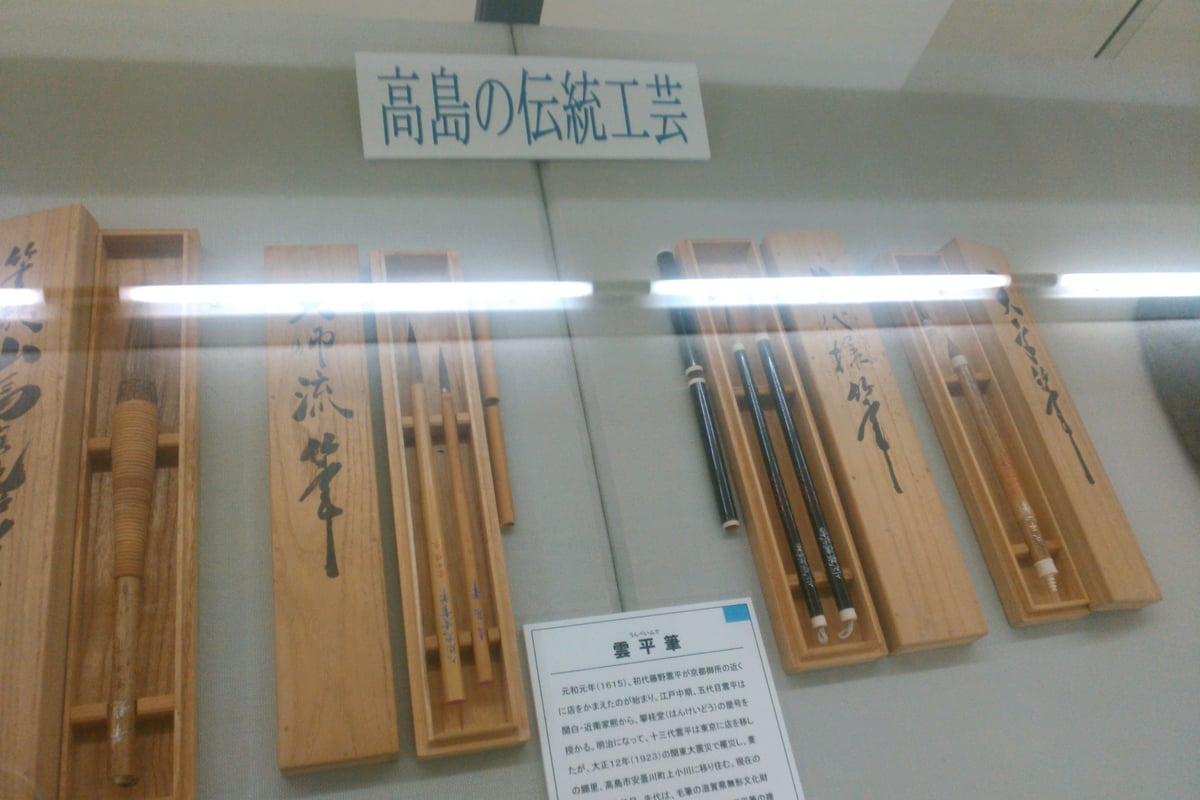
Umpei-fude are calligraphy brushes that carry on the technique of 'makifude' (wrapped brushes), in which the brush tip is formed by wrapping washi paper around the hair core. The craft's founder is said to be Fujino Umpei, a brush maker who established his workshop in Kyoto during the Genna era (around 1615); he served the imperial court and is said to have had close ties with the Arisugawa-no-miya family, known for its devotion to calligraphy. In the Shotoku era, the fifth-generation Umpei received the title 'Hankeido' from the then-regent Konoe Iehiro, and successive brush makers have carried on the technique under this name ever since. Today the workshop is located in Adogawa, Takashima City, Shiga Prefecture, where the fifteenth-generation Fujino Umpei and his child are known as the only makers in Japan of makifude brushes, whose tips are wrapped and fixed with washi paper. The brush tips, made using a combination of animal hairs such as raccoon dog, sheep, and weasel, hold ink well and are said to produce powerful lines, and have long been cherished by calligraphers and many enthusiasts. In 1966 the fourteenth generation was recognized as a holder of Shiga Prefecture's Intangible Cultural Property, and Umpei-fude itself has been designated a Traditional Craft by the Governor of Shiga Prefecture.
Origin
The origins of Umpei-fude go back to the Genna era (around 1615). The first-generation Fujino Umpei is said to have moved from Hikone to Kyoto after the Summer Siege of Osaka and begun making brushes there. He went on to serve the imperial palace and repeatedly supplied brushes to the Arisugawa-no-miya family, known for its devotion to calligraphy. In the Shotoku era, the fifth-generation Umpei received the title 'Hankeido' from the then-regent Konoe Iehiro, and successive brush makers have carried on the technique under this name ever since.
History
From the Edo period through the Meiji, Taisho, and Showa eras, brush making at Hankeido has been passed down through successive generations of craftsmen. In 1966, the fourteenth-generation Fujino Umpei was recognized as a holder of Shiga Prefecture's Intangible Cultural Property, and the technique has since been passed on to the fifteenth generation and his child. Although the workshop has moved from Kyoto to Adogawa, Takashima City, Shiga Prefecture, it is highly regarded by those in the calligraphy community as the only place in Japan that continues to uphold the 'makifude' method of wrapping and fixing the brush tip with washi paper.
Features
The defining feature of Umpei-fude is the 'makifude' technique, in which washi paper is wrapped in many layers around a core of aligned animal hair. This method, said to originate in China's Tang dynasty, gives the brush tip a distinctive firmness and good ink retention, producing lines said to be both powerful and flowing. Another characteristic is the range of brushes recreating historical styles — such as Tenpyo-fude, Kobo-fude, and Teika-fude — made by selectively using hairs from raccoon dogs, sheep, weasels, and other animals.
Techniques
Tenpyo-fude, Kobo-fude, and Others
Umpei-fude includes brushes named after famous calligraphers and historical styles, such as Tenpyo-fude, Kobo-fude in the style of Kobo Daishi, Teika-fude named for Fujiwara no Teika, and Koetsu-fude in the style of Hon'ami Koetsu, each differing in the shape of the brush tip and the way it is wrapped.
Materials Used
Production Process
- 1
Hair Kneading and Sorting
Hairs suited for the brush tip are selected from the animal hair, removing kinks and unwanted strands.
- 2
Forming the Core
The selected hairs are arranged to form the core of the brush tip.
- 3
Paper Wrapping
Washi paper is wrapped around the core in many layers and fixed in place, giving the brush its characteristic firmness.
- 4
Finishing
The tip is shaped and attached to the handle to complete the brush.
| Main Production Areas |
|
|---|
Artisans & Workshops
攀桂堂(藤野雲平)
A family of makifude brush makers said to have been founded in the Genna era. The fifteenth-generation Fujino Umpei and his child are active as the only makers in Japan upholding the traditional technique of wrapping and fixing the brush tip with washi paper.
Official site →How to Buy
- 攀桂堂
- Brushes for calligraphy, including makifude, can be purchased directly at the workshop in Adogawa, Takashima City. Custom orders are also available for calligraphers and enthusiasts.Where to buy →PR
FAQ
Q. How does a 'makifude' differ from an ordinary brush?
A. In an ordinary brush, the tip is fixed directly to the handle with thread or similar material, whereas in a makifude, washi paper is wrapped in many layers around the hair core before it is fitted to the handle. This method is said to give the tip a distinctive firmness, producing differences in ink retention and the expression of lines.