Image: Wikimedia Commons
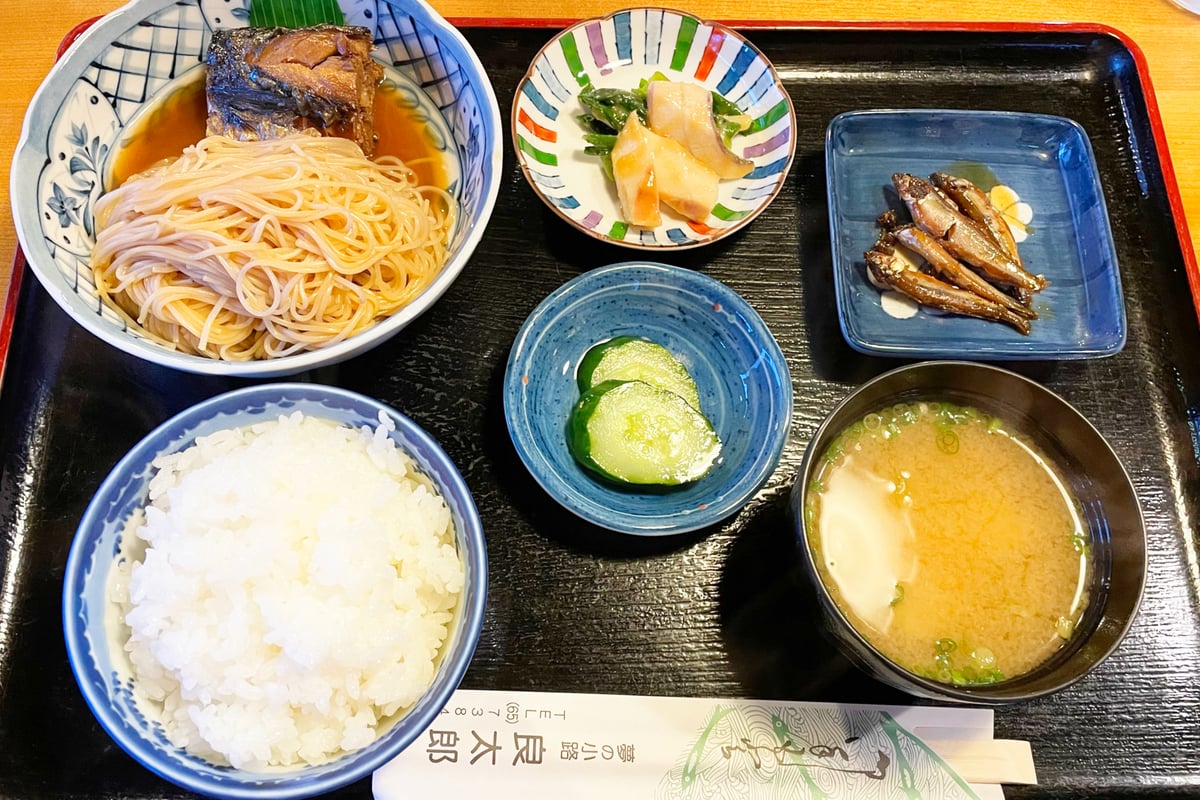
Saba-somen is a local dish from the Kohoku region of Shiga Prefecture (around Nagahama City) made by simmering sweet-and-savory grilled mackerel together with somen noodles; it is also called 'yaki-saba somen' (grilled mackerel somen). Although Kohoku is an inland region, it lies relatively close to Wakasa Bay, a mackerel-producing area, and grilled mackerel and narezushi carried in from Wakasa have long been familiar ingredients there. The dish is said to originate from the custom of 'satsuki-mimai,' in which families would send grilled mackerel to daughters who had married into farming households to look after them during the busy May farming season, and it became cherished as a dish that could be prepared quickly even during hectic times. It has also been served as a feast dish for celebrations and ceremonial occasions, such as the Nagahama Hikiyama Festival at Nagahama Hachimangu Shrine, and remains beloved today as a soul food representing the Kohoku region.
Origin
Kohoku is an inland area facing Lake Biwa, but it lies relatively close to Wakasa Bay, a mackerel-producing region, and preserved mackerel foods such as grilled mackerel, heshiko, and narezushi have long been part of daily life there. During the busy May farming season, families would send grilled mackerel to their daughters who had married into farming households as a gesture of concern, a custom known as 'satsuki-mimai' — this is considered one of the origins of saba-somen.
History
While cherished as a feast that could be prepared quickly during the busy farming season, it has also been served on occasions of hospitality, celebration, and ceremony. At the Nagahama Hikiyama Festival, held every April at Nagahama Hachimangu Shrine, it is customary for saba-somen to be served as a festival feast in each household, and this practice continues today as part of the region's food culture.
Features
The dish is characterized by grilled mackerel simmered slowly in a sweet-and-savory broth, together with somen noodles that absorb the flavor released from the tender flesh and bones. The dried somen is added directly to the broth and simmered until soft, resulting in noodles rich with the flavor of mackerel fat and dashi. The sweetness and saltiness of the broth and the degree to which the mackerel is simmered vary from shop to shop, and comparing different versions is part of the enjoyment.
Main Ingredients
Food Culture
Passed down through the custom of 'satsuki-mimai,' which offered comfort during the toil of the farming season, and as a feast served at the Nagahama Hikiyama Festival, the dish is rooted in Kohoku life not merely as everyday food but as a 'hare' (celebratory) dish for entertaining and marking special occasions.
How It Differs from Home Cooking
At home, it is often made simply using canned grilled mackerel or fillets, whereas specialty restaurants simmer whole mackerel over a long time until even the bones become tender, offering a more authentic preparation.
Famous Shops
翼果楼
滋賀県長浜市元浜町7-8
A specialty restaurant housed in a 200-year-old merchant house; yaki-saba somen costs around 950 yen, with set meals starting from around 1,390 yen.
View details →成駒家
滋賀県長浜市南呉服町5-25
A long-established restaurant founded in 1887 (Meiji 20); yaki-saba somen alone costs 870 yen, with set meals around 1,300 yen.
View details →