 1 / 2
1 / 2Image: Wikimedia Commons
Echizen-yaki is pottery made mainly in Echizen Town, Nyu District, Fukui Prefecture. It is counted among 'Japan's Six Ancient Kilns,' together with Seto, Tokoname, Shigaraki, Tanba and Bizen. The area began as a pottery center about 850 years ago, at the end of the Heian period, when it adopted techniques from the Tokai region, such as those of the Tokoname kilns, and started producing yakishime (high-fired unglazed) stoneware. Because the pieces are fired at high temperatures without glaze, they become hard and durable. A yellowish-green natural glaze, formed when wood ash melts inside the kiln, adds a rustic beauty. By the late Muromachi period, with jars, large storage vessels and mortars as its main products, it had grown into the largest pottery-producing area on the Sea of Japan side. It became a Traditional Craft Designated by the Minister of Economy, Trade and Industry in 1986, and in 2017 it was also recognized as Japan Heritage as one of the Six Ancient Kilns. At Echizen Ceramic Village (Echizen Togei-mura), visitors can choose pieces from local kilns and try making pottery.
Origin
The origins of pottery in Echizen are said to date back about 1,300 years, but it began as a production area in the late 12th century, at the end of the Heian period. Techniques from the Tokai region, such as those of the Tokoname and Sanage kilns, were introduced, and production of yakishime stoneware began. The first kiln was built in Osobara, Echizen Town, and it is presumed that a group of potters from Tokoname handled the early production.
History
In the Kamakura period, a unique forming method called 'nejitate,' in which coils of clay are stacked up, was developed. By the late Muromachi period, jars, large storage vessels and mortars had become the main products, and the area grew into the largest pottery-producing center on the Sea of Japan side. From the mid-Edo period onward it declined under pressure from wares such as Seto-yaki, but in the Showa era it also produced items such as soba plates for station soba stands. In 1948 it was counted as one of Japan's Six Ancient Kilns, and in 1971 Echizen Ceramic Village was established. In 1986 it was designated a national Traditional Craft.
Features
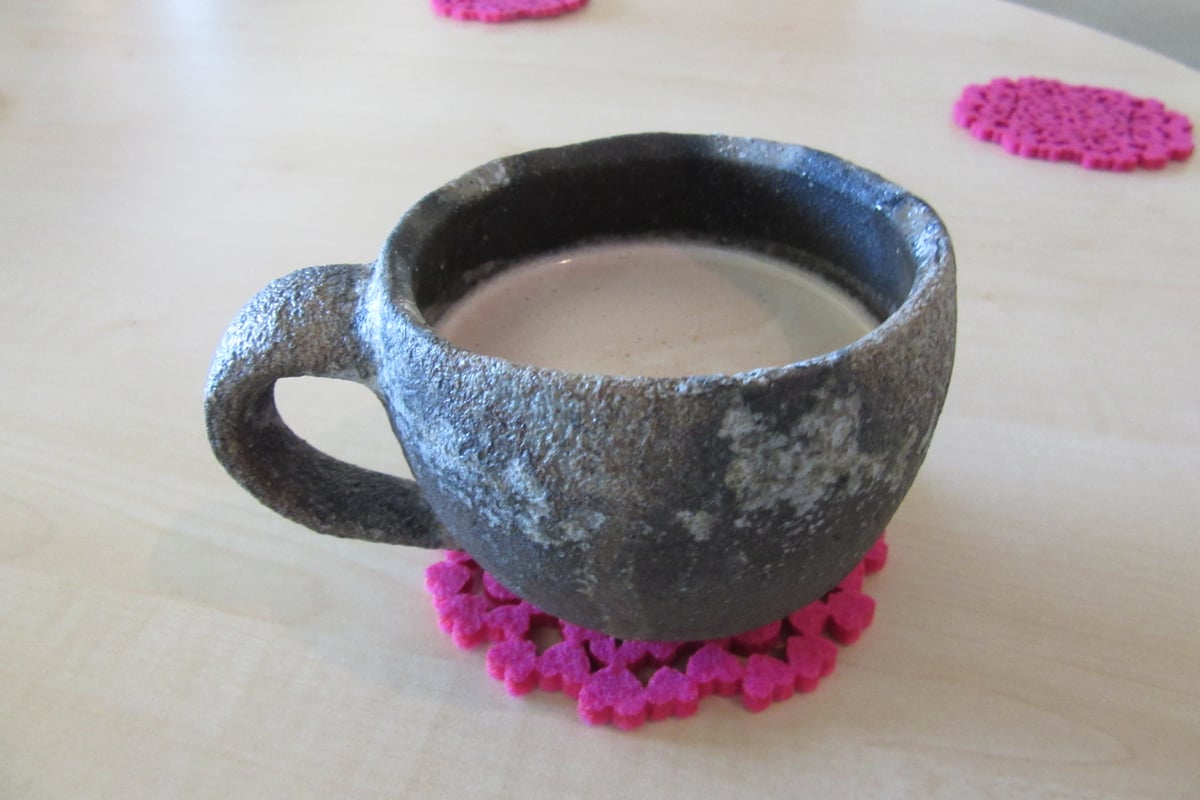
Echizen clay contains iron, has high fire resistance and vitrifies well when fired. The surface color ranges from blackish gray to reddish brown, and yellowish-green natural glaze running down the surface creates distinctive patterns. Because it is fired hard at high temperatures, it hardly lets water through and makes durable vessels. Since the Showa 40s (1965 to 1974), many potters have moved to the area, and in addition to traditional jars and storage vessels, they make everyday pieces such as tableware and flower vases.
Techniques
Nejitate (Coil Building)
A forming method unique to Echizen, said to have been developed in the Kamakura period. The potter walks around the clay base and builds up the shape by stacking coils of clay. It is well suited to making large storage vessels, and the technique is still handed down today.
Yakishime and Natural Glaze
A technique of firing at high temperatures without glaze so that the clay becomes hard and dense. During firing, wood ash falls on the pieces and melts, becoming a yellowish-green natural glaze. Firing in anagama (tunnel kilns) built on hillside slopes gives each piece its own unique coloring.
Materials Used
| Main Production Areas |
|
|---|
Artisans & Workshops
越前焼工業協同組合
The production-area cooperative for Echizen-yaki, based in Osobara, Echizen Town. It runs the direct sales shop 'Echizen-yaki no Yakata' and widely promotes the appeal of Echizen-yaki. Its website introduces more than 20 kilns and potters.
Official site →風来窯
A kiln located within Echizen Ceramic Village, listed in the Echizen-yaki cooperative's kiln directory as the kiln of Oya Uichiro. The village is also home to the Fukui Prefectural Ceramics Museum and the Echizen Old Kiln Museum, making it a base for touring the kilns.
How to Buy
- 越前焼の館
- A sales facility run directly by the kilns at 5-33 Osobara, Echizen Town. About 1,000 pieces of Echizen-yaki are always on display, ranging from natural-glaze jars and vases to plates, bowls and beer mugs. Open 10:00 to 16:00 on weekdays and 9:00 to 17:00 on weekends and public holidays.Where to buy →PR
- Echizen-yaki Online Store
- An online store accessible from the Echizen-yaki cooperative's website. Even people who live far away can buy Echizen-yaki pieces.Where to buy →PR
Hands-on Experiences
福井県陶芸館 陶芸教室
福井県丹生郡越前町小曽原120-61
Electric potter's wheel sessions cost around 3,500 yen (including firing for one piece), hand-building around 1,500 yen, and painting from around 800 yen. It takes about 40 days for pieces to be completed, and they can be shipped to your home with shipping paid on delivery. Closed on Mondays.
View details →FAQ
Q. What are Japan's Six Ancient Kilns?
A. It is the collective name for six representative pottery-producing areas where production has continued from medieval times to the present: Seto, Tokoname, Echizen, Shigaraki, Tanba and Bizen. Echizen-yaki was counted as one of the Six Ancient Kilns in 1948, and in 2017 the Six Ancient Kilns were recognized as Japan Heritage by the Agency for Cultural Affairs.
Q. Is there a place to learn about the history of Echizen-yaki?
A. The Echizen Old Kiln Museum in Echizen Ceramic Village displays materials collected over more than 40 years by Mizuno Kuemon, a leading researcher of old Echizen ware. Visitors can trace the history of Echizen-yaki from the Heian period to the present day.
Q. Are there events where Echizen-yaki potters gather?
A. Every May, the 'Echizen Ceramics Festival' is held at Echizen Ceramic Village, bringing Echizen-yaki potters together in one place. Many people come from both inside and outside the prefecture, and the lively event has become a springtime tradition.