Image: Wikimedia Commons
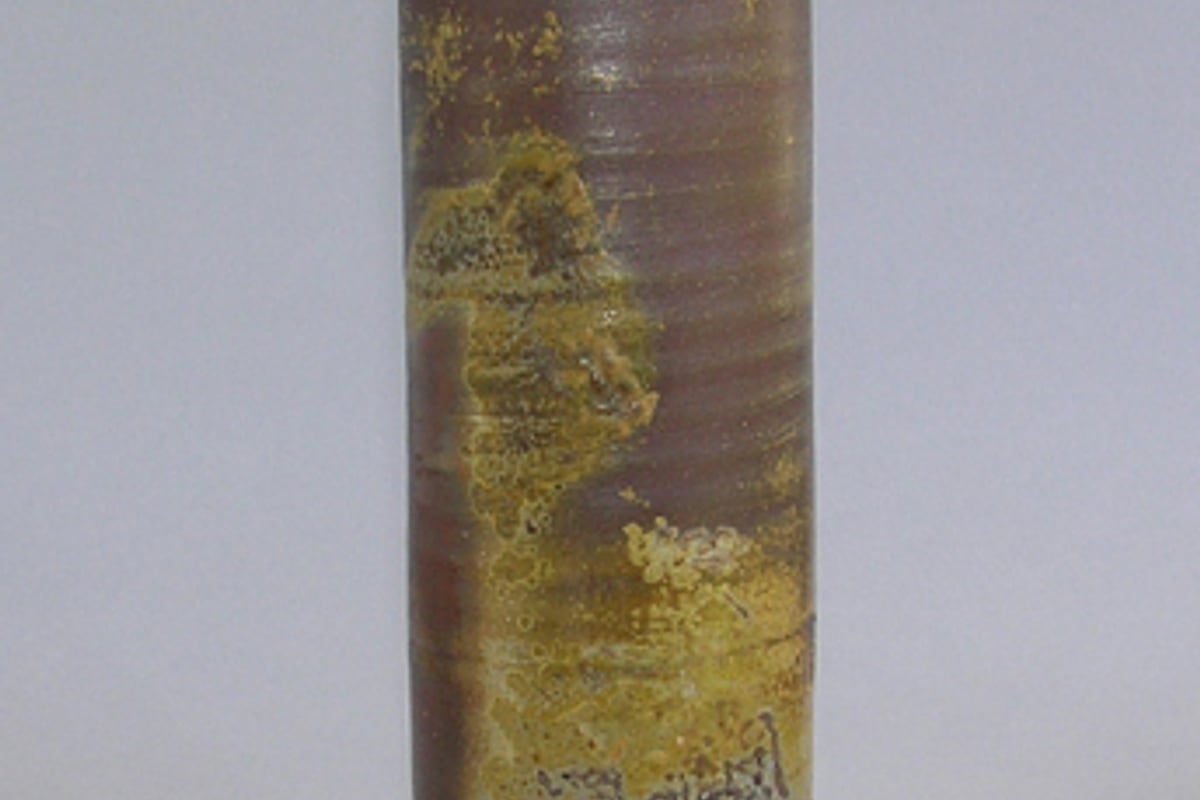
Bizen-yaki is an unglazed stoneware centered on the Ibe district of Bizen City, Okayama Prefecture, and is counted among Japan's Six Ancient Kilns alongside Seto, Tokoname, Tanba, Shigaraki, and Echizen. Also known as 'Ibe-yaki' after its production area, its defining feature is that it is fired at high temperature without any glaze whatsoever. The raw material is 'hiyose,' an iron-rich clay accumulated at the bottom of paddy fields stretching from Bizen and Ibe to Kagato; after prolonged firing, the way flames pass through the kiln and ash settles on each piece produces distinctive markings called 'yohen' (kiln transformations). Representative types of yohen include hidasuki (crimson cord marks left by wrapping straw around a piece before firing), sangiri (color changes that occur where pieces are buried in ash), and goma (sesame-like specks left where melted ash adheres to the surface), giving each piece the appeal of a one-of-a-kind work. Bizen-yaki developed as a center for everyday earthenware in the Kamakura period, and in the Momoyama period, amid the vogue for the tea ceremony, it was highly prized by tea masters in Sakai and Kyoto, producing many outstanding pieces of tea ceramics. In the modern era, potters led by Kaneshige Toyo further refined the techniques, and to this day many kilns still line the streets of Ibe.
Origin
The origins of Bizen-yaki are said to date to the Heian through early Kamakura periods, when potters who had produced Sue ware since the Kofun period began making more practical, durable everyday earthenware. In the medieval era it developed as a center for household goods such as jars, pots, and grinding bowls, and in the Momoyama period, as the tea ceremony flourished, its austere, unglazed texture won favor among tea masters in Sakai and Kyoto, leading to the production of many fine tea containers and water jars.
History
Kilns continued to be passed down centered on Ibe through the Edo period, and after a temporary decline following the Meiji era, potters including Kaneshige Toyo studied and revived the techniques of old Bizen ware in the Showa era. In 1956 Kaneshige Toyo became the first Bizen-yaki potter to be recognized as a Living National Treasure (holder of an Important Intangible Cultural Property), and he was followed by Fujiwara Kei, Yamamoto Toshu, Fujiwara Yu, and Isezaki Jun—five Living National Treasures in total to date. Many kilns and artists still gather in the Ibe district today, carrying on the Bizen-yaki tradition.
Features
Its most distinctive feature is the unglazed firing technique, using 'hiyose,' an iron-rich clay left to mature for a long time. Firing is done with split pine wood, and depending on how the flames pass through the kiln and how ash settles, a wide variety of yohen kiln transformations arise by chance, including hidasuki (crimson marks left by straw), sangiri (color shifts from being buried in ash), and goma (patterns left by melted, adhering ash). No two pieces come out with the same pattern even from the same clay and kiln, and this rustic, powerful texture of the clay is considered the charm of Bizen-yaki.
Techniques
Hidasuki
A technique in which straw is wrapped around a piece before firing; a chemical reaction between the straw and the clay produces crimson sash-like markings across the surface. Achieving a fine crimson color is difficult and hard to reproduce intentionally, making it especially prized.
Sangiri
Parts of a piece buried in ash inside the kiln are not touched directly by flame and are instead smoked, taking on shades of black, gray, or bluish tones. The way it appears varies with the amount of ash and the flow of the flame, producing complex color variations.
Goma
During firing, ash from the split pine wood falls onto the surface of a piece and melts at high temperature into a natural glassy glaze. This creates a grainy pattern resembling scattered sesame seeds, with the appearance varying according to how much ash adheres.
Materials Used
Production Process
- 1
Clay preparation
Iron-rich clay called hiyose, taken from paddy fields around Bizen and Ibe, is exposed to wind and rain for one to two years, sorted by particle size through elutriation, and then left to mature for several years to produce a fine-textured clay.
- 2
Forming
Pieces are shaped on a potter's wheel or by hand. Since no glaze will be used, the thickness and placement of each piece are considered with an eye to how the kiln transformations will appear.
- 3
Drying
The shaped pieces are thoroughly dried to prevent cracking during firing.
- 4
Kiln loading
Pieces are loaded into the climbing kiln with straw wrapped around them or ash placed over them, their arrangement and covering carefully worked out according to the desired kiln transformation.
- 5
Firing and unloading
Using split pine wood as fuel, the kiln is fired at high temperature around the clock for one to two weeks. Because the way the flames pass through and ash settles determines the pattern, the kiln master's skill greatly affects the final result.
| Main Production Areas |
|
|---|
Artisans & Workshops
金重陶陽
A potter who studied the techniques of Momoyama-era Bizen-yaki and revived the style of old Bizen ware for the modern age. In 1956 he became the first Bizen-yaki potter to be recognized as a Living National Treasure (holder of an Important Intangible Cultural Property), and is regarded as the father of the modern Bizen-yaki revival.
How to Buy
- 協同組合岡山県備前焼陶友会
- A cooperative association whose members are Bizen-yaki artists and kilns. At the sales gallery of the Bizen Pottery Traditional Industry Hall, numerous works by member artists are exhibited and sold.Where to buy →PR
Hands-on Experiences
備前焼伝統産業会館
岡山県備前市伊部1657-7
Hands-on clay-forming experiences are offered on weekends and holidays only (reservation required). The 600g beginner course starts at around 3,240 yen for electric-kiln firing and around 3,780 yen for climbing-kiln firing.
View details →夢幻庵備前焼工房
岡山県備前市伊部2697
Hand-forming experiences start at around 3,850 yen for 0.5kg, and electric potter's wheel experiences start at around 6,050 yen for 1kg (reservation required).
View details →