Image: Wikimedia Commons
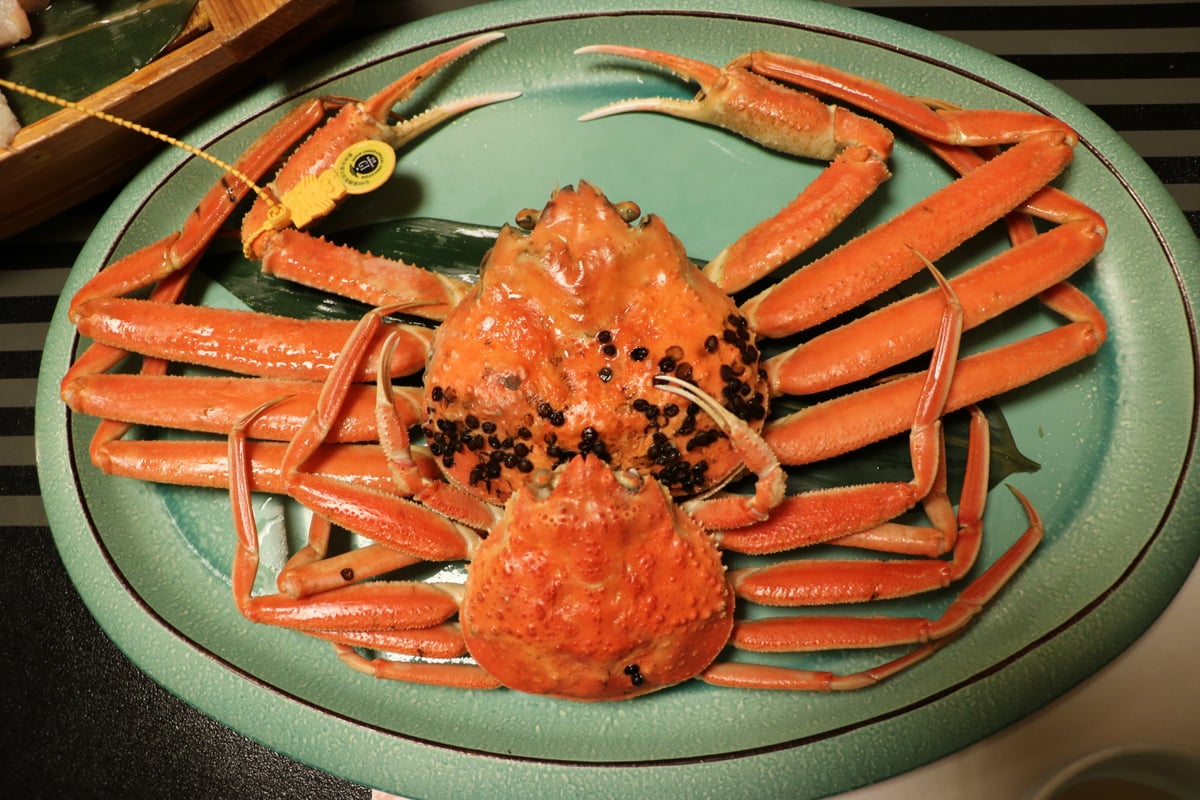
Echizen Crab is the brand name given to male snow crabs (zuwaigani) landed at ports in Fukui Prefecture. It covers crabs landed at Echizen Port (Echizen Fishing Port) in Echizen Town, as well as at Mikuni Port in Sakai City, Tsuruga Port, Obama Port, and others. A yellow tag attached to a leg is proof of the brand, bearing the GI (Geographical Indication) mark, the name of the fishing boat, and other information. Echizen Crab landed at Mikuni Port has been presented to the Imperial Household since 1922 (Taisho 11), and it is known as 'the only crab presented to the Imperial Household.' In 2018, it became the first crab in Japan to be registered under the national Geographical Indication (GI) protection system. The fishing season opens on November 6 each year, and males are landed until March 20 of the following year. Female snow crabs are called 'Seiko-gani,' and the uchiko (ovaries) inside the shell and the sotoko (eggs) carried on the belly are prized. Echizen Town is also home to the Echizen Crab Museum, where visitors can learn about Echizen Crab, and the crab is one of the signature winter delicacies of the Echizen Coast.
Origin
Echizen Crab has a long history. The diary of Sanjonishi Sanetaka, a court noble of the Muromachi period, is said to contain an entry from 1511 (Eisho 8) that mentions 'Echizen crab' (越前蟹). This is said to be the oldest record of the name 'Echizen crab,' suggesting that crabs from Echizen were already known in Kyoto at that time. In the Edo period, records of snow crab fishing also appear in a book titled 'Echizen no Kuni Fukui-ryo Sanbutsu' (Products of the Fukui Domain in Echizen Province), showing that fishing was actively carried out.
History
In the modern era, the presentation to the Imperial Household of Echizen Crab landed at Mikuni Port began in 1922 (Taisho 11). Apart from a few exceptions such as during wartime, it has continued every year, building a history of more than 100 years. In 1997 (Heisei 9), an initiative began to attach yellow tags to the crabs before the auction, making Echizen Crab a pioneer among tagged brand crabs. In 2018, it was registered as a Geographical Indication (GI).
Features
Among the ports where Echizen Crab is landed, Echizen Port is the closest to Cape Echizen, where rough waves crash ashore. It is said that close to 80 percent of the Echizen Crab in the prefecture is landed here. Echizen Town has about 40 bottom-trawl fishing boats, the most in the prefecture, and plays a central role in Echizen Crab fishing. Males that have only recently molted are called 'Mizu-gani' and are on the market only for a short period, from late February to March 20. There is also a top-tier brand called 'Kiwami,' reserved for large crabs well filled with meat.
Main Ingredients
Food Culture
November 6, the opening day of the season, is the day that announces the arrival of winter on the Echizen Coast. Fishermen set out to sea all at once the night before and cast their nets at midnight. At the Echizen Crab Museum in Echizen Town, visitors can learn about the history of crab fishing and the deep-sea environment through exhibits, and can also buy seafood at the adjacent market.
Famous Shops
こばせ
福井県丹生郡越前町梅浦58-8
An inn in Echizen Town founded in 1870 (Meiji 3). The author Kaiko Takeshi visited in the winter of 1965 (Showa 40) and is said to have kept coming back for more than 20 years afterward. Its specialty is the 'Kaiko-don,' in which the meat and eggs of eight Seiko-gani are placed on rice grown in Fukui Prefecture, from about 11,400 yen.
望洋楼
福井県坂井市三国町米ヶ脇4丁目3-38
A ryokan in Mikuni Onsen renowned for its cuisine, said to have been founded in the Meiji era. It serves dishes made with Echizen Crab from Mikuni Port, which is also presented to the Imperial Household. It also runs its own restaurant, 'Echizen Kani no Bo.'
| Echizen Kanimeshi Crab Rice (Banjo Honten) | A famous ekiben (station bento) of Fukui Station, created in 1961 (Showa 36). Flaked crab meat is spread over rice cooked together with Seiko-gani. Its crab-shaped container is also well loved, and frozen versions are available for delivery.Where to buy →PR |
|---|
FAQ
Q. What is the difference between Echizen Crab and Seiko-gani?
A. Both are snow crabs, but Echizen Crab refers to the male and Seiko-gani to the female. Seiko-gani is smaller than the male, but its appeal is that you can enjoy both the uchiko and the sotoko. The fishing seasons also differ: males may be caught until March 20 of the following year, and females until December 31.