 1 / 2
1 / 2Image: Wikimedia Commons
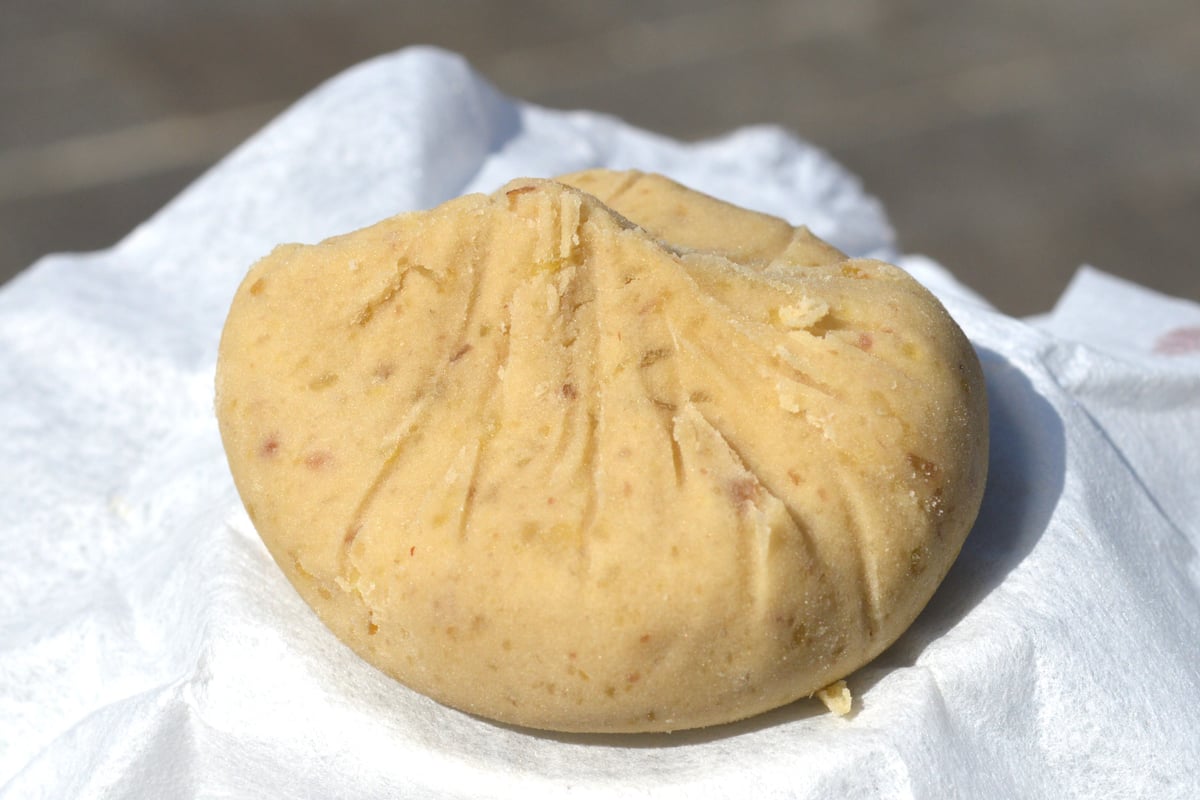
Kuri Kinton is a Japanese confection from Nakatsugawa City, Gifu Prefecture, made by steaming chestnuts, straining them, and combining them with sugar before shaping the mixture into a ball with a cloth twist (chakin-shibori). It differs from the kuri kinton served in osechi New Year dishes (candied chestnuts and sweet potato simmered in syrup), since the Tono-region version is made with only chestnuts and sugar, letting the chestnut's natural flavor and simple taste shine through. In the Edo period, Nakatsugawa flourished as a post town on the Nakasendo highway, and travelers were served a simple confection made by steaming and straining wild mountain chestnuts that grew on the slopes of Mount Ena — said to be the origin of Kuri Kinton. Confectioners began selling it commercially in the Meiji era, and production expanded once chestnut cultivation began in the Taisho era. Today it is enjoyed as an autumn delicacy from around September to December, with more than a dozen Japanese confectionery shops lining the streets of Nakatsugawa, drawing visitors from within and outside the prefecture.
Origin
The origins of Kuri Kinton are said to trace back to Nakatsugawa-juku, a post town on the Nakasendo highway during the Edo period. Wild mountain chestnuts that grew naturally in the forests around Mount Ena were steamed, strained, and twisted in cloth into a simple sweet served to travelers passing through the post town. It began as a rustic preserved food made in individual homes and teahouses.
History
In the mid-Meiji era, confectionery shops began producing it commercially, and once chestnut cultivation started in Nakatsugawa during the Taisho era, larger cultivated chestnuts became available, boosting production. In 2006, a stone monument marking Kuri Kinton's birthplace was erected in the rotary in front of Nakatsugawa Station, spreading recognition of the town as its place of origin.
Features
The defining characteristic is that it is cooked using only chestnuts and sugar, with no coloring or preservatives added. Many shops deliberately leave some texture rather than straining the mixture completely smooth, preserving the natural texture of the chestnuts, and its plain, unadorned cloth-twisted shape carries on the traditional method to this day. Because no preservatives are used, its shelf life is short — typically just a few days.
Main Ingredients
Food Culture
It is cherished as a seasonal confection enjoyed with the arrival of autumn, and is also a popular gift item. Nakatsugawa is home to numerous chestnut confectionery specialty shops, from long-established houses to newer ones, and many visitors come specifically to compare and taste different shops' versions.
How It Differs from Home Cooking
The kuri kinton served in osechi New Year dishes is made by simmering chestnuts and sweet potato together in sugar and syrup, but the Nakatsugawa-born version uses no sweet potato — only chestnuts and sugar — and is also different in that it is limited to the autumn season.
Famous Shops
栗きんとん本家 すや 本店
岐阜県中津川市新町2-40
A long-established shop said to have been founded in 1802 (Kyowa 2). Each piece of Kuri Kinton costs around 300 yen.
View details →御菓子所 川上屋 本店
岐阜県中津川市本町3丁目1番8号
Founded in 1864 (Genji 1). Each piece of Kuri Kinton costs around 300 yen, with assortment gift boxes starting in the 2,000 yen range.
View details →