 1 / 3
1 / 3Image: Wikimedia Commons
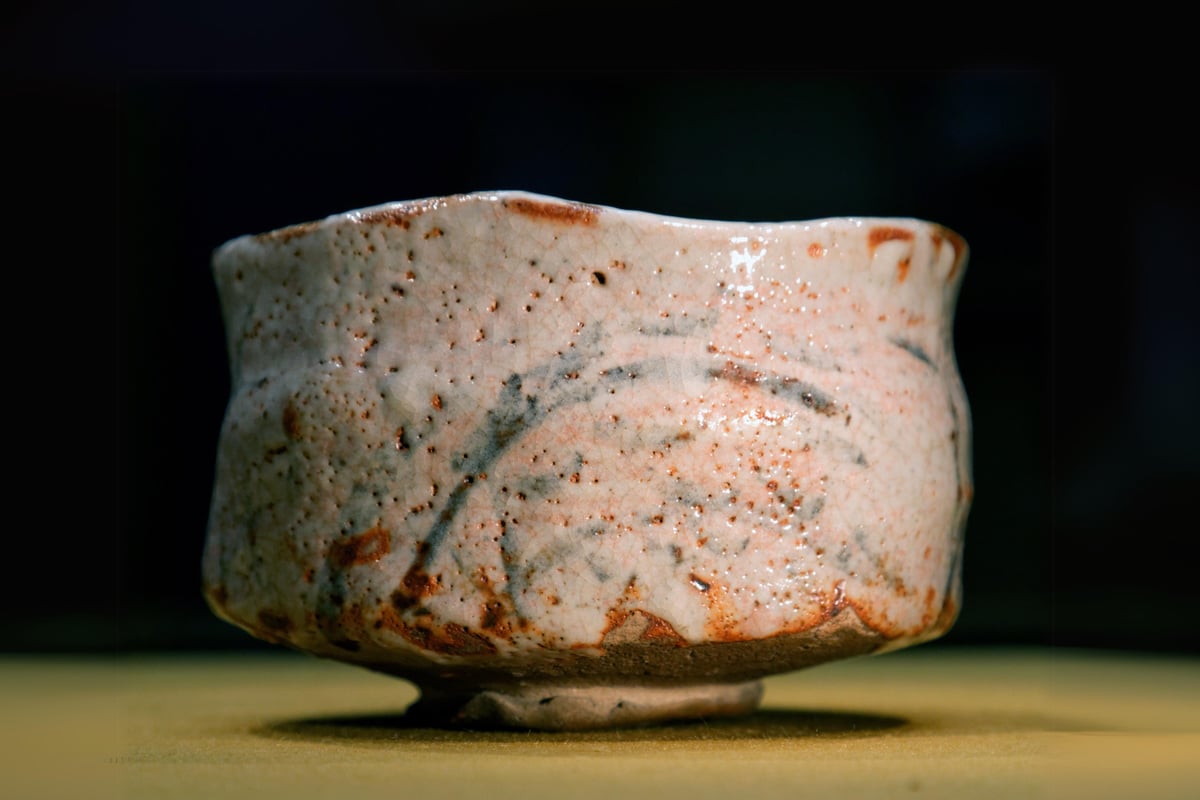
Mino-yaki is a general term for the ceramics produced for over 1,300 years mainly in Tajimi, Toki, Mizunami, and Kani cities in the Tono region of Gifu Prefecture. It is Japan's largest ceramics-producing area, supplying roughly 60% of the tableware distributed nationwide. Its greatest feature is that it is not bound to a single style or technique: Shino, Oribe, Ki-Seto, and Seto-guro, all born alongside the tea ceremony culture of the Momoyama period, are joined by as many as 15 styles and techniques recognized as Traditional Craft designated by the Minister of Economy, Trade and Industry. From rustic white-glazed Shino ware to Oribe ware with its bold green glaze and free-flowing patterns, a wide variety of expressive ceramics are all produced under the single name 'Mino-yaki,' cherished for everyday tableware as well as tea ceramics.
Origin
The origins of Mino-yaki are said to trace back to the production of Sue ware around the 7th century, with white ash-glazed pottery fired during the Heian period. When the tea ceremony flourished in the Momoyama period, kilns in the Tono region began producing distinctive tea ceramics that reflected the tastes of tea masters, giving rise to styles such as Shino, Oribe, Ki-Seto, and Seto-guro.
History
From the Edo period onward, mass production advanced in the Tono region, which was blessed with high-quality clay and firewood fuel, and the area developed into a major center for everyday tableware. From the Meiji era, the introduction of modern production techniques further expanded output, and in 1978 the ware was designated a national Traditional Craft under the name 'Mino-yaki.' Kilns remain concentrated today across the four cities of Tajimi, Toki, Mizunami, and Kani.
Features
The greatest characteristic of Mino-yaki is that it is not confined to a single style, with a wide variety of techniques and designs coexisting. As a Traditional Craft, 15 items are designated, including Shino, Oribe, Ki-Seto, and Seto-guro, producing wares with expressions ranging from soft white glazes to generous green glazes and calm yellow tones. It is also Japan's largest ceramics-producing area, supplying about 60% of the nation's tableware.
Techniques
Shino
A technique in which a thick feldspar glaze is applied before firing, producing a soft, milky-white surface marked by fire coloring and fine crackle. Born in Mino during the Momoyama period, it is said to be the first Japanese ceramic ware decorated with brush-painted patterns.
Oribe
A style using a bold green copper glaze combined with free, innovative shapes and patterns. It is said to reflect the taste of tea master Furuta Oribe and is also known for its unconventional, asymmetrical forms.
Ki-Seto
A technique in which iron is added to ash glaze and fired to produce a pale yellow color. Prized for its calm tone and dignified presence, it has long been popular both as tea ceramics and everyday tableware.
Materials Used
Production Process
- 1
Kneading the clay
The clay is kneaded to remove air pockets and achieve a uniform consistency.
- 2
Shaping
The clay is shaped into plates, bowls, tea bowls, and other forms using a potter's wheel or molds.
- 3
Bisque firing
The piece is fired once at a low temperature to stabilize the clay body.
- 4
Glazing and decoration
A glaze suited to the intended style, such as Shino or Oribe, is applied, and patterns are added.
- 5
Final firing
The piece is fired at high temperature in a climbing kiln, anagama kiln, or gas kiln to complete the ware.
| Main Production Areas |
|
|---|
Artisans & Workshops
幸兵衛窯
Founded in 1804, this kiln is located in the Ichinokura area of Tajimi City. The sixth-generation Kato Takuo was recognized as a Living National Treasure and is also known for his research into Persian ceramics. The kiln has an attached crafts hall and museum, and also offers pottery-making experiences.
Official site →How to Buy
- Ceramic Park MINO
- A complex facility for Mino-yaki in Tajimi City. Its shop and gallery sell Mino-yaki tableware, and special exhibitions and events are held regularly.Where to buy →PR
Hands-on Experiences
ガイド付き窯元めぐり(土岐市)
岐阜県土岐市(もとてらす東美濃内)
Reservation required, minimum 2 people, around 1,000 yen per person, mainly on weekdays. A tourism guide leads visitors through kiln workshops and galleries.
View details →セラミックパークMINO 作陶館
岐阜県多治見市東町4-2-5
Reservation required. Visitors can try wheel-throwing, painting, and other pottery-making experiences. Fees vary by season, so please check with the facility.
View details →