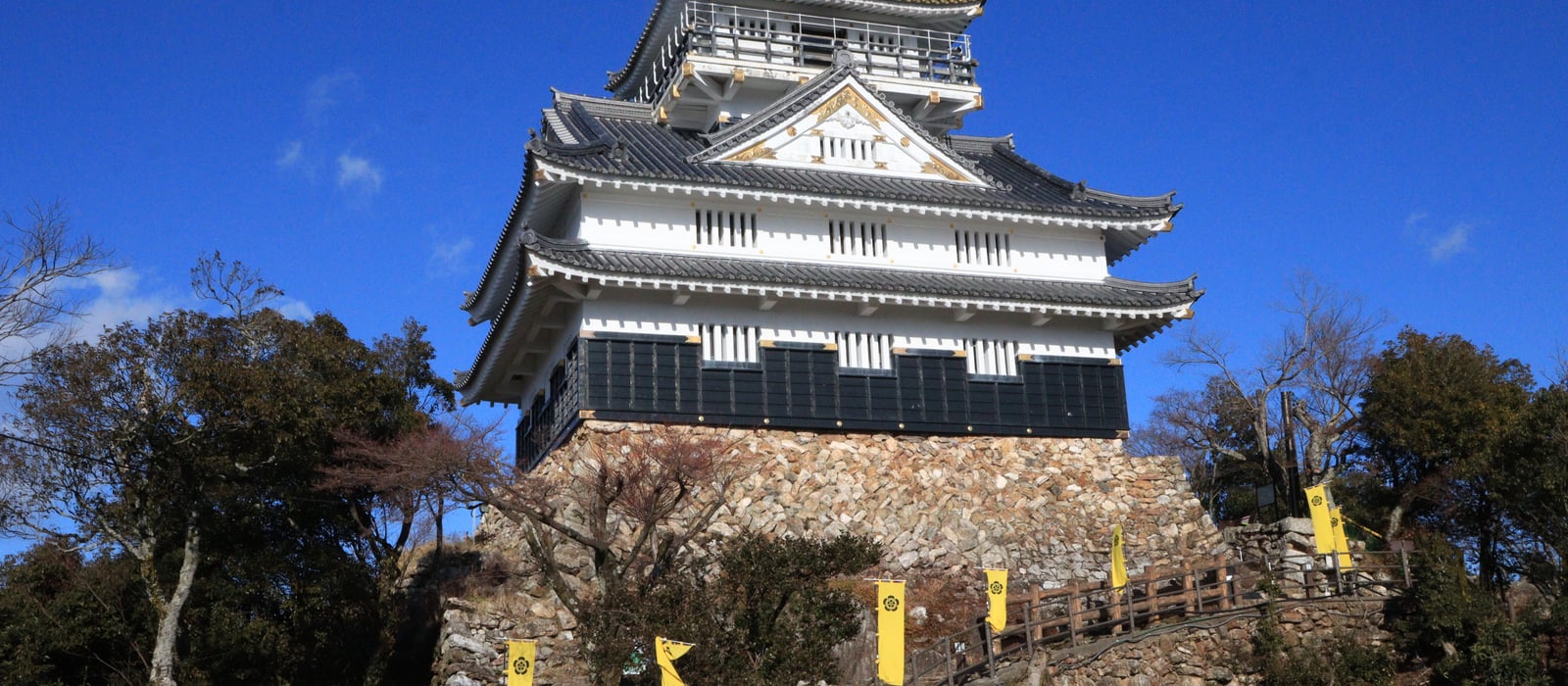
 Image: Wikimedia Commons
Gifu Prefecture
Gifu Prefecture is a treasury of craftsmanship and regional cuisine where two distinct climates, Mino and Hida, coexist within a single prefecture. In the Mino region, hands-on traditions combining practicality and beauty remain very much alive, from Mino-yaki, which produces about 60% of Japan's tableware, to Mino Washi paper (including Hon-mino-shi, a UNESCO Intangible Cultural Heritage), and Seki City, known worldwide as a center for cutlery. In Hida-Takayama, master crafts such as Ichii Ittobori wood carving, Hida Shunkei-nuri lacquerware, and Hida furniture have been passed down alongside the old townscape, nurturing a mountain food culture distinctive to the area, including Hoba Miso, Hida beef, and Takayama ramen. The culture of clear rivers and mountain life, epitomized by the cormorant fishing on the Nagara River and the Gujo Odori dance, is another of the prefecture's great charms.
Gifu's Traditional Crafts
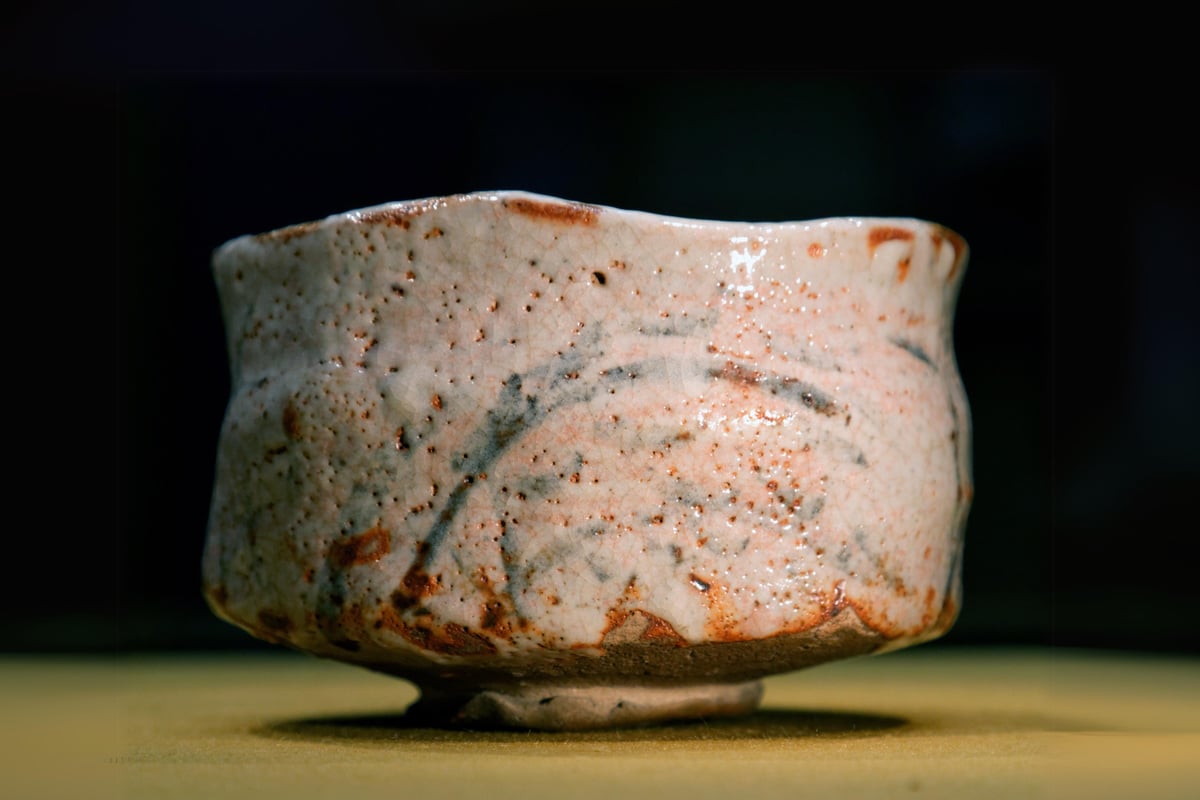
Mino-yaki
Mino-yaki
Mino-yaki is a general term for the ceramics produced for over 1,300 years mainly in Tajimi, Toki, Mizunami, and Kani cities in the Tono region of Gifu Prefecture. It is Japan's largest ceramics-producing area, supplying roughly 60% of the tableware distributed nationwide. Its greatest feature is that it is not bound to a single style or technique: Shino, Oribe, Ki-Seto, and Seto-guro, all born alongside the tea ceremony culture of the Momoyama period, are joined by as many as 15 styles and techniques recognized as Traditional Craft designated by the Minister of Economy, Trade and Industry. From rustic white-glazed Shino ware to Oribe ware with its bold green glaze and free-flowing patterns, a wide variety of expressive ceramics are all produced under the single name 'Mino-yaki,' cherished for everyday tableware as well as tea ceramics.

Mino Washi
Mino Washi
Mino Washi is a handmade Japanese paper that has been crafted in Mino City, Gifu Prefecture, for over 1,300 years. It is known for having been used in a household registration document from 702 (the 2nd year of Taiho) preserved at the Shosoin Repository in Nara, making it one of Japan's three most celebrated types of washi. Made from kozo, mitsumata, and gampi fibers, its defining characteristic is combining seemingly contradictory qualities: thinness and even texture with remarkable strength. During the Edo period it received official protection from the shogunate as a premium paper for shoji screens. Among its varieties, 'Hon-Minoshi,' which preserves the traditional production method, was registered as UNESCO Intangible Cultural Heritage in 2014. Designated a national Traditional Craft in 1985, papermaking artisans in and around Mino City continue to pass down the technique today.
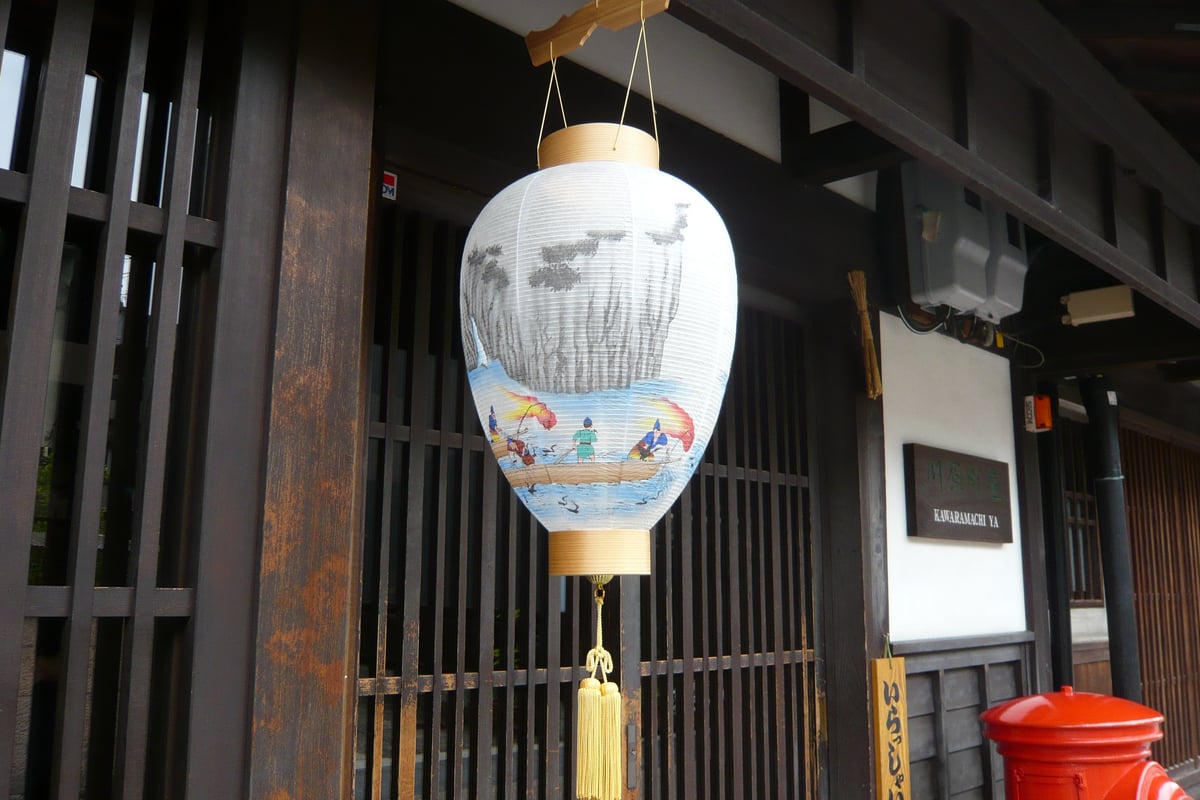
Gifu Chochin
Gifu Chochin
Gifu Chochin are Bon lanterns produced mainly in Gifu City, Gifu Prefecture, characterized by their delicate and elegant paper shades made from high-quality bamboo ribs and thin yet strong Mino Washi paper from the Mino region, decorated with autumn grasses, landscapes, and other motifs. With a history of more than 300 years dating back to the Edo period, they have also earned high acclaim overseas, winning a silver medal at the 1904 St. Louis World's Fair, a gold medal at the 1905 Liege International Exposition, and a gold medal again at the 1937 Paris International Exposition. They come in many varieties, including the hanging 'Gosho Chochin' and the standing 'Ouchi Andon' and 'Kaiten Andon,' and are loved for the elegant atmosphere and refreshing seasonal feel they create when lit. Designated a national Traditional Craft in 1995, long-established lantern makers in Gifu City continue to hand-craft them today.
Mizu Uchiwa
Mizu Uchiwa
Mizu Uchiwa is a summer tradition crafted around the Kawaramachi district of Gifu City, Gifu Prefecture - a truly one-of-a-kind fan that feels especially cool when dipped in water and fanned, thanks to the cooling effect of evaporation. Made by applying varnish to gampi paper pulped to an extreme thinness, it is prized for a transparency so fine that the scenery on the other side can be seen through it, a quality that developed uniquely within the history of Gifu Uchiwa fans, said to date back to the Muromachi period. Mizu Uchiwa developed as a souvenir associated with cormorant fishing on the Nagara River, but production once ceased due to difficulty obtaining gampi, the raw material, before being revived around the time of the 2005 World Exposition in Aichi. Artisans today still finish each fan entirely by hand.
Ichii Ittobori
Ichii Ittobori
Ichii Ittobori is a wood carving art produced mainly in Takayama City in the Hida region of Gifu Prefecture. Its greatest characteristic is that it uses ichii (Japanese yew), the prefecture's official tree, entirely without coloring, letting the wood's natural grain and hues speak for themselves. It is said to have begun in the late Edo period when Matsuda Sukenaga, a netsuke carver from Takayama, took note of the beauty of ichii wood grain and began carving frogs, turtles, animals, and other subjects, making full use of the sharp marks left by chisels and small knives. Ichii wood has a striking contrast between its whitish outer layer, called 'shirata,' and its reddish inner layer, called 'akata,' and skillfully carving to bring out this two-toned contrast creates the craft's distinctive sense of shading. Designated a national Traditional Craft in 1975, carvers centered in Takayama City continue to pass down the technique today.
Hida Shunkei-nuri
Hida Shunkei-nuri
Hida Shunkei-nuri is a lacquerware tradition from Takayama City, Gifu Prefecture, distinguished by its use of transparent lacquer (sukiurushi) rather than black or vermilion lacquer, which lets the natural beauty of the wood grain show through. Its origins are said to trace back to the early Edo period, during the Keicho era (1596-1615), when the fine grain of sawara (Japanese false cypress) offcuts discovered during the construction of a shrine or temple in the Takayama castle town was fashioned into a tray finished with transparent lacquer, a piece said to have been presented to the imperial court and the shogunate, marking the beginning of Hida's lacquerware tradition. Since then, kijishi (woodturners) who shape the wooden base and nushi (lacquerers) who apply the lacquer have refined their crafts through a division of labor, developing everyday items such as trays, tiered boxes, and confectionery containers. On February 17, 1975 (Showa 50), it was designated a Traditional Craft by the Minister of Economy, Trade and Industry, and production continues today in kilns and workshops throughout Takayama City. Each lacquerer's individual touch gives rise to distinct hues and lustre, so that no two pieces of the same shape ever look exactly alike.
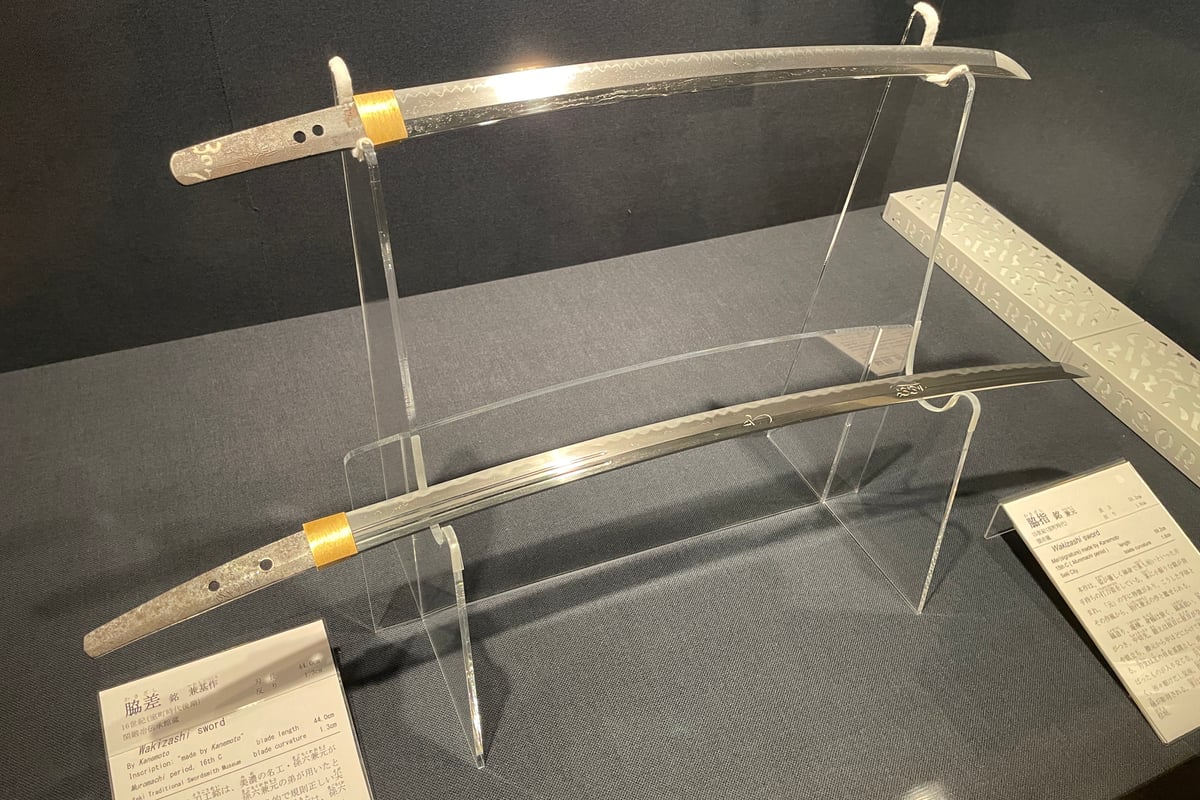
Seki Hamono
Seki Hamono
Seki Hamono is the collective name for the cutlery and blades made in Seki City, Gifu Prefecture, a leading production center that accounts for roughly half of Japan's total shipment value of household blades. Its origins are said to trace back to the Kamakura period, when the swordsmith Motoshige settled in Seki and began forging swords there. In the Nanboku-cho period, Kaneshige and Kaneuji, two of the Ten Great Disciples of Masamune, and others established a distinctive forging technique known as the Mino tradition, which came to be counted among the Five Traditions (Gokaden) of Japanese swordmaking. By the Muromachi period, the number of swordsmiths in Seki exceeded 300, and swords from Seki, praised as unbreakable, unbending, and sharp, became known throughout the country. From the Edo period onward, as demand for swords declined, blacksmiths shifted their skills toward everyday blades such as kitchen knives, razors, and scissors, and from the Meiji era the craft developed into a modern cutlery industry. Today, Seki Hamono is registered as a regional collective trademark by the Japan Patent Office, and Seki is regarded as one of the world's three great cutlery-producing regions.
Gujo Honzome
Gujo Honzome
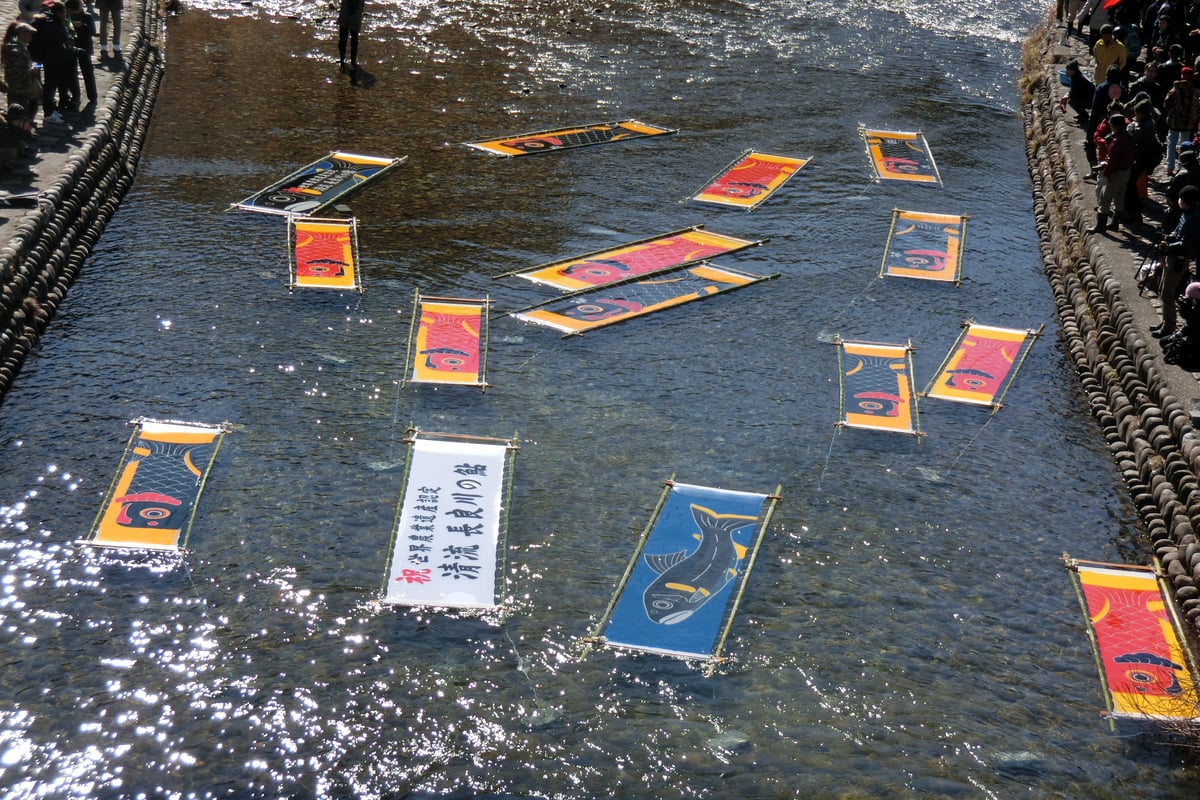
Gujo Honzome is an indigo-dyeing tradition from the town of Hachiman in Gujo City, Gifu Prefecture, known for its tsutsugaki (tube-drawing) technique used to dye carp-shaped koinobori streamers and other banners. Its origins are said to date back to the Tensho era (1573-1592) of the Azuchi-Momoyama period, and the craft has been handed down for more than 400 years in Hachiman, a town blessed with the abundant, clear waters of the Yoshida River, a tributary of the Nagara River. Craftspeople use a resist paste called managori, made from glutinous rice, squeezed from a cloth cone directly onto the fabric (tsutsugaki), or apply the paste through a stencil (katazome) to outline the pattern, before dyeing the cloth more than a dozen times in natural indigo to achieve a deep, vivid blue. Designated an Important Intangible Cultural Property of Gifu Prefecture in 1977 (Showa 52), the tradition is still carried on today by the Watanabe Dyeworks in Hachiman, now in its 15th generation. The annual kanzarashi (cold rinsing) of koinobori in the Yoshida River, held around the coldest time of the year, is a beloved winter tradition of Gujo Hachiman.
Gifu Wagasa
Gifu Wagasa
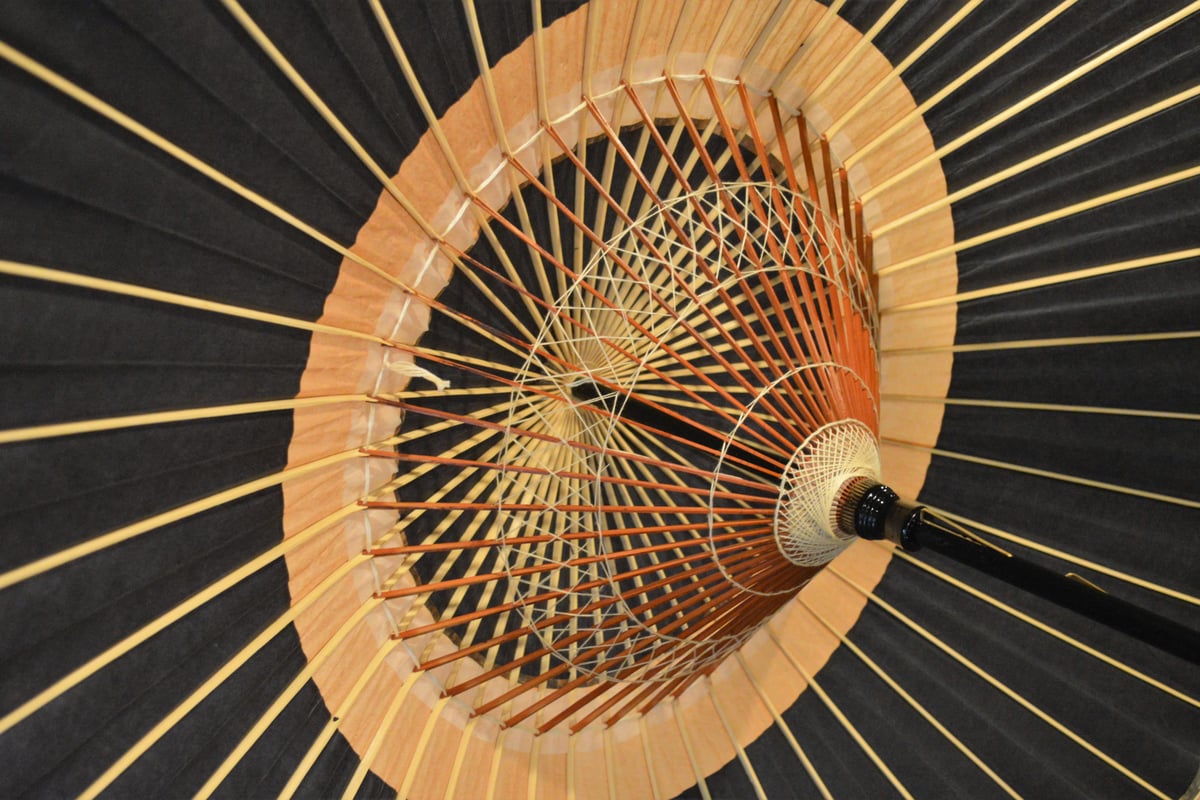
Gifu Wagasa is a traditional Japanese umbrella made in the Kano district of Gifu City, known for its hosomono (slender-fold) construction, which allows the umbrella to close into a slim form, along with a wide range of decorative techniques. Its origins are said to date back to 1639 (Kan'ei 16) in the early Edo period, when an umbrella maker from Akashi in present-day Hyogo Prefecture began making umbrellas in Kano. In 1756 (Horeki 6), Nagai Naonobu, lord of the Kano domain, encouraged umbrella making as a side occupation for impoverished lower-ranking samurai, and with the domain's backing the craft developed into a full-fledged industry. Blessed with proximity to sources of good-quality bamboo and Mino washi paper, the craft flourished, and at its peak in the mid-1950s, more than 600 wholesalers gathered in the area, producing 1.2 to 1.3 million umbrellas a month. Demand declined sharply with the spread of Western-style umbrellas, but a handful of wholesalers and workshops continue to uphold the tradition today, making rain umbrellas and parasols as well as ceremonial umbrellas used to mark occasions such as the Shichi-Go-San festival and weddings.
Hida Kagu
Hida Kagu
Hida Kagu refers to furniture made in the Hida region centered on Takayama City, Gifu Prefecture, and is one of Japan's leading furniture-producing areas, known especially for chairs, tables, and other leg furniture that make use of magiki, the technique of bending wood with steam. Its origins trace back to 1920 (Taisho 9), when local businesspeople, aiming to make use of underused beech timber, took up bentwood furniture making and founded Chuo Mokko Co., Ltd. (now Hida Sangyo Co., Ltd.), marking the beginning of Hida Kagu. The Hida region has a roughly 1,300-year-old tradition of woodworking craftsmen known as Hida no Takumi, said to have taken part in the construction of Heijo-kyo and Todai-ji Temple, and the skills of these craftsmen have carried through into modern furniture making. The craft makes use of beech, which is hard and pliant and well suited to bentwood processing, and oak, prized for its calm grain, to produce beautiful, refined designs that highlight the natural color and grain of the wood. In 2008 (Heisei 20), Hida no Kagu and Hida/Takayama no Kagu were registered as regional collective trademarks.
Gifu's Local Food
Hoba Miso
Hoba Miso
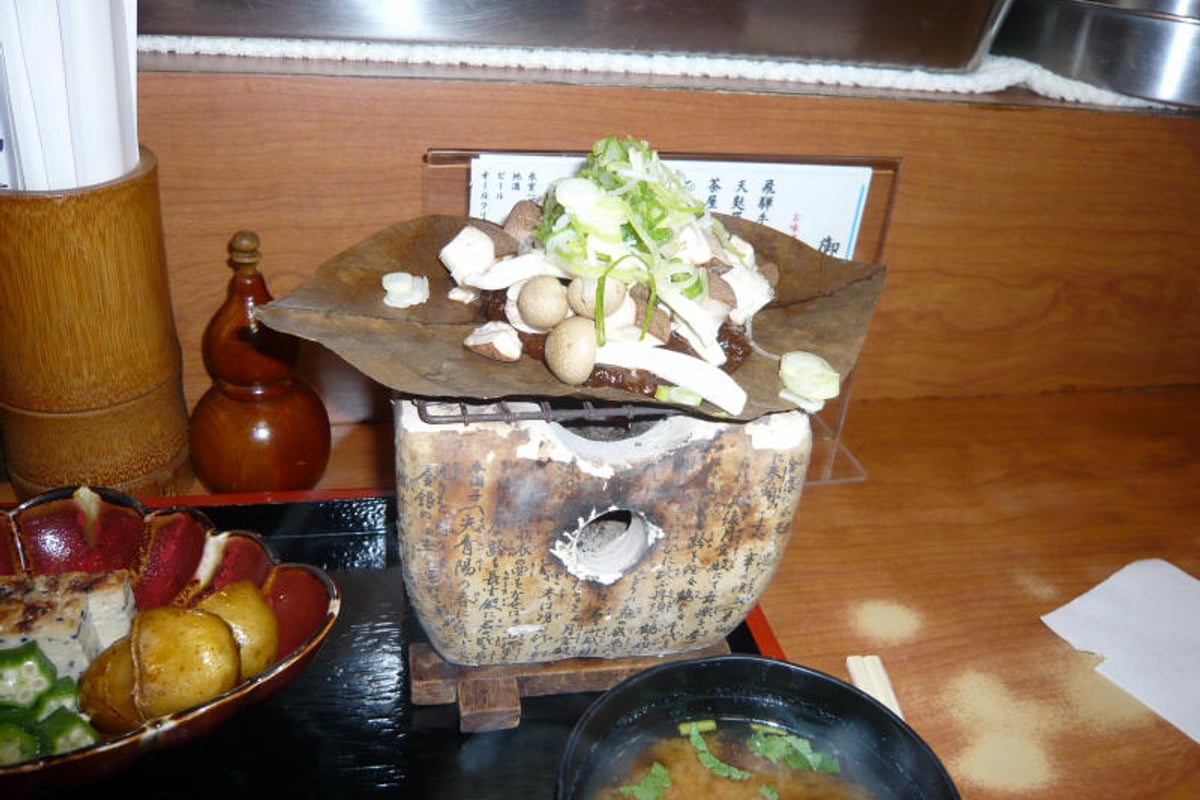
Hoba Miso is a local dish from the Hida-Takayama region in which koji miso is placed on a magnolia (hoba) leaf and grilled over charcoal or on a small hibachi grill. As it cooks, the fragrance of the hoba leaf infuses the miso, bringing out a savory aroma and gentle sweetness. It is said to have originated when woodcutters working in the mountains used hoba leaves as makeshift bowls for their meals, then grilled the leftover miso on the leaf to eat. The custom eventually spread to ordinary households, and grilling miso around the irori (sunken hearth) became a fixture of winter meals in the Hida region. Today it is common to grill the miso together with chopped green onion, mushrooms, or Hida beef, and the dish is a beloved specialty served at ryokan breakfasts and Takayama restaurants. In 2007 it was selected by the Ministry of Agriculture, Forestry and Fisheries as one of Japan's '100 Local Dishes of Farming, Mountain and Fishing Villages,' bringing national recognition to this signature taste of Hida.
Keichan
Keichan
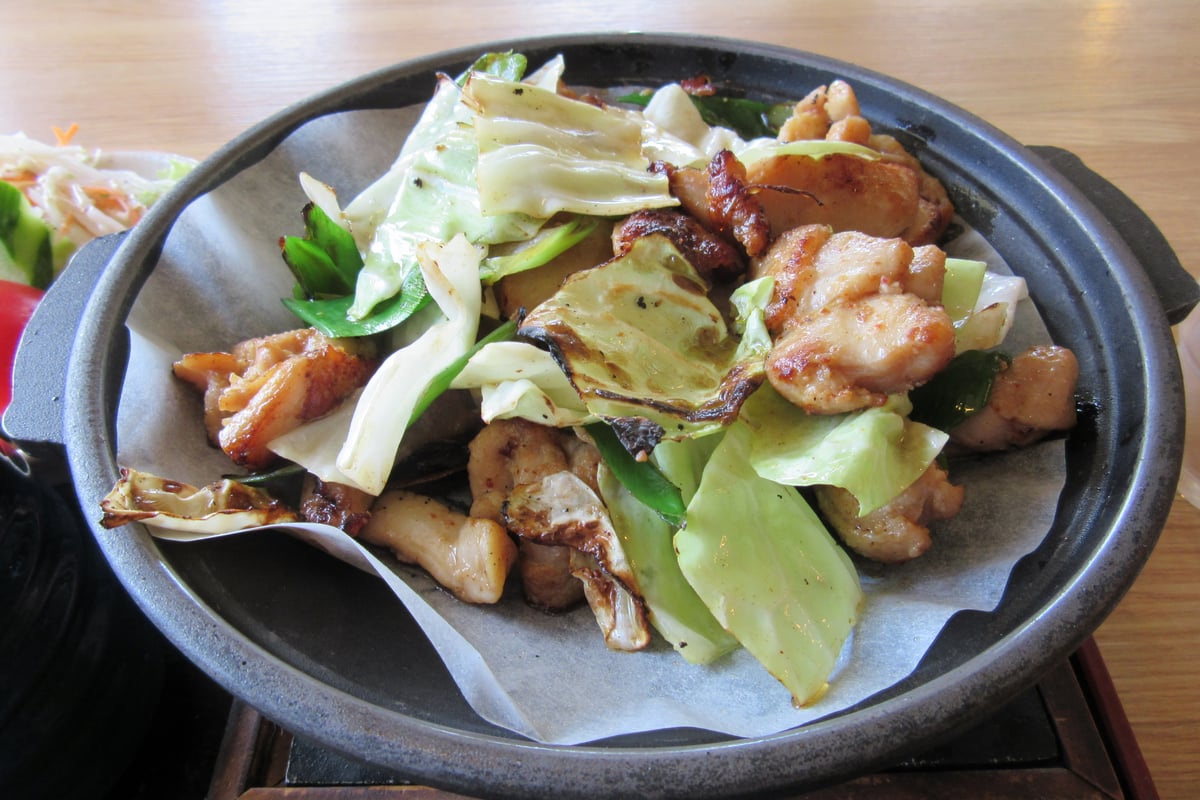
Keichan is a local dish from the Oku-Mino and southern Hida areas of Gifu Prefecture, in which chicken and seasonal vegetables are marinated in a special miso- or soy sauce-based sauce, then grilled on an iron plate or a Genghis Khan-style grill. It has long been enjoyed around Gujo City, Gero City, and the northern part of Nakatsugawa City, with each restaurant and household having its own way of seasoning and marinating. It is said to have originated when many households, which once kept chickens for eggs, prepared the hens that had stopped laying as a special dish for festive occasions such as Obon and New Year. From the 1955-1964 period onward, butcher shops and restaurants in Gero and Gujo began developing their own sauces, and as inexpensive chicken became more widely available, the dish spread from home cooking to restaurant menus. Today, more than 30 restaurants in Gero City alone serve their own versions of Keichan, and it remains a popular attraction for visitors to Gero Onsen and Gujo Hachiman.
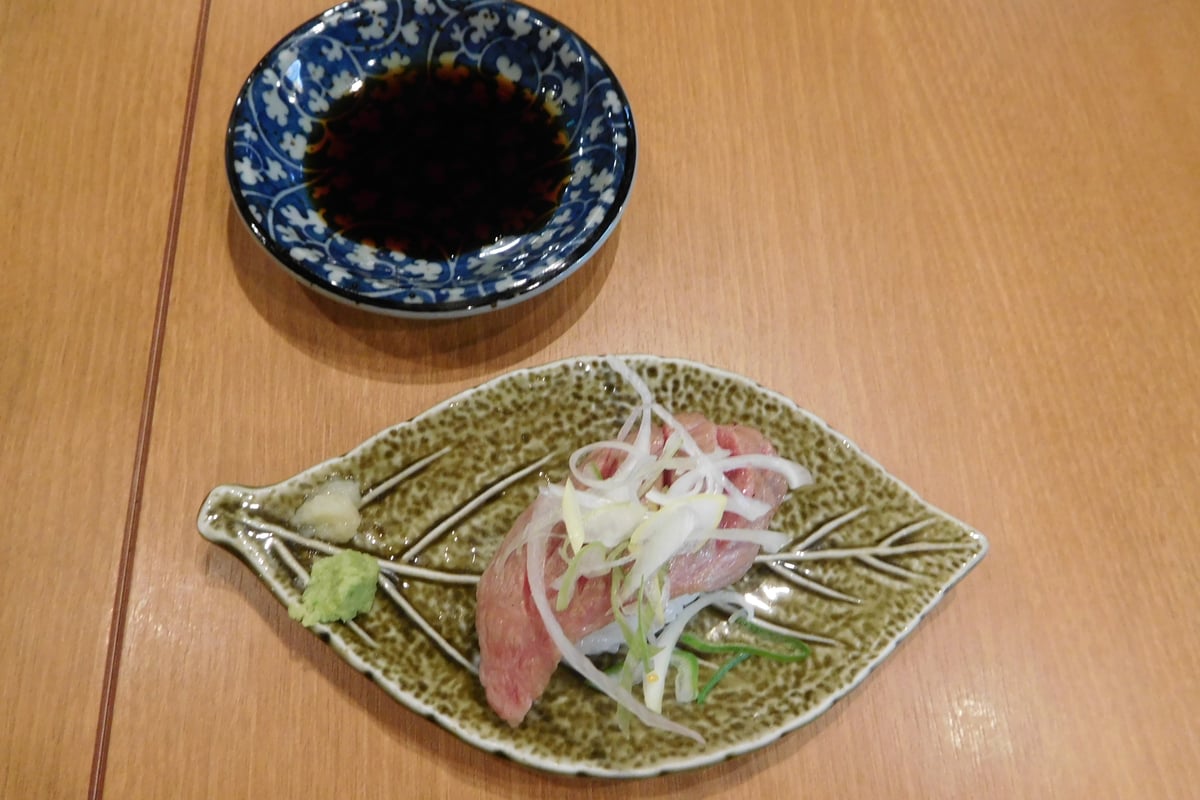
Hida Beef Dishes
Hida Gyu Ryori
Hida Beef is one of Japan's most celebrated brands of Wagyu beef, a source of pride for Gifu Prefecture. Among Japanese Black cattle born and raised within Gifu Prefecture, only those that meet a yield grade of A or B and a meat quality grade of 3 or higher, as rated by the Japan Meat Grading Association, may carry the name 'Hida Beef.' It is known for its finely marbled texture, tender meat, and elegant sweetness, and is enjoyed in a wide range of dishes including yakiniku, sukiyaki, shabu-shabu, and steak. In tourist destinations such as Hida-Takayama and Gero Onsen, numerous restaurants serve local specialties made with Hida Beef, such as steak rice bowls, nigiri sushi, and hoba miso-grilled beef, making it a popular local delicacy among travelers. It has also won top honors at the National Wagyu Competition and continues to gain recognition overseas.
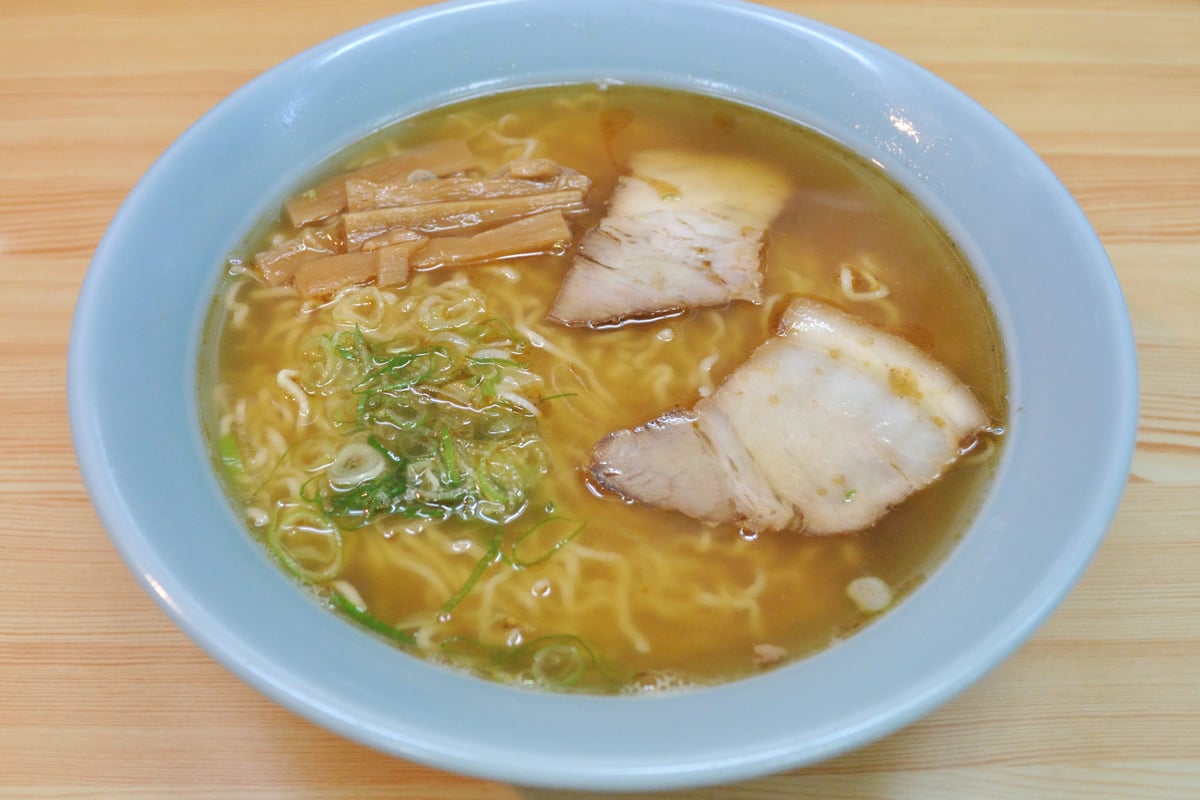
Takayama Ramen
Takayama Ramen
Takayama Ramen is a local ramen dish long cherished by residents of Takayama City, Gifu Prefecture, as 'Chuka Soba.' It combines a light soy sauce-based broth with medium-thin curly noodles, and its toppings follow a simple formula: sliced roast pork (chashu), bamboo shoots (menma), and chopped green onion. It is said to have begun in 1938, when the food stall 'Masago Soba' started selling Chinese-style noodles, and after the war, numerous similar stalls sprang up, creating a lively scene. In the 1955-1964 period, these stalls gradually transitioned into permanent shops, and today Takayama City is said to be home to more than 100 Chuka Soba restaurants. The dish is so deeply woven into local life that saying simply 'soba' is understood to mean Chuka Soba, and some households even eat it on New Year's Eve. The name 'Takayama Ramen' is mainly used by tourists, while local shop curtains display the words 'Chuka Soba.'
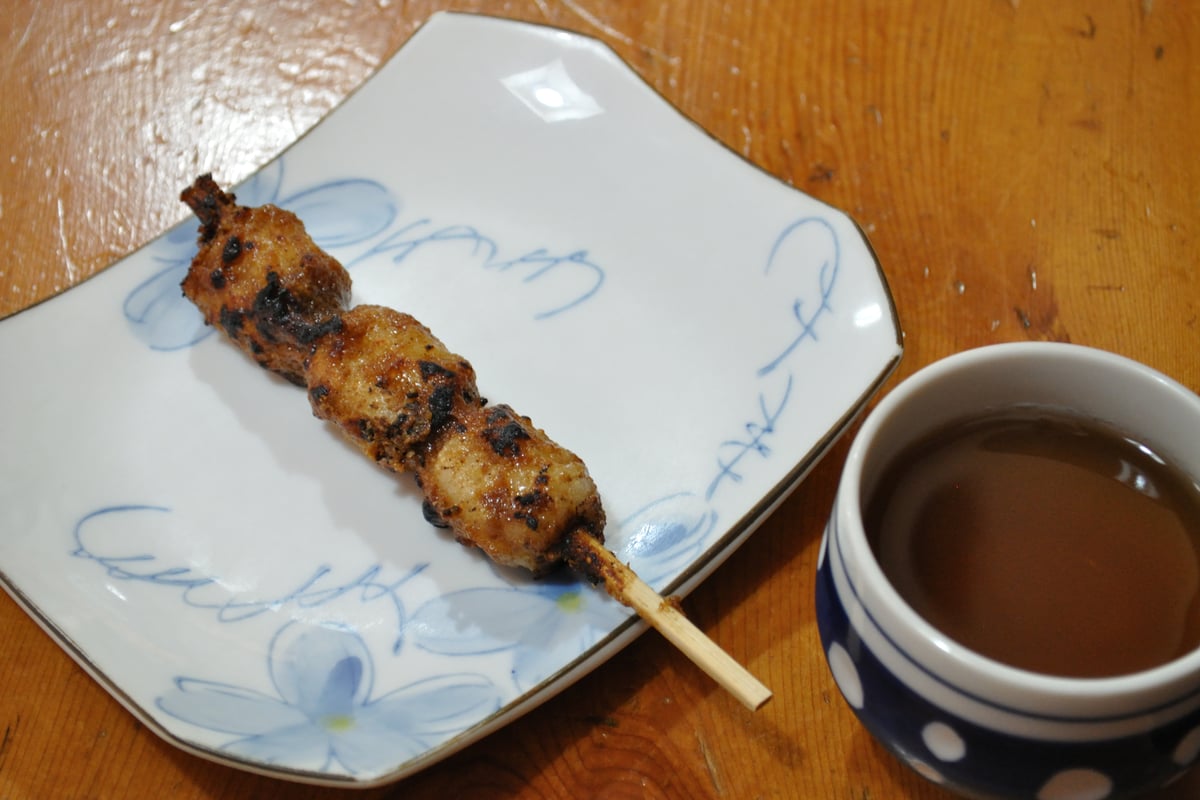
Gohei Mochi
Gohei Mochi
Gohei Mochi is a local dish made by mashing cooked non-glutinous rice, skewering it, coating it with a sweet-savory sauce made from walnuts, white sesame, or peanuts, and grilling it over charcoal until fragrant. It is widely eaten from the Tono region of Gifu Prefecture (Nakatsugawa City, Ena City, and others) through the Kiso and Ina areas of Nagano Prefecture to the Mikawa region of Aichi Prefecture, with the shape varying by region and household — dumpling-shaped, sandal (waraji)-shaped, or round. Its origin is said to lie in the mid-Edo period in the Kiso area, where woodcutters are said to have pressed rice onto the ends of tree branches, grilled it over a bonfire during breaks in mountain work, and eaten it with miso. It later became established as a special food offered to the mountain deity and prepared for celebrations such as the new rice harvest and local festivals. There are differing accounts of the name's origin, some saying it resembles the shape of a gohei, a ritual paper offering used in Shinto rites, and others saying it was created by a man named Gohei — the story varies by region.
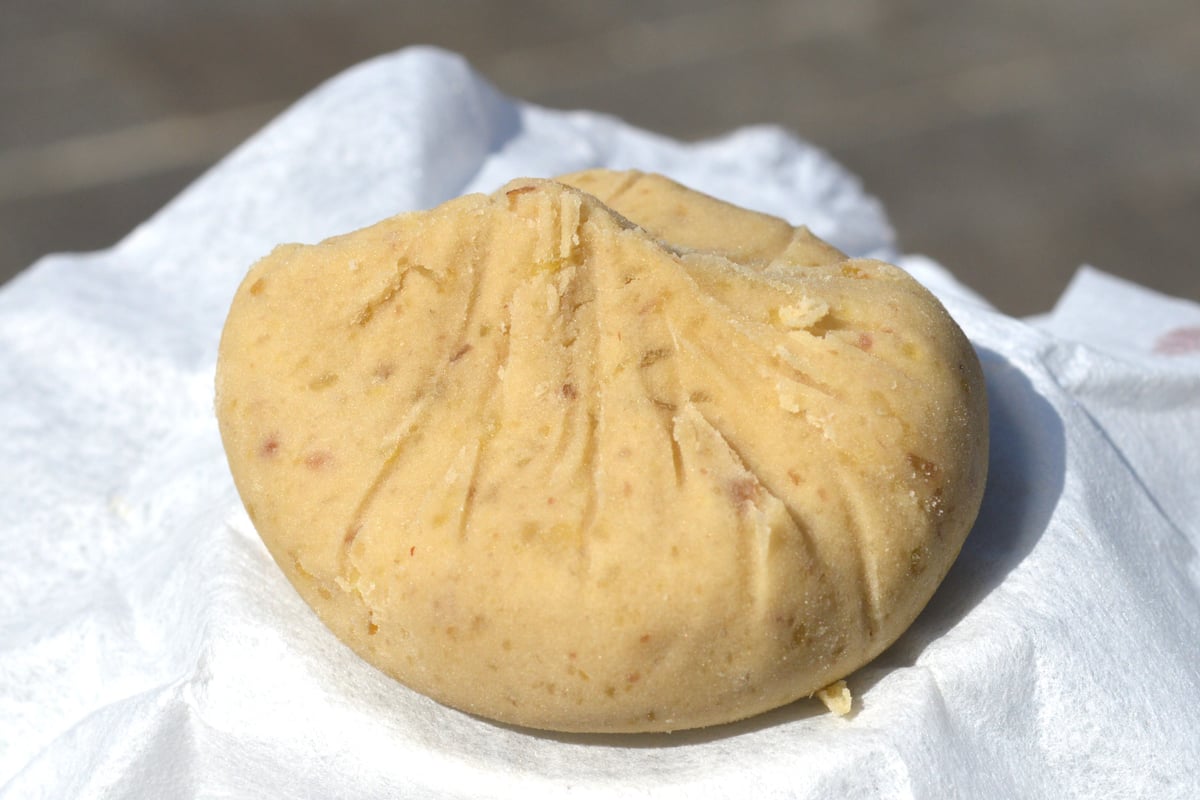
Kuri Kinton
Kuri Kinton
Kuri Kinton is a Japanese confection from Nakatsugawa City, Gifu Prefecture, made by steaming chestnuts, straining them, and combining them with sugar before shaping the mixture into a ball with a cloth twist (chakin-shibori). It differs from the kuri kinton served in osechi New Year dishes (candied chestnuts and sweet potato simmered in syrup), since the Tono-region version is made with only chestnuts and sugar, letting the chestnut's natural flavor and simple taste shine through. In the Edo period, Nakatsugawa flourished as a post town on the Nakasendo highway, and travelers were served a simple confection made by steaming and straining wild mountain chestnuts that grew on the slopes of Mount Ena — said to be the origin of Kuri Kinton. Confectioners began selling it commercially in the Meiji era, and production expanded once chestnut cultivation began in the Taisho era. Today it is enjoyed as an autumn delicacy from around September to December, with more than a dozen Japanese confectionery shops lining the streets of Nakatsugawa, drawing visitors from within and outside the prefecture.
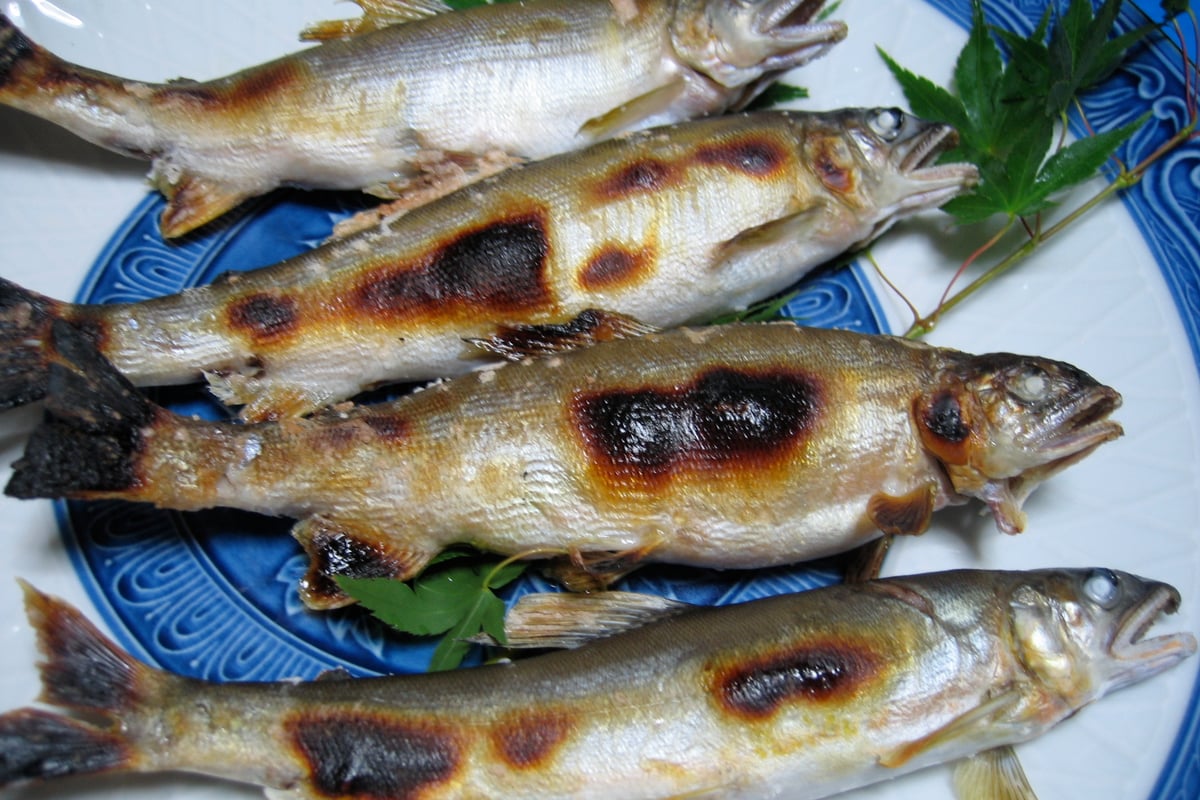
Nagara River Ayu Dishes
Nagaragawa Ayu Ryori
Nagara River Ayu Dishes are a local specialty of Gifu City featuring wild ayu (sweetfish) caught in the clear Nagara River, served grilled with salt, as sashimi, or as narezushi (fermented sushi). Cormorant fishing (ukai), with roughly 1,300 years of history, is still practiced on the Nagara River today; because the ayu caught in the cormorants' beaks are killed instantly, their flesh stays firm with remarkable freshness, and they have long been prized as a top-quality delicacy. Historical records show people engaged in cormorant fishing as early as 702 (Taiho 2) in the Nara period, and the Heian-period dictionary Wamyō Ruijushō notes that Mino Province (present-day Gifu City) had a village called Ukai-no-sato (cormorant fishers' village). Oda Nobunaga protected the cormorant fishers, and Tokugawa Ieyasu is said to have had ayu-zushi made in Gifu carried all the way to Edo. Today, restaurants and inns specializing in ayu cuisine still line the banks of the Nagara River, drawing many visitors during the cormorant fishing season from May to October.
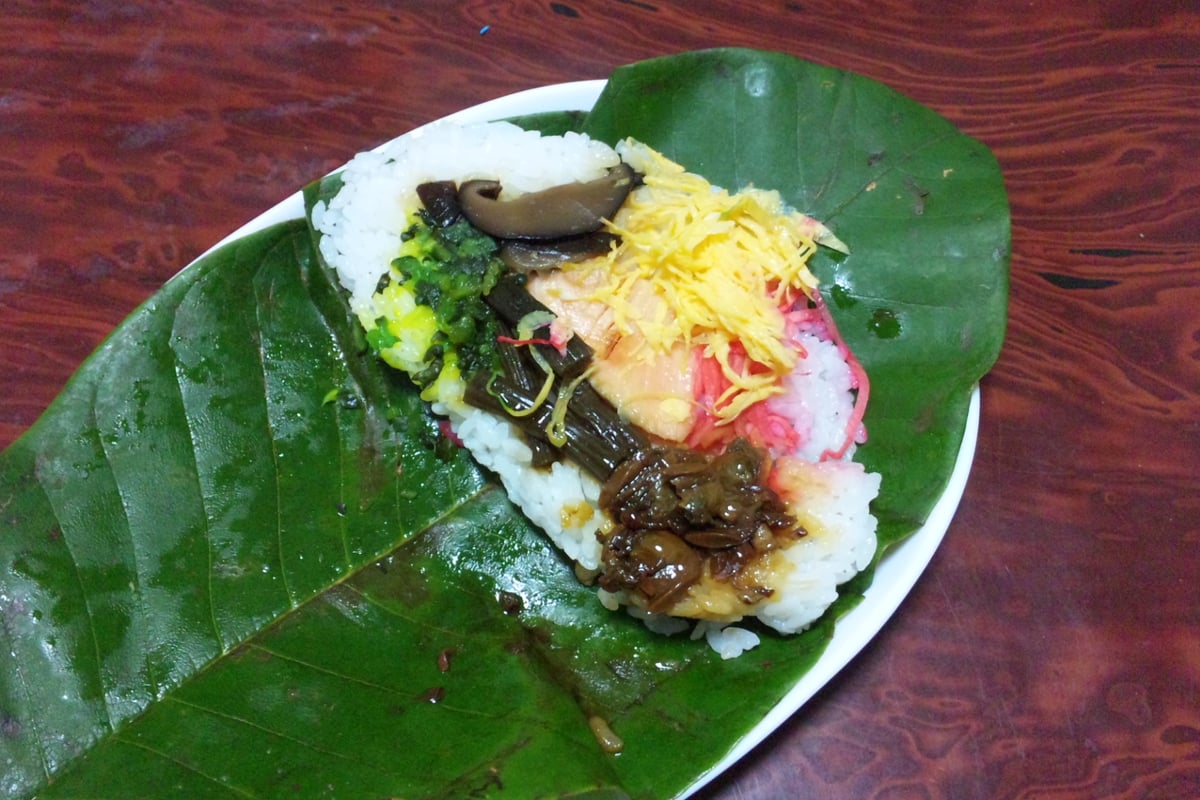
Hoba Zushi
Hoba Zushi
Hoba Zushi is an early-summer local dish from the southern Hida region through the Tono and Chuno regions, in which vinegared rice and toppings are wrapped in the large leaves of the hoba (magnolia) tree. Because hoba leaves have antibacterial and antifungal properties, the food inside resists spoiling, and the leaf can also double as a plate — making it a practical meal to carry along during rice-planting and other farm or forestry work. Preparation varies by area: in the Tono region, many households pile on seven or eight colorful toppings, such as river fish simmered in sweet soy sauce, vinegared mackerel, thin egg strips, and red pickled ginger, while in the Hida region a simpler style using just myoga (Japanese ginger) and vinegared rice is also common. It is typically made from mid-May to late June, when hoba leaves are in season, and is also enjoyed as a festive dish for local matsuri and celebrations.
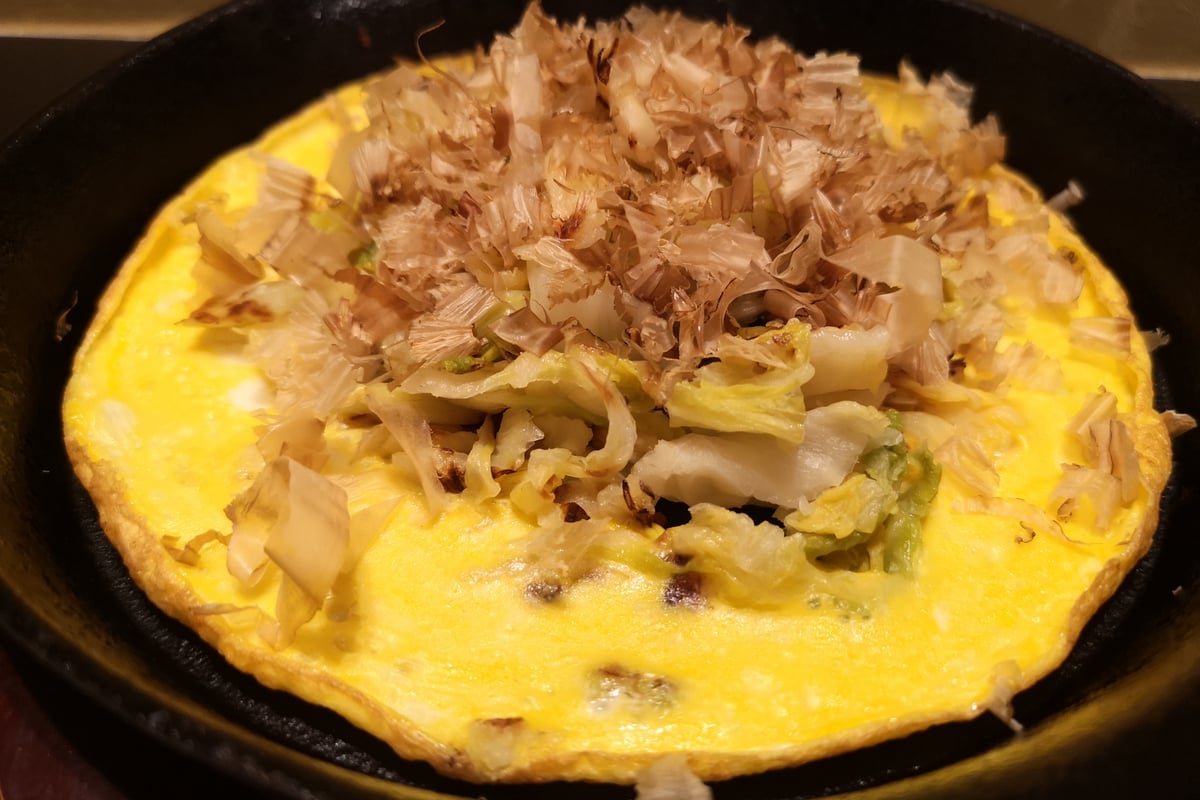
Tsukemono Steak
Tsukemono Steak
Tsukemono Steak is a local dish from the Hida region of Gifu Prefecture in which napa cabbage pickles are bound with egg and cooked on a griddle or in a pan; locals also call it tsuke-sute. In the depths of winter in Hida, pickles — once a vital source of vegetables — would freeze solid, so people are said to have started placing them on hoba leaves and warming them over the irori hearth to thaw before eating, which is considered the dish's origin. It also served as a resourceful way to make good use of pickles that had turned overly sour from fermenting too long. Despite its name, the dish contains no meat whatsoever, but it is thought to be called a steak because the sizzling sound as it cooks on a griddle, along with its appearance and the way it's eaten, evokes an actual steak. Today it is a standard menu item at nearly every izakaya in Hida-Takayama, enjoyed by tourists both as a side dish with drinks and as an accompaniment to rice.
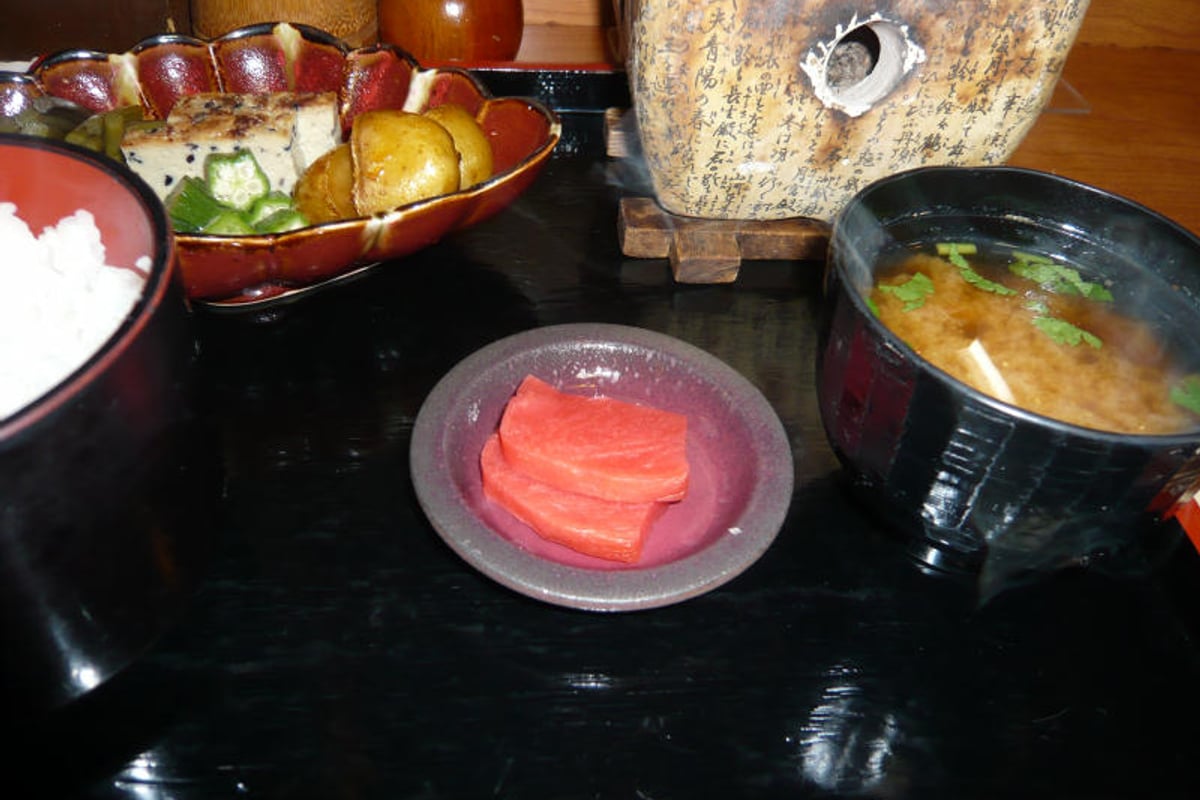
Aka Kabu Zuke
Aka Kabu Zuke
Aka Kabu Zuke is a local dish of the Hida region of Gifu Prefecture made by salting the region's specialty red turnips and allowing them to undergo lactic fermentation. In the Hida region, which sits at high elevation and is blanketed in snow through the winter, pickling has been practiced in individual households since the Edo period as a vital way to preserve food for the season when vegetables cannot be harvested. It is also said to have developed as a way to boost preservability using only a small amount of salt, since salt was once precious in this mountainous area. The Hida beni-kabu red turnip used in today's Aka Kabu Zuke originated from a naturally occurring red-colored mutant discovered in 1918 (Taisho 7) among the traditional Yoshika turnip variety. Natural pigments in the turnip's skin combine with lactic fermentation to produce its vivid red color along with a subtle tartness and sweetness, and it is also popular as a signature souvenir of Hida-Takayama.
Model Course
A course exploring the pottery town and chestnut country of Tono
Enjoy a tour of kilns in Tajimi and Toki, the heart of Mino-yaki production that supplies about 60% of Japan's tableware, then head to Nakatsugawa and Ena to savor the flavors of the Tono region: Kuri Kinton, made from nothing but chestnuts and sugar, and Hoba Zushi, sushi wrapped in magnolia leaves.
A course savoring Ittobori carving, Shunkei-nuri lacquerware, and morning-market food in Hida-Takayama
In Hida-Takayama, where the old townscape still remains, visit Ichii Ittobori wood-carving workshops and Hida Shunkei-nuri lacquerware shops, then finish with mountain specialties such as Hoba Miso and Hida beef - a course that lets you enjoy both craftsmanship and flavor in a single day.
A course visiting the Hida furniture production area and local specialties
Tour workshops and galleries of Hida furniture, Western-style furniture that makes use of bentwood techniques, then satisfy your appetite with Takayama ramen, before finishing with Tsukemono Steak, a classic izakaya dish, and Hida's Aka Kabu Zuke pickled red turnips, to round out Hida's food culture.
A course enjoying the cutlery town of Seki and cormorant fishing on the Nagara River
In Seki City, the 'City of Cutlery' with 700 years of swordsmithing history, visit the Seki Cutlery Tradition Museum and the Cutlery Hall to experience craftsmanship the world takes pride in, then head to the Nagara River to enjoy salt-grilled wild ayu (sweetfish) and the atmosphere of cormorant fishing, a tradition over a thousand years old.
A course savoring indigo dyeing and Keichan in Gujo Hachiman
Visit a Gujo Honzome workshop, where dyed cloth is rinsed in the clear waters of the Yoshida River, stroll through the streets of Gujo Hachiman, the water-filled castle town known for the Gujo Odori dance, then finish with Keichan, a regional dish of chicken marinated in a miso-based sauce and grilled.
A course exploring paper crafts in Gifu City: washi, lanterns, fans, and umbrellas
Visit the Mino Washi no Sato Kaikan, which carries on the tradition of Hon-mino-shi, a UNESCO Intangible Cultural Heritage, then explore central Gifu City comparing four traditional crafts made from washi paper: Mino Washi, Gifu Chochin lanterns, Mizu Uchiwa fans, and Gifu Wagasa umbrellas - a course devoted entirely to paper craftsmanship.
Events
Gifu Nagara River Cormorant Fishing (Ukai)
Every year from May 11 to October 15 (held daily except on rest days and when the river is swollen) / Nagara River cormorant fishing grounds (Nagara riverbed, Gifu City)
View details →Spring Takayama Festival (Sanno Festival)
Every year on April 14 and 15 / Central Takayama City (around Hie Shrine)
View details →Gujo Odori Dance
Every year from mid-July to early September (all-night dancing during Obon, August 13-16) / Hachiman-cho, Gujo City
View details →Hamono Matsuri (Cutlery Festival)
Every October / Around Honmachi-dori Street, Seki City
View details →