 1 / 2
1 / 2Image: Wikimedia Commons
Gifu Wagasa is a traditional Japanese umbrella made in the Kano district of Gifu City, known for its hosomono (slender-fold) construction, which allows the umbrella to close into a slim form, along with a wide range of decorative techniques. Its origins are said to date back to 1639 (Kan'ei 16) in the early Edo period, when an umbrella maker from Akashi in present-day Hyogo Prefecture began making umbrellas in Kano. In 1756 (Horeki 6), Nagai Naonobu, lord of the Kano domain, encouraged umbrella making as a side occupation for impoverished lower-ranking samurai, and with the domain's backing the craft developed into a full-fledged industry. Blessed with proximity to sources of good-quality bamboo and Mino washi paper, the craft flourished, and at its peak in the mid-1950s, more than 600 wholesalers gathered in the area, producing 1.2 to 1.3 million umbrellas a month. Demand declined sharply with the spread of Western-style umbrellas, but a handful of wholesalers and workshops continue to uphold the tradition today, making rain umbrellas and parasols as well as ceremonial umbrellas used to mark occasions such as the Shichi-Go-San festival and weddings.
Origin
The origins of Gifu Wagasa are said to date back to 1639 (Kan'ei 16) in the early Edo period, when an umbrella maker from Akashi in present-day Hyogo Prefecture began making umbrellas in what is now the Kano district of Gifu City. In 1756 (Horeki 6), Nagai Naonobu, lord of the Kano domain, encouraged umbrella making as a side occupation for impoverished lower-ranking samurai, and with the domain's backing the craft began to develop in earnest as an industry.
History
Blessed with proximity to sources of good-quality bamboo and Mino washi paper, the Kano district became a major production center for Japanese umbrellas under a system of division of labor. At its peak in the mid-1950s, more than 600 wholesalers gathered in the area, producing as many as 1.2 to 1.3 million umbrellas a month. Demand declined sharply with the spread of Western-style umbrellas, and today only a handful of wholesalers and workshops continue to uphold the tradition.
Features
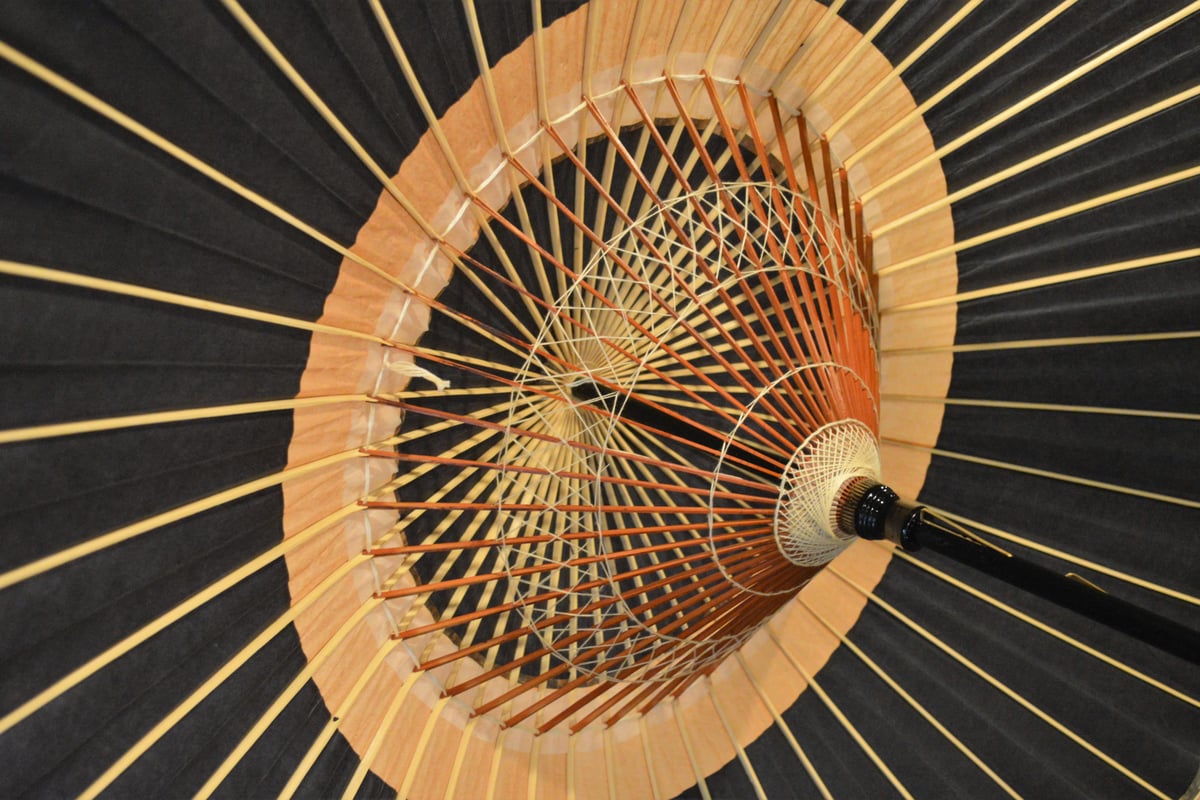
Gifu Wagasa is known for its excellent hosomono construction, which allows the umbrella to fold into a slim form, along with a wide range of decorative techniques handed down over generations. Traditionally, specialist artisans divided the work among processes such as frame making, paper pasting, and finishing, though today some artisans handle nearly the entire process alone. Beyond rain umbrellas and parasols, they are also used as nodate-gasa (outdoor tea-ceremony umbrellas), sashikake-gasa (attendant's umbrellas), and ceremonial umbrellas for occasions such as Shichi-Go-San and weddings.
Materials Used
Production Process
- 1
Making the frame
Bamboo is split and shaved into several dozen thin ribs that form the framework of the umbrella.
- 2
Pasting the paper
Mino washi paper is pasted onto the frame and dried in the sun.
- 3
Oiling
Perilla oil is applied to the washi paper for waterproofing and hardened by drying in the sun.
- 4
Thread binding and finishing
Thread is woven between the ribs to strengthen the frame, and decorative patterns are added for the finished product.
| Main Production Areas |
|
|---|
Artisans & Workshops
河合幹子(仐日和)
A wagasa artisan based at Nagaragawa Teshigoto Machiya CASA, a Gifu Wagasa specialty shop. She launched her own brand, Kasabiyori, in 2016, handling nearly every process from bamboo shaving to paper pasting by herself, producing 15 to 20 umbrellas a month.
Official site →坂井田永吉本店
A long-established wagasa maker rooted in the Kano district, carrying on the history and techniques of Kano's umbrella craft today.
Official site →How to Buy
- Hirano Akihiro Shoten
- A Gifu Wagasa specialty shop dealing in janome-gasa (bull's-eye umbrellas) and bangasa (traditional bamboo-ribbed umbrellas), available both in-store and by mail order.Where to buy →PR
Hands-on Experiences
長良川てしごと町家CASA
岐阜県岐阜市湊町29
In this machiya townhouse more than 100 years old, visitors can see and experience the handwork of Gifu Wagasa, including a thread-binding experience led by wagasa artisan Kawai Mikiko (reservation required).
View details →