 1 / 2
1 / 2Image: Wikimedia Commons
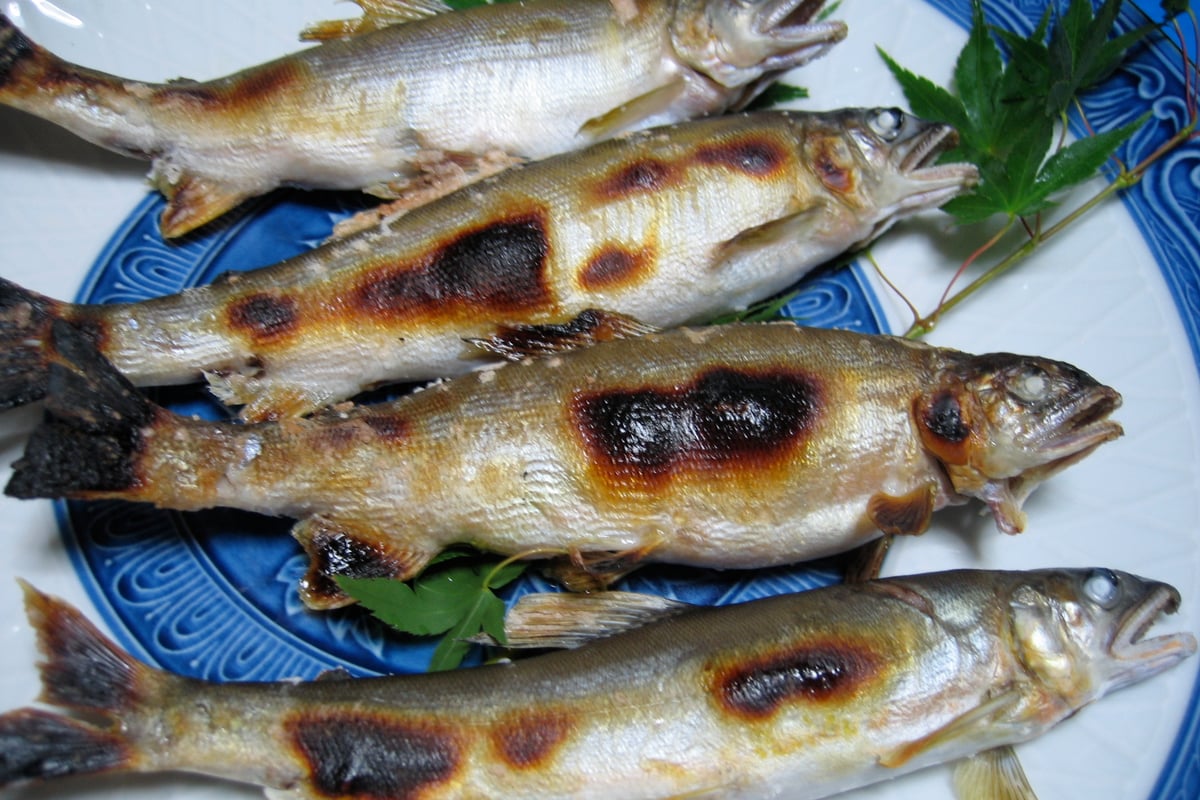
Nagara River Ayu Dishes are a local specialty of Gifu City featuring wild ayu (sweetfish) caught in the clear Nagara River, served grilled with salt, as sashimi, or as narezushi (fermented sushi). Cormorant fishing (ukai), with roughly 1,300 years of history, is still practiced on the Nagara River today; because the ayu caught in the cormorants' beaks are killed instantly, their flesh stays firm with remarkable freshness, and they have long been prized as a top-quality delicacy. Historical records show people engaged in cormorant fishing as early as 702 (Taiho 2) in the Nara period, and the Heian-period dictionary Wamyō Ruijushō notes that Mino Province (present-day Gifu City) had a village called Ukai-no-sato (cormorant fishers' village). Oda Nobunaga protected the cormorant fishers, and Tokugawa Ieyasu is said to have had ayu-zushi made in Gifu carried all the way to Edo. Today, restaurants and inns specializing in ayu cuisine still line the banks of the Nagara River, drawing many visitors during the cormorant fishing season from May to October.
Origin
Cormorant fishing on the Nagara River is said to have roughly 1,300 years of history, with records from 702 (Taiho 2) in the Nara period already noting people engaged in the practice. The Heian-period dictionary Wamyō Ruijushō records that Mino Province (present-day Gifu City) had a village called Ukai-no-sato, suggesting that ayu fishing and its associated food culture had taken root there since ancient times.
History
During the Sengoku period, Oda Nobunaga granted cormorant fishers formal status and placed them under his protection. In the Edo period, Tokugawa Ieyasu is said to have watched cormorant fishing on repeated occasions and had ayu-zushi (narezushi) made in Gifu carried all the way to Edo. Nagara River ayu, also presented as a tribute to the Imperial family, has long been held in high historical regard as a regional specialty.
Features
Because cormorants kill the fish instantly with their beaks, the flesh is rarely damaged, giving the ayu exceptional freshness — its defining feature. Beyond salt-grilling and sashimi, it can be enjoyed prepared in many ways, including sun-dried ayu, ayu simmered in sweet soy sauce, and narezushi made by pickling the fish in vinegar and fermenting it. The main season for these dishes runs from mid-May to the end of October, coinciding with the cormorant fishing season.
Main Ingredients
Food Culture
A tourism culture of enjoying ayu dishes alongside watching cormorant fishing is deeply rooted in Gifu City, with riverside restaurants and inns offering multi-course ayu kaiseki meals and dishes served aboard yakatabune boats while guests watch the fishing.
Famous Shops
鵜匠の家 すぎ山
岐阜県岐阜市長良73-1
An inn at Nagara River Onsen whose signature dish is an ayu kaiseki course featuring wild ayu.
View details →割烹うおそう
岐阜県岐阜市矢島町1-3
A traditional Japanese restaurant devoted to wild ayu from the Nagara River. Ayu course meals start at around 7,000 yen, with the restaurant open seasonally from around May to October.
View details →