Image: Wikimedia Commons
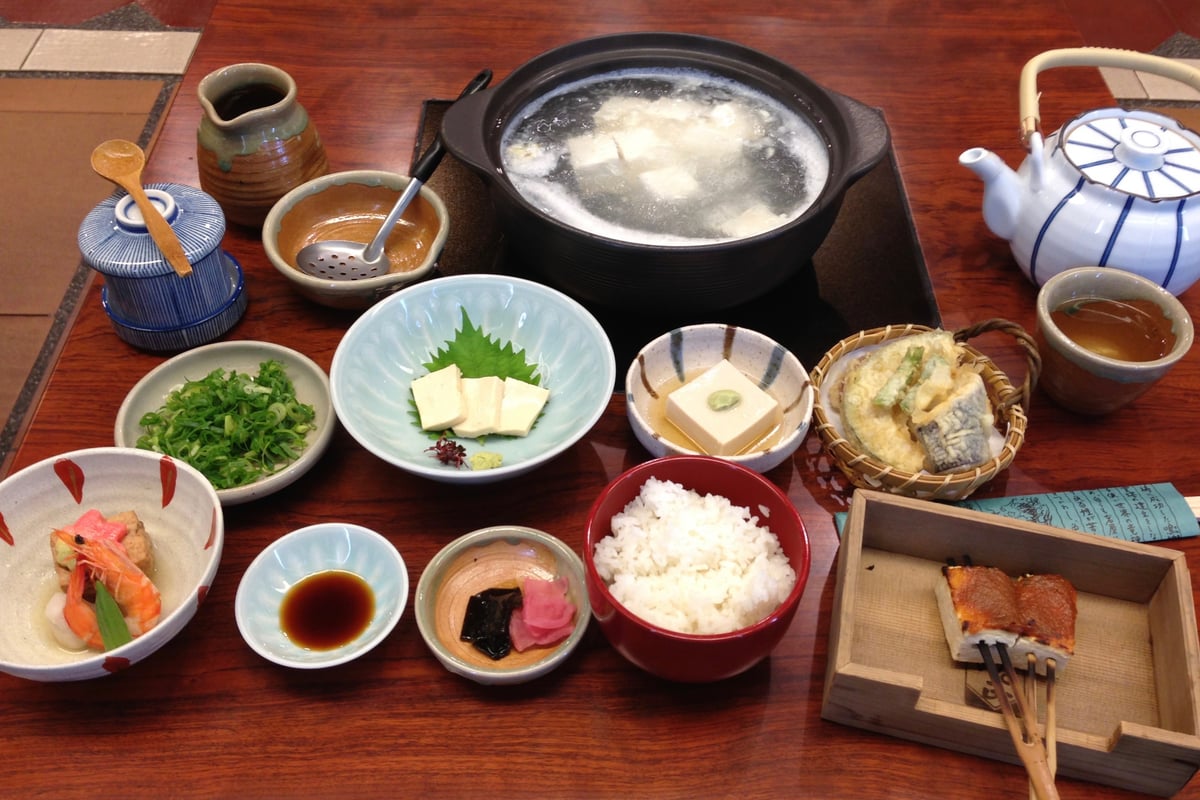
Yudofu is a simple local dish of Kyoto in which tofu is gently warmed in an earthenware pot filled with kelp dashi and served with ponzu sauce and condiments. Known to have originated at the approach to Nanzen-ji Temple in Sakyo Ward, Kyoto City, it developed as a shojin cuisine (Buddhist vegetarian cooking) dish for savoring the flavor of tofu itself. Kyoto, blessed with high-quality groundwater, has long had a thriving tofu-making tradition, and the quality of the water and soybeans is said to greatly affect the flavor. Although known as a symbol of winter, specialty shops around Nanzen-ji actually offer it year-round, and it is one of the Kyoto dishes popular with tourists as well. Though understated, its depth of appeal lies in the careful attention paid to the temperature and texture of the dashi and tofu.
Origin
Yudofu is said to have originated as a shojin cuisine dish at Zen temples, where meat-eating was forbidden. Especially at the approach to Nanzen-ji, tofu-based shojin cuisine developed as a specialty of the temple and came to be served to visiting worshippers. An Edo-period document states that travelers visiting Nanzen-ji should eat yudofu, suggesting that it was already recognized as a specialty at the time.
History
In the Edo period, teahouses at the approach to Nanzen-ji began serving yudofu, which spread to ordinary people and became established as a temple-approach specialty. Kyoto, blessed with high-quality groundwater, had long had a thriving tofu-making tradition, and it achieved its own development intertwined with the temple's shojin cuisine culture. Even today, long-established shops claiming Edo-period founding line the area around Nanzen-ji.
Features
Its most distinctive feature is that the tofu is warmed using only kelp dashi and hot water, with no additional seasoning. Because the flavor and texture of the tofu itself determine the quality of the dish, many shops are particular about the origin of their soybeans and the water used to make the tofu. Ponzu sauce or sesame sauce is used as a dipping sauce, and condiments such as green onion, bonito flakes, and shichimi pepper are used to add variety to the flavor.
Main Ingredients
Food Culture
Tied to the culture of shojin cuisine, it has been cherished as a food to enjoy after visiting temples and shrines. Tofu was prized as a source of protein that did not conflict with the Buddhist precept against taking life, and combined with the high quality of Kyoto's water, it took root as a distinctive food culture.
How It Differs from Home Cooking
At home, it is often eaten simply with soy sauce or store-bought ponzu, whereas at specialty shops around Nanzen-ji it is served as part of a shojin cuisine course featuring house-made tofu, accompanied by dishes such as dengaku, goma-dofu (sesame tofu), and shojin tempura.
Famous Shops
総本家ゆどうふ 奥丹 南禅寺
京都市左京区南禅寺福地町86-30
A long-established shop said to have been founded in the Edo period. Offers only a single menu, "yudofu ittori" (the full yudofu course), for around 3,500 yen.
南禅寺 順正
京都市左京区南禅寺草川町60
Multiple courses are available, including the Hana (flower) course from 3,630 yen and the Yuki (snow) course at 5,500 yen (tax included).
View details →