Image: Wikimedia Commons
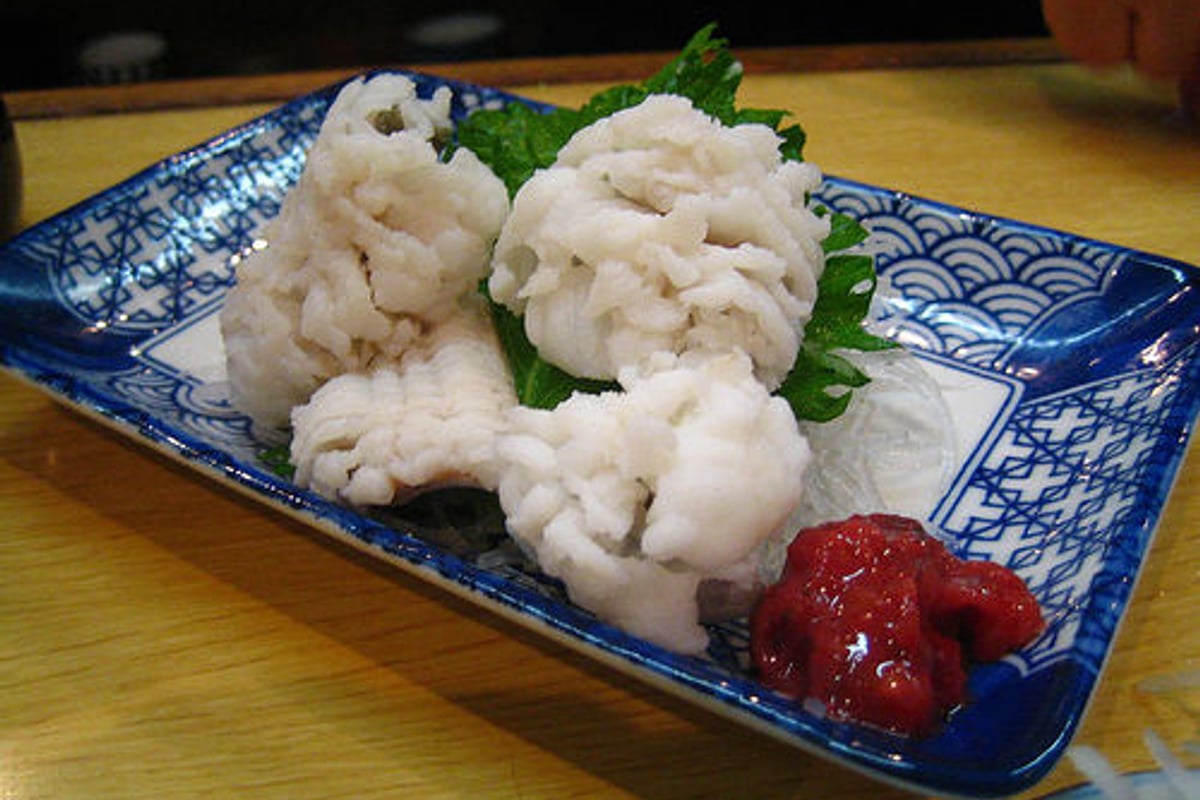
Hamo Ryori is a summer local dish of Kyoto in which conger pike eel (hamo), in season from the rainy season through midsummer, is prepared using the distinctive technique known as honekiri (bone-cutting). Even in landlocked Kyoto, hamo could be transported alive thanks to its strong vitality, making it a valued source of protein since the era before refrigeration existed. Because hamo has so many small bones that it cannot be eaten without honekiri, this technique developed into a symbol of a chef's skill, and in Kyoto it is said that "mastering honekiri makes a chef full-fledged," making it one of the most important stages of a chef's training. Preparations range widely, from hamo no otoshi — blanched hamo served with plum paste — to teriyaki, hamo shabu-shabu, and simmered dishes, and because hamo comes into season around the time of the Gion Festival, the festival is also nicknamed the "Hamo Festival," reflecting how indispensable this flavor is to a Kyoto summer.
Origin
Since Kyoto does not face the sea, hamo — a fish with strong vitality that can survive for long periods even out of water — has long been prized as a fish that could be brought in alive from distant waters such as the Seto Inland Sea. The fact that it has been eaten as a valuable source of protein in summer since long before refrigeration and freezing technology existed is considered the main reason hamo cuisine took root in inland Kyoto.
History
The technique of eating hamo after honekiri is said to have spread from the Momoyama period into the early Edo period. Since then, because hamo comes into season in July, the month of the Gion Festival, a food culture of enjoying hamo cuisine alongside the festival became firmly established. It is against this historical background that the Gion Festival came to be nicknamed the "Hamo Festival."
Features
Hamo has an extremely large number of small bones, making the advanced technique of honekiri — finely cutting through the flesh and bones while leaving the skin intact — essential; it is said that over twenty cuts are made within a width of about three centimeters. When honekiri'd flesh is blanched, it opens up like a blooming flower, and it is served as hamo no otoshi with plum paste, as well as in teriyaki, hamo shabu-shabu, simmered dishes, and other preparations that add color to summer Kyoto cuisine.
Main Ingredients
Food Culture
Because it comes into season around the time of the Gion Festival, it is nicknamed the "Hamo Festival," and it is cherished as an indispensable flavor at summer dining tables and festival gatherings in Kyoto.
How It Differs from Home Cooking
Honekiri requires skilled technique and is difficult to perform at home, so it is common for households to buy hamo that has already been honekiri'd from fishmongers or supermarkets and cook it from there.
Famous Shops
祇園 京料理 花咲 祇園店
京都市東山区祇園町南側570-17
Offers a hamo kaiseki course from around May to October each year. About 6,000 yen and up for lunch, about 10,000 yen and up for dinner (reservation required).
View details →京料理 たん熊北店 本店
京都市中京区西木屋町通四条上ル紙屋町355
Founded in 1928 (Showa 3). Serves hamo no otoshi and hamo shabu-shabu, among other dishes, in its summer kaiseki course.
View details →FAQ
Q. What kind of technique is "honekiri"?
A. A technique for finely cutting the countless small bones between the flesh and skin of hamo, leaving only the skin intact. It is an advanced skill requiring over twenty knife cuts within a width of about three centimeters, and in Kyoto it is considered a gateway for a chef to become full-fledged.