Image: Wikimedia Commons
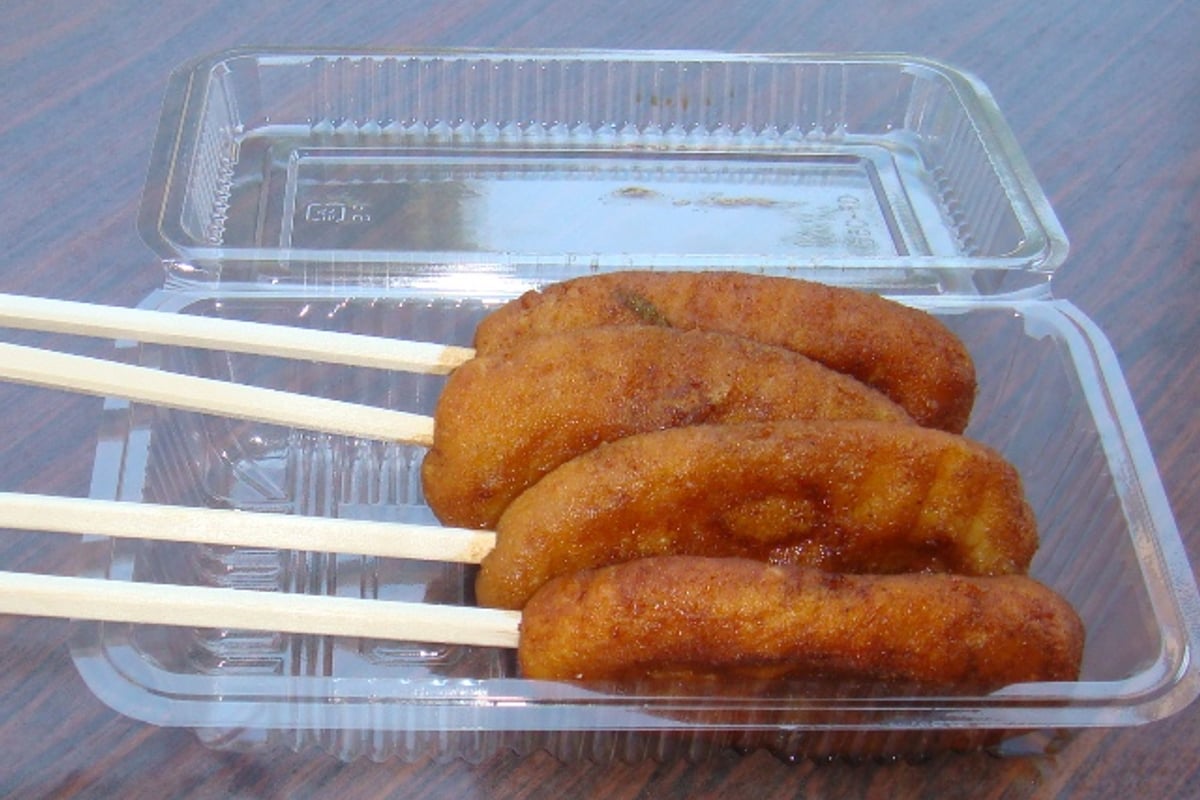
Zeri furai is a local specialty of Gyoda City made by boiling and mashing potatoes, mixing them with okara (soy pulp), chopped green onion, carrot, and other ingredients, shaping the mixture into small oval discs resembling coins, deep-frying it without any batter, and dipping it in Worcestershire sauce before eating. Despite the name, it has nothing to do with dessert 'jelly'; the widely known theory is that it was originally called 'zenifurai' ('coin-fried,' written with characters meaning 'money' and 'coming'), for its coin-like shape, and the name gradually shifted to 'zeri furai.' Its roots are said to trace back to the owner of 'Ippuku Chaya' in Mochida, Gyoda, who served in the Russo-Japanese War and adapted a vegetable-bun dish he ate in northeastern China; it is said to have already existed by the late Meiji era. Because it uses plenty of okara, it is rich in dietary fiber and considered a healthy dish, and its chewy texture combined with the flavor of the sauce that soaks into it has made it a favorite. It is served and sold at several places around Gyoda City, including specialty shops, tofu shops, and candy stores, and is beloved as a representative everyday snack and light meal of the city.
Origin
The 'zeri' in the name has nothing to do with dessert jelly. One theory holds that it was originally called 'zenifurai' (written with characters meaning 'coin' and 'coming'), for its coin-like shape, and that the name gradually shifted to 'zeri furai.' Another theory traces it to the characters meaning 'money and cloth coming,' referencing Gyoda's long history as a center for tabi (Japanese socks) and cloth production. The dish is said to have been created by Osawa Tsunehachi, the owner of 'Ippuku Chaya' in Mochida, Gyoda, and to date from 1905.
History
The story goes that the shop owner, who served in the Russo-Japanese War, learned how to make 'vegetable buns' he had eaten in northeastern China from locals there, adapted the recipe using Japanese ingredients, and began selling it at a festival in Gyoda, and this is said to be how the dish began. In the early Showa era, it became a popular snack among women working at tabi factories and took hold as an everyday food among ordinary people. In 2017 it was certified as one of the Agency for Cultural Affairs' '100-Year Foods,' drawing renewed attention as a dish representing Gyoda's local flavor.
Features
The distinctive method is to mix boiled and mashed potatoes with a large amount of okara, along with green onion and carrot, shape the mixture into small oval discs, and deep-fry it as is, without any batter. It is dipped in Worcestershire sauce while still hot from frying, giving it a chewy texture and a subtly sweet flavor. It is an entirely different dish from Gyoda's other well-known specialty, the round 'furai' made with wheat flour and egg, though the two are often confused, which is itself a frequent topic of conversation.
Main Ingredients
Food Culture
Loved by ordinary people as a frugal dish making heavy use of okara, zeri furai has long been eaten in Gyoda as an easily affordable snack or light meal available at candy stores and furai specialty shops.
Famous Shops
A serving of two pieces of zeri furai is about 220 yen.
One piece of zeri furai is about 80 yen.
Look for the blue-and-white striped roof as a landmark. Also serves unusual variations of zeri furai, such as a curry-flavored version.
FAQ
Q. Does the name 'zeri furai' have anything to do with jelly?
A. It has nothing to do with dessert jelly. The most widely accepted theory is that it was originally called 'zenifurai' (written with characters meaning 'coin' and 'coming'), for its coin-like shape, and the name gradually shifted to 'zeri furai.'