Image: Wikimedia Commons
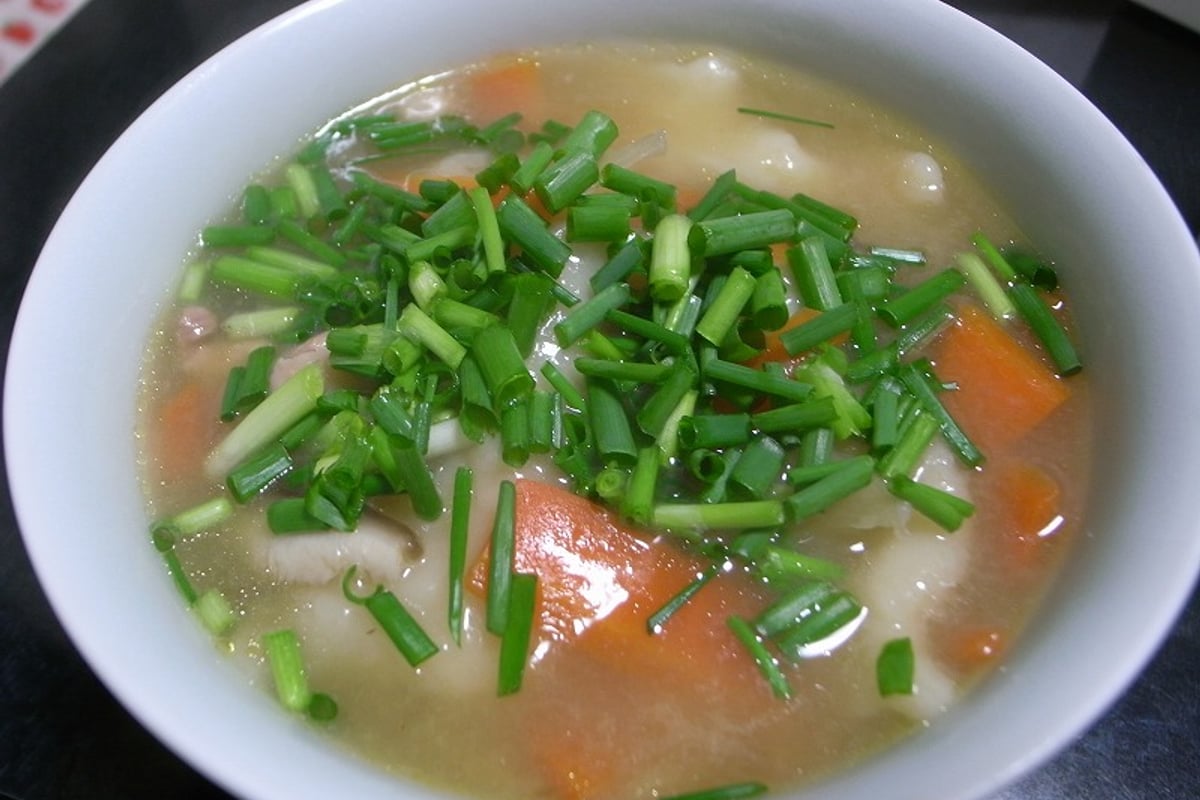
Hittsumi is a local dish of Iwate Prefecture in which wheat flour dough, kneaded with water to an earlobe-like softness, is stretched thin, torn by hand into pieces, and simmered in a pot. The name is said to come from the local dialect word 'hittsumamu,' meaning 'to tear with the hands.' In the central Iwate region, paddy fields spread along the Kitakami River basin and rice farming flourished, but the harsh cold sometimes brought poor rice harvests, so wheat and barley were also grown, giving rise to a flour-based food culture known as 'shitonemono,' in which flour is kneaded with water. Hittsumi is the most representative dish of this tradition, simmered in a broth seasoned with soy sauce or miso together with seasonal ingredients such as chicken, burdock root, carrot, and mushrooms. Seasoning and ingredients vary from household to household, and the dish has long been cherished by Iwate residents as a 'taste of home.' In some areas it is also known as 'tottenage' or 'hatto.'
Origin
In the central Iwate region, paddy fields spread along the Kitakami River basin, and rice farming had long flourished there, but the harsh cold sometimes led to poor rice harvests due to cold-weather damage. As a result, wheat, barley, and buckwheat were also cultivated, and a food culture known as 'shitonemono' developed, in which these flours were kneaded with water. Hittsumi is said to have emerged as the most representative dish of this tradition.
History
In years of poor rice harvests, it was eaten as a substitute staple food, and it became rooted in everyday meals as each household developed its own seasoning and ingredients. Although the dish goes by different names in different areas, such as 'tottenage,' 'hatto,' and 'kiribatto,' they all share the same basic method of kneading wheat flour, tearing it, and adding it to a simmering pot, and the dish has been passed down as a representative home-cooked meal of Iwate.
Features
Wheat flour is kneaded with water to an earlobe-like softness, left to rest, then stretched thin, torn by hand, and simmered together with chicken, burdock root, carrot, mushrooms, and other ingredients in a soy sauce- or miso-flavored broth. The dough has a smooth surface that goes down easily, and because the torn pieces vary in thickness, diners can enjoy the contrast between chewy, doughy parts and smooth, silky parts.
Main Ingredients
Food Culture
Seasoning and ingredients vary from household to household, and the dish has long been cherished by Iwate residents as a 'taste of home.' It was born out of a flour-based food culture developed to guard against cold-weather crop damage, and in some areas it is also called 'tottenage' or 'hatto.'
Famous Shops
ひっつみ亭
岩手県盛岡市黒川18-65
Served alongside hand-made soba in a traditional old farmhouse. The hittsumi set meal costs 1,200 yen, and the dish alone costs around 680 yen.
伝承園食堂 おしら亭
岩手県遠野市土淵町土淵6-5-1
A dining hall inside 'Densho-en,' a folk-culture facility in Tono. Guests can enjoy local dishes such as Tono-style hittsumi and 'keiran.'
FAQ
Q. Where does the name 'hittsumi' come from?
A. It is said to derive from the Iwate dialect word 'hittsumamu,' meaning to tear the wheat dough with the hands, which evolved into the name 'hittsumi.'