Image: Wikimedia Commons
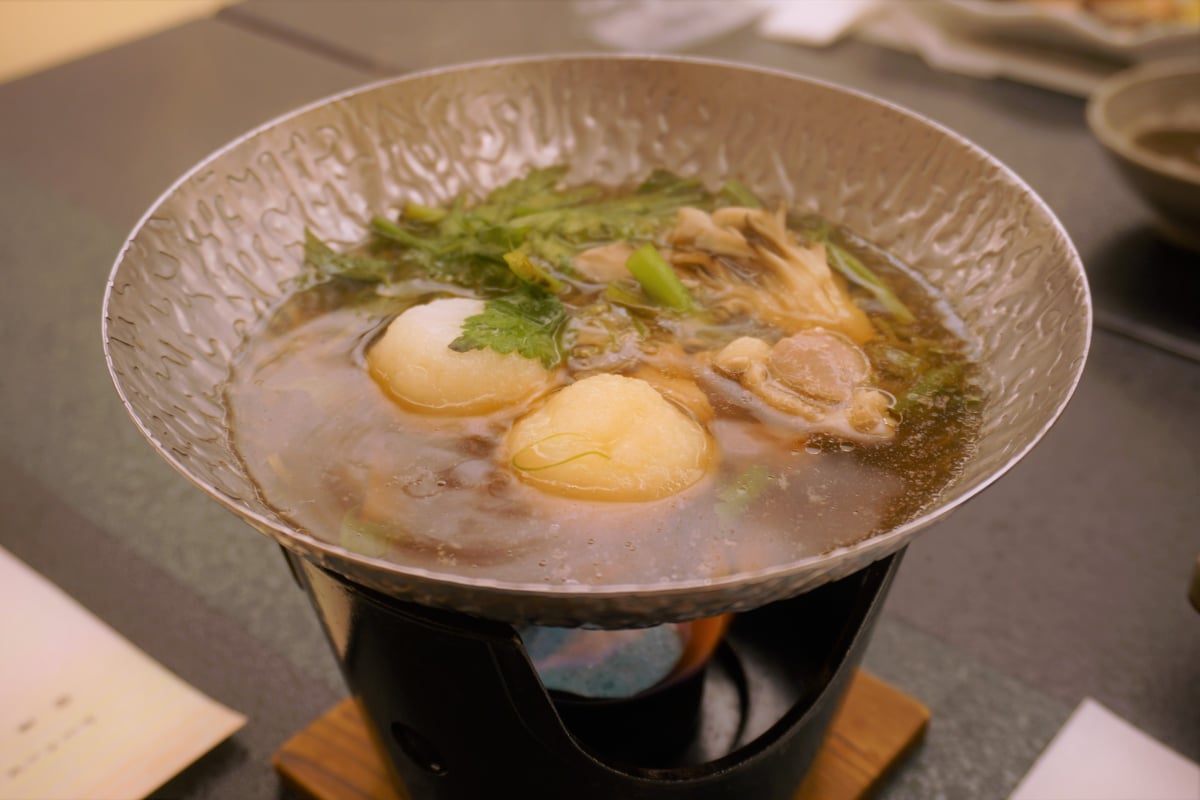
Damako Nabe is a local dish of Akita Prefecture in which damako-mochi — half-pounded rice rolled into bite-sized balls — is simmered in a Hinai-jidori broth together with burdock root, Japanese parsley (seri), mushrooms, and other ingredients. It is said to have originated in the Nanshu area around Lake Hachirogata, and its prototype is said to be a dish called 'tsukego,' in which grilled wakasagi (pond smelt) or crucian carp were seasoned with miso. As land reclamation of Lake Hachirogata reduced fish catches, chicken bones and meat came to be used in place of fish. Unlike kiritanpo, which is molded onto cedar skewers and grilled, Damako Nabe requires no skewers or grilling, making it easy to prepare, and it is cherished as a chewy home-style dish, alongside kiritanpo, as one of the signature winter hot pots of Akita.
Origin
Damako Nabe is said to have originated in the Nanshu area of Akita Prefecture facing Lake Hachirogata, around what is now Gojome Town. In this area, a simple dish called 'tsukego' — in which wakasagi, crucian carp, icefish, and other fish caught in the lake were skewered, grilled, and dipped in miso — was long enjoyed, and this is thought to have become the prototype of Damako Nabe.
History
Land reclamation of Lake Hachirogata greatly reduced fish catches, and as opportunities to use fish decreased, chicken bones and meat came to be used instead for both the broth and the ingredients. The dish has been passed down through generations in local households, and it continues to be taught to younger generations today through school lunches and home economics cooking classes.
Features
Freshly cooked rice is half-mashed in a mortar and rolled by hand into damako-mochi balls, which are added to a Hinai-jidori broth along with burdock root, maitake mushroom, seri, and long green onion, and simmered together. Unlike kiritanpo, which involves molding the rice onto cedar skewers and grilling it, damako-mochi is simply rolled and added directly to the pot, giving it a notably chewy texture.
Main Ingredients
Food Culture
In Akita, a beanbag toy for children is called 'damako,' and the dish is said to be named for the resemblance between its shape and that of a rice ball rolled into a dumpling. Because it requires no skewers and can be made easily, it has been made even more frequently in home kitchens than kiritanpo.
How It Differs from Home Cooking
While kiritanpo requires the process of molding rice onto cedar skewers and grilling it, Damako Nabe can be made at home simply by rolling the rice into balls. At specialty restaurants, the difference from home cooking lies in the extra preparation involved, such as taking broth from whole Hinai-jidori chickens and rolling each damako-mochi by hand.
Famous Shops
郷土料理いしかわ
秋田県南秋田郡五城目町東磯ノ目2丁目1-7
A local-food restaurant in Gojome Town, said to be the birthplace of Damako Nabe. Damako Nabe and Kiritanpo Nabe are its signature dishes.