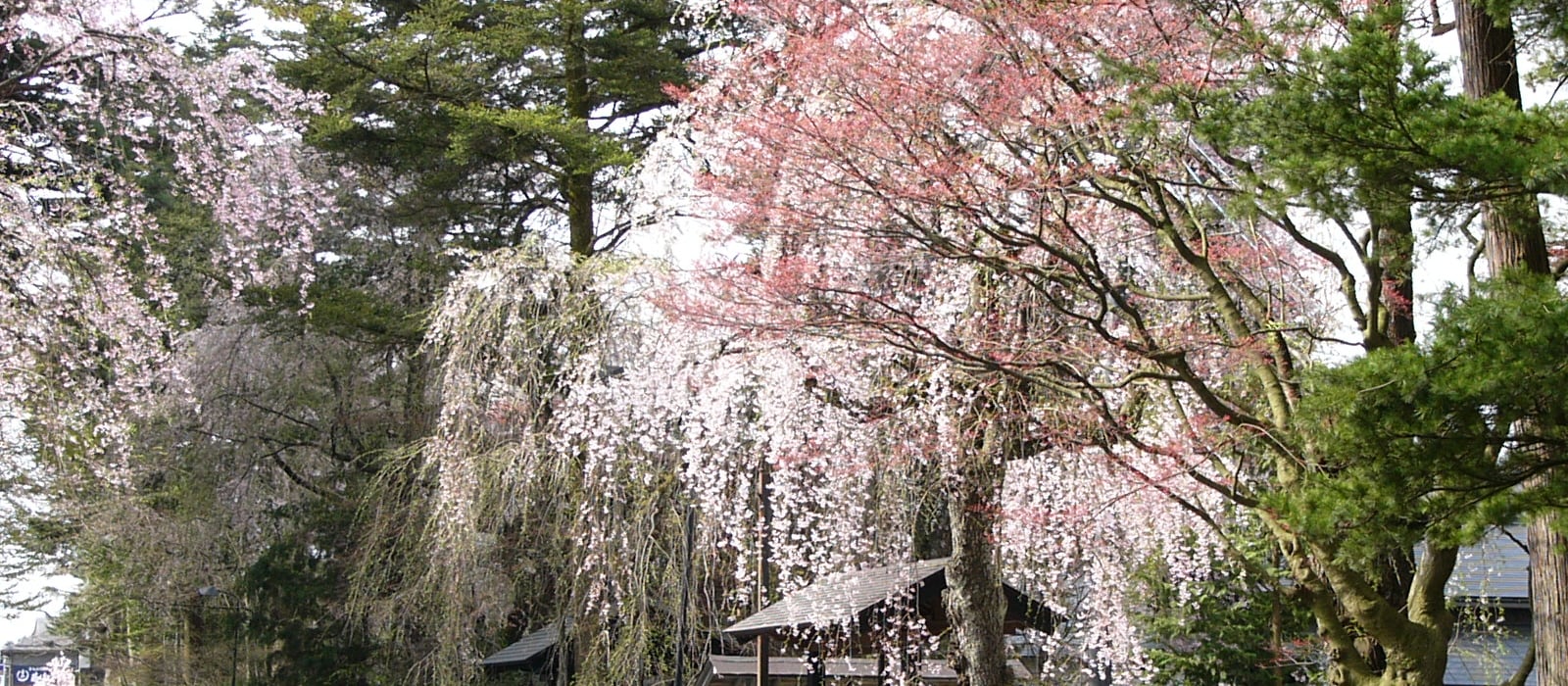
 Image: Wikimedia Commons
Akita Prefecture
Nurtured by the rich forests of Akita cedar and some of Japan's finest rice-growing land, Akita is a prefecture where woodworking, lacquerware, and metalwork traditions run deep alongside a food culture built on rice and koji. Alongside nationally designated Traditional Crafts such as Odate Magewappa, Kawatsura Shikki, and Kabazaiku, the prefecture is also home to revived ceramic traditions like Shiraiwa-yaki and Naraoka-yaki, centered on the historic town of Kakunodate. Its cuisine reflects the wisdom of a snow country, from Kiritanpo Nabe simmered in Hinai-jidori broth to Inaniwa Udon, one of Japan's three great udon noodles, and Iburigakko, smoked and pickled daikon. With scenic attractions such as the samurai district of Kakunodate, Lake Hachiro, and Lake Tazawa changing with the seasons, Akita draws visitors from across Japan and beyond each summer for the Akita Kanto Festival and the Omagari Fireworks.
Akita's Traditional Crafts
Odate Magewappa (Odate Bentwood Wooden Boxes)
Odate Magewappa
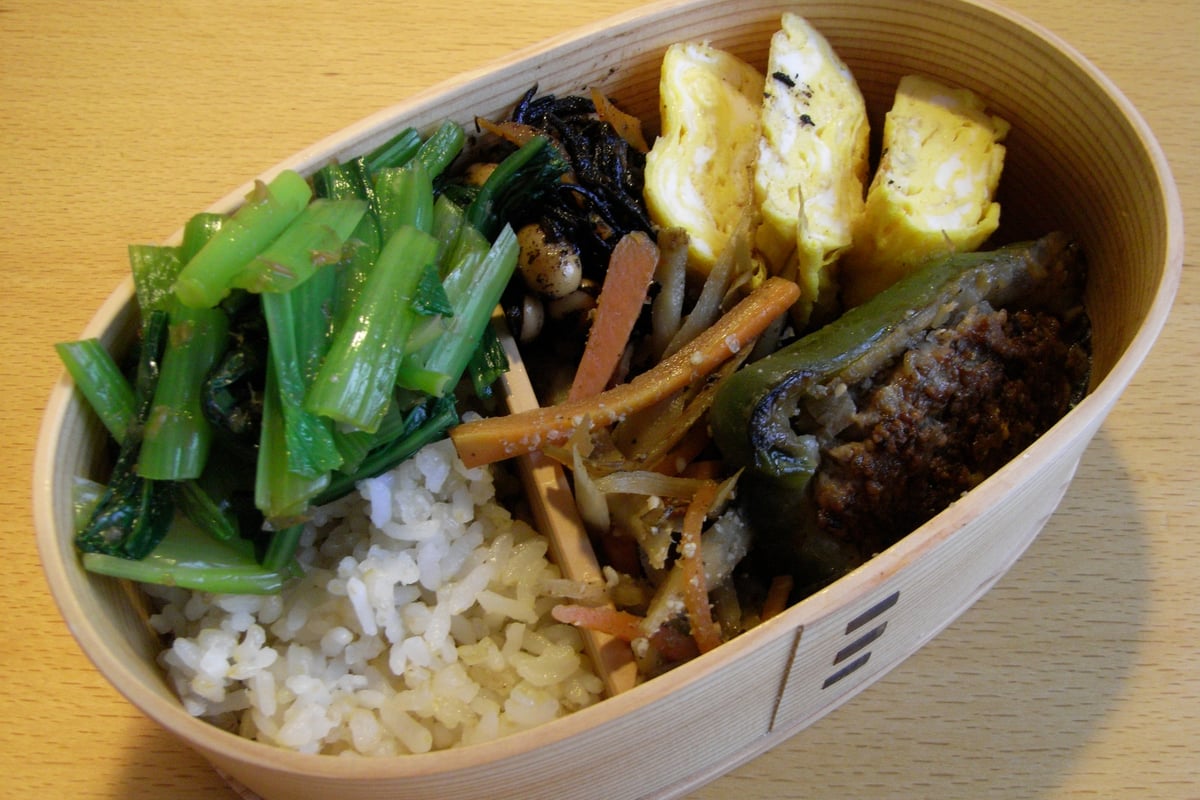
Odate Magewappa is a woodcraft made in Odate City, Akita Prefecture, using a technique in which thin sheets peeled from straight-grained (masame) natural Akita cedar are softened in hot water, bent into a cylindrical shape, and then stitched closed with the bark of the mountain cherry tree. The Odate Local History Museum holds a fragment of bentwood ware believed to date from the Heian period, suggesting that simple bentwood craftsmanship existed in the area from ancient times, but it was not until the latter half of the 17th century that it developed into a full-fledged industry. Its direct origin is said to be the encouragement of bentwood ware production as a side occupation by the Satake-Nishi family, lords of Odate Castle, who drew on the region's abundant Akita cedar resources to address the domain's financial difficulties and the hardship of its lower-ranking samurai. In addition to the cedar's beautiful grain, the wood's moderate humidity- and airflow-regulating properties are said to absorb excess moisture from packed rice and help keep it delicious, and Magewappa has recently drawn renewed attention as lunch boxes and rice containers. In October 1980 (Showa 55), it was designated a Traditional Craft Designated by the Minister of Economy, Trade and Industry.
Kawatsura Lacquerware
Kawatsura Shikki
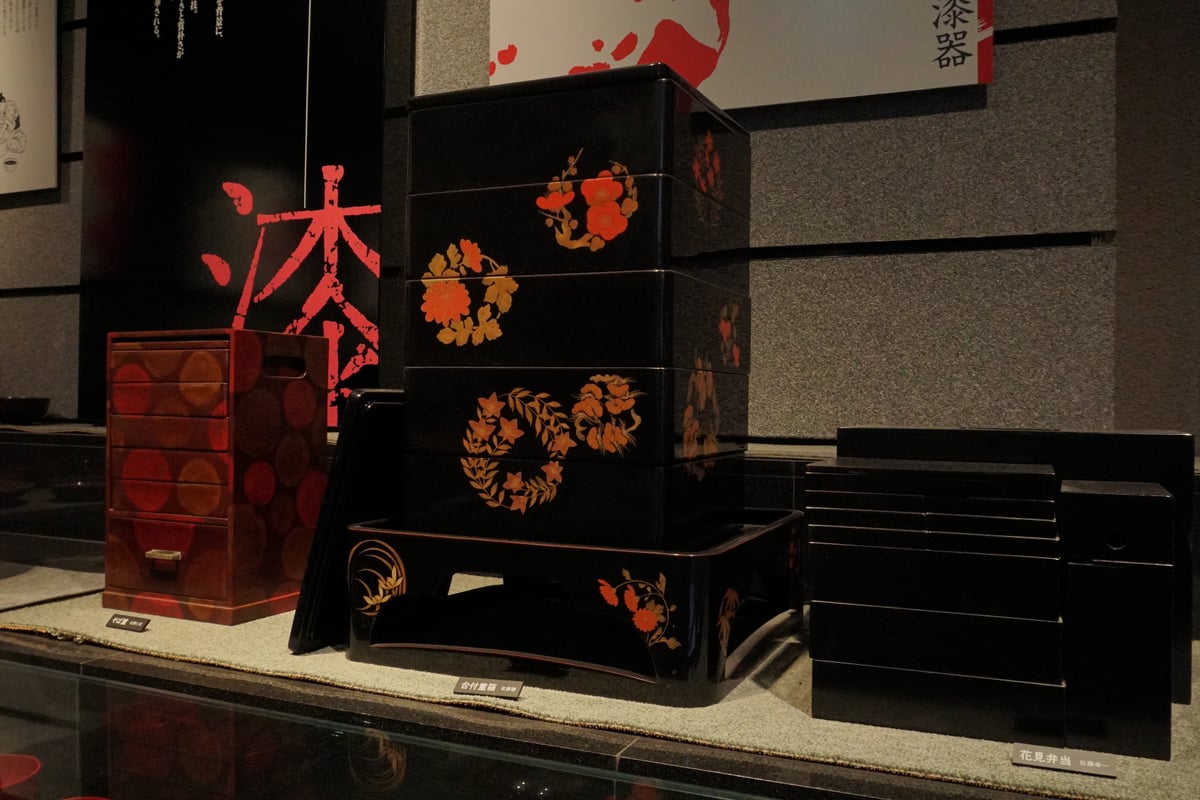
Kawatsura Shikki is lacquerware made in the area around Kawatsura, Yuzawa City, Akita Prefecture (formerly Inakawa Town), with a history said to span roughly 800 years. According to tradition, it began in 1193, when Lord Doku—younger brother of Onodera Shigemichi, a retainer of Minamoto no Yoritomo and lord of Inaniwa Castle—built a residence at Koshio-nojiri and had his retainers lacquer sword scabbards, bows, armor, and other weapons and equipment; the craft later developed into the making of everyday lacquered bowls. From the Genna era (around 1615) through the Genroku era in the early Edo period, roughly 26 households in and around Kawatsura village came to work as bowl makers, and in the latter half of the Edo period they obtained domain permission to expand their sales routes, producing a wide range of lacquerware including bowls, trays, and tiered boxes and adding decorative techniques such as chinkin and maki-e that helped establish the craft as an industry. Its defining features are the hananuri technique, in which the final coat of lacquer is left as brushed—without polishing or grinding afterward—and sturdy foundation work, making it a beloved everyday lacquerware valued for its practicality. It is a nationally designated Traditional Craft.
Kabazaiku (Cherry Bark Woodcraft)
Kabazaiku
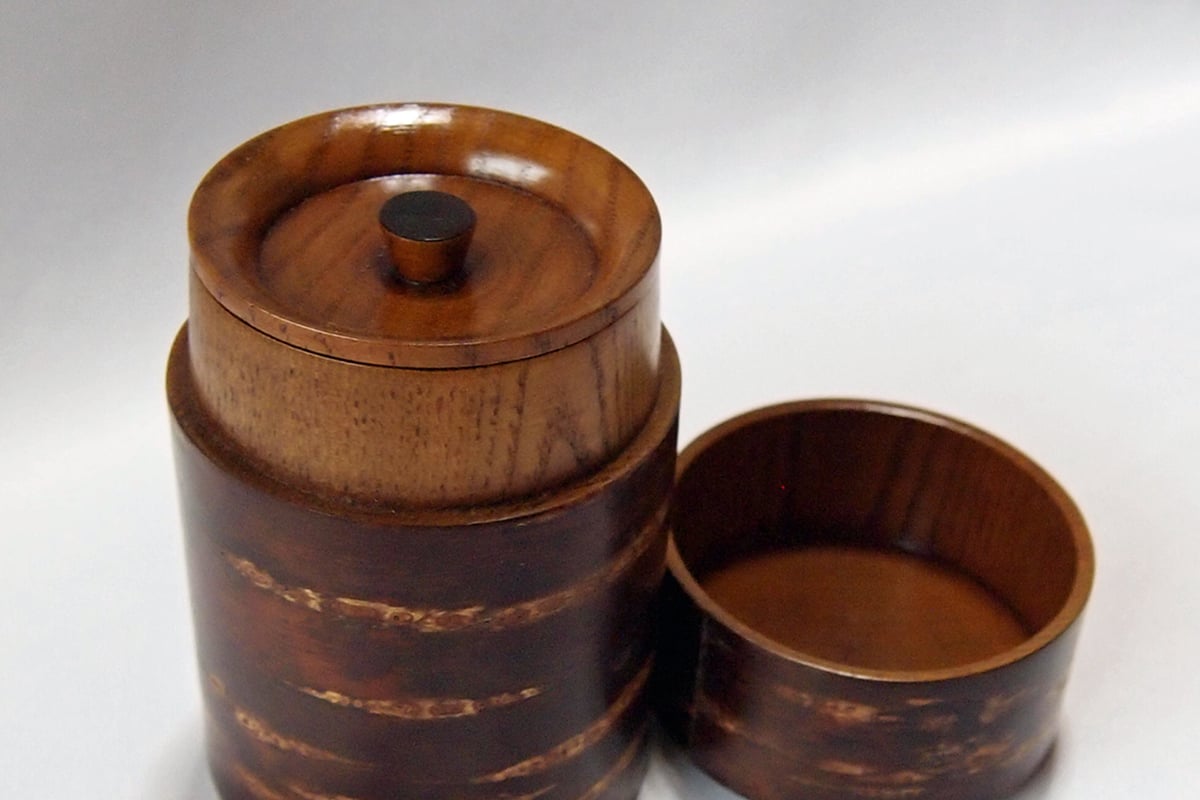
Kabazaiku is a woodcraft made in Kakunodate, Semboku City, Akita Prefecture, using the bark ('kaba') of the mountain cherry tree. It is said to have originated in the Tenmei era (1781-1789), when Fujimura Hikoroku, a lower-ranking samurai of Kakunodate, learned the technique from the Gosho-no family, Shinto priests in Kamasawa, Aikawa, in northern Akita Prefecture, and spread it among the samurai of Kakunodate. At the time, the region was suffering repeated crop failures and famine, and lower-ranking samurai took up making inro (medicine cases) and netsuke as a side occupation using the low-cost bark of mountain cherry trees growing nearby. From the Meiji era onward, the emergence of influential wholesalers such as Nagamatsuya Shoten (trade name: Marugame) helped stabilize the craft as an industry, and around 1897 (Meiji 30) the kijimono technique—shaping the wood base on a lathe before applying the bark—was also added. In the Taisho and Showa eras, Ono Tozo is regarded as the figure who revived the craft, and following his encounter with Yanagi Soetsu, techniques were revitalized through workshops beginning in 1942 (Showa 17). In 1976 (Showa 51), Kabazaiku was designated a Traditional Craft Designated by the Minister of Economy, Trade and Industry, and the Kakunodate Kabazaiku Museum opened the following year, in 1978. Representative products include tea caddies, trays, and tobacco cases.

Akita Sugi Oke-Taru (Akita Cedar Barrels and Tubs)
Akita Sugi Oke-Taru
Akita Sugi Oke-Taru are wooden tubs (oke) and barrels (taru) made from Akita cedar, one of Japan's three great cedar forests, produced mainly in Noshiro City, Odate City, and Kita-Akita City in Akita Prefecture. A tub believed to date from the late Heian period has been excavated from the ruins of Akita Castle in Akita City, suggesting that the history of tub and barrel making in the region goes back a long way. During the Kyoho era of the Edo period, production areas were established under the protection of the Satake domain, and output grew on the strength of the region's abundant Akita cedar resources. Akita cedar has evenly spaced growth rings, resists warping, has a pleasant fragrance, and is highly water-resistant, making it well suited to containers for handling water and food, such as sake barrels, miso tubs, and rice containers. Uses are divided between tubs made from quarter-sawn wood and lidded barrels made from flat-grain wood, with hoops made of madake bamboo, copper, or brass. In May 1984 (Showa 59), it was designated a Traditional Craft Designated by the Minister of Economy, Trade and Industry.
Itaya-zaiku (Itaya Maple Basketry)
Itaya-zaiku
Itaya-zaiku is a type of basketry made in the Kumojikari area of Kakunodate, Semboku City, Akita Prefecture, in which young Itaya maple trees are split into thin strips and woven together. It is said to have begun around the Kansei era (around 1790) as a side occupation for farming households during the winter agricultural off-season, and has been passed down for more than 200 years. In the past, the craft mainly produced practical farm tools such as the waist basket known as 'kakkobe,' resembling a fish creel, along with baskets for farm work and mi (winnowing baskets), but over time it has broadened into craft items such as hand baskets, serving trays, and the toy horse known as Itaya-uma. The trunk of the Itaya maple used as material is split evenly to a thickness of less than 1mm and woven by hand using basketry techniques. In addition to being light and durable, it develops an amber color and deepens in character with use, an appealing change over time. It is a Prefecturally Designated Traditional Craft of Akita Prefecture, and today only two households in the Kumojikari area continue to make and sell it.
Akita Ginsen Zaiku (Silver Filigree Work)
Akita Ginsen Zaiku
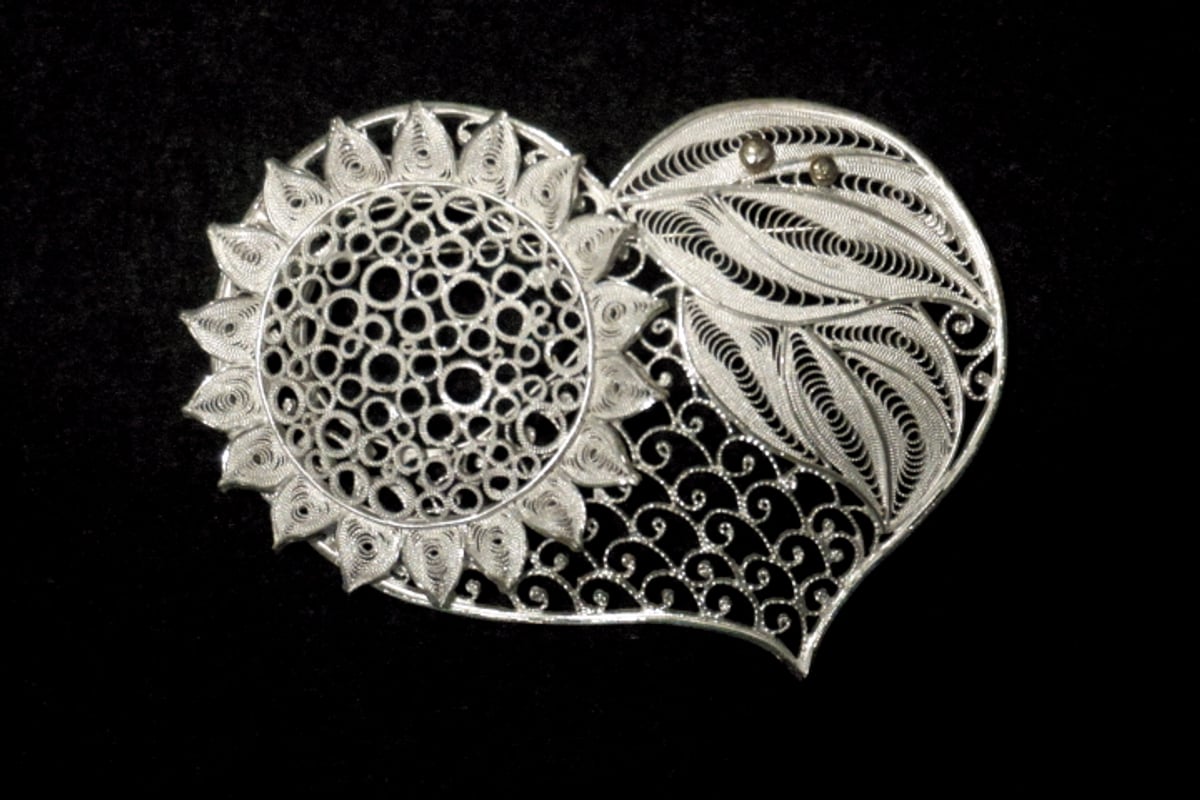
Akita Ginsen Zaiku is a metalwork craft in which high-purity silver is drawn into fine wire about 0.2 to 0.3 millimeters in diameter, twisted together, and shaped into swirl- or arabesque-patterned parts called 'hirado,' which are then set into a silver frame and assembled. Its origin is traced to 1602 (Keicho 7), when Satake Yoshinobu brought gold- and silversmiths with him as he moved from Hitachi Province to Akita, and the craft developed as a technique for sword fittings and decorative metal hardware under mining development in Akita, including the Innai Silver Mine, and the protection of successive lords of the Satake clan. From the Meiji era onward, as demand from the samurai class declined, its use expanded into accessories such as brooches and pendants, and it established its own distinctive style by incorporating the 'Hirado-zaiku' technique said to have been introduced by Portuguese ships. Its greatest appeal lies in the composed luster unique to pure silver and the delicate designs created by its intricate wirework; it was selected as a national Intangible Cultural Property in 1955 (Showa 30), and today it is carried on as a Traditional Craft of Akita Prefecture and a City-Designated Intangible Cultural Property of Akita City.
Naraoka ware (Naraoka-yaki)
Naraoka-yaki
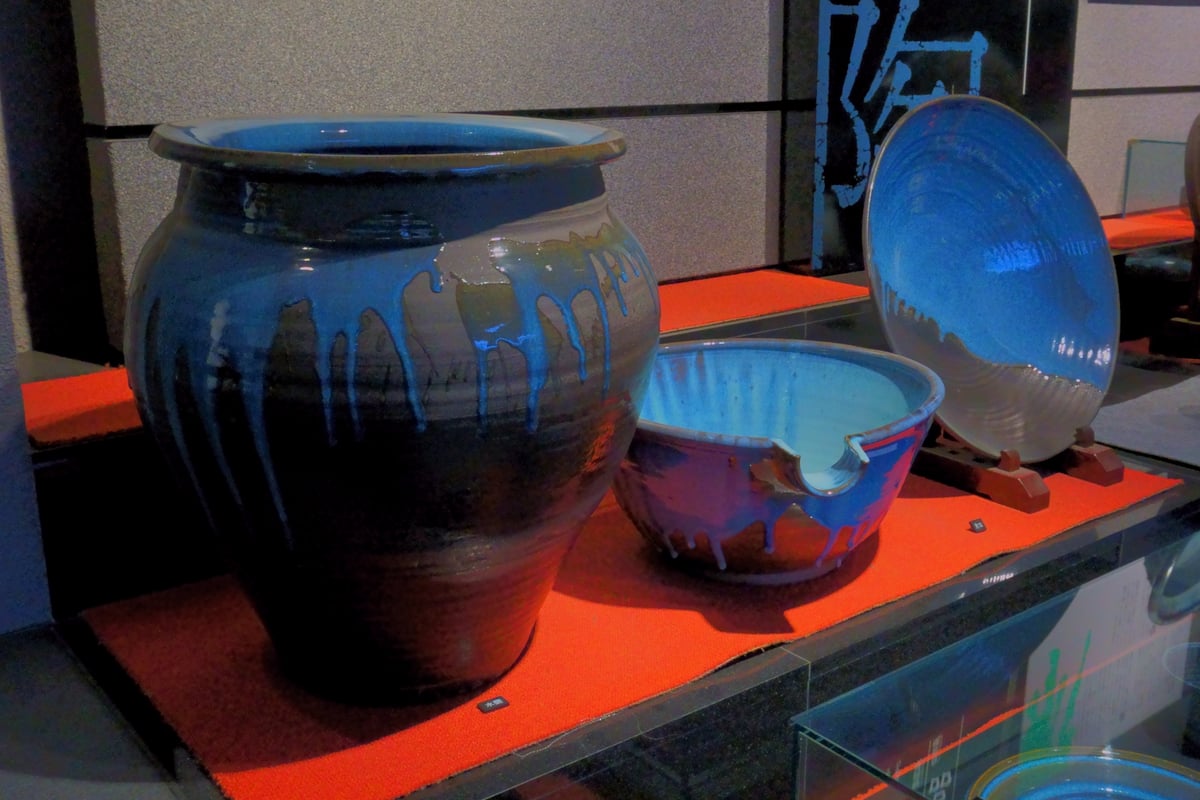
Naraoka ware is pottery fired in the Naraoka district of Nangai, Daisen City, Akita Prefecture, and is said to have the longest history of any pottery within the prefecture. It began in 1863 (Bunkyu 3), when Komatsu Seiji, a member of a local old family, invited a potter and built a kiln; in its early years the kiln mainly produced olive-colored tea utensils and the like, but from the mid-Meiji era onward, robust pieces using the bluish 'namako glaze (a bluish-grey glaze)' became the mainstream. Today, production continues in the Takano area of Nangai, to which the kiln relocated in 1908 (Meiji 41), using local clay and glaze and firing with wood in a climbing kiln. The Naraoka Togen kiln has kept the kiln running for five generations, and is also known for having received guidance from the potters Kato Tokuro and Shoji Hamada in the early Showa era to refine its techniques. The deep ultramarine of its ware was even used as inspiration for the interior design of the Green Car (first-class car) of the Akita Shinkansen's E6 series.
Shiraiwa ware (Shiraiwa-yaki)
Shiraiwa-yaki
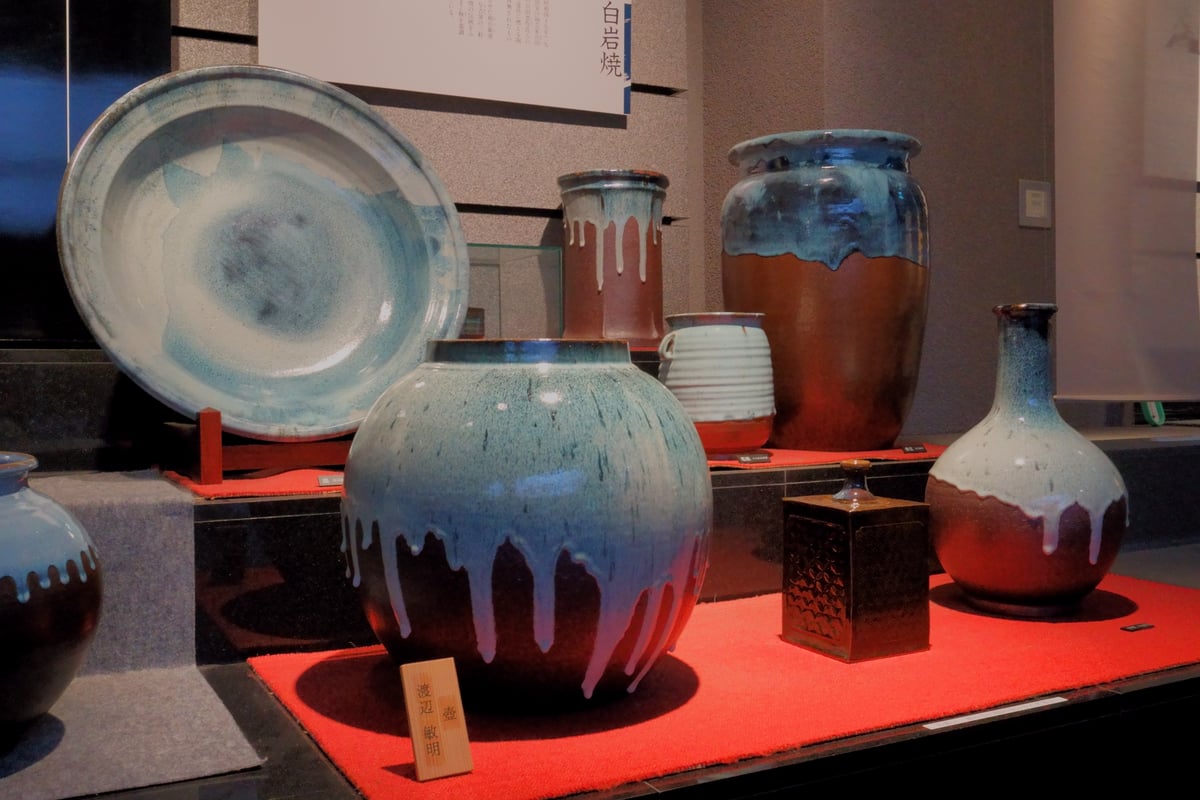
Shiraiwa ware is pottery fired in the Shiraiwa district of Kakunodate, Semboku City, and is said to have the oldest history of any pottery in Akita Prefecture. It began in 1771 (Meiwa 8), when Matsumoto Unshichi, a potter from Soma in Mutsu Province (present-day Fukushima Prefecture), opened a kiln with the support of samurai from Kakunodate; several kilns were subsequently opened, and at its peak more than 40,000 pieces of everyday earthenware were produced annually. However, after the Meiji Restoration the kilns lost the protection of the domain, and combined with the influx of porcelain and kiln damage from an earthquake, its 130-year history came to a temporary end in 1900 (Meiji 33). In 1974 (Showa 49), a meeting with the potter Shoji Hamada sparked momentum for revival, and the following year, in 1975 (Showa 50), local volunteers opened the 'Waheegama' kiln and revived the technique. Its defining feature is the contrast between the reddish local clay color and the bluish namako glaze, and today Waheegama continues to carry on the tradition.
Nakayama Ningyo (Nakayama Dolls)
Nakayama Ningyo
Nakayama Ningyo are clay dolls made in the Nakayama district of Hiraka-machi, Yokote City, prized for their rounded, endearing shapes and vivid coloring. They are said to have originated in the mid-Meiji era, when Hiwatashi Yoshi, a local woman, began making clay figures inspired by anesama ningyo (traditional paper dolls) and oshie (padded fabric pictures) as a means of supporting herself after the death of her husband, giving the craft a history of about 150 years. At first the dolls were mainly seasonal figures for festivals, such as hina dolls and Kabuki characters, but later the craft came to include motifs distinctive to Akita, such as kamakura snow huts, Kanto pole lanterns, Bonden, and Akita dogs, as well as clay bells shaped like the animals of the zodiac. The 'zodiac clay bells' devised by third-generation maker Hiwatashi Giichi became known nationwide after the sheep design was adopted for a New Year's postage stamp in 1979 (Showa 54). Today, the Hiwatashi Doll Shop in Yokote City continues to carry on the tradition, and in January 2021 (Reiwa 3), Nakayama Ningyo was designated a Traditional Craft of Akita Prefecture.
Akita Hachijo
Akita Hachijo
Akita Hachijo is a silk textile woven with striped and checkered patterns based on a reddish-brown 'tobi-iro' color, using silk thread dyed with plant dyes such as the root bark of hamanasu (rugosa rose), kariyasu (a type of grass), and rengetsutsuji (a species of azalea). Its origin is said to date to around 1784 (Tenmei 4), when Ishikawa Takiuemon and others brought the weaving technique to the region; building on plant-dyeing techniques related to 'Honba Kihachijo' of the Izu Islands, further improvements were made during the Bunka era, when a craftsman was invited from Kiryu in Joshu. Production reached its peak around 1903-1904 (Meiji 36-37), but the number of producers gradually declined afterward, and the craft was once interrupted when the Namekawa Textile Factory (Akita City), the last remaining producer, closed in 2003. In 2006, Toshiko Narada, a former employee of that factory, took over its equipment and set up a workshop in Kitaakita City, single-handedly reviving the technique. In 2023, the workshop relocated and was renamed 'Akita Hachijo Hamanasu Workshop'; today Narada remains the sole producer, handling everything from dyeing the thread to weaving, while also working to pass on the technique to members of the local Community Revitalization Cooperator program.
Akita's Local Food
Kiritanpo Nabe
Kiritanpo Nabe
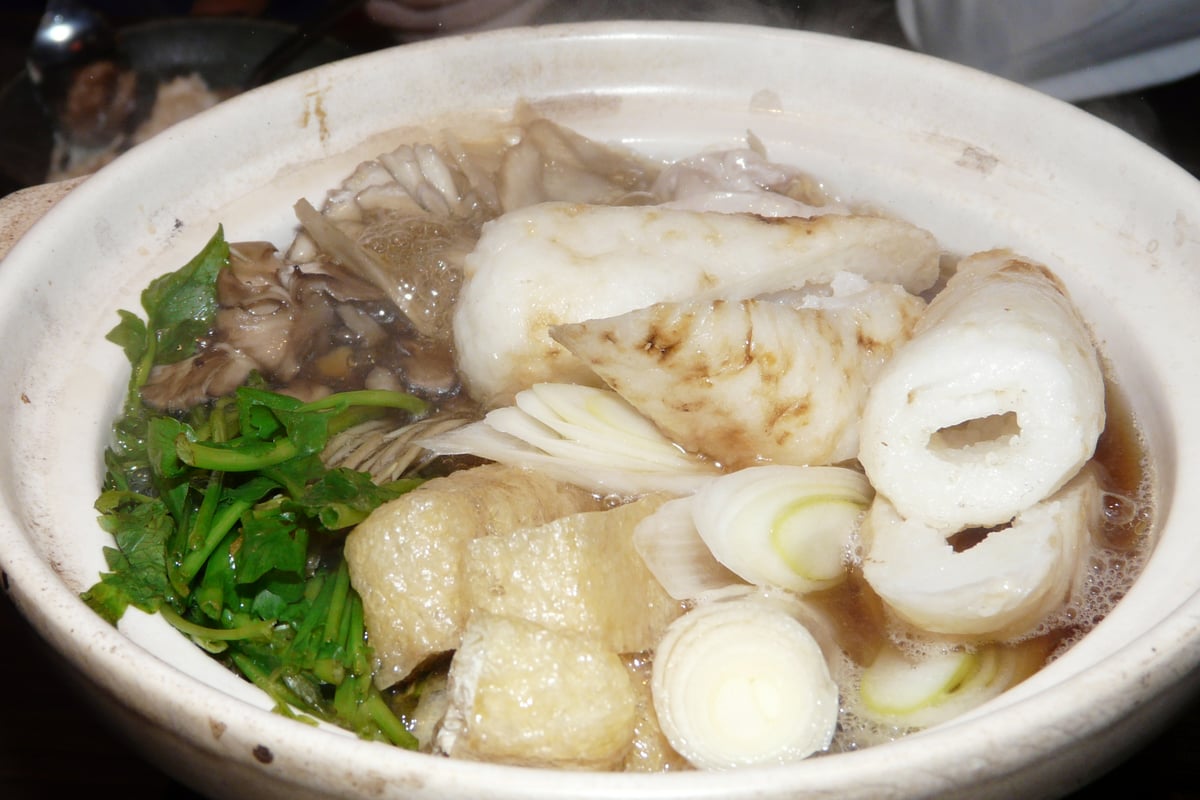
Kiritanpo Nabe is a signature local dish of Akita Prefecture in which kiritanpo — half-pounded rice wrapped around a cedar stick and grilled — is simmered in a broth made from Hinai-jidori (a breed of free-range chicken). It is said to have originated in the northern part of the prefecture, centered on Odate City and Kazuno City, where workers who stayed in the mountains for charcoal-making or cedar logging would mold leftover rice onto sticks and grill it over a fire. The soy-sauce-based broth, rich with the umami of Hinai-jidori, is combined with mountain ingredients of Akita such as burdock root, maitake mushroom, Japanese parsley (seri), and long green onion, and the kiritanpo is added at the end and simmered briefly so it soaks up just the right amount of broth. Made in homes from the season of new rice through winter, it is also cherished as an essential dish for celebrations, funerals, and entertaining guests.
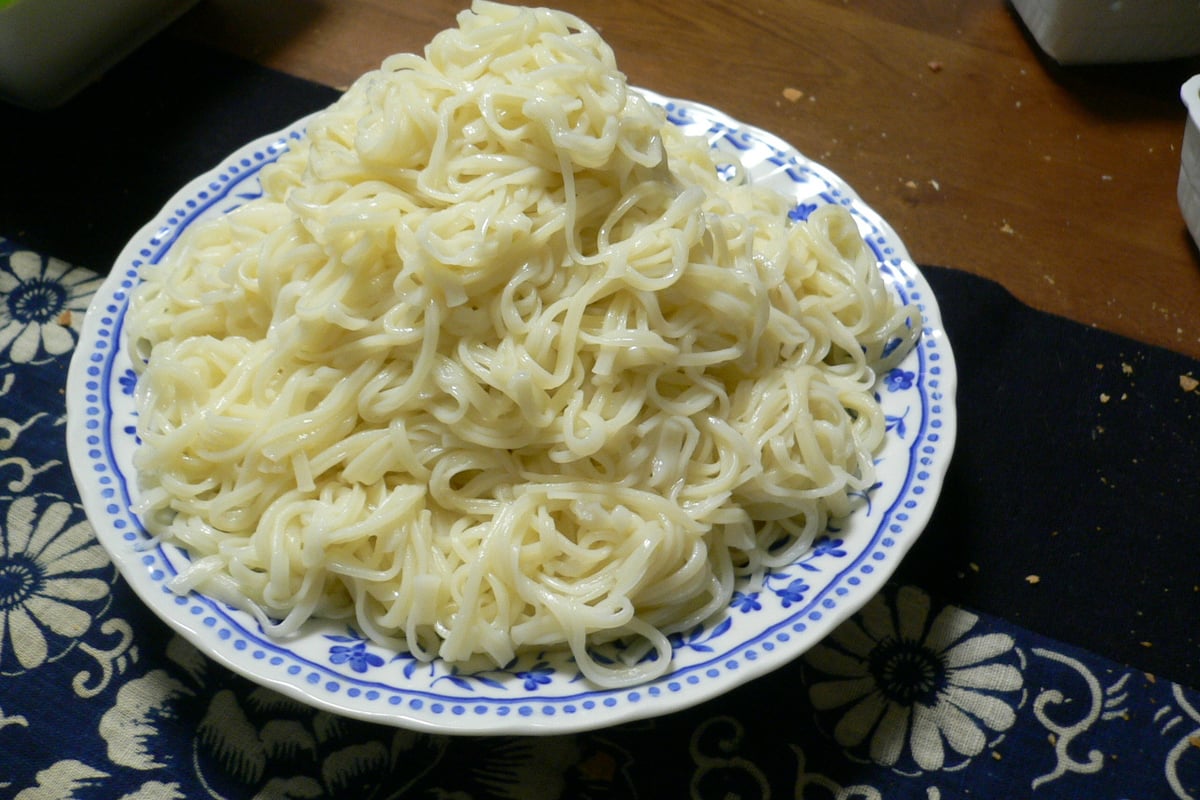
Inaniwa Udon
Inaniwa Udon
Inaniwa Udon is a hand-stretched dried udon noodle originating in the Inaniwa area of Yuzawa City, Akita Prefecture. It is made through a distinctive process in which the dough is kneaded, twisted into rope-like strands, aged, and then stretched thin by hand. The flat, ribbon-like noodles offer a smooth, slippery texture along with a firm bite. The technique is said to have been established in 1665 (Kanbun 5) in the early Edo period, and about 100 years later it was designated as an official product for the Satake family, lords of the Akita domain. It is sometimes counted, alongside Sanuki udon and Mizusawa udon, as one of Japan's 'three great udon.' Because the labor-intensive hand-stretching process limits production volume, it is also highly prized as a gift item, making it a signature noodle dish of Akita Prefecture.
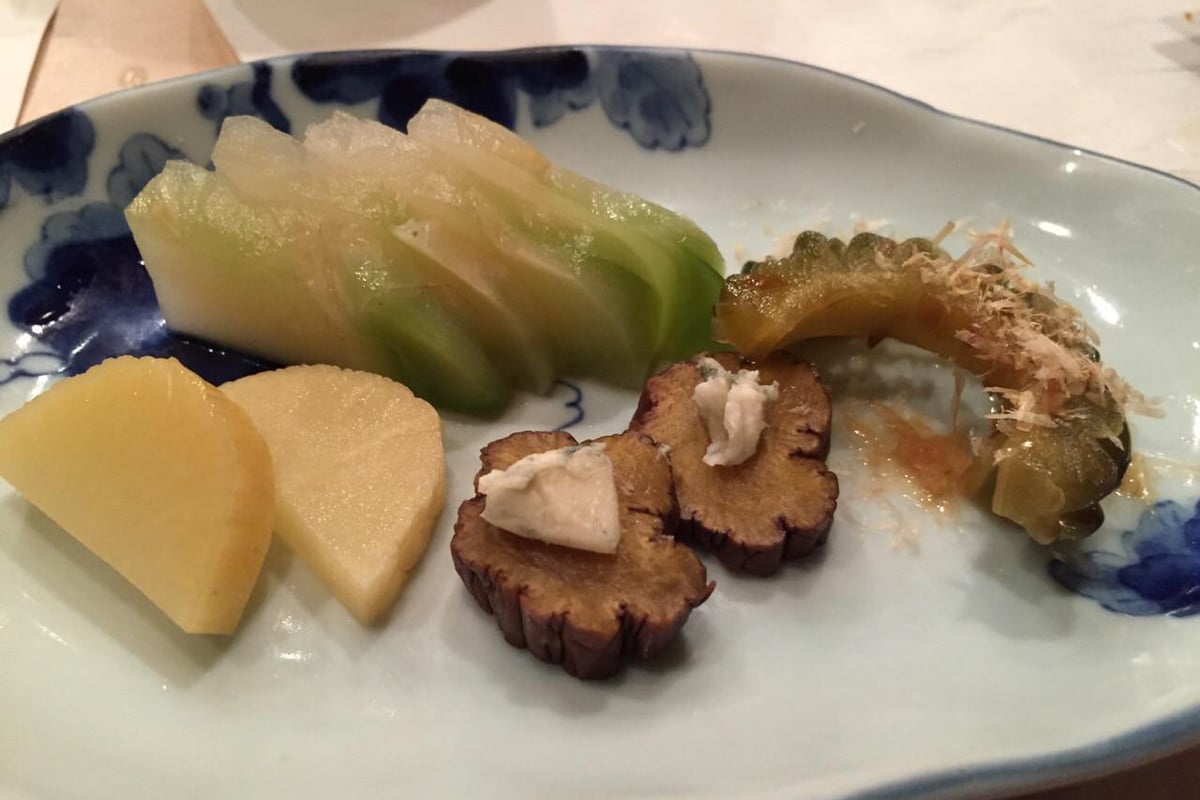
Iburigakko
Iburigakko
Iburigakko is a pickle originating in the inland southern part of Akita Prefecture, made by smoking daikon radish over an irori (sunken hearth) fire, drying it, and then pickling it in rice bran and salt. 'Iburi' means 'to smoke,' and 'gakko' is an Akita dialect word for pickles. It is said to have developed from the wisdom of farmers who, in a climate with heavy snowfall that made sun-drying difficult, hung daikon from the beams of their houses and dried it using the heat and smoke of the irori — a practice believed to date back to the Muromachi period. Known for its fragrant smoky aroma and crisp, crunchy texture, it developed mainly in the area around Yokote City. In 2019 it was registered under Japan's national Geographical Indication (GI) protection system, and it is now known nationwide as one of Akita's signature fermented foods.
Shottsuru Nabe
Shottsuru Nabe
Shottsuru Nabe is a hot pot dish from the coastal area of Akita Prefecture, centered on the Oga Peninsula, that uses shottsuru — a fish sauce made by fermenting fish such as hatahata (sailfin sandfish) with salt over a long period — as its broth. Shottsuru is counted as one of Japan's three great fish sauces, alongside Noto's ishiru and Kagawa's ikanago shoyu. Since around the early Edo period, fishing villages in Akita, including Oga, have passed down the technique of salting the large hatahata catches in barrels and slowly fermenting them into fish sauce. The hot pot, in which hatahata, tofu, napa cabbage, mushrooms, and other ingredients are simmered in a shottsuru-based broth in an earthenware pot, is prized for the rich umami and distinctive flavor unique to fish sauce, and it is cherished as a signature winter taste of Oga.
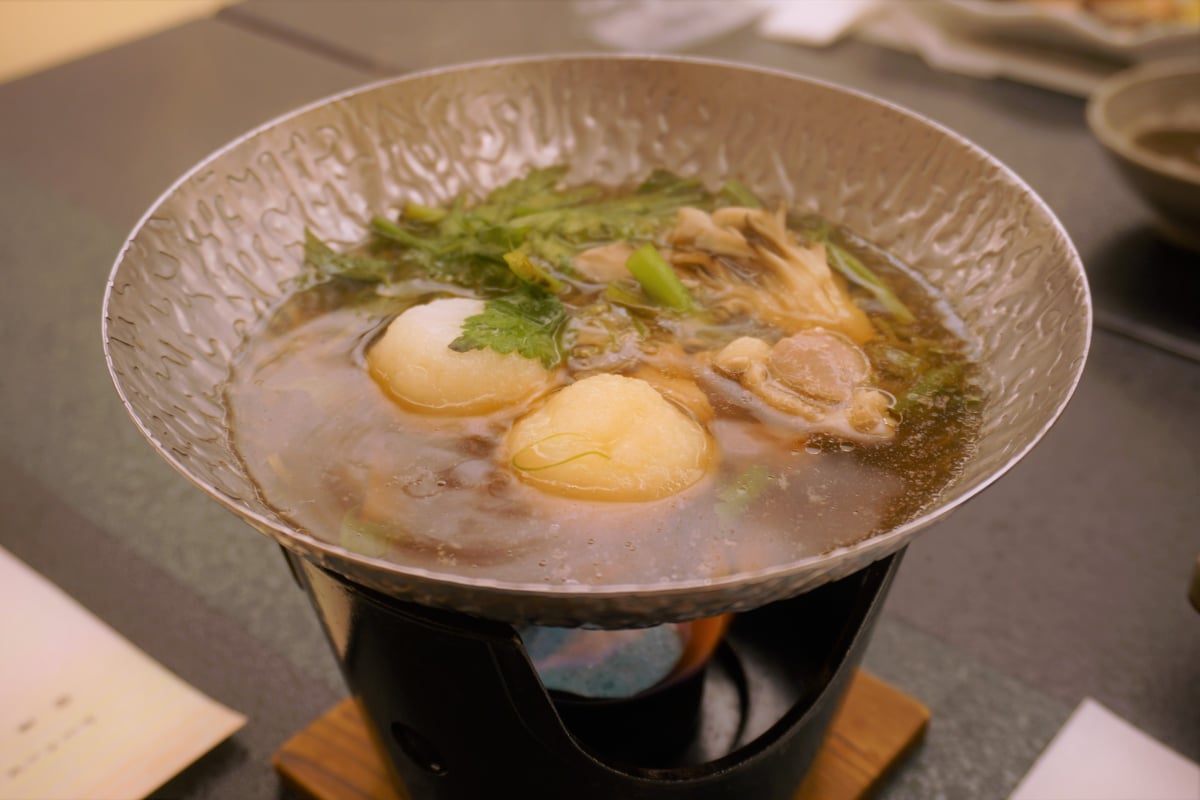
Damako Nabe
Damako Nabe
Damako Nabe is a local dish of Akita Prefecture in which damako-mochi — half-pounded rice rolled into bite-sized balls — is simmered in a Hinai-jidori broth together with burdock root, Japanese parsley (seri), mushrooms, and other ingredients. It is said to have originated in the Nanshu area around Lake Hachirogata, and its prototype is said to be a dish called 'tsukego,' in which grilled wakasagi (pond smelt) or crucian carp were seasoned with miso. As land reclamation of Lake Hachirogata reduced fish catches, chicken bones and meat came to be used in place of fish. Unlike kiritanpo, which is molded onto cedar skewers and grilled, Damako Nabe requires no skewers or grilling, making it easy to prepare, and it is cherished as a chewy home-style dish, alongside kiritanpo, as one of the signature winter hot pots of Akita.
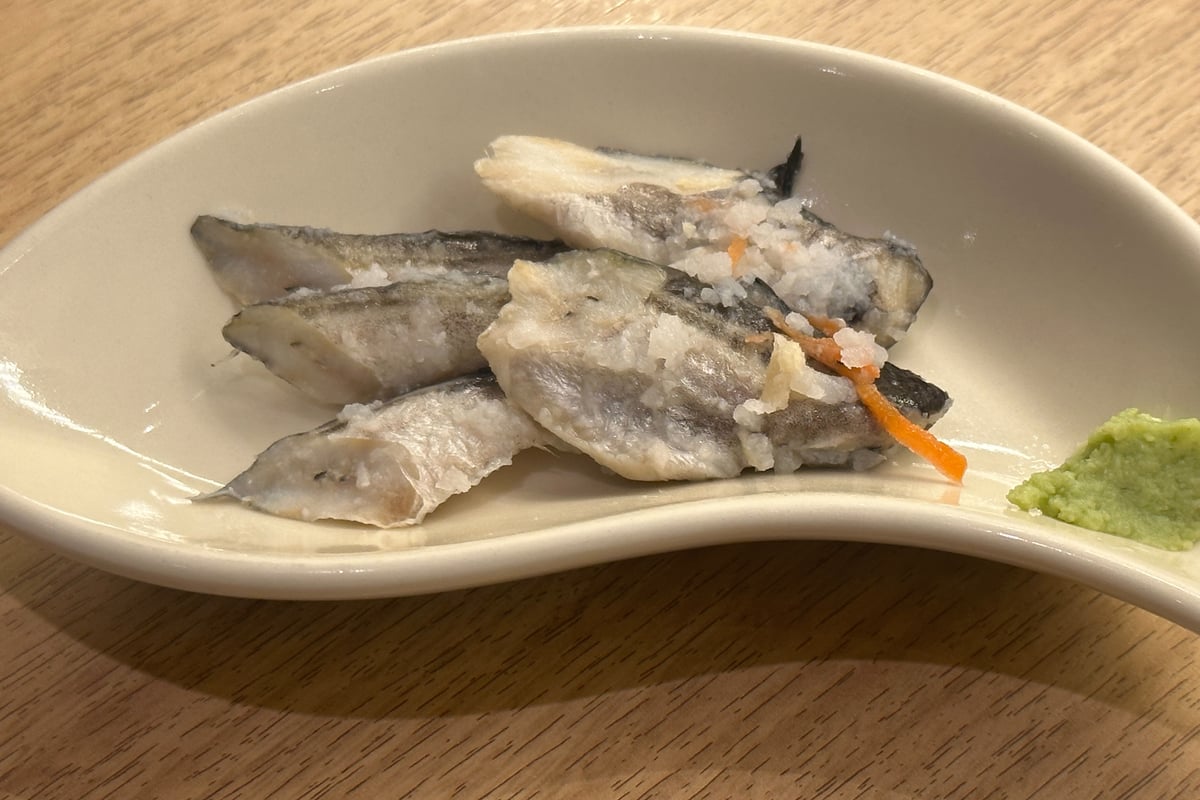
Hatahata-zushi
Hatahata-zushi
Hatahata-zushi is a signature narezushi (fermented sushi) of Akita Prefecture, made by layering hatahata (Japanese sandfish) — Akita's official prefectural fish — with rice, rice malt (koji), and vegetables in a wooden barrel and allowing the mixture to undergo lactic fermentation. Salted hatahata are desalted, then layered in a barrel in alternating layers with koji-mixed rice, vegetables such as carrot, and kelp, weighted down with a heavy stone, and left to ferment slowly for about three to four weeks. Hatahata is said to have earned the name 'hatahata-gami,' after an old word evoking thunder, because it appears in great schools along the coast during its spawning season, when thunder often rumbles over the sea. In Akita, the fish is so deeply woven into daily life that people traditionally say 'the New Year cannot be welcomed without hatahata.' The dish's flavor — the sweetness of koji blended with the tang of fermentation and the umami of the fish — remains an indispensable part of the New Year's Eve and New Year's holiday feast to this day.
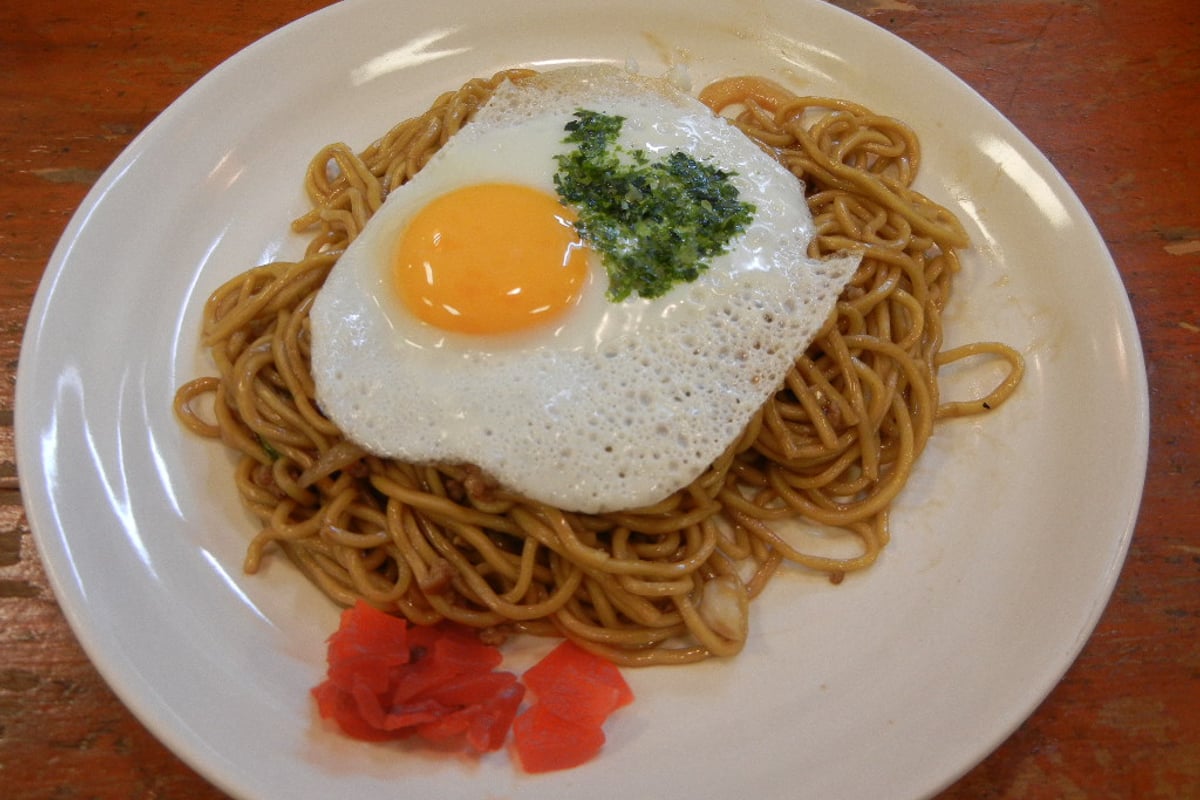
Yokote Yakisoba
Yokote Yakisoba
Yokote Yakisoba is a local-style yakisoba (fried noodles) dish that originated in Yokote City, Akita Prefecture. Its defining features are thick, boiled square noodles stir-fried with ground meat and chopped red pickled ginger in a slightly sweet Worcestershire-style sauce, finished with a soft-yolk fried egg and fukujinzuke (sweet pickled relish) on top. It is said to have been born just after the end of World War II, when a stall owner running an okonomiyaki cart in Yokote City sought to create a new menu item, and through trial and error with a local noodle maker, the noodles took their present form around 1953 (Showa 28). Its ease of preparation and delicious taste made it spread quickly, and at its peak, the city is said to have had around 100 yakisoba shops. In 2001 (Heisei 13), the 'Yokote Yakisoba Noren-kai' association was formed, and efforts to promote the dish nationwide and revitalize the local community continue to this day.
Junsai Nabe
Junsai Nabe
Junsai Nabe is a summer hot pot dish centered on junsai (water shield, an aquatic plant), a specialty of Mitane Town in Akita Prefecture. Junsai is a water lily-family aquatic plant, and the tender young shoots that grow beneath its floating young leaves are eaten together with their jelly-like coating. The area around Kakusuke Pond in Mitane Town is known as a natural growing site, and thanks to community-wide efforts to maintain the pond, the area has developed into one of Japan's leading production regions. During the harvest season from May to August, the sight of harvesters in small flat-bottomed boats picking each shoot by hand has become a seasonal symbol of early summer. The dish is made by simmering chicken and burdock root in a broth made from chicken bones or Hinai-jidori chicken, then adding the junsai at the very end and eating it as soon as its color turns a vivid green — a summer hospitality dish of Akita enjoyed for its smooth, slippery texture and plump bite.
Nata-zuke
Nata-zuke
Nata-zuke is a quick Akita pickle made by roughly chopping raw daikon radish with a thick-bladed hatchet (nata) and pickling it for a short time in rice malt (koji), amazake, sugar, and other seasonings. Deliberately splitting the daikon so the cut surfaces turn rough and jagged lets the koji flavor soak in all the way through, producing a light pickle known for its crisp texture and natural sweetness. Akita Prefecture is rich in forest resources, including high-quality Akita cedar, and its long tradition of forestry meant that most households kept a hatchet on hand — using it to cut the daikon is said to be the origin of the dish's name. Unlike Iburigakko, which is made by smoking and drying the daikon before pickling, Nata-zuke uses raw daikon and is ready in just a few days, making it one of the winter 'gakko' (pickles) essential to the Akita table.
Akita Morokoshi
Akita Morokoshi
Akita Morokoshi is a local confection classified as a type of rakugan (a pressed, dry sugar confection), made by mixing red-bean (azuki) flour with sugar, pressing it in wooden molds, and slowly baking it. Its origin is said to trace back to 1705 (Hoei 2) in the Edo period, when Satake Yoshitada, the 4th lord of the Kubota domain, had a parched-rice confection made to reward his retainers for their service. Later, Sugiyama Ryosaku, the founding master of the confectionery shop Sugiyama Jusando, presented a confection made with red-bean flour to Lord Yoshitada, who praised it highly, saying it 'surpassed every other confection in flavor' — and this remark is said to be the origin of the name 'Morokoshi.' (There is also another theory that the name instead derives from 'morokoshi,' a word of Chinese origin, so its precise etymology remains debated.) With a history spanning more than 300 years, it is known for its refined sweetness that melts gently in the mouth and the fragrant flavor of red beans, and it remains beloved today as a signature souvenir confection of Akita.
Model Course
A Course of Woodcraft and Regional Hot Pot in Odate and Kazuno
Enjoy a hands-on session at a workshop or the Handicraft Studio making Odate Magewappa, bentwood ware crafted from straight-grained Akita cedar, then finish with Kiritanpo Nabe, a hot pot built around rich Hinai-jidori broth — a half-day course unique to the northern part of the prefecture.
A Course of Lacquerware and Inaniwa Udon in Yuzawa
Experience the craftsmanship of Kawatsura Shikki at the Kawatsura Lacquerware Traditional Craft Center, known for its 'hana-nuri' technique that leaves the final coat unpolished, then sample hand-stretched noodles at Sato Yoske's main store, home of Inaniwa Udon, one of Japan's three great udon — a course exploring the city of Yuzawa.
A Course Through the Pottery and Woodcraft Villages of Kakunodate and Semboku
Combine a stroll through the samurai district with visits to a Kabazaiku workshop crafting wares from mountain cherry bark, the kiln of Shiraiwa-yaki, revived after once falling out of production, and the Itaya-zaiku basketry village of Kumojikari — a tour of Semboku City's traditional crafts.
Events
Akita Kanto Festival
Every year, August 3-6 / Kanto Odori Avenue and the Nigiwai Hiroba plaza in Naka-dori, Akita City
View details →Omagari Fireworks (National Fireworks Competition)
Every year, the last Saturday of August (August 29 in 2026) / Omonogawa Riverbed Sports Park, Daisen City
View details →Honba Odate Kiritanpo Festival
Held annually in October (scheduled for October 10-11 in 2026) / Nipro Hachiko Dome (1-1 Inaridai, Shirodai, Odate City)
View details →