Image: Wikimedia Commons
Iburigakko is a pickle originating in the inland southern part of Akita Prefecture, made by smoking daikon radish over an irori (sunken hearth) fire, drying it, and then pickling it in rice bran and salt. 'Iburi' means 'to smoke,' and 'gakko' is an Akita dialect word for pickles. It is said to have developed from the wisdom of farmers who, in a climate with heavy snowfall that made sun-drying difficult, hung daikon from the beams of their houses and dried it using the heat and smoke of the irori — a practice believed to date back to the Muromachi period. Known for its fragrant smoky aroma and crisp, crunchy texture, it developed mainly in the area around Yokote City. In 2019 it was registered under Japan's national Geographical Indication (GI) protection system, and it is now known nationwide as one of Akita's signature fermented foods.
Origin
Iburigakko is said to date back to the Muromachi period and has long been made by farming households in the inland southern part of Akita Prefecture. In this region, where winter arrives early and daylight hours are short, sun-drying the daikon needed to make takuan pickles was difficult, so people devised a method of hanging daikon above the household irori to dry it using smoke and heat.
History
The Ministry of Agriculture, Forestry and Fisheries lists Yokote City, Yuzawa City, and Yurihonjo City, among others, as the main areas where the tradition has been passed down, and there was reportedly a time when nearly every household in the inland southern area made it. Around 1967, a local pickle producer began using the product name 'Iburigakko,' which helped it become widely known, and since 2007 Yokote City has held a contest called the 'Iburinpikku.' In 2019 it was registered under the national Geographical Indication (GI) protection system, standardizing its quality criteria.
Features
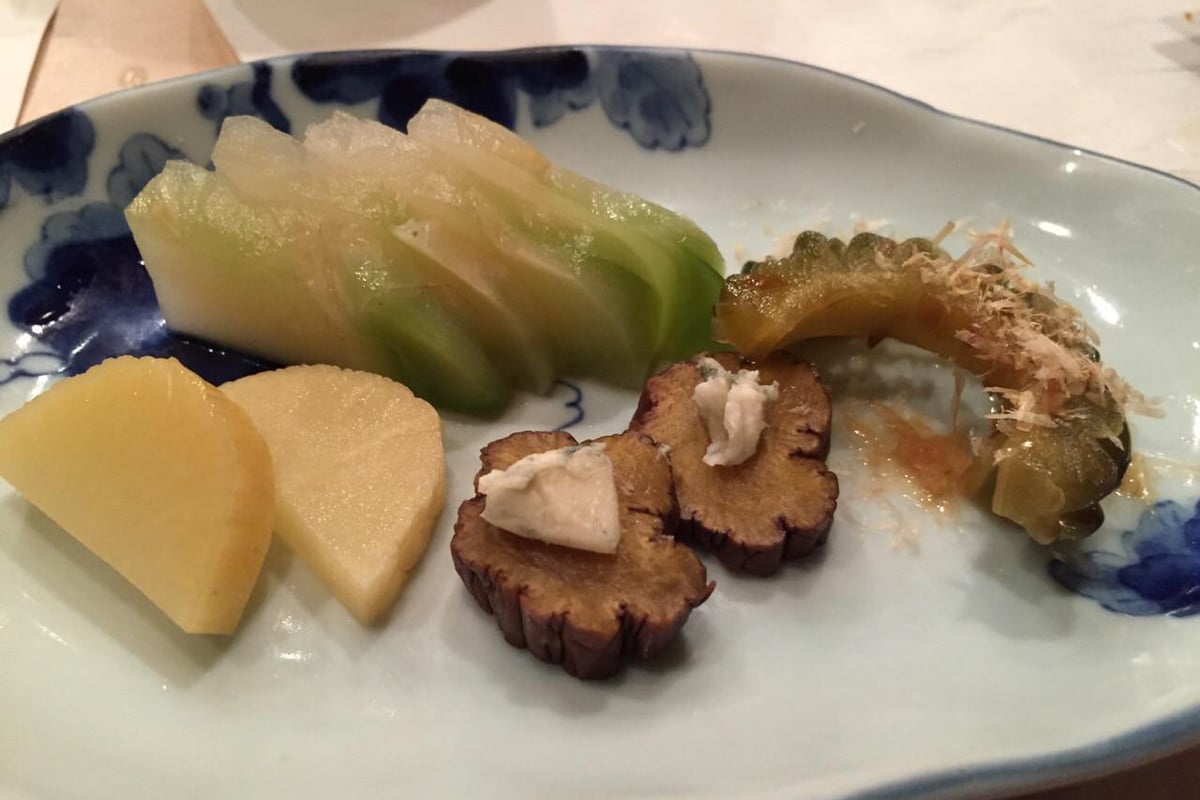
The daikon is smoked to remove moisture and impart a distinctive smoky aroma, then pickled in rice bran, salt, and coarse sugar (zarame). The defining feature is the way the fragrant smokiness harmonizes with the flavor of the pickling bed, producing a satisfying, crisp texture. Besides being eaten as is, it is also popular as a drinking snack, for example chopped finely and mixed with cream cheese.
Main Ingredients
Food Culture
It has been passed down in individual households as a preserved food to help get through Akita's snowy winters. The wisdom of using irori smoke is a food culture born directly from Akita's climate, and it is also characteristic that each household varies in its smoking time and the blend of its pickling bed.
How It Differs from Home Cooking
At home, the daikon is typically smoked over several days in a household irori or a smokehouse, whereas specialized producers use temperature- and humidity-controlled smoking rooms to keep quality consistent. Another difference from home cooking is that GI-registered products must meet certain standards, such as using daikon grown in Akita Prefecture and following the traditional smoking method.
Famous Shops
雄勝野きむらや(いぶりがっこ本舗)
秋田県湯沢市下院内常盤町91
A long-established maker founded in 1963 (Showa 38). Its firewood-dried takuan-style Iburigakko costs around 540 yen for 40g.
View details →| 桜食品 いぶりがっこ(個包装タイプ) | Bite-sized, individually wrapped Iburigakko made by a producer in Daisen City, Akita Prefecture. Priced at around 538 yen, it is also sold at souvenir shops and supermarkets. |
|---|
FAQ
Q. What does 'gakko' mean?
A. It is an Akita dialect word referring to pickles in general. 'Iburigakko' therefore means 'smoked pickles.'