Image: Wikimedia Commons
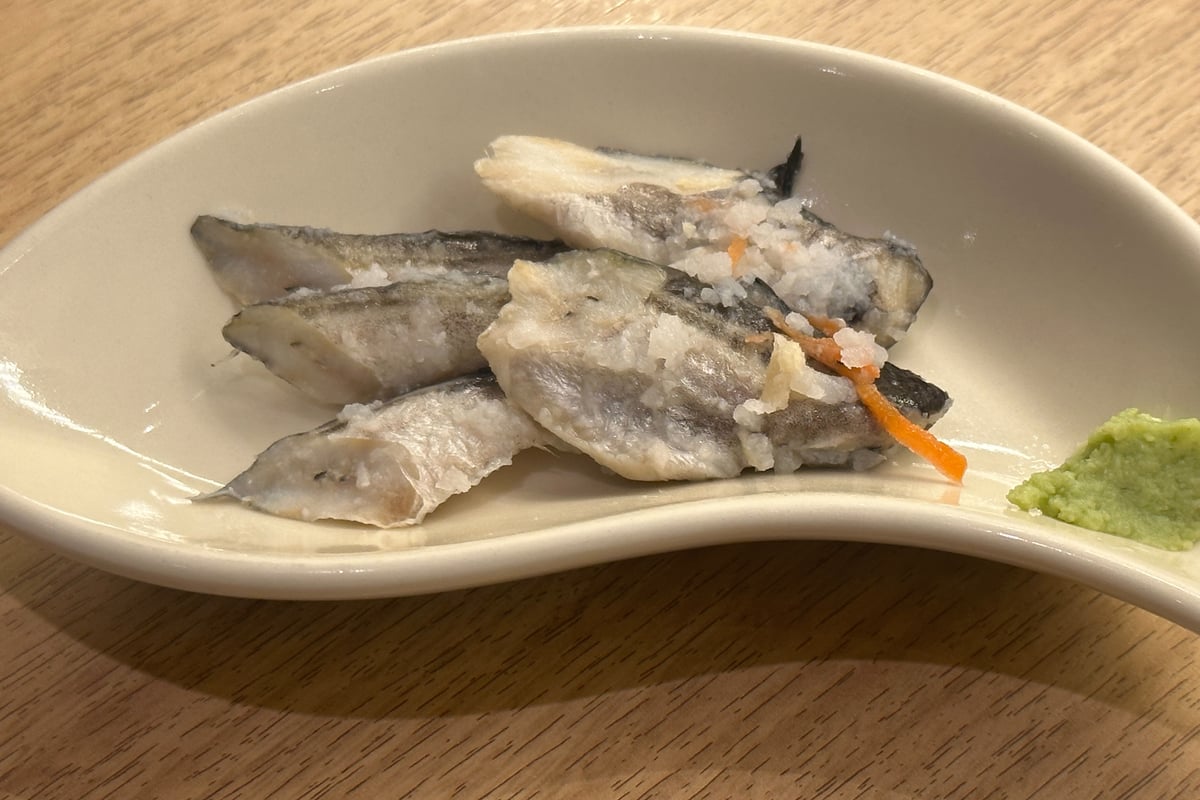
Hatahata-zushi is a signature narezushi (fermented sushi) of Akita Prefecture, made by layering hatahata (Japanese sandfish) — Akita's official prefectural fish — with rice, rice malt (koji), and vegetables in a wooden barrel and allowing the mixture to undergo lactic fermentation. Salted hatahata are desalted, then layered in a barrel in alternating layers with koji-mixed rice, vegetables such as carrot, and kelp, weighted down with a heavy stone, and left to ferment slowly for about three to four weeks. Hatahata is said to have earned the name 'hatahata-gami,' after an old word evoking thunder, because it appears in great schools along the coast during its spawning season, when thunder often rumbles over the sea. In Akita, the fish is so deeply woven into daily life that people traditionally say 'the New Year cannot be welcomed without hatahata.' The dish's flavor — the sweetness of koji blended with the tang of fermentation and the umami of the fish — remains an indispensable part of the New Year's Eve and New Year's holiday feast to this day.
Origin
Hatahata is a fish that appears in great schools along the Akita coast only briefly, during its spawning season, and is said to have come to be called 'hatahata-gami' after an old word for thunder's flash, because it shows itself in seas where thunder rumbles. The wisdom of preserving this fish, caught in great quantities during winter, so it could be enjoyed as a New Year's feast gave rise to a pickling technique using rice and koji — fitting for Akita, a region known for its rice — from which Hatahata-zushi is said to have been born.
History
Records from the Edo period note that hatahata was a fish enjoyed by common people for its low cost, and it is thought that the practice of pickling and preserving it was already widespread by that time. In the early Showa period, against the backdrop of abundant hatahata catches, the dish became firmly established across Akita Prefecture as an essential food for the year-end and New Year season, and even in areas away from the coast, the custom took root of ordering salted hatahata to make into sushi at home. In recent years, declining catches have led to hatahata being treated as a high-end fish.
Features
True to Akita's reputation as rice country, the defining feature of this dish is its generous use of rice and koji. After the salt is drawn out of salted hatahata, the fish is layered in a barrel alternately with koji-mixed rice, vegetables such as carrot, and kelp, then weighted down with a heavy stone and left to ferment for three to four weeks. The result balances the refreshing tartness of lactic fermentation, the sweetness of the koji, and the umami of the hatahata. The 'ippiki-zushi,' made by pickling the fish whole, is considered a particularly formal dish fitting for celebratory occasions.
Main Ingredients
Food Culture
Hatahata is so deeply rooted in the life of Akita's people that it even appears in local folk songs, and each household has traditionally prepared it as an essential dish for welcoming the New Year. The whole-fish 'ippiki-zushi' is considered a particularly formal offering for New Year's Eve and New Year celebrations, while the sliced 'kiri-zushi' is a New Year's table staple.
How It Differs from Home Cooking
While households sometimes shorten the pickling period for convenience, specialty shops and long-established makers use methods and fermentation management passed down over many years to achieve a deep, well-balanced flavor of tartness and umami. There are two approaches: pickling immediately after salting, or first rinsing the fish in water to remove sliminess and blood before pickling — the latter is said to bring out the koji's sweetness more fully.
Famous Shops
永田屋
秋田県にかほ市平沢字中町43番地
A long-established shop said to have been founded during the Kaei era (1848-1854). A 1kg barrel costs around 4,500 yen (before tax) and up.
View details →