Image: Wikimedia Commons
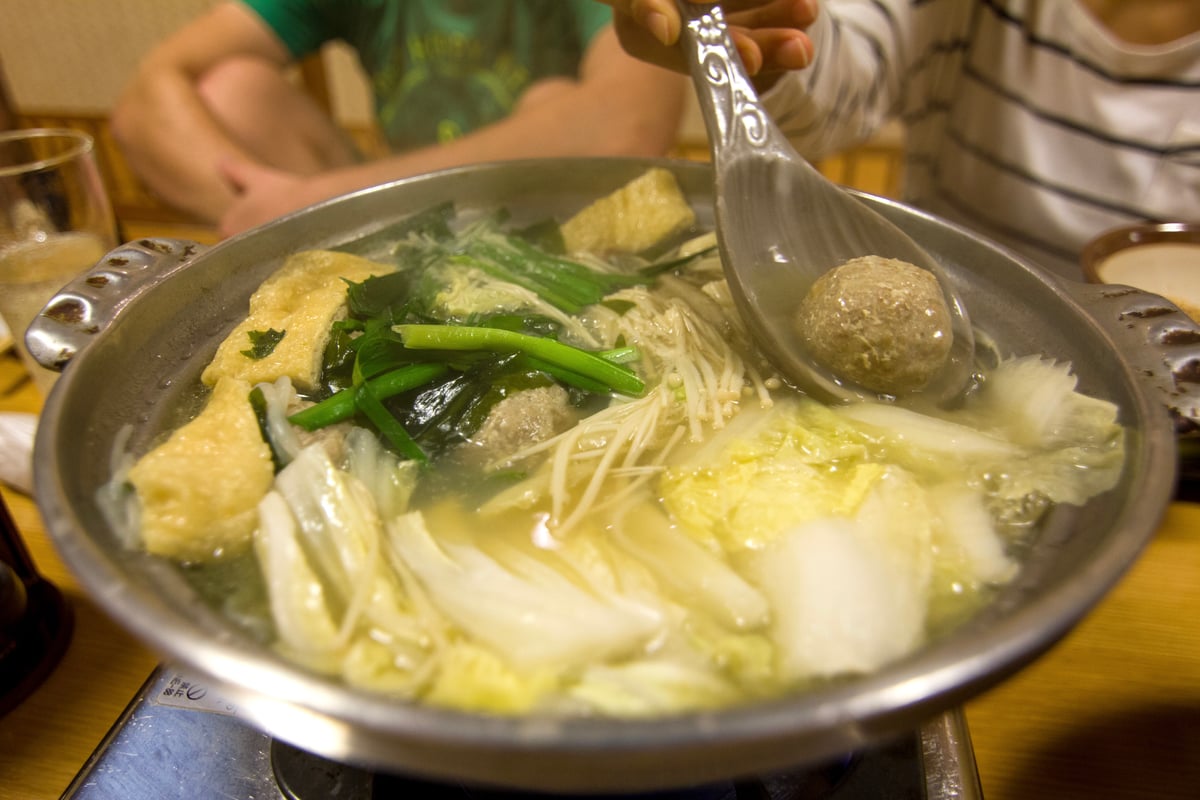
Chanko nabe is a hot pot dish that developed in the sumo stables of Ryogoku, Tokyo, as a meal for sumo wrestlers. The term 'chanko' originally refers to any food prepared in a sumo stable, and hot pot dishes among them are specifically called 'chanko nabe.' Around the time the Ryogoku Kokugikan sumo arena was completed in 1909 (Meiji 42), the popularity of the yokozuna champion Hitachiyama Taniemon drew a surge of new recruits to the Dewanoumi stable, and it is said that the custom of a large group of wrestlers gathering around a single pot to efficiently get their nutrition took hold at that time. The seasoning and ingredients vary from stable to stable, ranging from soppu-daki, made with a chicken-bone broth, to miso- and salt-based versions, and the dish has traditionally combined vegetables received from farmers along sumo tour destinations with whatever meat or fish was available that day. Four-legged animals such as beef and pork were considered unlucky, since eating them was associated with 'putting a hand down' on the ring (a losing move), so chicken and fish were favored instead. Today, chanko nabe can also be enjoyed by the general public at chanko restaurants run by former sumo wrestlers, mainly around Ryogoku.
Origin
The origin of chanko nabe is said to trace back to around 1909 (Meiji 42), when the Ryogoku Kokugikan sumo arena was completed. The popularity of the yokozuna champion Hitachiyama Taniemon at the time led to a sharp increase in new recruits joining the Dewanoumi stable, and the style of gathering around a large pot is said to have been devised as an efficient way to provide nutrition to a large number of wrestlers. The term 'chanko' originally referred to any food prepared in a sumo stable.
History
From the Taisho era into the early Showa era, the area around Ryogoku was a major chicken market, which helped establish soppu-daki, made with a chicken-bone broth, as a nutritious staple for wrestlers. Wrestlers are said to have avoided four-legged animals for luck's sake, since eating them evoked the image of 'putting a hand down' on the ring, favoring chicken and fish instead. Vegetables received from farmers along sumo tour destinations were also added, and each stable developed its own distinctive chanko culture. After World War II, an increasing number of restaurants run by retired wrestlers opened in Ryogoku, and the dish became familiar to the general public as well.
Features
The seasoning and ingredients of chanko nabe vary greatly from stable to stable, and there is no fixed definition. Besides soppu-daki, made with a chicken-bone broth, there are various styles, including miso-, salt-, and soy sauce-based versions. What they have in common is a generous use of chicken dumplings, tofu, napa cabbage, green onion, and other vegetables, prepared with an emphasis on nutritional balance. The style of a large group gathering around a big pot to eat reflects sumo culture itself, mirroring the communal living and hierarchical relationships of the sumo stable.
Main Ingredients
Food Culture
Originally, chanko was cooked by the sumo wrestlers themselves and eaten by a large group gathered around the pot after practice, with younger wrestlers taking on the cooking duties — closely tied to the hierarchical relationships and communal lifestyle of the sumo stable.
How It Differs from Home Cooking
Unlike hot pot dishes made at home, chanko nabe is characterized by simmering a large quantity of ingredients together in a big pot at once, prepared with an emphasis on nutritional balance and a filling meal for wrestlers. At specialty restaurants, former wrestlers recreate the actual flavors of their sumo stables.
Famous Shops
相撲茶屋 ちゃんこ江戸沢 両国総本店
東京都墨田区両国3-24-11
A chanko specialty restaurant founded in 1974 (Showa 49). Dinner is reasonably priced from around 3,500 yen, and lunch from around 1,000 yen.
View details →FAQ
Q. Where does the name 'chanko' come from?
A. There are several theories, with no established consensus: one holds that wrestlers affectionately called the senior figure in the kitchen 'chan' (father), giving rise to the term, while another suggests it comes from a corruption of a word meaning 'Chinese pot,' brought over from China.