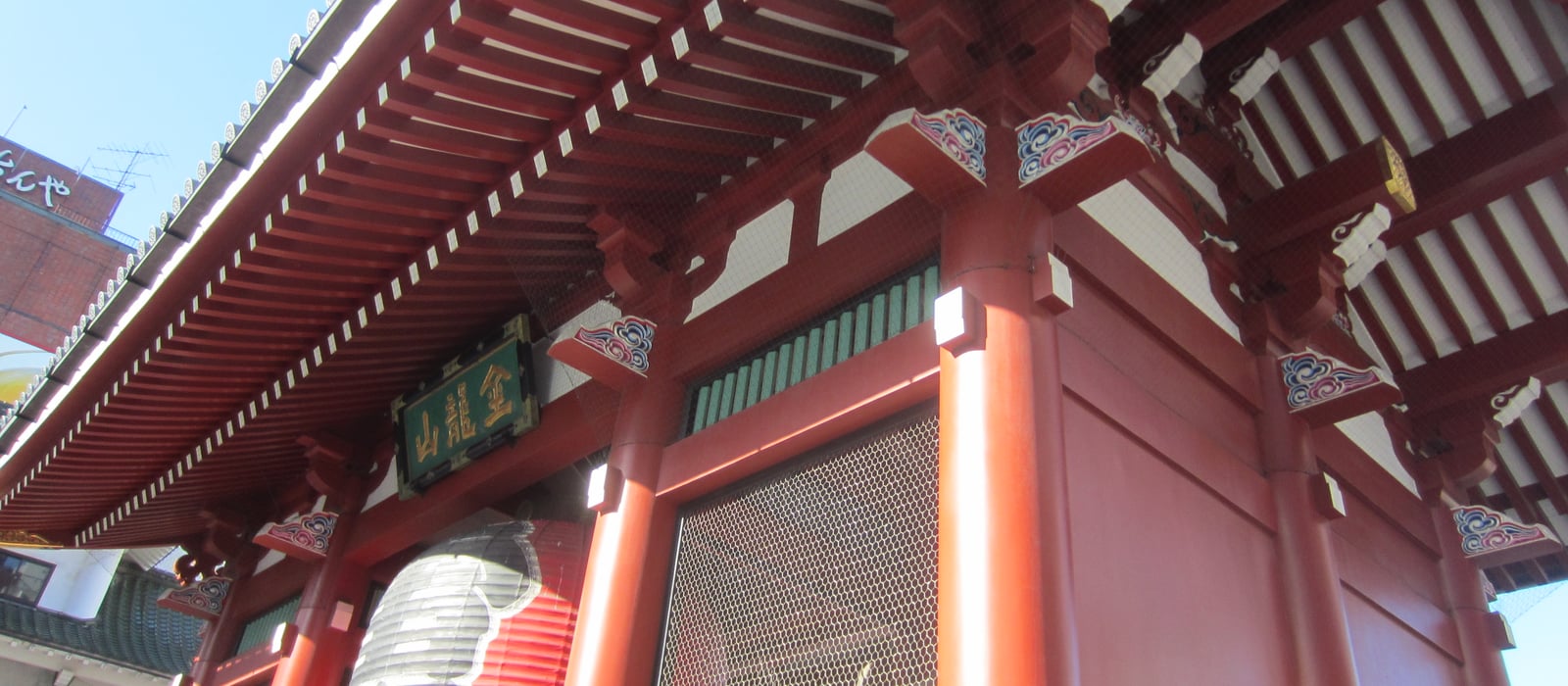
 Image: Wikimedia Commons
Tokyo
As the political and commercial center since the Edo period, Tokyo is a region where the craft and food cultures nurtured by both samurai and merchant culture are still alive today. Textile and glass crafts such as Edo Kiriko, Tokyo Some Komon, and Honba Kihachijo carry on skills honed in Edo by artisans gathered from across Japan under the sankin-kotai system. Its food culture is equally rich, from Edomae Zushi, born from street-stall cooking, to Monjayaki, a creation of the downtown candy-shop culture, with local dishes closely tied to the lives of ordinary townspeople. Shitamachi (downtown) areas such as Tsukishima, Ryogoku, Asakusa, and Nihonbashi are still dotted with specialty shops and artisans' workshops today.
Tokyo's Traditional Crafts

Edo Glass
Edo Glass
Edo Glass is a general term for glassware handcrafted piece by piece by artisans, carrying on techniques that developed in the old Edo region (present-day Tokyo). It is said to have begun in the early 18th century, when Kagaya (Minagawa) Kyubei of Nihonbashi Toshiocho made mirrors and eyeglasses, and Kazusaya Tomesaburo of Asakusa made hairpins and wind chimes; by the late 19th century it had grown into one of Tokyo's leading industries. Whereas Edo Kiriko is characterized by decorative cut-glass patterns, Edo Glass centers on plain glassware shaped without molds through 'free-blowing (mold-free glassblowing)' -- using only a blowpipe and molten glass -- or through 'mold-blowing,' in which the glass is blown into a mold, giving it a simple, warm texture. It has produced many everyday items rooted in daily life, such as cups, glass bowls, goldfish bowls, and Edo furin (wind chimes), and, unlike mass-produced imports, is also highly regarded for custom-made items such as wine glasses and sake vessels, thanks to its ability to handle small-batch, many-variety production. It was designated a Traditional Craft Designated by the Tokyo Metropolitan Government in 2002 and a Traditional Craft Designated by the Minister of Economy, Trade and Industry in 2014, and today many small, workshop-style glass studios continue to pass down the technique, mainly in Sumida, Koto, and Edogawa wards.
Edo Kimekomi Ningyo
Edo Kimekomi Ningyo
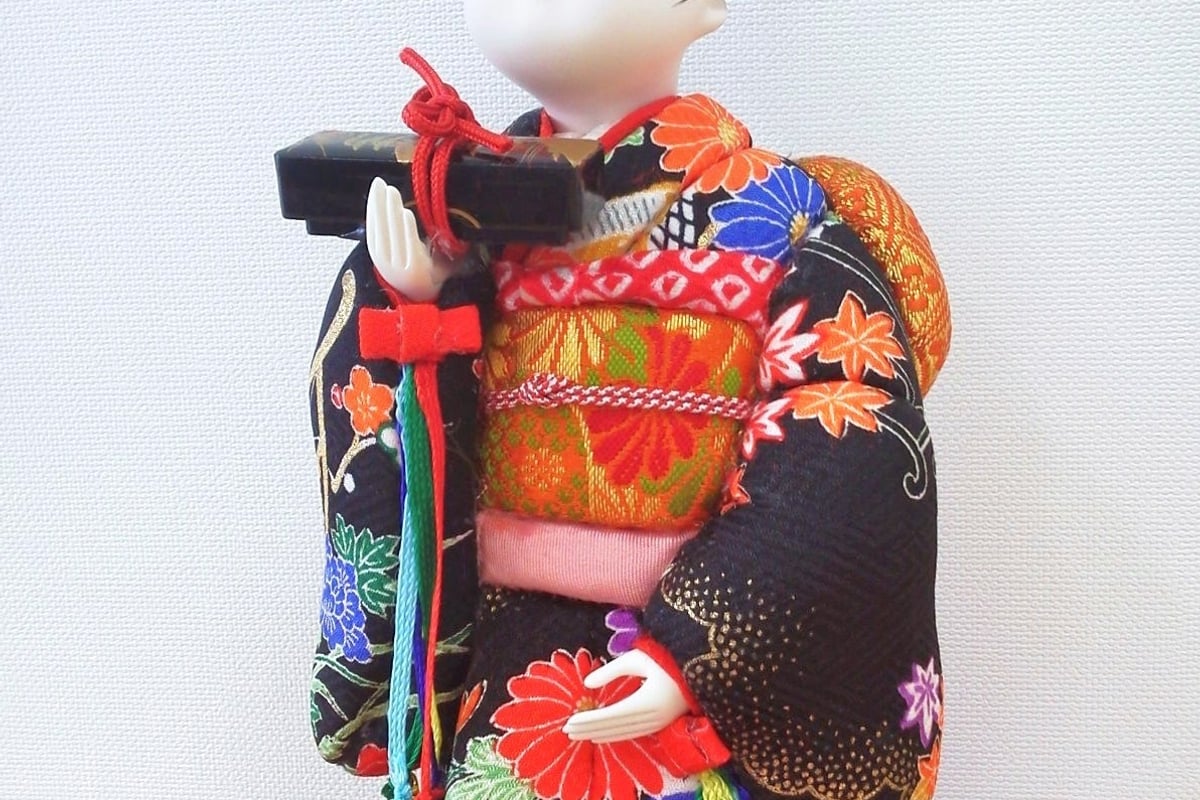
Edo kimekomi ningyo are dolls made using a distinctive technique in which fine grooves are carved into a doll's base form—made of toso (paulownia-powder clay paste) or wood—and the edges of fabric are pressed, or 'kimekomi'-ed, into those grooves to dress the doll. The technique originates in Kyoto during the Genbun era (1736–1741), when Takahashi Tadashige, who served the priests of Kamigamo Shrine, is said to have carved a doll's base form from willow wood and pressed scraps of priestly robes into it, giving rise to what became known as 'yanagi ningyo' (willow dolls) or 'kamo ningyo' (Kamo dolls). This technique was later passed on to Edo, where it developed independently after the Meiji era in Tokyo and became established as 'Edo kimekomi ningyo.' While dolls made in Kyoto are characterized by plump, courtly faces, those made in Tokyo are known for a somewhat slender-faced, modern look with sharply defined features. Making a single doll involves many stages of handwork, from applying layer upon layer of finishing coats to a toso base, to pressing fabric into the grooves, to painting the face with a fine detail brush and finishing the hair. Still widely loved today as hina dolls and Boys' Day dolls, Edo kimekomi ningyo was designated a Traditional Craft Designated by the Minister of Economy, Trade and Industry in 1978.
Edo Kiriko
Edo Kiriko
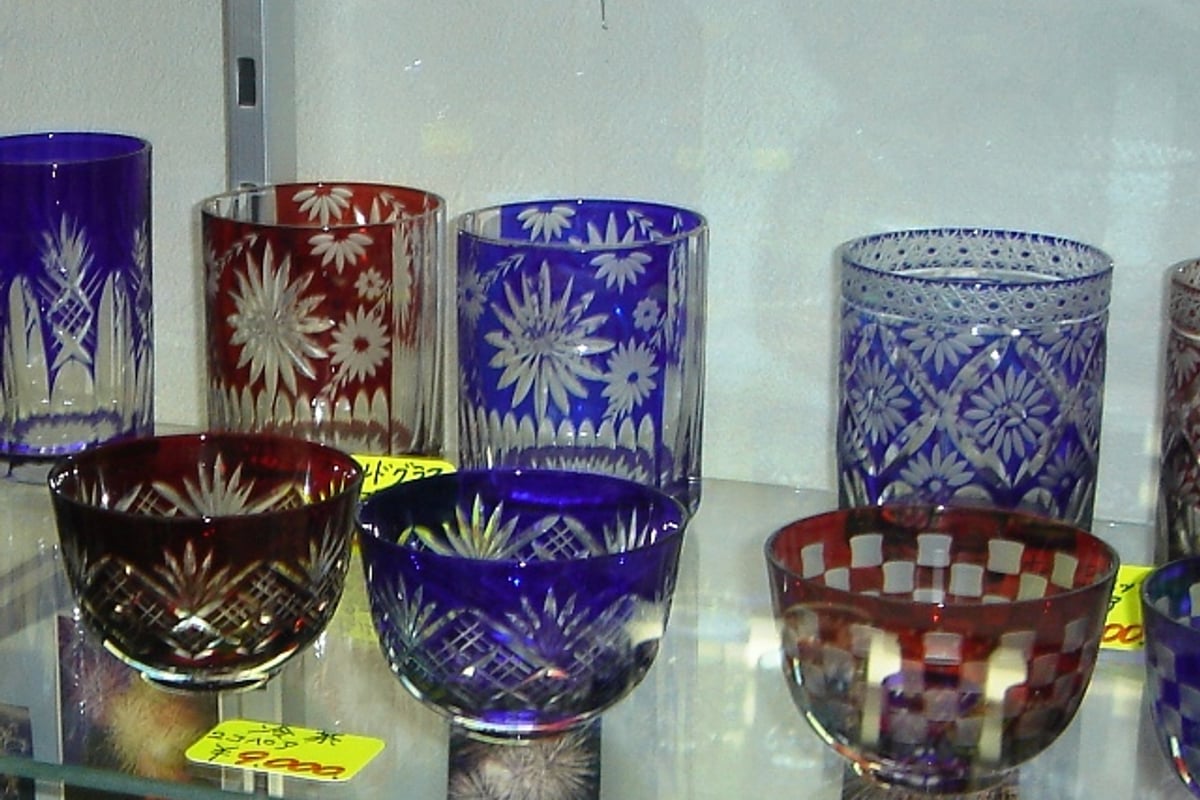
Edo Kiriko is a cut-glass craft born in Edo (present-day Tokyo), made by carving fine patterns into the surface of glass. It is said to have begun in 1834 (Tenpo 5), when Kagaya Kyubei, a glassware dealer in Edo's Odenmacho district, used abrasive sand to engrave patterns onto glass. During the Meiji era, Japanese artisans studied under the British engineer Emanuel Hauptmann, invited by the government, and established the cutting technique still used today. The craft uses 'overlay glass (cased glass)' -- clear glass thinly coated with colored glass -- into which patterns are cut with a blade. Because the colored layer is only about 1mm thick, the boundaries of each cut stand out sharp and crisp. About 20 traditional patterns exist, including nanako (fish-roe pattern), kiku-tsunagi (linked chrysanthemums), asa-no-ha (hemp leaf), and yarai (bamboo fence), and the fine cuts catch the light with delicate brilliance. Whereas Satsuma Kiriko, another well-known cut-glass tradition, has a thicker colored layer that creates a gradated effect, Edo Kiriko is known for its sharp, crisp cuts. It was designated a Traditional Craft Designated by the Tokyo Metropolitan Government in 1985 and a Traditional Craft Designated by the Minister of Economy, Trade and Industry in 2002, and today many artisans continue to pass down the technique, mainly in Koto, Edogawa, and Sumida wards.
Edo Sashimono
Edo Sashimono
Edo Sashimono is a woodworking craft produced in Tokyo's Taito, Arakawa, and Koto wards, in which furniture and small items are made using the sashimono joinery (nail-free wood joinery) technique of carving and fitting together the joints of wood without using any nails. Sashimono itself dates back to Heian-period Kyoto, but the technique that reached Edo developed its own distinctive character alongside the economic and cultural growth of Edo from the 17th to 19th centuries. While samurai households favored solid, linear designs for their furnishings, sashimono for kabuki actors—known as 'Rien Sashimono'—and for townspeople gave rise to playful, chic, and delicate designs, and the craft gradually spread into the everyday lives of common people. Making the most of the natural grain of woods such as mulberry, zelkova, paulownia, and cedar, and keeping the use of metal fittings to a minimum, Edo Sashimono is characterized by simple design and achieves sturdy construction without nails through diverse wood-joinery techniques such as edge-joining (hagitsugi), mortise-and-tenon joints (hozotsugi), and halved joints (aikakitsugi). From paulownia chests of drawers to other pieces, it remains a craft of handmade work carried on by artisans today, cherished and used for decades. It was designated a Traditional Craft Designated by the Minister of Economy, Trade and Industry in 1997.
Edo Sudare
Edo Sudare
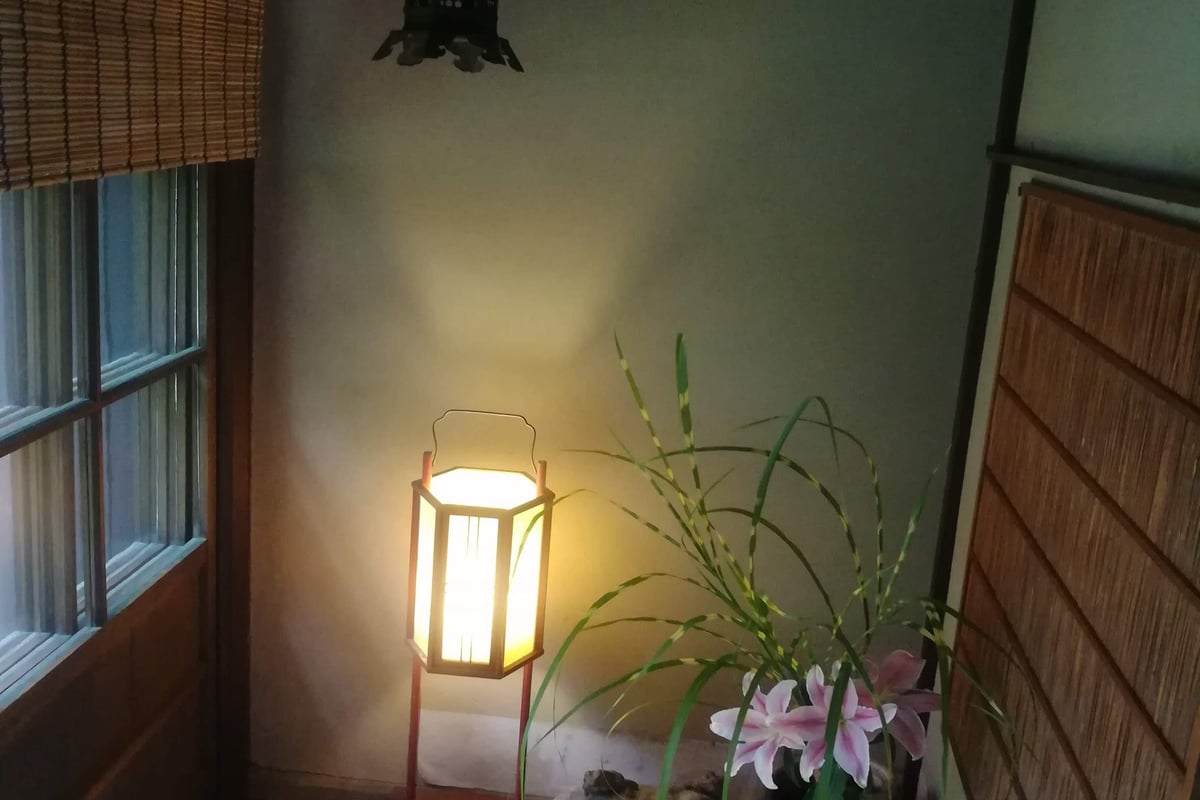
Edo sudare are traditional woven blinds made in Tokyo's Taito and Minato wards by weaving natural materials such as bamboo and reed together with thread. Blinds have a long history in Japan, appearing in the Manyoshu, the country's oldest anthology of poetry compiled in the 7th–8th centuries, and during the Heian period they were used in imperial courts, aristocratic residences, and shrines and temples as room dividers and sunshades. As the town of Edo developed, sudare spread into everyday commoners' life, and books from the Genroku era record the existence of specialist blind craftsmen known as misu-shi. In contrast to the lavish kyo-sudare of Kyoto, Edo sudare emphasize practicality and simple design as everyday household items, retaining the natural texture of materials such as bamboo, reed, bush clover, and cattail. Bamboo strips that have been finely split or thinly shaved are woven using a variety of techniques, including single-strand weave, double-strand weave, twist weave, and tortoiseshell weave, creating a breathable interior space that carries a pleasant breeze. Edo sudare was designated a Traditional Craft by the Tokyo Metropolitan Government in 1983.
Honba Kihachijo
Honba Kihachijo
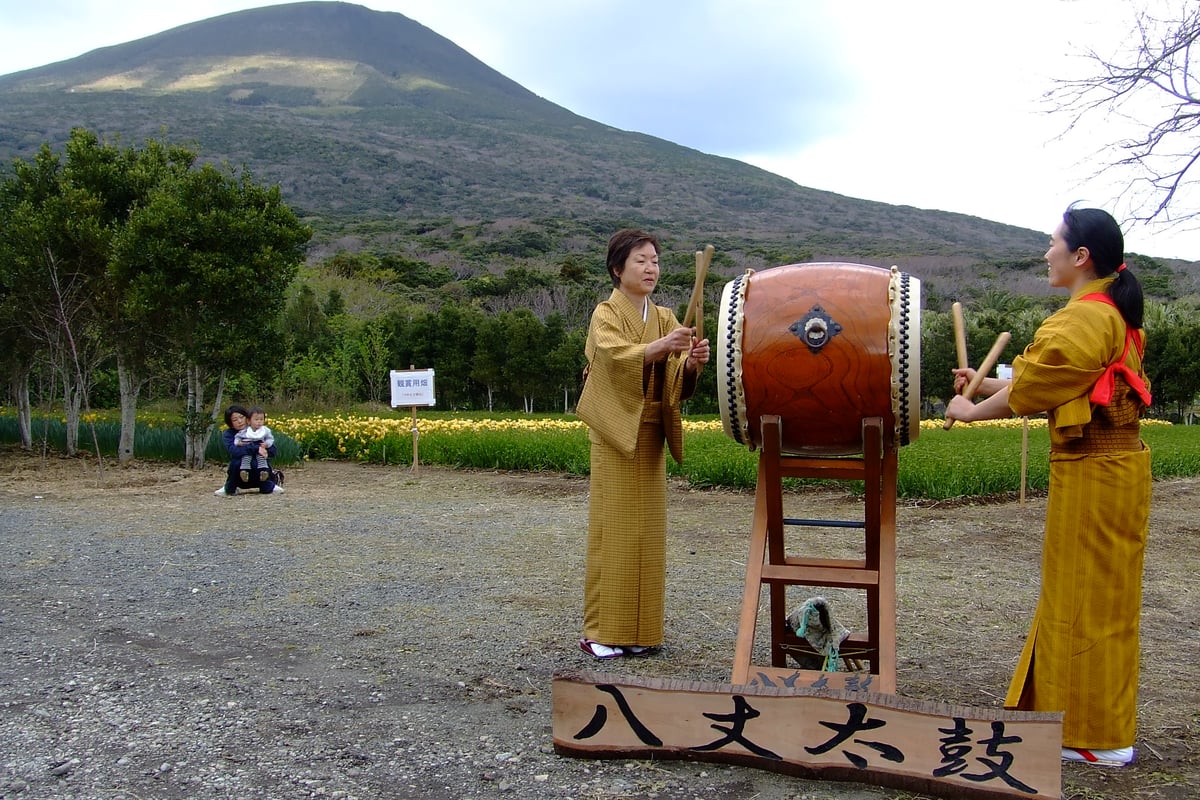
Honba Kihachijo is a plant-dyed silk textile handed down on Hachijojima, a remote island about 290 kilometers south of central Tokyo. Once called 'the island no bird visits,' Hachijojima is said to have paid plain pongee as tribute as early as the Muromachi period, and the dyeing techniques still used today are believed to have been established around the Kansei era (1789-1801) of the Edo period. Thread is dyed using only plants native to the island: yellow from hachijo-kariyasu (a type of grass), kaba-iro (russet brown) from the bark of madami (machilus trees), and black through mud-dyeing with the bark of chinquapin trees. The dyed thread is woven on a hand-thrown shuttle into extremely simple designs -- plain, striped, or checkered -- and the fabric is said to grow softer with wear and its colors more vivid with washing. Dyeing black requires a painstaking process of soaking the thread in a decoction of chinquapin bark and sun-drying it as many as 40 times, producing a deep, lustrous black. From the mid-Edo period onward, striped and checkered patterns also came to be woven, and the craft survives today as handwork passed down through generations of women on the island. It was designated a Traditional Craft Designated by the Minister of Economy, Trade and Industry in 1977 (Showa 52).
Murayama Oshima Tsumugi
Murayama Oshima Tsumugi
Murayama Oshima Tsumugi is a kasuri (ikat-patterned) silk textile that has been woven in and around Musashimurayama City, Tokyo, along with Mizuho Town and Akishima City. It traces its roots to two textile traditions: 'Murayama Kon-gasuri,' a striped cotton fabric that began around the Genroku era (1688–1704) of the Edo period, and 'Sunagawa Futoori,' a coarse silk weave made from silk thread spun from double cocoons. As demand for silk textiles grew from the mid-Meiji era onward, these two traditions merged into a silk fabric around 1920, giving birth to Murayama Oshima Tsumugi. Despite carrying 'Oshima' in its name, it is entirely distinct from Honba Oshima Tsumugi, woven on Amami Oshima island; the key difference lies in the dyeing technique used for the kasuri threads. While Amami's Honba Oshima Tsumugi achieves its intricate kasuri patterns through labor-intensive methods such as mud-dyeing with a shime-bata (binding loom), Murayama Oshima Tsumugi uses a technique called itajime dyeing, introduced from Isesaki, Gunma Prefecture, in 1919. By sandwiching threads between carved pattern boards and dyeing them under pressure, this method achieves intricately matched kasuri patterns in the warp and weft at a relatively accessible price. The fabric is prized for its smooth, light feel, with men's designs favoring understated, refined fine kasuri patterns and women's designs favoring chic patterns wearable at any age. It was designated a national Traditional Craft in 1975.
Tokyo Ginki
Tokyo Ginki
Tokyo Ginki is a silverware craft produced in Tokyo's Taito, Arakawa, and Bunkyo wards, in which tea utensils, personal accessories, and sake vessels are made using traditional techniques such as forging (tankin), chasing/engraving (chokin), inlay work (kirihame), and soldering/brazing. Japan's history of silverware dates back a long way; records of silver tableware and sake vessels already appear in the Engishiki, a Heian-period legal code. From the mid-Edo period, silverware came into wide use among townspeople who had gained economic power, and specialist artisans known as kazari-shokunin (ornament makers) and shirogane-shi (silversmiths) developed their craft. From the Meiji era onward, Western refining techniques were also incorporated, and at the 1867 Paris Exposition, the sophistication of Japanese silverware is said to have astonished experts from abroad. Made with silver of at least 92.5% purity, the craft is characterized by techniques such as hammered texture (tsuchime), created by striking patterns with a metal hammer, and distinctive surface textures such as rock-grain (ganseki-me) and matting (goza-me). Today it remains widely loved as tea utensils, accessories, and other items that grow more comfortable to use with age. It was designated a Traditional Craft Designated by the Minister of Economy, Trade and Industry in 1979.
Tokyo Kumihimo
Tokyo Kumihimo
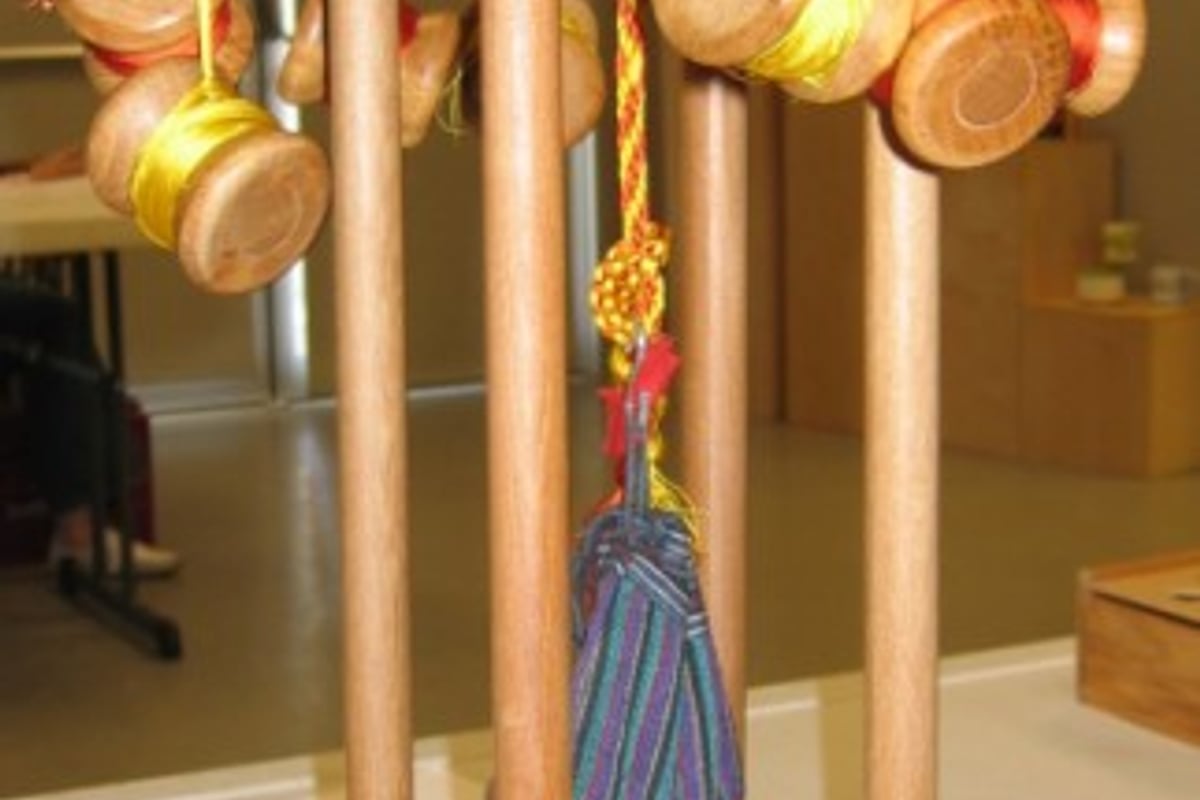
Tokyo Kumihimo is a braided cord craft made mainly from silk thread in Tokyo's Taito, Suginami, and Kita wards, produced using dedicated braiding stands such as the maru-dai (round stand), kaku-dai (square stand), aya-take-dai (twill-bamboo stand), and taka-dai (high stand). Its origins trace back to the cords used for sutra scrolls and priestly robes that arrived with the transmission of Buddhism, as well as sashes accompanying the ceremonial robes of court nobles. Under samurai society, braiding methods combining practicality and beauty developed for the lacing cords of armor and helmets and for sword hilt wrappings. In contrast to the flamboyant Kyo Kumihimo shaped by court noble culture, Tokyo Kumihimo reflects the influence of samurai society and Edo townsfolk culture, characterized by understated, muted colors and sturdy braid patterns. From the late Edo period into the Meiji era, it came into wide use among ordinary people for obi cords (waist-sash cords) and haori cords, and long-established braiding houses such as Domyo, founded in 1652, still carry on the technique today. In addition to obi cords, contemporary products such as neckties and accessories are now also made to suit modern lifestyles.
Tokyo Some Komon
Tokyo Some Komon
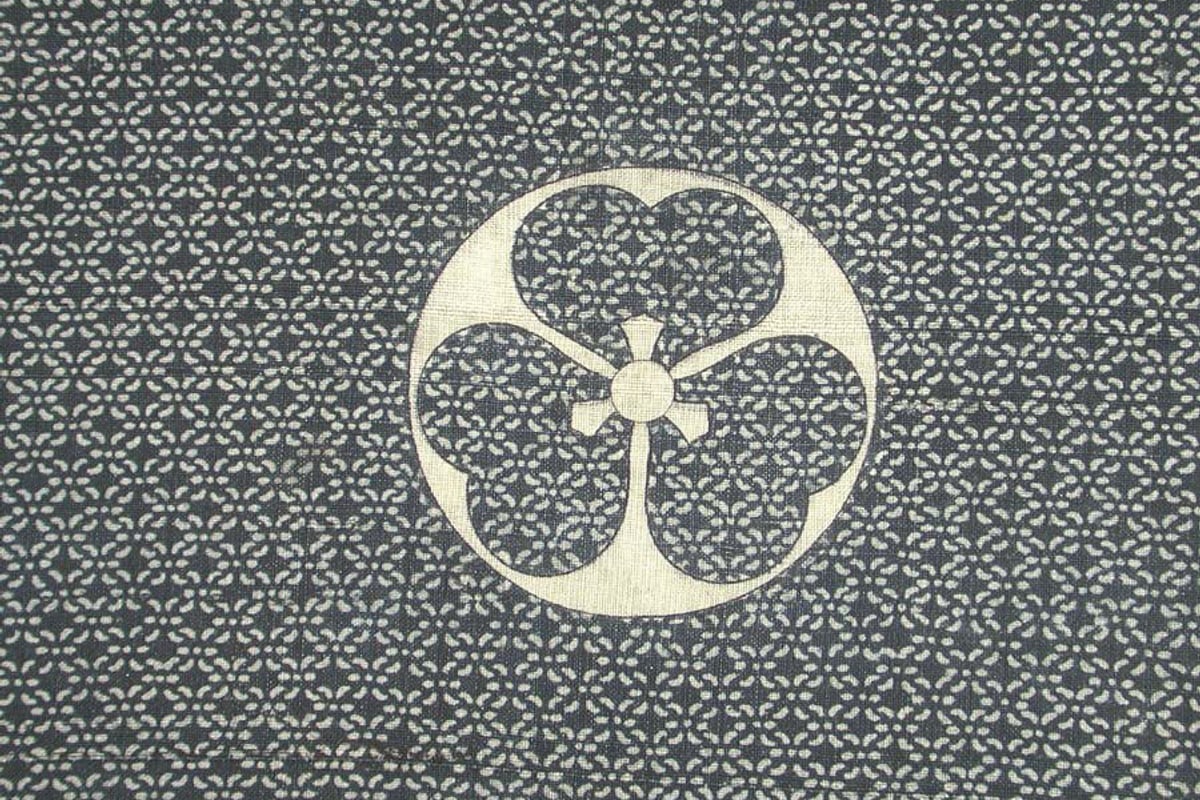
Tokyo Some Komon is a stencil-dyeing technique born in Edo that uses finely carved Ise katagami (stencil paper) to dye minute patterns onto fabric with a single-color rice-paste dye. The development of komon (fine-patterned dyeing) itself is said to date back to the Muromachi period, but the technique flourished in the early Edo period, when the various daimyo houses began dyeing fine, house-specific patterns onto the kamishimo (formal attire) worn at their Edo residences. Because daimyo from across the country gathered in Edo, demand for komon grew rapidly, and the patterns once reserved for samurai kamishimo eventually spread among the common people, blossoming as a dyeing tradition beloved in townsman culture from the mid-Edo period onward. The three representative patterns -- same (shark skin), gyogi (proper conduct), and kaku-doshi (square lattice) -- are considered especially prestigious and are known as the 'Edo Komon Sanyaku' (three most prestigious Edo Komon patterns). The patterns are made up of extremely small dots and lines, roughly 0.5 to 1mm in size, and their defining feature is an intricacy so fine that the goku-same (ultra-fine shark-skin) pattern can contain a thousand dots within a 3-centimeter square, each placed without the slightest deviation. Appearing plain from a distance but revealing delicate patterns up close, it embodies the aesthetic of Edo 'iki' (chic refinement) and has long been cherished as an adornment for women's kimono; it was designated a Traditional Craft Designated by the Minister of Economy, Trade and Industry in 1976 (Showa 51).
Tokyo's Local Food
Bettarazuke
Bettarazuke
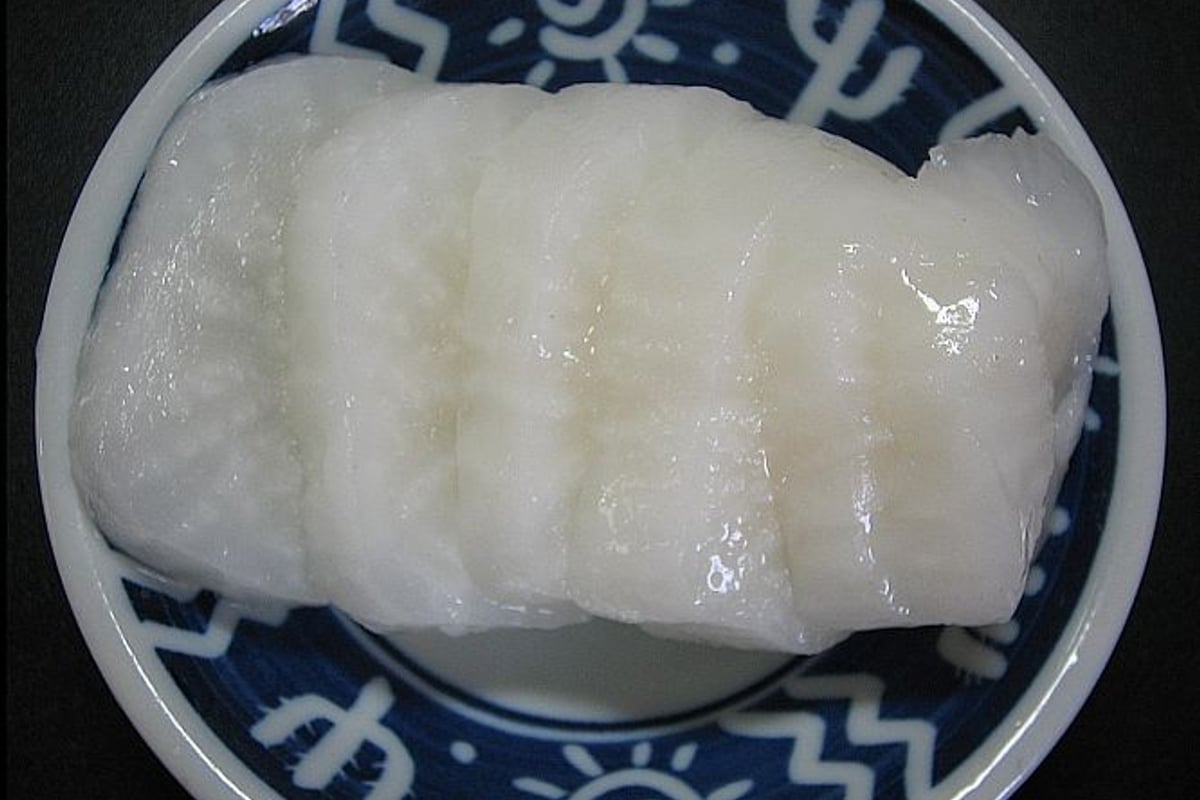
Bettarazuke is a traditional Tokyo pickle known for its sweetness and gentle tartness, made by first salting fresh daikon radish and then curing it further in rice malt (koji) and sugar to ferment. It became known nationwide under this name from the mid-Edo period, when it was sold every October 19 and 20 at the Bettara Ichi (Bettara Market) held at Takarada Ebisu Shrine in Odenmacho, Nihonbashi. There are two theories about the origin of the name: one holds that it came from the way rice malt from the curing bed stuck ('betta-betta') to the surface of the daikon, and another that street vendors would call out 'bettara, bettara' while playfully trying to press the malt onto customers' kimono sleeves. In an era when salty pickles were the norm, this lightly cured style with the natural sweetness of rice malt won popularity among the people of Edo, and the Bettara Ichi remains a beloved autumn tradition in Nihonbashi to this day, carried on since the Edo period. It is now sold year-round at specialty shops and pickle stores around Nihonbashi and has become a classic Tokyo souvenir.
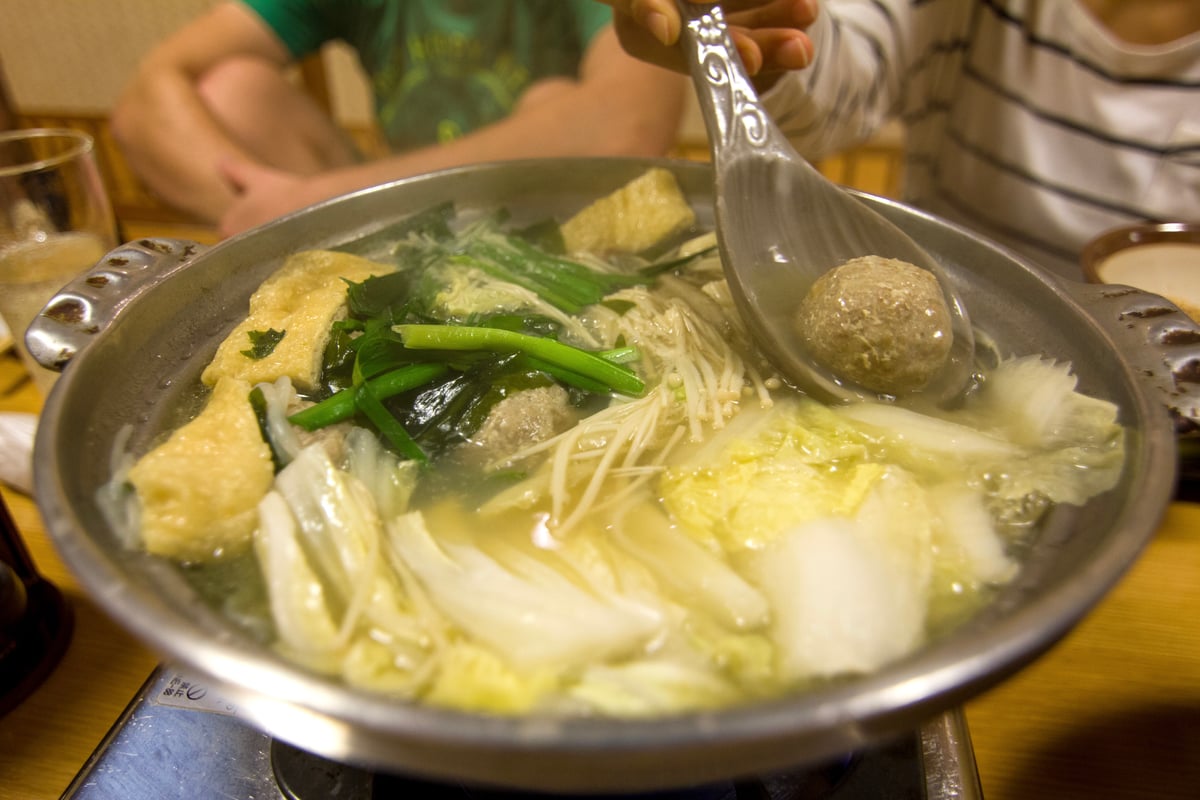
Chanko Nabe (Sumo Wrestler's Hot Pot)
Chanko Nabe
Chanko nabe is a hot pot dish that developed in the sumo stables of Ryogoku, Tokyo, as a meal for sumo wrestlers. The term 'chanko' originally refers to any food prepared in a sumo stable, and hot pot dishes among them are specifically called 'chanko nabe.' Around the time the Ryogoku Kokugikan sumo arena was completed in 1909 (Meiji 42), the popularity of the yokozuna champion Hitachiyama Taniemon drew a surge of new recruits to the Dewanoumi stable, and it is said that the custom of a large group of wrestlers gathering around a single pot to efficiently get their nutrition took hold at that time. The seasoning and ingredients vary from stable to stable, ranging from soppu-daki, made with a chicken-bone broth, to miso- and salt-based versions, and the dish has traditionally combined vegetables received from farmers along sumo tour destinations with whatever meat or fish was available that day. Four-legged animals such as beef and pork were considered unlucky, since eating them was associated with 'putting a hand down' on the ring (a losing move), so chicken and fish were favored instead. Today, chanko nabe can also be enjoyed by the general public at chanko restaurants run by former sumo wrestlers, mainly around Ryogoku.
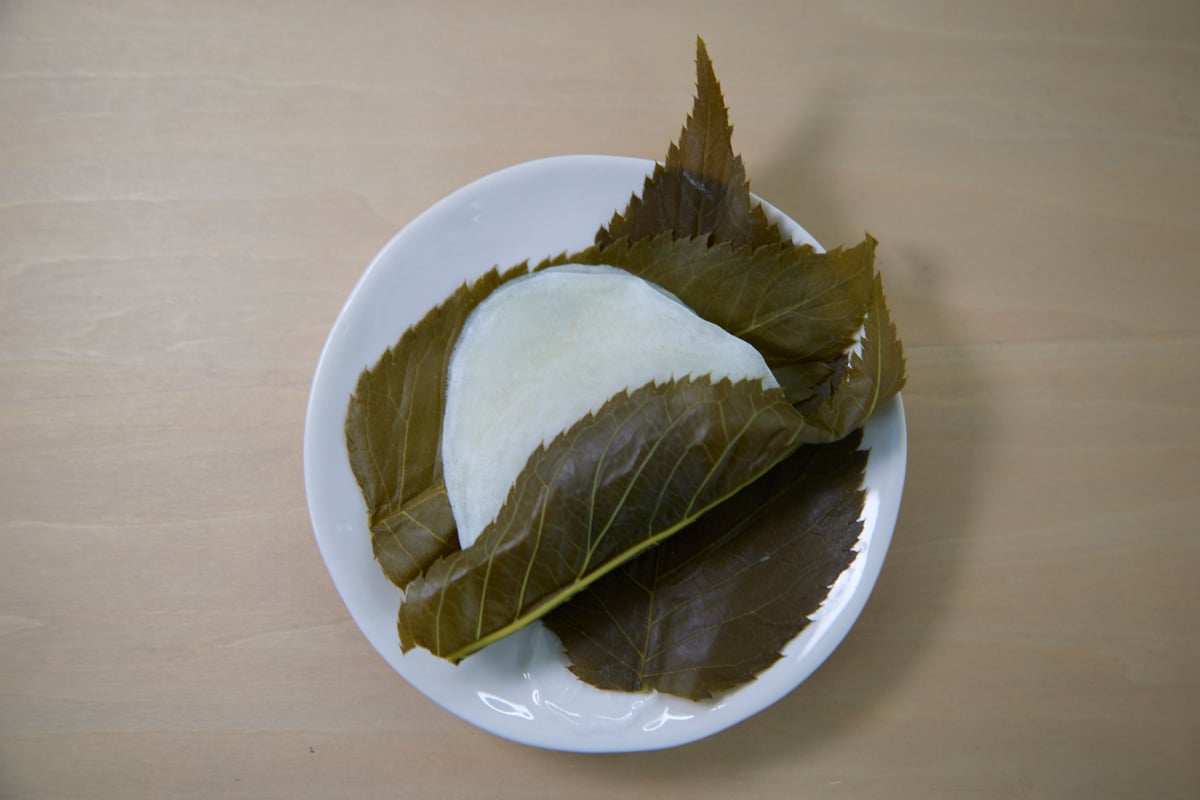
Chomeiji Sakuramochi (Edo-Style Sakura Mochi)
Chomeiji Sakuramochi
Chomeiji sakuramochi is a Japanese confection regarded as the original Edo-style (Kanto-style) sakura mochi: a thin, crepe-like wheat-flour skin wrapped around sweet bean paste, then wrapped again in a salt-pickled cherry leaf. According to tradition, it originated in 1717, when Yamamoto Shinroku, a gatekeeper at Chomeiji Temple in Mukojima along the Sumida River, came up with the idea of salt-pickling the fallen cherry leaves he swept from the temple grounds and using them with mochi, and began selling the confection at the temple gate. Unlike Domyoji-style (Kansai-style) sakura mochi, which makes the most of the coarse, grainy texture of domyoji-ko (glutinous rice flour), Chomeiji sakuramochi is characterized by a thin, crepe-like wheat-flour skin wrapped around smooth koshian (strained red bean paste), and the shop still preserves its own distinctive style of wrapping each piece in two or three cherry leaves. During cherry blossom season, it draws crowds of visitors to the Sumida embankment, and Yamamoto-ya, which has operated continuously as a sakura mochi specialty shop in Mukojima for roughly 300 years since its founding, is cherished as a celebrated shop that keeps Edo's hanami culture alive today.
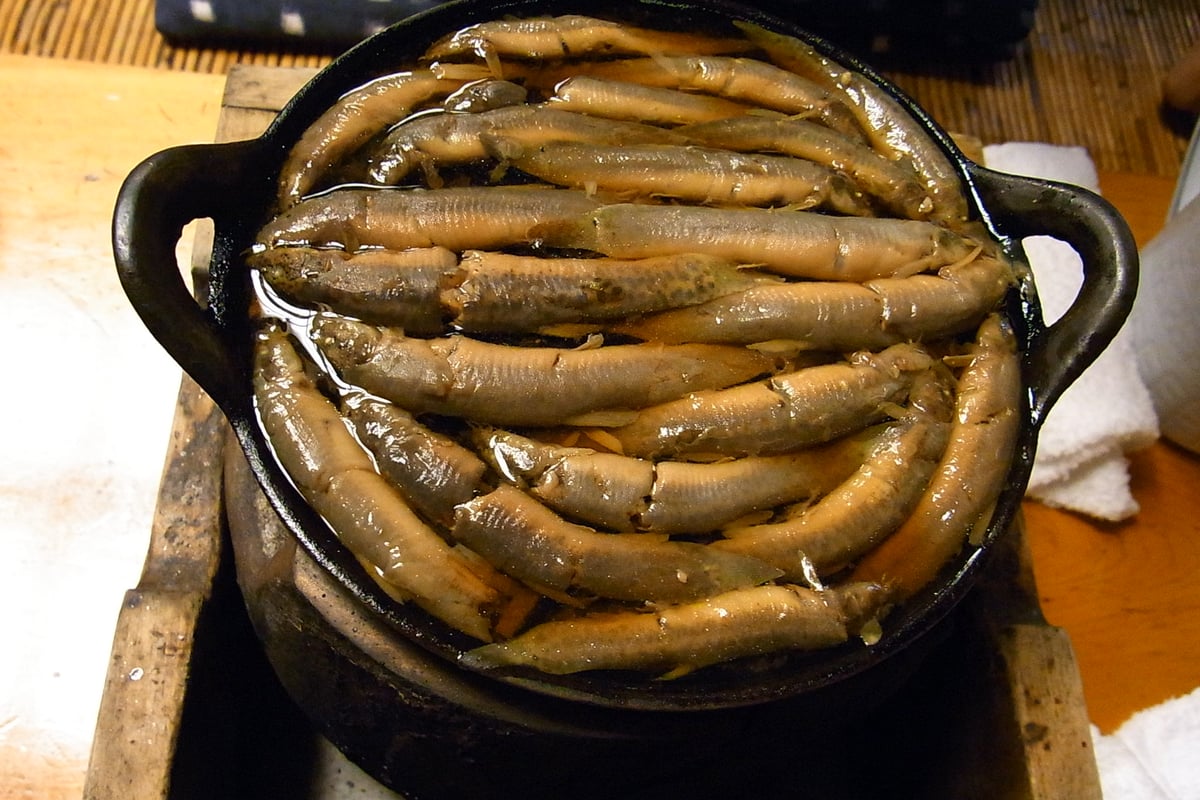
Dojo Nabe
Dojo Nabe
Dojo nabe is a hotpot dish made with dojo (loach, a small eel-like freshwater fish) that has been cherished in Tokyo's shitamachi (downtown) districts since the Edo period. Cheap and highly nutritious, dojo became a popular source of stamina for ordinary Edo people who worked up a sweat doing physical labor, and this gave rise to numerous specialty restaurants, including Komagata Dozeu in Asakusa. The two representative styles are 'marunabe,' in which the whole dojo is simmered without being cut open, and 'yanagawa nabe,' in which it is cut open and simmered with burdock root, then finished with beaten egg; both are typically topped generously with green onion and Japanese pepper (sansho) before eating. The spelling 'dozeu' is said to have been devised by an Edo-period shop owner, who used three characters — an auspicious odd number — in place of the correct but four-character spelling 'dodjiyau,' for good luck. Although the number of specialty restaurants has declined today, long-established shops founded in the Edo period still keep their doors open in Asakusa, and the dish remains cherished as a taste of Edo's common people.
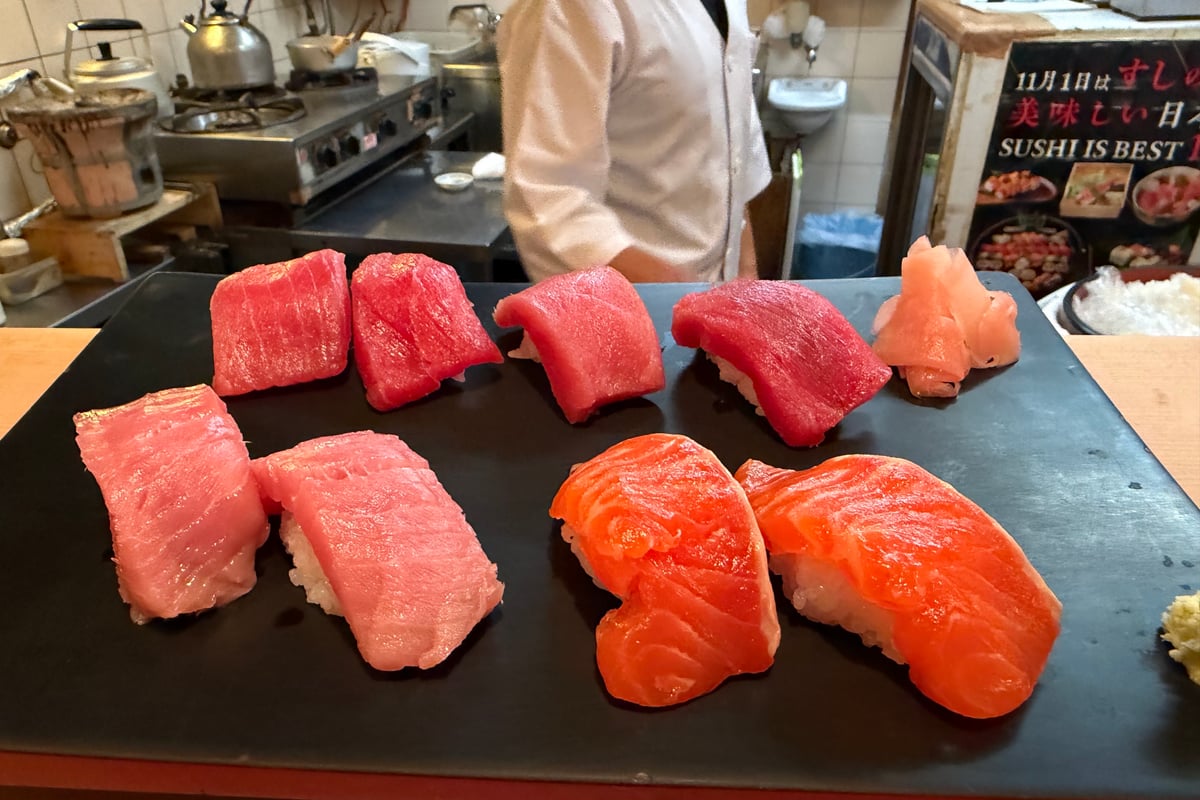
Edomae Zushi (Edo-Style Sushi)
Edomae Zushi
Edomae Zushi is a style of nigiri sushi that originated in Edo (present-day Tokyo) during the Bunsei era (1818-1830) of the late Edo period. In an age without refrigeration, it developed as a food-stall dish in which seafood caught in the Edomae sea (present-day Tokyo Bay) was given careful preparation known as 'shigoto'—vinegar-curing, soy-sauce marinating, and simmering in a sweetened soy glaze—then hand-pressed to order together with vinegared rice. Hanaya Yohei, who opened the shop Yoheizushi in Ryogoku, is said to have helped perfect nigiri sushi, and unlike fermented narezushi or the pressed sushi of the Kansai region, it won popularity among ordinary people as a sushi that could be eaten quickly and matched the brisk spirit of Edo townspeople. The 'shigoto' preparation gives the toppings more umami and better keeping quality than raw sashimi, while the vinegared rice is firmly seasoned with vinegar and salt. Today it is served in forms ranging from high-end restaurants to conveyor-belt sushi shops, and is known worldwide as a food culture representative of Tokyo.
Fukagawa Meshi
Fukagawa Meshi
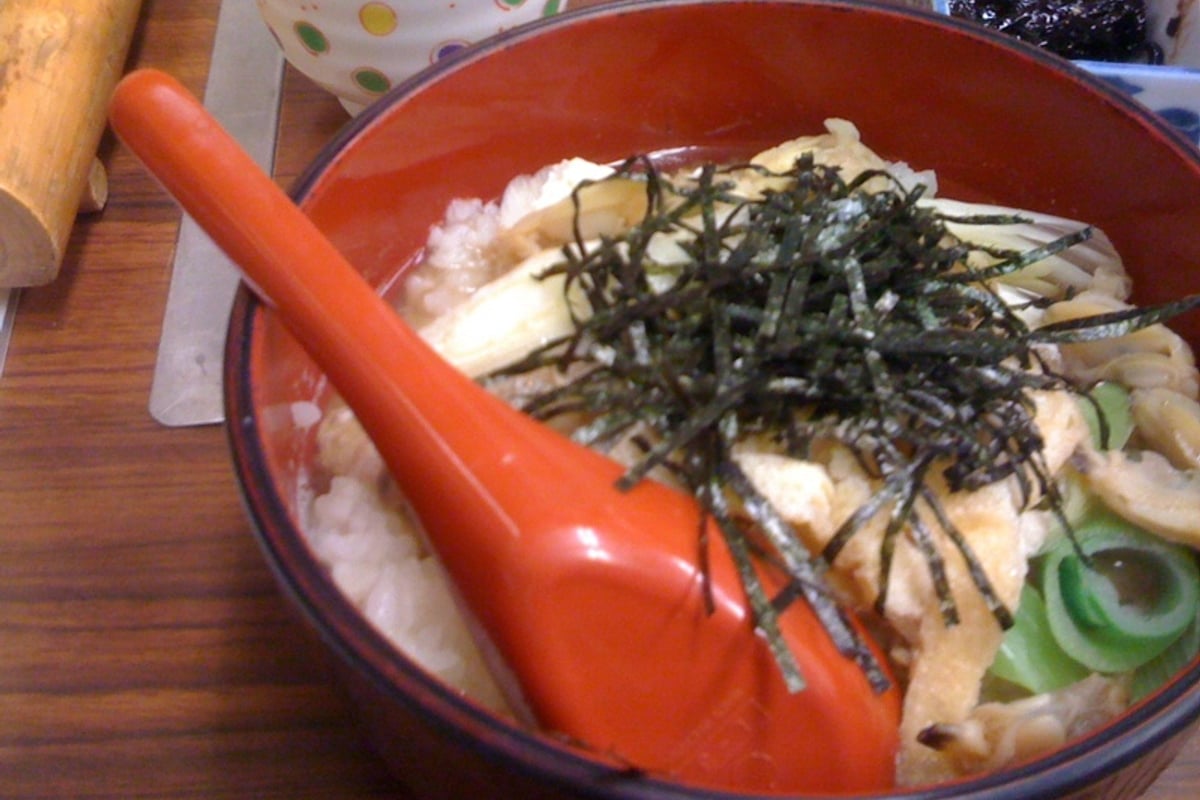
Fukagawa meshi is a local dish that originated in the fishing town of Fukagawa (present-day Koto Ward) during the Edo period, and it comes in two main styles built around clams: 'bukkake' and 'takikomi.' The area now known as Koto Ward once had broad, shallow tidal flats and thrived as a fishing town rich in clams, hard clams (hamaguri), and Japanese trough shells (aoyagi). The dish is said to have originated as 'bukkake meshi' — clams simmered in miso or soy sauce ladled over hot rice so fishermen could eat quickly between jobs — and later a version in which rice is cooked together with clams and vegetables, known as 'Fukagawa-don' or 'Fukagawa-meshi,' also spread. During the Edo period it was common to use bakagai (aoyagi), which were caught in great quantities at the time, but from the Meiji and Taisho eras onward, clams became the mainstream ingredient. Counted among Japan's five great rice dishes, it is a fisherman's dish representative of Tokyo that can still be enjoyed today at specialty restaurants throughout Koto Ward.
Jindaiji Soba (Temple-Front Buckwheat Noodles)
Jindaiji Soba
Jindaiji soba is a type of buckwheat noodle that has long been made around Jindaiji Temple in Chofu City, Tokyo, and has developed since the Edo period as monzen soba — soba served to temple visitors at the gate. The plateau along the Kokubunji Cliff Line, which stretches north of Jindaiji, drained well and was poorly suited to rice cultivation, but well suited to growing buckwheat. According to tradition, farmers in the area paid buckwheat flour to the temple in place of annual rice tribute, and the temple made it into soba to serve visitors — this is said to be the origin of the dish. During the Genroku era, when Jindaiji's soba was presented to Prince-Abbot Koben of Kaneiji Temple in Ueno, it was highly praised and became widely known to the shogunate and various feudal lords, earning it the name kenjo soba (tribute soba). The area around Jindaiji is also rich in spring water, which is used both to mill the buckwheat flour and to boil and rinse the noodles, and this pure water is said to enhance the soba's flavor. Today, around 20 soba shops still line the approach in front of Jindaiji's main gate, and every autumn the Jindaiji Soba Festival is held.
Monjayaki
Monjayaki
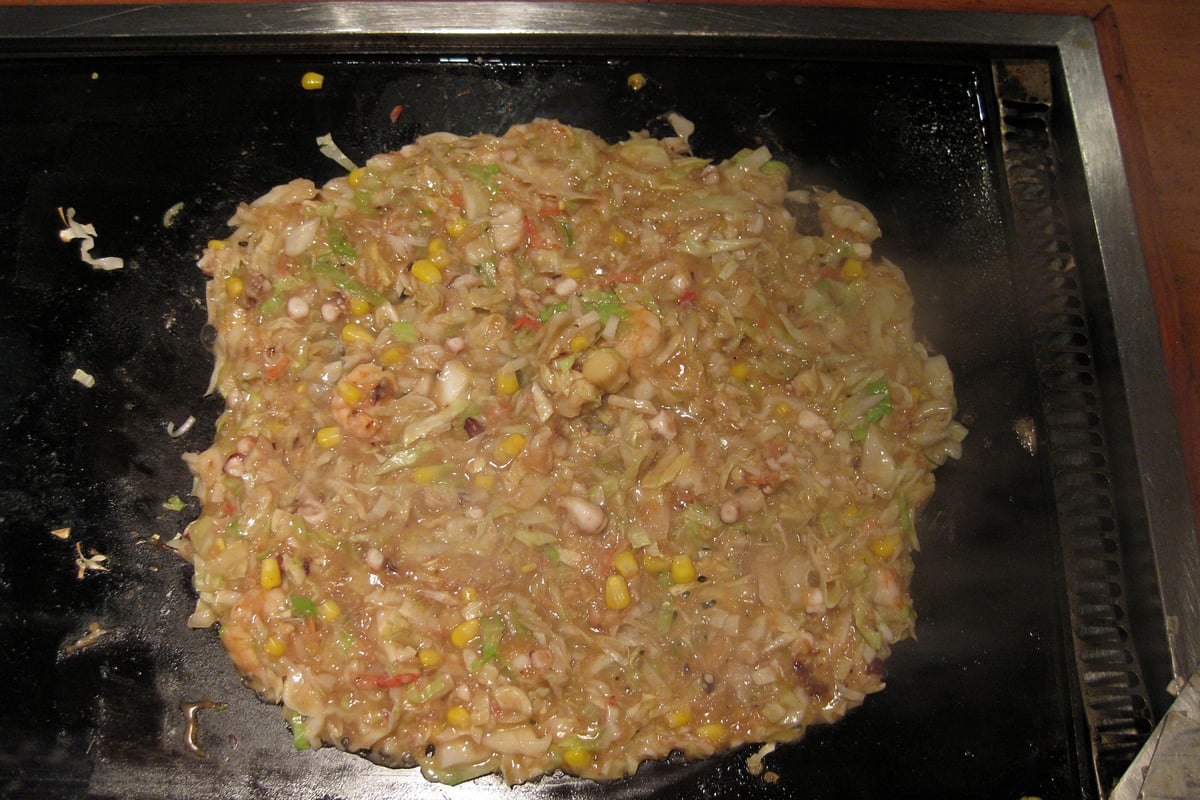
Monjayaki is a flour-based dish born in Tokyo's shitamachi (downtown) districts, made by mixing chopped cabbage and other ingredients into flour batter thinned with water and cooking it on a griddle as you eat. It is said to have originated as a children's snack sold at candy shops from the late Edo period through the Meiji era, in which flour batter thinned with water was cooked thin on a griddle and seasoned with soy sauce or starch syrup. Because children would draw letters and pictures in the still-loose batter with a spatula as it cooked, it came to be called 'moji-yaki' (letter-grilling), a name that is said to have shifted over time into 'monja.' From the late Showa era onward, Tsukishima in Chuo Ward saw a rapid increase in monjayaki specialty restaurants, and today it is known as the dish's signature neighborhood, with many shops lining what is now called 'Monja Street.' The defining feature of monjayaki is its batter, which is much runnier than okonomiyaki, and part of its charm lies in the distinctive way it is eaten — scooped directly off the griddle with a small spatula called a 'hagashi.'
Ningyoyaki
Ningyoyaki
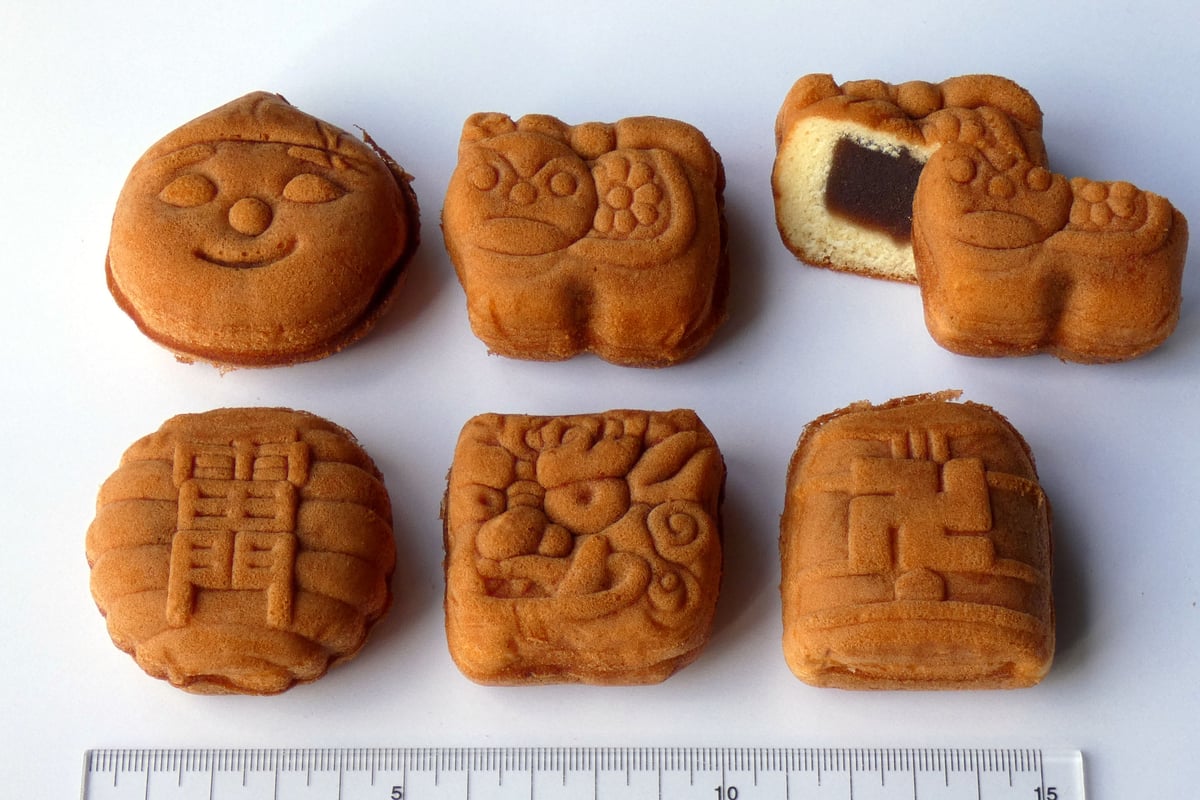
Ningyoyaki is a signature Tokyo baked confection made from a castella-like, egg-flavored batter wrapped around sweet red bean paste (usually smooth koshian) and baked in wooden molds shaped like figures or famous local landmarks. Although several theories exist about its origin, it is generally said to have been created around 1907 (Meiji 40) in Nihonbashi Ningyocho, a district that flourished as a theater town, where it was baked using wooden molds shaped like the Seven Lucky Gods and kabuki actors. In the Taisho era, an artisan who had trained in Ningyocho moved his shop to Asakusa and devised new wooden molds shaped after Asakusa landmarks such as the Kaminarimon Gate, the five-story pagoda, lanterns, and doves; at first it was also called 'meisho-yaki' (landmark-shaped confection) and became a staple Asakusa souvenir. Its simple, comforting taste, in which the fragrant, fluffy batter harmonizes with the moist sweetness of the bean paste, remains highly popular today, helped by the appeal of being able to buy it freshly baked right at the storefront. Long-established shops still stand in both Ningyocho and Asakusa, and it is known nationwide as a Tokyo souvenir.
Tsukudani
Tsukudani
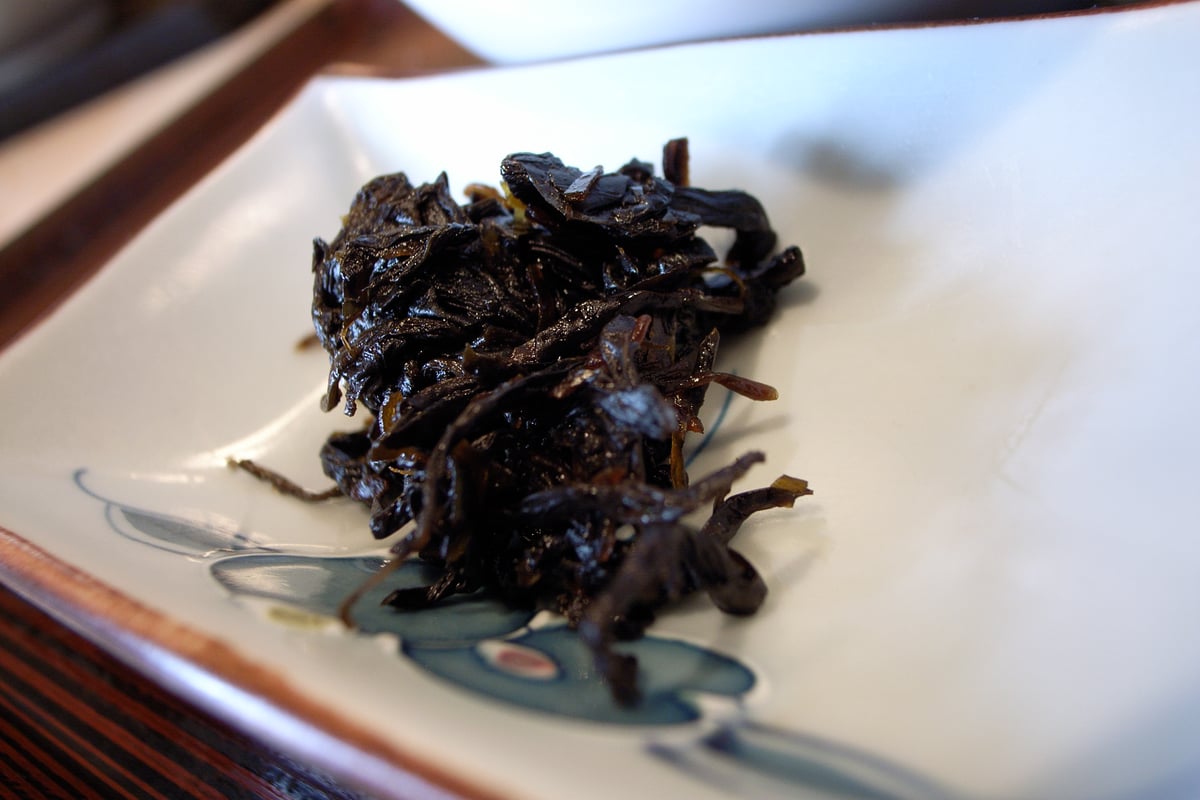
Tsukudani is a preserved food made by slowly simmering small fish, shellfish, or seaweed in soy sauce and sugar, and it represents the food culture of Edo, having originated on Tsukudajima (present-day Tsukuda, Chuo Ward, Tokyo). Tsukudajima is said to have begun when Tokugawa Ieyasu, founder of the Edo shogunate, invited fishermen from Tsukuda Village in Settsu Province (present-day Osaka) and settled them on a tidal flat at the mouth of the Sumida River. To avoid wasting food on days they could not fish, or small fish and shellfish too minor to sell, the fishermen devised a way of simmering them down thickly in salt and soy sauce so they would keep - this is said to be the origin of the name 'tsukudani.' As dark soy sauce became more widely produced through the Edo period, the flavor grew richer and more refined, and samurai and travelers on the sankin-kotai (alternate attendance) journeys carried it home as a souvenir, helping it spread across the country. Long-established shops dating from the Edo period still line the streets around Tsukudajima today, making and selling tsukudani from a variety of ingredients such as small fish, shellfish, kombu, and ginger. Loved as an accompaniment to rice or sake and firmly established as a household staple, it is one of Japan's representative preserved-food traditions.
Model Course
A Course Through Edo Craftsmanship and Bustle in Sumida and Asakusa
Enjoy an exhibition and hands-on experience of Edo Kiriko at the Sumida Edo Kiriko Museum, then visit a workshop of Edo Kimekomi Ningyo dollmaking, and move on to Asakusa to taste Ningyoyaki — a course exploring the artisan culture of eastern Tokyo.
A Course Comparing Downtown Hot-Pot and Griddle Dishes in Tsukishima and Ryogoku
Enjoy the famous Monjayaki along Tsukishima's Monja Street, then taste Chanko Nabe, born in the sumo stables of Ryogoku, and finish with Dojo Nabe, the stamina food of Edo's common people, in Asakusa — a course through Tokyo's downtown hot-pot and griddle dishes.
A Course Encountering Edo's Dyeing and Weaving Culture
Tour a Tokyo Some Komon dyeing workshop, then try your hand at Tokyo Kumihimo braiding, and encounter the woven textiles of Honba Kihachijo, from Hachijojima Island, and Murayama Oshima Tsumugi, from Musashimurayama — a course exploring Tokyo's dyeing and weaving culture.
Events
Sanja Matsuri
The third Friday, Saturday, and Sunday of May every year (May 15-17 in 2026) / Around Asakusa Shrine (Asakusa, Taito Ward)
View details →Nihonbashi Ebisu-ko Bettara Ichi (Bettara Market)
October 19-20 every year / Around Takarada Ebisu Shrine (Nihonbashi Honcho, Chuo Ward)
View details →