Image: Wikimedia Commons
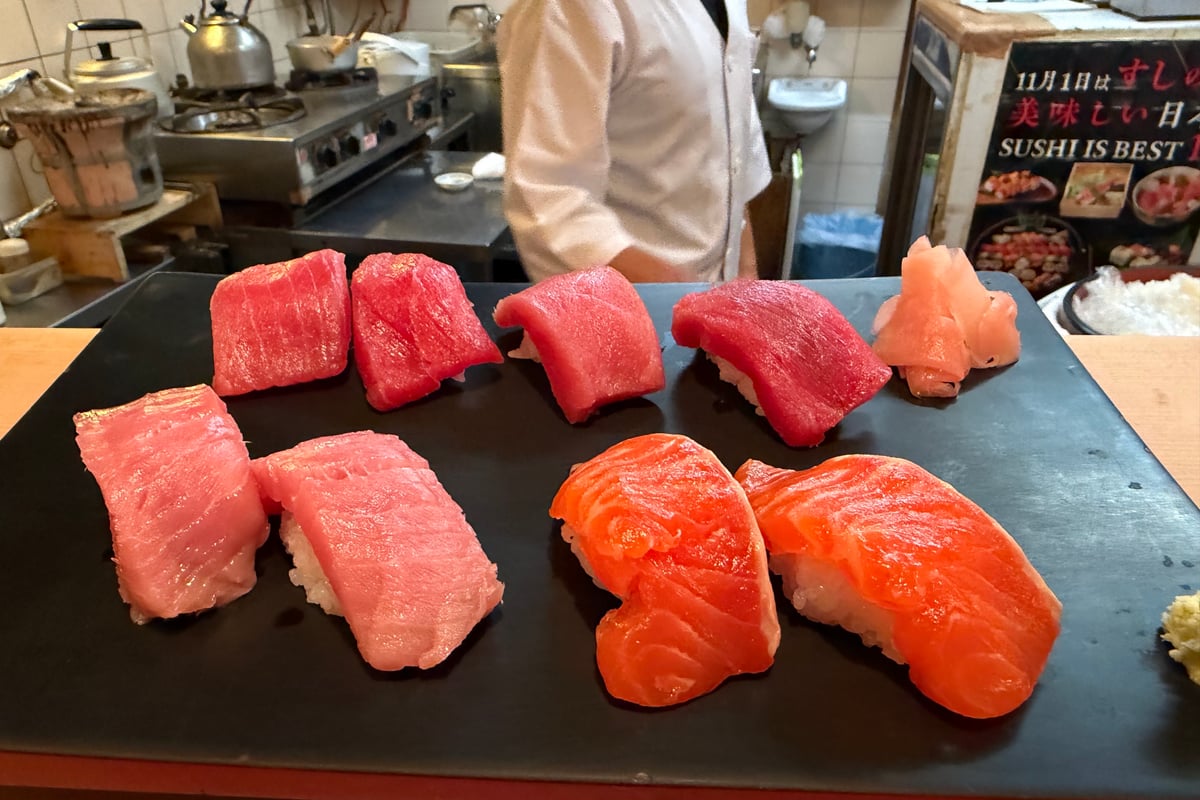
Edomae Zushi is a style of nigiri sushi that originated in Edo (present-day Tokyo) during the Bunsei era (1818-1830) of the late Edo period. In an age without refrigeration, it developed as a food-stall dish in which seafood caught in the Edomae sea (present-day Tokyo Bay) was given careful preparation known as 'shigoto'—vinegar-curing, soy-sauce marinating, and simmering in a sweetened soy glaze—then hand-pressed to order together with vinegared rice. Hanaya Yohei, who opened the shop Yoheizushi in Ryogoku, is said to have helped perfect nigiri sushi, and unlike fermented narezushi or the pressed sushi of the Kansai region, it won popularity among ordinary people as a sushi that could be eaten quickly and matched the brisk spirit of Edo townspeople. The 'shigoto' preparation gives the toppings more umami and better keeping quality than raw sashimi, while the vinegared rice is firmly seasoned with vinegar and salt. Today it is served in forms ranging from high-end restaurants to conveyor-belt sushi shops, and is known worldwide as a food culture representative of Tokyo.
Origin
The origins of Edomae Zushi trace back to the Bunsei era (1818-1831) of the late Edo period. Hanaya Yohei, who opened the shop Yoheizushi in Ryogoku, and Sakaiya Matsugoro of Matsunozushi in Ataka are said to have devised and perfected 'nigirizushi'—rice topped with seafood and hand-pressed to order—which differed from the pressed sushi and fermented narezushi that came before. Because it used fresh seafood caught in the Edomae sea, it came to be known as 'Edomae Zushi.'
History
In the Edo period, before refrigeration existed, nigiri sushi spread among ordinary people as a fast food that could be served quickly at food stalls. It is said that the pieces were originally larger than today, with a single piece said to have been about the size of a rice ball. From the Meiji era onward, sushi moved from stalls into proper shops, and after the Great Kanto Earthquake and postwar food rationing scattered sushi artisans across the country, Edomae techniques spread throughout Japan. Today it is recognized worldwide as Japanese cuisine, synonymous with high-end restaurants where artisans hand-press each piece across the counter.
Features
The greatest characteristic of Edomae Zushi is the preparation known as 'shigoto' applied to each topping. Techniques such as kelp-curing white fish, vinegar-curing shiny fish like kohada, marinating tuna in soy sauce (zuke), simmering conger eel or clams in a sweetened soy glaze, and preparing sweet rolled egg all draw out umami through careful, ingredient-specific work. The rice is firmly seasoned with red or white rice vinegar plus salt and sugar to create unity with the toppings. The sense of live preparation, with artisans hand-pressing each piece in front of the customer, is also part of the appeal that carries on from Edomae Zushi's food-stall origins.
Main Ingredients
Food Culture
The dish was born to suit the brisk spirit of Edo townspeople, who ate standing at food stalls with their hands. It is considered proper etiquette to be handed one piece at a time by the artisan and eat it right away.
How It Differs from Home Cooking
At home, sushi centers on rolled sushi (makizushi) or scattered sushi (chirashizushi), and toppings are rarely given preparations like vinegar-curing or soy-sauce marinating. Specialty restaurants differ greatly in that they manage the aging of the fish and even the temperature of the rice, serving each piece in its optimal condition.
Famous Shops
銀座久兵衛 銀座本店
東京都中央区銀座8-7-6
Founded in 1935, a renowned Edomae sushi restaurant said to have been favored even by the artist Kitaoji Rosanjin. Nigiri lunch courses start at around 11,000 yen, and dinner courses start at around 16,500 yen.
View details →FAQ
Q. Why is it called 'Edomae'?
A. 'Edomae' originally referred to the sea in front of Edo Castle—present-day Tokyo Bay. Because the sushi used fresh seafood caught there, it came to be called 'Edomae Zushi,' a name that also served to distinguish it from the pressed sushi of the Kansai region.