Image: Wikimedia Commons
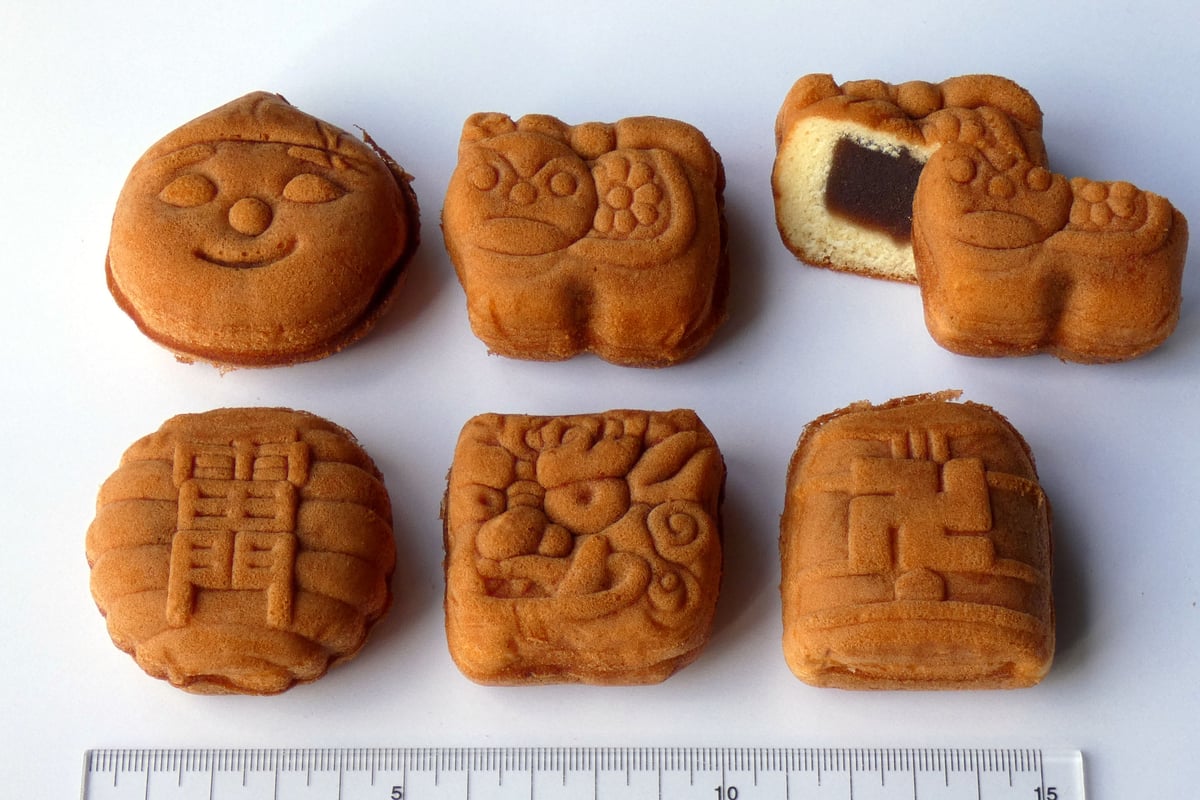
Ningyoyaki is a signature Tokyo baked confection made from a castella-like, egg-flavored batter wrapped around sweet red bean paste (usually smooth koshian) and baked in wooden molds shaped like figures or famous local landmarks. Although several theories exist about its origin, it is generally said to have been created around 1907 (Meiji 40) in Nihonbashi Ningyocho, a district that flourished as a theater town, where it was baked using wooden molds shaped like the Seven Lucky Gods and kabuki actors. In the Taisho era, an artisan who had trained in Ningyocho moved his shop to Asakusa and devised new wooden molds shaped after Asakusa landmarks such as the Kaminarimon Gate, the five-story pagoda, lanterns, and doves; at first it was also called 'meisho-yaki' (landmark-shaped confection) and became a staple Asakusa souvenir. Its simple, comforting taste, in which the fragrant, fluffy batter harmonizes with the moist sweetness of the bean paste, remains highly popular today, helped by the appeal of being able to buy it freshly baked right at the storefront. Long-established shops still stand in both Ningyocho and Asakusa, and it is known nationwide as a Tokyo souvenir.
Origin
Several theories exist about the origin of ningyoyaki, but it is generally said to have begun when a confectionery that opened around 1907 (Meiji 40) in Nihonbashi Ningyocho - a district that flourished as a theater town in the Edo period - began selling a confection baked in wooden molds shaped like the Seven Lucky Gods and bunraku puppets. The name, meaning 'doll-shaped baked confection,' is said to derive both from the Ningyocho place name and from the doll-shaped wooden molds used to bake it.
History
In the Taisho era, an artisan who had trained in Ningyocho opened a shop in Asakusa and newly devised wooden molds shaped after Asakusa landmarks such as the Kaminarimon Gate, the five-story pagoda, lanterns, and doves. Sold at first under the name 'meisho-yaki' (landmark-shaped confection), it gained a strong reputation among visitors to Asakusa and became established there as a local specialty as well. Since then, long-established shops in both Ningyocho and Asakusa have each developed with their own wooden molds and distinctive flavors.
Features
The defining characteristic is a fluffy, egg-flavored batter similar to castella, wrapped around a filling centered on smooth koshian, and baked in molds that stamp the shape of a landmark or figure onto the confection. The motifs used for the wooden molds - such as doves, lanterns, the Kaminarimon Gate, or the five-story pagoda - vary from shop to shop, and each offers the pleasure of a fragrant, freshly baked aroma, a soft batter, and the elegant sweetness of the bean paste working together.
Main Ingredients
Food Culture
Having been born amid the bustle of festivals and theater-going, it has developed as a treat for sightseeing spots and as a 'stroll-and-eat' confection enjoyed freshly baked right at the storefront.
How It Differs from Home Cooking
It is rarely made at home; instead, specialty shops each use their own wooden molds and batter recipes, with the thickness of the batter and the amount of bean paste varying from shop to shop.
Famous Shops
木村家本店
東京都台東区浅草2-3-1
Founded in 1868 (Keio 4), one of the oldest ningyoyaki shops in Asakusa. It uses four types of wooden molds - the Kaminarimon Gate, the five-story pagoda, a lantern, and a dove - and ningyoyaki filled with bean paste sells from around 600 yen.
元祖木村家人形焼本舗
東京都台東区浅草2-3-1
Known for its smooth koshian made with azuki beans from Tokachi, Hokkaido, baked using four molds tied to Asakusa's landmarks. A bag of eight sells from around 500 yen.
FAQ
Q. Where did ningyoyaki originate?
A. Nihonbashi Ningyocho is considered the leading theory for its origin, but in the Taisho era, shops in Asakusa also independently began baking it using wooden molds shaped like the Kaminarimon Gate and the five-story pagoda, and it developed uniquely in each area. Today, long-established shops exist in both Ningyocho and Asakusa.