Image: Wikimedia Commons
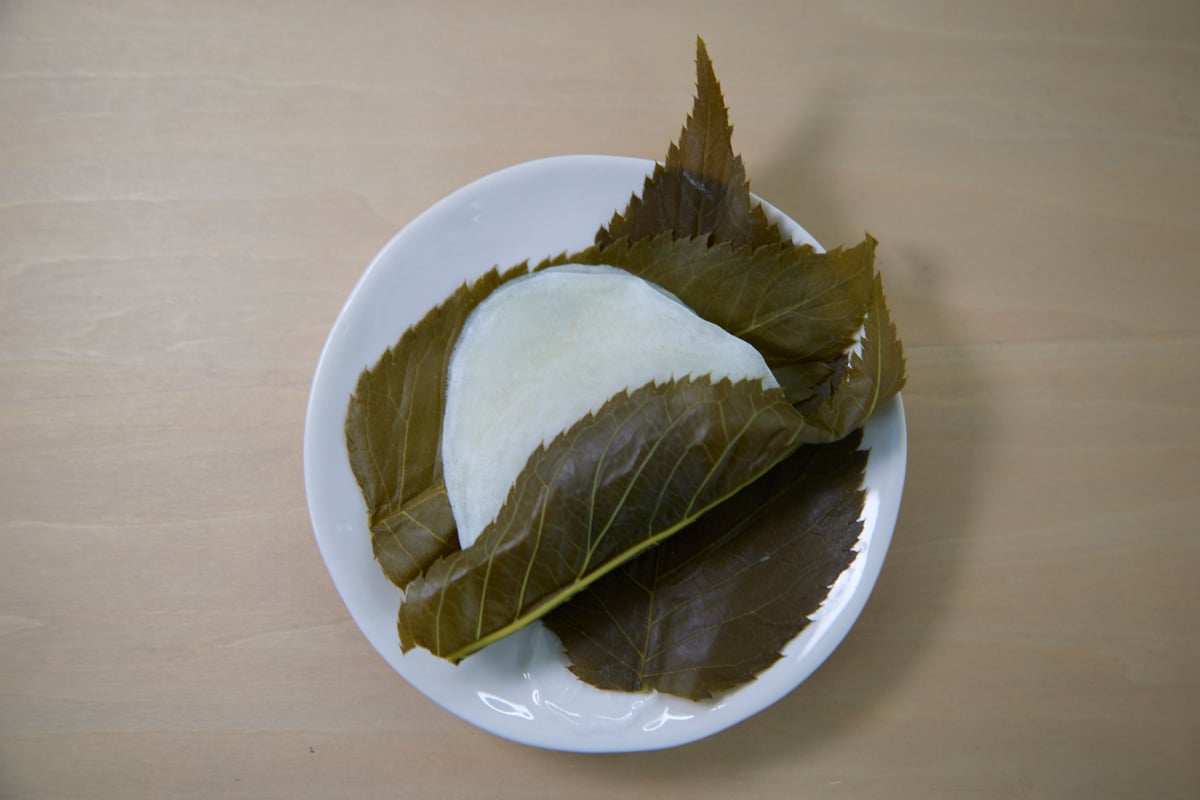
Chomeiji sakuramochi is a Japanese confection regarded as the original Edo-style (Kanto-style) sakura mochi: a thin, crepe-like wheat-flour skin wrapped around sweet bean paste, then wrapped again in a salt-pickled cherry leaf. According to tradition, it originated in 1717, when Yamamoto Shinroku, a gatekeeper at Chomeiji Temple in Mukojima along the Sumida River, came up with the idea of salt-pickling the fallen cherry leaves he swept from the temple grounds and using them with mochi, and began selling the confection at the temple gate. Unlike Domyoji-style (Kansai-style) sakura mochi, which makes the most of the coarse, grainy texture of domyoji-ko (glutinous rice flour), Chomeiji sakuramochi is characterized by a thin, crepe-like wheat-flour skin wrapped around smooth koshian (strained red bean paste), and the shop still preserves its own distinctive style of wrapping each piece in two or three cherry leaves. During cherry blossom season, it draws crowds of visitors to the Sumida embankment, and Yamamoto-ya, which has operated continuously as a sakura mochi specialty shop in Mukojima for roughly 300 years since its founding, is cherished as a celebrated shop that keeps Edo's hanami culture alive today.
Origin
In 1717, Yamamoto Shinroku, who served as gatekeeper of Chomeiji Temple in Mukojima along the Sumida River, sought to make good use of the fallen cherry leaves piling up on the temple grounds. He came up with the idea of salt-pickling the leaves and pairing them with mochi, and began selling the confection at the temple gate. This is said to be the origin of Edo-style sakura mochi, commonly known as Chomeiji sakuramochi.
History
The row of cherry trees along the Sumida embankment was known as one of Edo's leading cherry blossom viewing spots, and the confection's reputation spread as hanami visitors began buying sakura mochi at the temple gate. Since then, Yamamoto-ya has continued to operate as a dedicated sakura mochi shop, preserving its flavor in Mukojima for roughly 300 years since its founding. Separate from the domyoji-ko-based sakura mochi of the Kansai region, the Chomeiji-style sakura mochi spread as its own distinct lineage centered on Tokyo and the Kanto region.
Features
The defining feature is a thin, crepe-like skin, made from wheat flour mixed with a small amount of domyoji-ko, wrapped around smooth koshian and then wrapped again in a salt-pickled cherry leaf. Unlike Kansai-style sakura mochi, which highlights the grainy texture of domyoji-ko, Chomeiji sakuramochi is known for its chewy, thin skin and its refined flavor, in which the saltiness of the cherry leaf sets off the sweetness of the bean paste.
Main Ingredients
Food Culture
This confection developed alongside the hanami culture of the Sumida embankment, and has long been cherished as a souvenir and a sweet treat for cherry blossom viewers visiting the Sumida River area during cherry blossom season.
How It Differs from Home Cooking
It is rarely made at home. Unlike the domyoji-ko-based sakura mochi common in the Kansai region, the technique of wrapping the filling in a thin wheat-flour skin has been passed down through the skill of specialty shops.
Famous Shops
長命寺桜もち 山本や
東京都墨田区向島5-1-14
Founded in 1717, this is the shop where Edo-style sakura mochi originated. A single piece can be purchased for around 220 yen, and it can be enjoyed on-site served with green tea.
View details →FAQ
Q. How is this different from Domyoji-style sakura mochi?
A. Kansai-style sakura mochi, made with domyoji-ko, wraps the filling in a grainy, textured dough, whereas Chomeiji sakuramochi wraps smooth koshian in a thin, crepe-like wheat-flour skin — resulting in a very different texture and appearance.